
Executive Overview
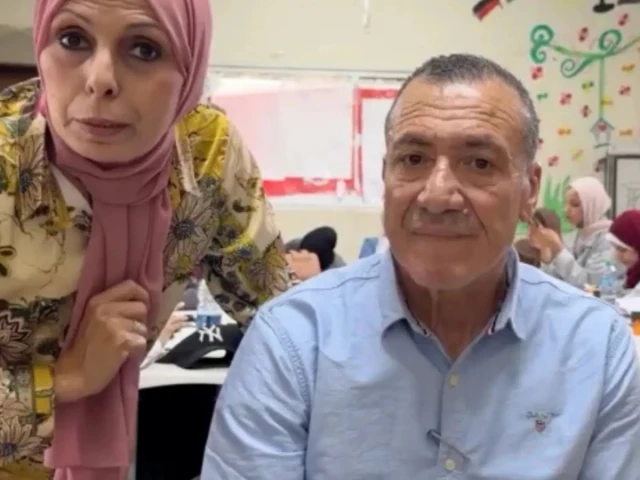
Amid the ongoing devastation and humanitarian crisis in the Gaza Strip, a beacon of cultural resilience has emerged on the global stage. The newly established Gaza Cinema Academy made its landmark debut at the prestigious Venice Film Festival, introducing a transformative educational and creative initiative designed to empower young people and women in Gaza. Co-founded by prominent Palestinian filmmaker Ezzaldeen Shalhah and acclaimed director Mai Masri, the academy aims to bridge the gap between profound isolation and global expression by equipping the next generation of Palestinian artists with the technical skills, resources, and platforms needed to tell their own stories.
The initiative arrives at a critical juncture, directly addressing the physical, emotional, and infrastructural destruction that has gripped Gaza following the escalation of the conflict in October 2023. By focusing heavily on marginalized voices—specifically women and youth—the Gaza Cinema Academy seeks to transcend traditional narratives of victimhood, replacing them with authentic, self-determined accounts of reality, memory, and hope.
Backed by an influential coalition of Palestinian, Arab, and international film luminaries, including acclaimed actor Hiam Abbass, comedian and writer Ramy Youssef, and Oscar-nominated Tunisian filmmaker Kaouther Ben Hania, the academy’s launch at Venice highlights a broader, undeniable resurgence of Palestinian cinema internationally. Alongside the academy’s unveiling, the festival’s official programme features prominent Palestinian works such as Ahmed Hassouna’s Citizen Osama and Muayad Alayan’s Conversation With the Sea.
Read Also
This comprehensive report examines the genesis of the Gaza Cinema Academy, the philosophies driving its founders, the structural challenges it seeks to overcome, and its profound implications for the future of global independent cinema and human rights advocacy.
Detailed Chronology: From Grassroots Resilience to the Global Stage
The realization of the Gaza Cinema Academy is the culmination of years of persistent cultural activism, subterranean artistic networks, and an unyielding commitment to preserving the Palestinian narrative. To understand the significance of its Venice debut, one must trace the trajectory of cinema’s survival inside the blockaded enclave and the steps that led to this international unveiling.
The Groundwork: The Gaza International Women’s Film Festival
The foundation for the academy was significantly shaped by the pioneering work of filmmaker Ezzaldeen Shalhah, who previously established the Gaza International Women’s Film Festival. Despite the catastrophic conditions prevailing in the enclave, the festival staged its inaugural edition from October 26 to 31, 2025. In an act of profound defiance against the erasure of culture and life, the festival opened with The Voice of Hind Rajab, directed by Kaouther Ben Hania—a poignant cinematic tribute that set a tone of resistance, mourning, and solidarity.
The success and resilience demonstrated during the Women’s Film Festival exposed an insatiable hunger among Gaza’s youth and women for creative outlets. It became acutely clear that temporary screenings and sporadic events were insufficient; a permanent, structured institution was required to provide systematic education, mentorship, and equipment access.
Conceptualization and Partnership
Recognizing this urgent demand, Shalhah joined forces with Mai Masri, a towering figure in Palestinian cinema whose cinematic catalog spans decades of documenting Palestinian life, resistance, and displacement. Masri’s 2015 feature film, 3000 Nights, which premiered at the Toronto International Film Festival before embarking on a celebrated global tour, proved that Palestinian narratives directed by Palestinian women could command international critical acclaim while remaining deeply rooted in lived realities.
Together, Shalhah and Masri conceptualized the Gaza Cinema Academy as a multi-tiered platform. It was designed not merely as a film school in the traditional sense, but as a cultural sanctuary. The academy would offer comprehensive training spanning screenwriting, cinematography, directing, sound design, and post-production, while actively facilitating the production of short and feature-length films by local creators.
The Venice Film Festival Debut
The transition from a localized blueprint to an international initiative culminated at the Venice Film Festival. By launching the academy at one of the world’s oldest and most influential film festivals, the founders ensured that the plight, aspirations, and artistic potential of Gaza’s youth were placed directly in the field of vision of international producers, film financiers, institutional partners, and global media outlets.
The debut was strategically timed to coincide with a robust slate of Palestinian cinema at the festival, creating an ecosystem of visibility. With Citizen Osama by Ahmed Hassouna and Conversation With the Sea by Muayad Alayan featured in the official programme, Palestinian directors demonstrated that despite systemic attempts to silence them, their creative output remains vibrant, intellectually rigorous, and formally accomplished.
Supporting Context & Metrics: Cinema as an Instrument of Survival
To fully appreciate the gravity of the Gaza Cinema Academy, one must analyze the socio-political and humanitarian landscape from which it springs. Since October 2023, the Gaza Strip has experienced unprecedented infrastructural devastation, resulting in the collapse of educational institutions, cultural centers, theaters, and historical archives.
The Destruction of Cultural Infrastructure
In conflict zones, the targeting of physical infrastructure extends beyond residential homes and hospitals; it frequently encompasses cultural assets designed to preserve collective memory. Libraries, community centers, art galleries, and makeshift cinemas in Gaza have suffered catastrophic damage. For a population under continuous siege, the loss of communal spaces where stories can be shared, debated, and preserved threatens to sever the generational continuity of identity and history.
The Gaza Cinema Academy steps into this vacuum not as a luxury, but as an essential service for psychosocial rehabilitation and historical preservation. By teaching young people how to handle cameras, record audio, and edit footage, the academy equips them to document their own histories in real-time, preventing external actors from monopolizing the narrative of their existence.
Demographics and the Emphasis on Youth and Women
The academy’s strategic focus on young people and women is rooted in a sociological understanding of conflict and recovery. Women in Gaza have shouldered immense burdens during the conflict, acting as primary caregivers, community organizers, and survivors under unimaginable duress. Providing women with the cinematic tools to articulate their specific vantage points ensures a multi-dimensional portrayal of the crisis—one that moves beyond homogenized media tropes to highlight agency, intellect, and leadership.
Similarly, Gaza possesses one of the youngest demographic populations in the world, with a median age under twenty years. Millions of children and adolescents have spent their formative years under blockade and repeated military escalations. Without intervention, this generation risks facing profound educational stagnation and psychological alienation. The academy offers a constructive, highly collaborative outlet where abstract trauma can be alchemized into tangible art, fostering critical thinking, peer solidarity, and vocational readiness.
International Solidarity and Institutional Backing
The viability of the Gaza Cinema Academy relies heavily on a global network of solidarity. The initiative has successfully mobilized high-profile figures across the international entertainment industry. Key backers include:
- Hiam Abbass: The legendary Palestinian actor and director, celebrated for her roles in critically acclaimed international series and films, who lends her immense artistic credibility and mentorship to the project.
- Ramy Youssef: The renowned American-Egyptian comedian, actor, and writer, whose platform brings vital North American and mainstream visibility to Palestinian creative initiatives.
- Kaouther Ben Hania: The Oscar-nominated Tunisian director whose powerful storytelling sensibilities and commitment to regional solidarity have directly aligned with Gaza’s artistic community.
This cross-border coalition acts as a crucial protective shield and resource multiplier, helping to secure funding, educational curricula, software licenses, and hardware donations that would otherwise be inaccessible due to the blockade.
Official Statements and Visionary Perspectives
The leaders and international supporters of the Gaza Cinema Academy have articulated a clear, impassioned philosophy regarding the role of film in times of crisis. Their public statements from the Venice Film Festival underscore the profound stakes of the initiative.
Co-founder Ezzaldeen Shalhah emphasized the existential and political necessity of filmmaking for Palestinians in Gaza, framing the camera not merely as an artistic tool, but as an instrument of historical self-defense.
"In Gaza, cinema is not merely an art form; it is a means of preserving memory, reclaiming our right to shape our own image, and giving a new generation the tools to tell its own story," Shalhah stated in a release distributed by Variety.
Elaborating on the practical objectives of the academy and its appeal to the global community, Shalhah issued a direct call to action:
"We want the Academy to open a window for young people and women in Gaza to learn, create and make their own films, and for their voices and images to reach the world. We invite our partners in institutions, universities and the international film community to be part of building this space."
Echoing these sentiments, co-founder Mai Masri—whose decades-long career has served as a masterclass in independent Palestinian filmmaking—highlighted the transformative and healing power of creative expression. In an interview with Deadline, Masri articulated the core ethos of the mentorship program:
"Supporting a new generation of filmmakers in Gaza means giving them a space to express their reality, memory and dreams. We believe that creativity and cinema can empower, preserve human memory, and build bridges that transcend borders."
These statements collectively reject the passive positioning of Palestinians as subjects of charity or perpetual tragedy. Instead, they assert that Gazans are active creators, intellectuals, and artists capable of producing world-class cinema that engages global audiences on universal themes of human dignity, resilience, and resistance.
Future Outlook: Challenges, Horizons, and Global Impact
As the Gaza Cinema Academy looks beyond its successful debut at the Venice Film Festival, it faces a complex landscape of operational hurdles and extraordinary opportunities.
Operational and Logistical Obstacles
The primary challenge facing the academy is the volatile security environment and the stringent blockade governing the Gaza Strip. Transporting filmmaking equipment—such as digital cameras, lighting rigs, audio recorders, and editing workstations—across borders remains exceptionally difficult due to import restrictions and infrastructural collapse.
Furthermore, conducting consistent, physical educational programs requires stable supplies of electricity, reliable internet connectivity, and safe physical venues—all of which are scarce commodities in post-conflict Gaza. To circumvent these physical limitations, the academy’s leadership is exploring hybrid models, combining localized workshops with remote mentorship programs facilitated by international film institutions, universities, and diaspora professionals.
Curricular Development and Mentorship Pipelines
Looking ahead, the academy plans to formalize partnerships with international film schools to establish accredited diploma programs, masterclasses, and artist-in-residence exchanges. By pairing aspiring Gazan filmmakers with established directors, cinematographers, and editors from Europe, North America, and the Arab world, the academy will ensure that its students receive world-class technical training while maintaining complete autonomy over their artistic vision.
Distribution and Global Reach
A film is incomplete until it finds its audience. A critical component of the academy’s future outlook involves establishing robust distribution pipelines to ensure that films produced by Gaza’s youth are screened at international film festivals, broadcast on global streaming platforms, and showcased at academic institutions worldwide.
By bypassing traditional gatekeepers who have historically marginalized Palestinian narratives, the Gaza Cinema Academy aims to establish an independent distribution network. This network will ensure that the cinematic output of Gaza’s youth achieves sustained global visibility, fostering empathy, dialogue, and cross-cultural understanding.
Conclusion
The debut of the Gaza Cinema Academy at the Venice Film Festival marks a watershed moment in contemporary cinema. In the face of overwhelming odds, structural destruction, and collective trauma, Ezzaldeen Shalhah, Mai Masri, and their international allies have proven that the human desire to create, remember, and bear witness cannot be extinguished.
By empowering young people and women with the tools of filmmaking, the academy is not merely training the next generation of directors and cinematographers; it is safeguarding the historical memory of Palestine, reclaiming the right to self-representation, and forging an unbreakable bridge between the besieged streets of Gaza and the global conscience. As these nascent voices begin to project their realities onto silver screens worldwide, they carry with them the undeniable truth that art is one of the most enduring forms of resistance.




Comments
Facebook App ID not configured. Please add it in the Customizer.