
VENICE — In the upper echelons of modern technology, finance, and global politics, few names carry the polarizing gravity of Elon Musk. As the chief architect behind Tesla, SpaceX, and the social media platform X (formerly Twitter), Musk has fundamentally reshaped how humanity envisions the future, transitioning from a celebrated visionary of the dot-com era into a deeply entrenched, highly controversial political powerbroker.
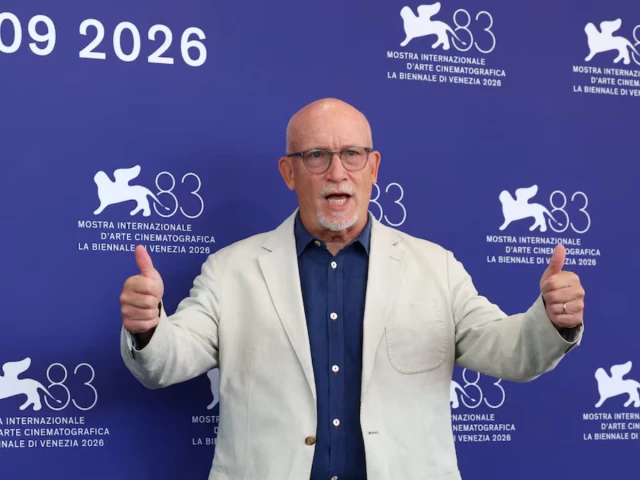
Yet, beneath the sheen of reusable rockets and electric vehicles lies a chilling atmosphere of intimidation, according to Academy Award-winning documentarian Alex Gibney. Unveiling his staggering, nearly four-hour cinematic exposé simply titled Musk at the Venice Film Festival, Gibney peeled back the layers of the world’s most influential tech titan, revealing a climate of fear so pervasive that it paralyzed potential whistleblowers, former associates, and even close friends from speaking out on the record.
Premiering out of competition at the prestigious festival—which runs through September 12—Musk is far more than a retrospective biography. It is a sprawling, investigative autopsy of modern power, examining how an unelected billionaire amassed unprecedented influence over international commerce, statecraft, and public discourse.
Read Also
Executive Overview: A Marathon Exploration of Modern Power
Running nearly four hours, Musk is an ambitious undertaking even by the standards of Gibney, a filmmaker renowned for his deep-dive exposés into systemic corruption, corporate malfeasance, and cultish control (such as Enron: The Smartest Guys in the Room and Going Clear: Scientology and the Prison of Belief).
The documentary traces Musk’s trajectory from his early days navigating the turbulent waters of the dot-com boom to his current status as a global geopolitical player. But as Gibney explained during his pre-screening press conference, the scope of the project expanded dramatically as real-world events overtook the filmmaking process. What was initially conceived as a concise, standard-length documentary mutated into a sweeping epic when Musk’s career became inextricably intertwined with the political ambitions of Donald Trump and the broader American and international right-wing movements.
Gibney painted a stark portrait of the hurdles faced during production, which began in 2003. According to the director, approaching sources yielded an immediate and alarming pattern: existential dread.
"There was a tremendous sense of fear of talking, really almost existential fear, both among people who were his critics, people who were his business colleagues, and people who are his friends," Gibney told journalists in Venice. "I talked to many, many, many, many people who, except for some of the brave people who are here, declined to speak."
Unsurprisingly, the subject of the film has fiercely rejected its premise. Taking to X—the very platform he acquired in a chaotic $44 billion buyout—Musk dismissed Gibney outright earlier this month. The billionaire claimed the director was harboring an unyielding bias, predicting that the project would undoubtedly emerge as "the most convincingly terrible hit piece on me that he can possibly think of."
Despite the pushback, Gibney and his legal teams pushed forward, utilizing an innovative array of sources, archival material, and even an AI-generated version of Musk—programmed to articulate verbatim statements the billionaire has uttered over the years—to construct a comprehensive, if deeply critical, character study.
Detailed Chronology: From Dot-Com Dreamer to Geopolitical Kingmaker
To understand the weight of Musk, one must trace the meticulously structured chronology presented in Gibney’s film, mapping the evolution of a tech entrepreneur into a global political actor.
Phase 1: The Silicon Valley Mythos and the Art of the "Confidence Man"
Gibney’s documentary revisits Musk’s formative years, framing his early business ventures through the lens of classic American salesmanship. Drawing parallels to historic figures of industrial deception, Gibney explicitly categorizes Musk’s rise as "the story of the confidence man."
According to the film’s narrative thesis, the billionaire’s corporate empire—sprawling from PayPal’s early iterations to the ambitious milestones of Tesla and SpaceX—has historically relied less on infallible engineering and more on an exceptional aptitude for selling inflated visions, manufacturing high-stakes deadlines, and hyper-promising futures to investors and the public. While acknowledging the tangible technological achievements of his companies, Gibney argues that the underlying foundation has always been a charismatic illusion designed to sustain hyper-growth and personal dominance.
Phase 2: The Twitter Takeover and Institutional Power
A critical pivot point in Musk is the tumultuous acquisition of Twitter. Gibney analyzes the purchase not merely as a corporate buyout or a billionaire’s vanity project, but as a calculated consolidation of media and political control.
By linking the takeover of the digital town square with Musk’s subsequent government cost-cutting advocacy and his deep reliance on lucrative federal aerospace and defense contracts, the film exposes a dangerous paradox: a private citizen wielding structural power that rivals, and often supersedes, sovereign governments. The documentary highlights how access to critical state infrastructure, combined with ownership of a premier global communication channel, created an unprecedented concentration of wealth and political influence in the hands of a single individual.
Phase 3: The Trump Alignment and the Global Right
Initially planned as a tighter, product-focused film, the documentary’s narrative arc took a dramatic turn when Musk aligned himself closely with Donald Trump’s MAGA movement and subsequently began extending his political footprint internationally.
The film documents Musk’s expanding support for right-wing political movements across the globe, prominently featuring his growing alignment with the surging Alternative for Germany (AfD) party. Gibney argues that this pivot is far from accidental or purely ideological.
"I think he’s pursuing a global right-wing agenda, both for ideological and for very practical and monetary reasons," Gibney asserted in Venice, branding the billionaire as "extremely" dangerous to the health of global democracy.
Supporting Context & Metrics: Inside the Inner Circle
Musk is anchored not only by Gibney’s analytical narration but also by the firsthand testimonies of individuals who experienced the billionaire’s orbit intimately. Among them are journalist Zoë Schiffer and Ashley St. Clair, a former partner of Musk and the mother of one of his many children.
The $40 Million Silence
St. Clair’s contribution to the documentary provides some of its most compelling emotional and psychological weight. In the film, she reveals that she was offered—and ultimately turned down—a staggering $40 million non-disclosure agreement (NDA) following the conclusion of her relationship with Musk.
Her testimony paints a picture of a man whose personal interactions are governed by control, high stakes, and legal insulation. Offering an unflinching summary of her time with the entrepreneur, St. Clair remarks bluntly in the film: "Elon is a nuke." Elaborating further on his psychological profile, she added during the Venice promotional events: "His most complicated relationship is with the truth."
A Deficit of Empathy
Gibney echoes these personal assessments, offering a stark psychological evaluation of his subject. Drawing from interviews with former colleagues and confidants who broke their silence, the director diagnosed a fundamental emotional limitation.
"I would say he has a very difficult time with empathy," Gibney stated. This perceived lack of emotional resonance, combined with absolute financial power, forms the emotional core of the documentary’s thesis: a warning about what happens when vast planetary resources are concentrated under the stewardship of an individual fundamentally detached from traditional human empathy.
Official Statements and Industry Reactions
The reception of Musk at the Venice Film Festival has sparked a wider conversation across the international film and tech communities regarding documentary ethics, defamation risks, and journalistic integrity.
Given Musk’s well-documented litigiousness and his aggressive posture toward media outlets and critics, questions regarding the legal safety of the project were paramount during the festival’s press briefings. Addressing potential legal challenges—particularly concerning the film’s use of an AI-generated voice model of Musk speaking his historical words—Gibney remained confident.
"We consulted our lawyers, and they gave us a sign-off to go forward," the director confirmed, emphasizing that the documentary relies strictly on public statements and verified reporting.
Concurrently, the subject’s digital apparatus has responded with characteristic velocity. Through posts on X and allied media channels, supporters and representatives of Musk have sought to preemptively discredit the film, framing it as a politically motivated hit job engineered by liberal cultural elites in Hollywood and European film festivals. This digital pushback underscores the ongoing information war that defines Musk’s public life—a conflict where traditional journalism and decentralized social media narratives constantly collide.
Future Outlook: The Legacy of a Tech Monarch
As Musk completes its festival run and looks toward broader distribution, the questions raised by Alex Gibney’s four-hour epic will reverberate far beyond the cinematic sphere.
We live in an era where the boundaries separating corporate enterprise, national security, and democratic governance are increasingly blurred. Figures like Elon Musk operate on a geopolitical plane that transcends traditional nation-states, controlling satellite constellations essential for global communications, driving the transition to electric mobility, and actively funding or promoting political movements across continents.
Gibney’s documentary serves as an urgent diagnostic tool for this new reality. By capturing the climate of fear surrounding Musk, detailing the mechanisms of his corporate and political rise, and amplifying the voices of those who chose to risk retaliation by speaking out, Musk forces society to confront an uncomfortable question: What happens to democracy when the destiny of the public square rests entirely in the hands of an unelected, unaccountable titan?
Whether the film will alter public perception or merely harden existing ideological battle lines remains to be seen. However, one reality is indisputable: the conversation surrounding the limits of billionaire power has officially entered a new, much sharper phase, and Alex Gibney has ensured that the debate cannot be easily ignored.





Comments
Facebook App ID not configured. Please add it in the Customizer.