
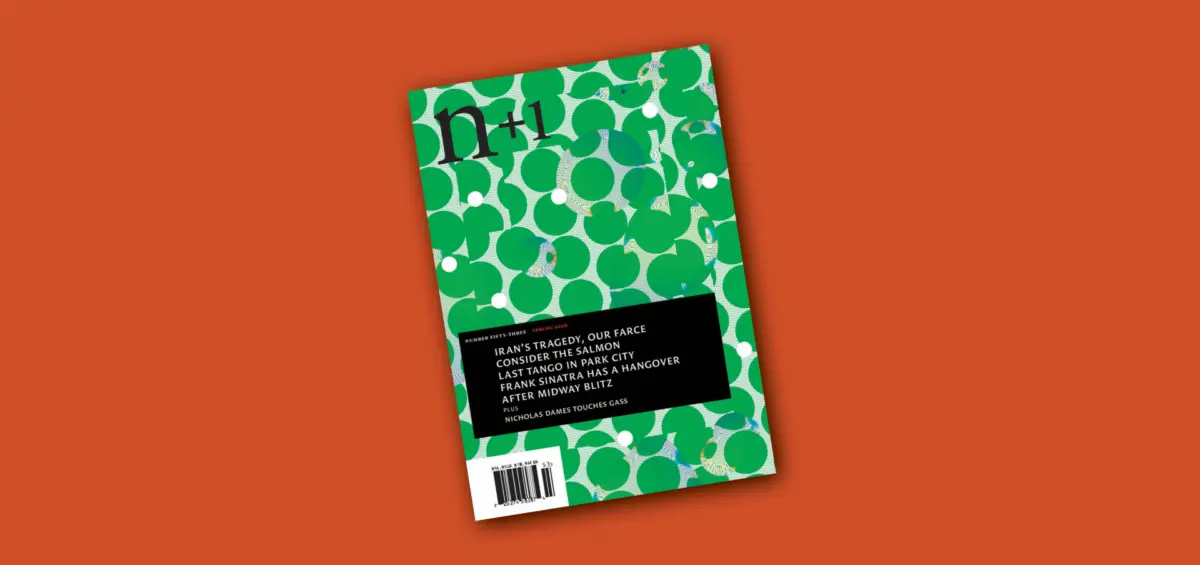
The landscape of contemporary cultural criticism and literary reception has been profoundly shaped by the intricate ways audiences interact with text, film, and geography. In a recent dual-letter correspondence published in n+1 (Issue 53), critics and fact-checkers Caleb Stern and Tommy Tower illuminate the micro-mechanics of artistic analysis. Stern explores the career of the late, towering documentarian Frederick Wiseman through the rigorous lens of fact-checking and sociological observation, while Tower navigates the uncanny verisimilitude of Gillian Linden’s regional fiction, drawing parallels to digital spatial mapping tools like GeoGuessr.
Together, these reflections offer a meta-critical examination of how art imitates, records, and constructs reality. Wiseman’s forty-six-film oeuvre—spanning decades of institutional and social observation—resists sentimentality and conventional narrative structure, operating instead with the sweeping eye of a sociologist and the precise touch of a novelist. Simultaneously, Linden’s prose achieves a localized, almost algorithmic precision, anchoring readers so deeply in specific topographies that fiction blurs seamlessly into lived experience. This report provides an authoritative examination of both critiques, evaluating the intersection of documentary ethics, spatial realism, and the evolving responsibilities of contemporary literary and film criticism.
Detailed Chronology
The Wiseman Legacy and the Fact-Checker’s Lens
The arc of Frederick Wiseman’s cinematic career spans over half a century, culminating in his passing at the age of 96 after completing forty-six feature films. Wiseman’s work long defied standard categorization, functioning simultaneously as cinema verité, sociological fieldwork, and novelistic prose.
Read Also
- The Review ("Looking Like a State"): In Issue 53 of n+1, critic Mariana Mogilevich published a comprehensive survey of Wiseman’s career, analyzing his commitment to recording institutional structures without succumbing to the temptations of modern documentary sentimentality.
- The Fact-Checking Process: Caleb Stern, tasked with fact-checking Mogilevich’s essay, undertook an intensive review of approximately twenty-four hours of Wiseman’s filmography within a condensed timeframe. This process required a shift from a bird’s-eye sociological view to hypervigilant micro-observation—verifying dialogue, time stamps, and visual background details.
- Atypical Stylistic Choices: Stern’s shadow retrospective uncovered rare, anomalous stylistic divergences in Wiseman’s early and mid-career work. These included the blunt, didactic intercutting of a force-feeding procedure with a mortician’s preparation of a corpse in Titicut Follies (1967), and the sole nondiegetic needle-drop in his oeuvre—Otis Redding’s "(Sittin’ on) The Dock of the Bay" playing over an opening car window shot in High School (1968).
- Spatial Poetics in Later Works: In Public Housing (1997), Wiseman utilized lingering, static vignettes of children playing near the Ida B. Wells Homes in Chicago following the tragic murder of Eric Morse, contrasting these quiet absences with the kinetic, patrolling presence of the Chicago Housing Authority Police Department.
The Encounter with Erving Goffman
A pivotal moment in the historical understanding of Wiseman’s methodology involves his interaction with renowned sociologist Erving Goffman during the editing of Titicut Follies.
- The Goffman Comparison: Mogilevich noted that Titicut Follies serves as a structural blueprint for Goffman’s theories on total institutions, housing physical boundaries, special ceremonies, and intake interviews.
- The Misalignment: When Goffman was brought into Wiseman’s editing room by a mutual university colleague, the sociologist examined the sequence featuring the guard-cum-mortician washing a deceased inmate. Goffman misidentified the core tragedy, citing it as proof of guard indifference because the guard "doesn’t speak to the prisoner"—failing to notice that the inmate was already dead.
- Wiseman’s Rebuttal: This misreading reinforced Wiseman’s lifelong aversion to didacticism. Rather than relying on sociological shorthand, Wiseman prioritized the complex, often contradictory nature of human experience, aligning himself more closely with literary giants such as Flaubert, Balzac, Melville, and Henry James than with academic sociology.
Literary Geography and Linden’s "Beckley Furnace Road"
Shifting from documentary film to contemporary fiction, Tommy Tower’s contribution to Issue 53 examines the startling spatial accuracy of Gillian Linden’s short story "Beckley Furnace Road."
- The GeoGuessr Analogy: Tower contextualizes his reading through the lens of desktop geographic games like GeoGuessr and its New York City variant, which reward deep familiarity with architectural styles, light quality, and municipal infrastructure.
- The Incidental Reading Environment: Reading the story in his in-laws’ backyard in western Connecticut—surrounded by apple trees, clean air, and the sound of the Housatonic River—Tower experienced an uncanny geographic convergence. The fictional setting mirrored his exact physical coordinates, down to local municipal customs like the "transfer station" (the regional dump where residents leave free goods).
- Geographic Investigation: Upon investigating the title, Tower discovered that while "Beckley Furnace Road" is a fictional construct, the "Beckley Iron Furnace State Park" is located precisely twelve minutes away in East Canaan, Connecticut—a site he had previously visited.
- Culmination in Negative Space: Prompted by the precision of the short story, Tower explored Linden’s 2024 novel, Negative Space, finding an identical mastery of spatial navigation and psychological realism set within elite Brooklyn neighborhoods.
Supporting Context & Metrics
To fully appreciate the scope of the critical discourses presented in n+1 Issue 53, it is essential to analyze the quantitative and qualitative metrics defining Wiseman’s cinematic output and the literary geography of regional realism.
Frederick Wiseman’s Filmography: Quantitative Overview
| Metric Category | Data / Observation |
|---|---|
| Total Feature Films | 46 completed works across a 56-year span |
| Age at Passing | 96 years old |
| Primary Subject Matter | Total institutions, educational systems, municipal administration, artistic spaces, and public services |
| Key Literary Influences | Flaubert, Balzac, Melville, Hawthorne, Henry James |
| Atypical Audio Choices | Exactly 1 nondiegetic musical cue (High School, 1968) |
The Mechanics of Fact-Checking vs. Sociological Viewing
The dichotomy outlined by Stern highlights two distinct modes of media consumption:
- The Sociological/Bird’s-Eye View: Emphasized by critics like Mariana Mogilevich, this approach examines films as macro-level ethnographies, tracking how individuals intersect with and illuminate broader social structures and institutional boundaries (e.g., Erving Goffman’s markers of total institutions).
- The Micro-Analytic/Fact-Checking View: As experienced by Stern during his twenty-four-hour review marathon, this method requires hypervigilance regarding minute details—verifying coffee cups, conversational cadence ("gonna be" versus "going to be"), and exact temporal stamps (Titicut Follies: physical boundaries at 17:11; special ceremonies at 00:05; planning meetings at 1:00:29; intake interviews at 04:25).
Official Statements & Critical Excerpts
Frederick Wiseman on Didacticism and Complexity
Reflecting on his encounter with Erving Wiseman’s work and academic sociology, Wiseman famously articulated his opposition to heavy-handed messaging in documentary filmmaking:
"As it happened, he was a visiting professor at the university where I taught, and one of my colleagues ‘brought him’ to me while I was editing Titicut Follies. I showed him the sequence in which the guard, who is also a mortician, performs the ritual washing of the deceased inmate. He told me, ‘Look at this scene; it’s characteristic of the indifference of prison guards toward incarcerated patients, of their degree of dehumanization. The proof: He doesn’t speak to the prisoner.’ He hadn’t even noticed that the man was dead! . . . It’s an anecdote, but it sums up my approach: The human experience is complicated, and I try to reflect this complexity in my editing. I abhor didacticism, the scourge of documentaries."
Caleb Stern on the Dual Impulses of Wiseman’s Cinema
Summarizing the synthesis of macro-structure and micro-detail in Wiseman’s four-hour magnum opus, Belfast, Maine, Stern writes:
"Wiseman’s gift was that he could obey dual impulses. He could hold in focus both the weight of the world and the touch of the hand; the painting and the brushstroke; the forest and the trees."
Tommy Tower on Literary Spatial Realism
Describing the uncanny localization of Gillian Linden’s fiction, Tower observes:
"Above all she is so observant and exacting, her descriptive abilities so fine-tuned, that you can read a two-line description of a sky and a tree and know exactly where you are. I’ve always appreciated realist fiction that attempts something like location-sharing… but this took things to a new level. This was literature as dropping a pin."
Future Outlook
The critical dialogues initiated by Caleb Stern and Tommy Tower point toward several emerging trajectories in modern cultural criticism, media analysis, and the reception of realist art:
- The Evolution of Hyper-Contextual Criticism: As digital spatial tools (such as GeoGuessr and GIS mapping) reshape how audiences interact with physical spaces in media, literary and film criticism will increasingly lean into hyper-local verification. Reviewers will analyze not only thematic resonance but also the exactitude of geographic and architectural representation.
- Re-evaluating Documentary Ethics: In an era saturated by algorithmically generated content and heavily manipulative documentary formats (often driven by the "sentimentality and story" lamented by Mogilevich), Wiseman’s refusal of didacticism serves as an enduring touchstone. Future filmmakers and critics will look to his structural rigor as an antidote to modern narrative oversimplification.
- The Persistence of the Novelistic Documentarian: As long-form nonfiction continues to bridge the gap between sociology and art, scholars will increasingly analyze documentarians through the framework of the Great American Novelist. The cross-pollination of literary influences—from Melville to Flaubert—will remain vital to understanding how nonfiction filmmakers construct complex, contradictory portraits of society.
- The Future of Archival Fact-Checking: With streaming platforms hosting massive digital archives of classic documentary cinema, the role of the fact-checker transitions from a routine editorial safeguard to an essential form of shadow-archaeology. Discovering the micro-details of a frame—down to a coffee cup or an unscripted linguistic tic—enables a richer, more granular appreciation of cinematic history.




Comments
Facebook App ID not configured. Please add it in the Customizer.