
Executive Overview
In the annals of sports history, few figures have endured as much systemic adversity while achieving such stratospheric heights as Marshall Walter “Major” Taylor. Long before Jackie Robinson broke baseball’s color barrier or Muhammad Ali shook the world, Major Taylor was a household name across multiple continents—revered as the fastest cyclist alive and celebrated as the world’s first Black superstar athlete. Yet, for decades, his extraordinary legacy faded into the hazy background of sports historiography, overshadowed by the very racial animus he pedaled so fiercely to outrun.
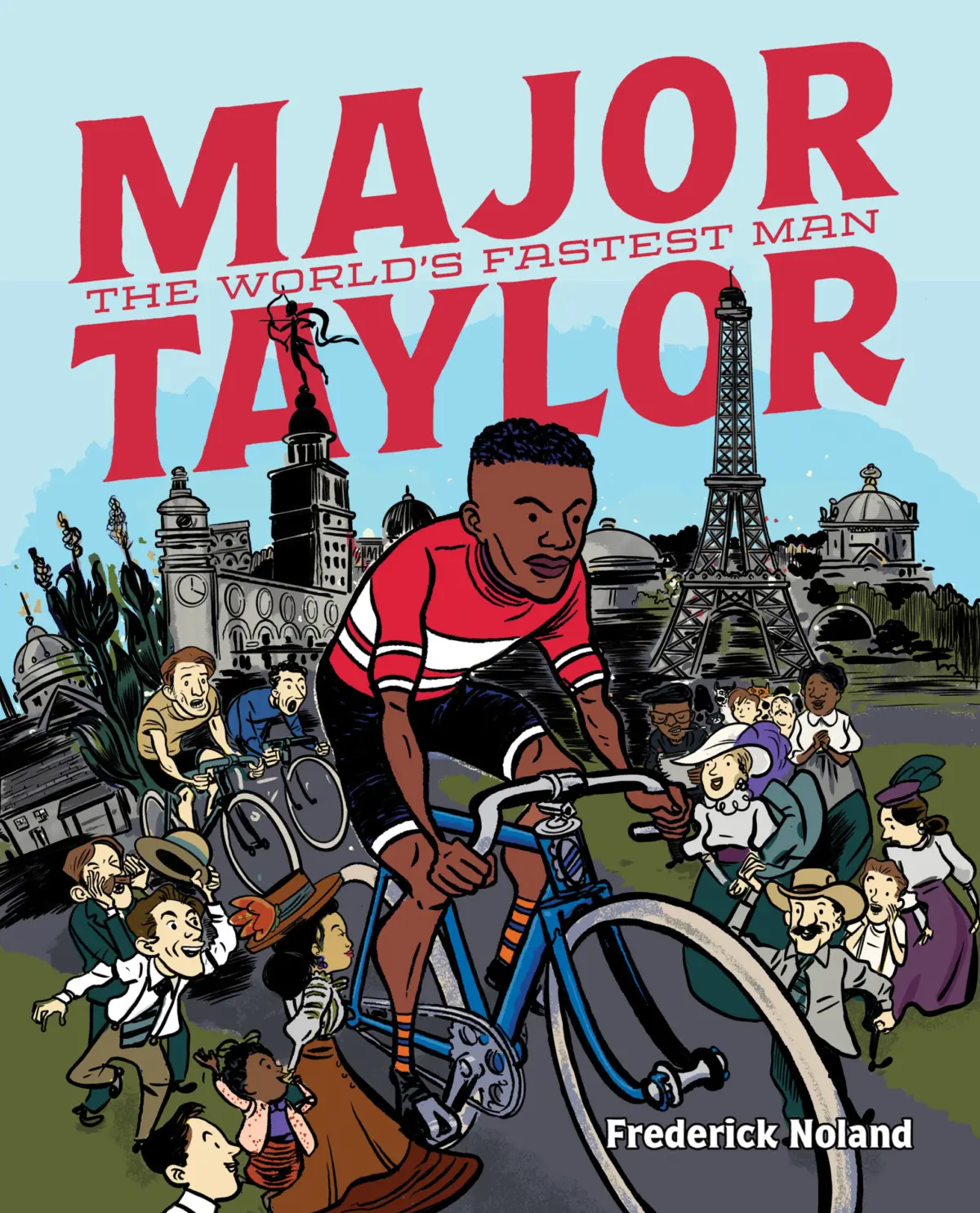
Now, through the meticulously researched and visually striking graphic biography Major Taylor: The World’s Fastest Man, creator Frederick Noland resurrects the triumph, tragedy, and trailblazing spirit of a Gilded Age icon. Published by Drawn & Quarterly, Noland’s work serves as both a comprehensive tribute and a vital historical correction. It chronicles Taylor’s journey from a working-class childhood in Indianapolis to international acclaim, capturing a man who navigated the treacherous waters of the Jim Crow era with unwavering faith, aerodynamic brilliance, and unyielding psychological fortitude.
This literary and artistic triumph arrives at a critical cultural juncture. As modern sports journalism increasingly interrogates the intersections of race, capitalism, and athletic labor, Noland’s biography invites contemporary audiences to look back at the roots of modern sports celebrity. This feature explores the breadth of Noland’s contribution, situates Taylor’s achievements within the socio-political crucible of the late 19th and early 20th centuries, examines the structural hurdles the cyclist conquered, and analyzes the profound resonance of his legacy in the modern era.
Read Also
Detailed Chronology: From Indianapolis Apprenticeship to Global Domination
To fully appreciate the scope of Frederick Noland’s graphic biography, one must trace the winding, arduous path Major Taylor forged across a rapidly industrializing globe. Noland’s narrative structure moves deliberately through the formative phases of Taylor’s life, treating each chapter of his career not merely as a sequence of athletic victories, but as a masterclass in resilience.
The Crucible of the Midwest: Early Talent and the Indianapolis Apprenticeship
Born in November 1878 near Indianapolis, Indiana, Marshall Taylor grew up during a period when the United States was rapidly transforming from an agrarian society into an industrial powerhouse. The bicycle—then a revolutionary mode of transportation and a high-tech marvel—was sweeping the nation. As a teenager, Taylor found work in a local bicycle shop. It was here that his innate mechanical intuition and superhuman physical gifts converged.
Noland’s graphic narrative captures this embryonic phase of Taylor’s career with palpable intimacy. In the book’s early pages, readers are introduced to the formative alliances that shaped the young prodigy. Notably, the book highlights Taylor’s relationship with his white mentor, Louis “Birdie” Munger, a prominent cycle manufacturer and former racer who recognized the teenager’s otherworldly speed. Munger became a crucial protector, though he could not completely shield Taylor from the venomous racism of the era.
Alongside Munger, the biography highlights interactions with established cycling greats of the day, such as Arthur Zimmerman and Willie Windle. These early mentorships and peer dynamics were fraught with the paradox of the Gilded Age: genuine athletic camaraderie existing side-by-side with rigid, inescapable racial stratification. Taylor quickly learned that while his physical talents commanded the awe of his peers, his presence on the track disrupted a deeply segregated social order.
Escaping Jim Crow: The Leap to National Prominence
As Taylor’s competitive ambitions grew, so too did the hostility of white competitors and race promoters. Denied entry into many domestic races due to the color of his skin, and frequently facing physical threats, boycotts, and coordinated efforts by rival cartels to box him in on the track, Taylor made a strategic decision that would define his legacy: he looked beyond American borders.
Before his international exodus, however, Taylor shattered barriers at home. He captured the American sprint championship in 1899, setting numerous world records along the way. Noland’s illustrations vividly bring these races to life, capturing the kinetic blur of the velodrome, the roar of the turn-of-the-century crowds, and the intense psychological isolation Taylor experienced even in victory. When competing on American tracks, Taylor was routinely subjected to elbows, intentional crashes, and slurs—attacks that race officials frequently chose to ignore.
Conquering the World: Europe, Australia, and Beyond
Frustrated by American bigotry, Taylor took his talents to Europe and Australasia, where he found a much more receptive, albeit still complex, racial climate. In France, Germany, and Australia, Taylor was not merely tolerated; he was fêted as a sporting royalty. Crowds marveled at his tactical brilliance, his explosive finishing kick, and his immaculate sportsmanship.
During his international campaigns, Taylor routinely defeated the world’s best cyclists, winning world championships and setting track records that stood for years. Noland’s graphic biography excels in depicting this global tour, illustrating how Taylor transformed from a persecuted domestic racer into a transnational celebrity. He was dined by dignitaries, lionized by foreign press, and embraced by fans who cared less about the color of his skin and more about his unmatched dominance on two wheels. Yet, despite his global acclaim, Taylor remained a deeply spiritual man, grounding his grueling regimen in his unwavering Christian faith.
Supporting Context & Metrics: The Mechanics of a Gilded Age Legend
To understand Major Taylor’s athletic dominance, one must examine the quantitative and technological landscape of turn-of-the-century bicycle racing. Cycling during the 1890s was not merely a pastime; it was the global sport of the era, drawing crowds that rivaled modern-day soccer or American football matches. Velodromes—banked oval tracks built specifically for bicycle racing—dotted major metropolitan areas across North America and Europe, serving as cathedrals of modern speed.
The Quantitative Footprint of a Pioneer
- The World Championship (1899): Taylor won the 1-mile professional sprint world championship in Montreal, Canada, cementing his status as the fastest man on earth and making him only the second Black athlete to win a world title in any major sport (after Canadian-born safety bicyclist and boxer George Dixon).
- World Records: Over the course of his career, Taylor set numerous world records, including the 1/4-mile, 1/3-mile, 1/2-mile, and 1-mile distances, with several records standing for years.
- Global Travel: At the height of his career, Taylor’s international tours spanned thousands of miles, taking him across the United States, Canada, France, Germany, Italy, and Australia.
- Financial Success: Through his dominance, Taylor commanded massive appearance fees and prize purses, earning a small fortune that made him one of the wealthiest Black men of his generation—though much of this wealth was later depleted by the exorbitant costs of legal battles, health issues, and philanthropic endeavors.
The Socio-Political Realities of Jim Crow Athletics
Noland’s biography does not shy away from the brutal sociological realities that shadowed Taylor’s financial and athletic triumphs. The late 19th and early 20th centuries in America were defined by the codification of Jim Crow segregation, the rise of scientific racism, and pervasive anti-Black violence.
In the athletic arena, this manifested as the "white professional cycling trust"—an informal syndicate of riders, managers, and promoters who conspired to deny Taylor entries, block his access to premier training facilities, and enact rules designed specifically to neutralize his competitive advantages. For instance, Southern states outright banned integrated athletic competitions, forcing Taylor to navigate a labyrinth of legal prohibitions and constant physical threats just to ply his trade.
Frederick Noland’s visual style captures these structural impediments with striking clarity. The monochromatic or muted palette used in portions of the book underscores the cold, unyielding nature of the systemic racism Taylor faced, contrasting sharply with the dynamic, high-velocity action lines that animate his racing triumphs.
Official Statements and Critical Reception
The release of Major Taylor: The World’s Fastest Man has drawn widespread acclaim from literary critics, historians, and graphic novel enthusiasts alike. Publishers Weekly, in its starred review, praised the work as a "comprehensive and fitting tribute to the life and accomplishments of 19th and early 20th century champion racing cyclist Major Taylor."
Industry experts have lauded Noland’s ability to synthesize complex historical archives into an accessible, emotionally resonant visual medium. In interviews surrounding the book’s launch, creators and historians have emphasized the ongoing cultural imperative of recovering marginalized sports histories.
"Major Taylor’s story is not just a sports story; it is an American story of resilience in the face of insurmountable odds. Frederick Noland’s graphic biography strips away the dust of history and presents Taylor in all his complicated, brilliant, and indomitable humanity," noted a prominent comic arts historian during a recent panel discussion on the intersection of race and sports literature.
Reviewers have also highlighted the pedagogical value of Noland’s work. By packaging deep archival research into a 12-page excerpt and a larger graphic novel format, Drawn & Quarterly has ensured that Taylor’s story can bridge the gap between academic history and mainstream popular culture—engaging younger readers who might otherwise remain unaware of this foundational sports pioneer.
Future Outlook: The Enduring Legacy of Major Taylor in Modern Sports
As we look toward the future of sports culture and historical education, the legacy of Major Taylor serves as both a cautionary tale and a wellspring of inspiration. The publication of Frederick Noland’s Major Taylor: The World’s Fastest Man arrives at a time when athletes are increasingly expected to use their platforms to address systemic inequality, mirroring the path Taylor forged more than a century ago.
Reclaiming the Velodromes: Modern Tributes and Educational Initiatives
In recent years, a concerted effort has emerged to restore Major Taylor to his rightful place in public memory. Streets, cycling clubs, and velodromes across the United States and Europe have been named in his honor. Organizations such as the Major Taylor Association actively work to educate youth about his achievements, promoting diversity and inclusion in cycling—a sport that continues to grapple with demographic representation challenges today.
Furthermore, the mainstreaming of graphic biographies as a medium for serious historical inquiry ensures that figures like Taylor can reach expansive, diverse audiences. Noland’s work demonstrates that graphic novels are uniquely equipped to handle the kinetic energy of sports history while retaining the emotional nuance required to depict systemic oppression.
A Timeless Blueprint for Resilience
Ultimately, the enduring value of Major Taylor’s story lies in his refusal to be erased. Despite enduring death threats, sabotage, and institutional racism that would have broken a lesser spirit, Taylor maintained his dignity, his Christian faith, and his status as a global titan of sport.
As contemporary athletes continue to navigate the complex intersections of race, politics, and celebrity, Major Taylor remains the North Star of athletic endurance. Through Frederick Noland’s brilliant artistic lens, the world’s fastest man rides once more—not just across the velodromes of Paris, Melbourne, and Indianapolis, but directly into the modern consciousness where he belongs.
Bibliographic and Publication Details
- Major Taylor: The World’s Fastest Man
- Author/Illustrator: Frederick Noland
- Publisher: Drawn & Quarterly
- Format: Graphic Biography / Hardcover / Paperback
- Subject: Marshall Walter “Major” Taylor (1878–1932)
- Themes: Sports History, Jim Crow Era, African American Biography, Cycling, Graphic Novels





Comments
Facebook App ID not configured. Please add it in the Customizer.