
The Greater Caribbean—a sprawling geopolitical and cultural tapestry encompassing the islands of the Caribbean Sea, the eastern seaboard of Central America, the southern tier of North America, and the northern littoral of South America—remains profoundly defined by historical fragmentation. Artificially partitioned by colonial borders and diverse linguistic legacies, these territories nevertheless share what theorist Paul Gilroy famously termed "shared experiences." Born from the trauma of historical abduction from Africa, the harrowing passage of the Middle Passage, and the enduring struggles of slavery and abolition, these nations constitute what writer Antonio Benítez Rojo aptly characterized as "the "repeating island."
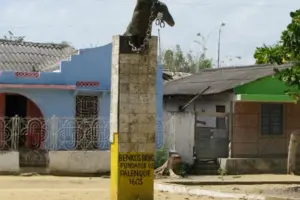
A groundbreaking literary initiative is currently challenging these traditional boundaries and imperial linguistic hierarchies by presenting a major, pan-Caribbean showcase of creole literature. Featuring stories, poems, novel excerpts, and critical essays translated from English-, French-, and Spanish-based creoles, this transnational collection elevates marginalized tongues directly through their native texts. Beyond mere translation, the project pairs original works with critical examinations—such as an investigation into the monument of maroon leader Benkos Biohó in San Basilio de Palenque, Colombia—highlighting the volatile intersections of cultural memory, institutional history, and postcolonial liberty.
This literary renaissance arrives at a critical juncture in global discourse. The post-war "crisis of authority" in Western epistemology, paired with an emerging skepticism toward monocultural paradigms, has catalyzed a profound reassessment of universalist theories. Consequently, contemporary postcolonial studies have embraced new vocabularies of diversity, hybridization, and syncretism. Caribbean texts, by their very nature, exemplify the dynamic blending of a brutal colonial past with the realities of the Americas, actively re-establishing a fractured sense of selfhood. In doing so, these transcultural literatures dismantle institutionalized notions of the center, purity, and authenticity, proving that creole languages are not mere deviations, but sovereign engines of artistic and cultural innovation.
Read Also
Detailed Chronology
The arc of Caribbean creolization is a complex historical continuum defined by resistance, adaptation, and systemic institutional suppression. Below is a chronological framework charting the evolution of creole consciousness, linguistic codification, and literary milestones across the region:
- The Era of Forced Translocation (16th–19th Century): The transatlantic slave trade forcibly relocates millions of Africans to the Greater Caribbean. Amid the violent plantation economies of the region, enslaved populations forge new linguistic instruments—creoles—synthesizing African syntax and vocabularies with European lexicons as tools of survival and clandestine resistance.
- 1985 — Pioneering Creole Fiction: Martinican writer Raphaël Confiant shatters regional literary taboos by publishing Bitako-a, marking the first time a novel is written and published entirely in Martinican Creole, signaling an aggressive turn toward linguistic self-determination.
- 1989 — The Manifesto of Creoleness: Confiant, alongside Jean Bernabé and Patrick Chamoiseau, publishes Éloge de la créolité (In Praise of Creoleness). This foundational theoretical text champions Caribbean identity, multi-layered cultural memory, and the aesthetic legitimacy of creole languages.
- 1991 — Constitutional Recognition in Colombia: The Colombian Constitution of 1991 formally recognizes ethnic and linguistic diversity within the nation, granting official language status to San Andrés–Providencia Creole alongside Spanish, initiating a legal shift toward regional pluralism.
- 2005 — UNESCO Heritage Designation: UNESCO officially designates San Basilio de Palenque, Colombia—the first free town of the Americas founded by runaway slaves—as a Masterpiece of the Oral and Intangible Heritage of Humanity, validating its Hispanophone creole culture (Palenquero) on the global stage.
- 2011 — Archiving Palenquero Orality: Bernardino Pérez Miranda publishes Chitieno lengua ku ma kuendo: hablemos Palenquero a través del cuento, a pivotal illustrated book transcribing oral histories, including popular adaptations of the lumbalú (dance of death) chant traditions.
- Contemporary Era: A surge of digital publishing, pan-Caribbean literary anthologies, and postcolonial translation initiatives bring works by authors like Emiliana Bernard-Stephenson, Jean D’Amérique, and Ludmila Ferrari to a global audience, cementing creole literature as a vibrant cornerstone of modern world letters.
Supporting Context & Metrics
To fully understand the weight of creole literature, one must examine the socio-linguistic metrics and historical contexts that have shaped the Greater Caribbean.
Linguistic Stratification and Diglossia
Throughout the Caribbean, creole languages frequently exist in a state of complex diglossia alongside dominant colonial administrative tongues (such as French, Spanish, and English). For instance, in San Andrés and Providencia, the Raizal community navigates an institutional landscape where Spanish—imposed heavily following twentieth-century centralizing policies from mainland Colombia—serves as the official administrative language, while San Andrés–Providencia Creole functions as the intimate repository of cultural identity. Despite being granted constitutional protection in 1991, creole varieties continuously grapple with historic institutional stigma, educational exclusion, and socio-economic marginalization.
The Geography of Resistance
The literary works featured in this pan-Caribbean movement map a geography rooted in specific sites of historical defiance:
- San Basilio de Palenque (Colombia): Founded in the seventeenth century by escaped African slaves led by Benkos Biohó, this community developed Palenque, a Hispanophone-based creole. It remains a living laboratory of African retention, syncretic funeral rites (lumbalú), and radical autonomy.
- Martinique: A French overseas department where the interplay between French and Martinican Creole reflects the contested legacy of the plantation complex. Writers like Raphaël Confiant have meticulously mapped the economic exploitation and cultural resilience of these spaces.
- Haiti: A sovereign republic whose revolutionary history stands as a permanent testament to anti-colonial victory, yet one that continues to battle systemic political instability—a reality channeled through the piercing poetry of figures like Jean D’Amérique.
- The Raizal Archipelago (San Andrés, Providencia, and Santa Catalina): English-based creole-speaking territories whose maritime culture and distinct identity are currently championed by writers, diplomats, and activists such as Emiliana Bernard-Stephenson.
Comparative Overview of Featured Literary Voices
| Author / Scholar | Region / Community | Primary Language / Creole | Notable Work Featured | Thematic Focus |
|---|---|---|---|---|
| Bernardino Pérez Miranda | San Basilio de Palenque, Colombia | Spanish-Palenquero Creole | "Catalina Loango" | Oral history, ancestral lumbalú chants, and utopian returns to Africa. |
| Ludmila Ferrari | Argentina / Colombia | Critical Essay (English) | "A Maroon Monument" | Spatial economies of violence, public monuments, and living memory. |
| Emiliana Bernard-Stephenson | San Andrés, Providencia & Santa Catalina | San Andrés–Providencia Creole / English | "Kriol Soldier" | Raizal identity, linguistic defense, and tension with official Spanish. |
| Jean D’Amérique | Haiti | French / Haitian Creole Context | "Poem for Children with Trouble Sleeping" | State violence, political machinery, and the vulnerability of youth. |
| Raphaël Confiant | Martinique | Martinican Creole / French | Galfétè Mò (Galfétè is dead) | Plantation economies, oral tradition, and foundational creoleness. |
Official Statements & Critical Perspectives
Scholars, cultural ambassadors, and literary critics have increasingly articulated the urgency of dismantling Eurocentric linguistic hierarchies in favor of a pluralistic, creole-centered worldview.
Reflecting on the complex legacy of the maroon leader Benkos Biohó, whose statue in San Basilio de Palenque has become a focal point of intense community debate, cultural critic Ludmila Ferrari notes that physical monuments to freedom cannot be treated as static or monolithic. In her critical analysis, Ferrari observes:
"The representation of freedom in the statue of Benkos Biohó is mired in the visual language of slavery and in Western sculptural standards. With time, the inhabitants of Palenque have collectively altered the statue, transforming it into a living space of symbolic dispute… tied to an experience of liberty that cannot be reduced to the slave-master dichotomy and is instead based in the quotidian, the community, and shared memory."
This sentiment echoes the overarching philosophy of the pan-Caribbean literary project, which asserts that creole literatures are fundamentally "supersyncretic" byproducts of historical dialogue. As researchers and translators note, these languages synthesize African, European, and Asian elements into entirely new cultural forms that continuously oscillate between appropriation and rejection.
Furthermore, public intellectuals and diplomats like Emiliana Bernard-Stephenson have long championed the legal and cultural parity of native tongues. Writing from her dual perspective as a journalist, writer, and former ambassador, Bernard-Stephenson uses poetry to expose the daily friction experienced by speakers of marginalized vernaculars. Her work underscores that defending an indigenous creole is not merely an artistic exercise, but an essential political defense of community survival against the homogenizing pressures of state-sanctioned monolingualism.
Future Outlook
As the global academic and literary communities increasingly pivot toward postcolonial and decolonial frameworks, the future of Caribbean creole literature appears both luminous and urgent. For centuries, these linguistic systems were relegated to the margins of intellectual discourse, stigmatized as corrupt dialects rather than fully formed vehicles of complex human thought. However, the tide is turning.
The formal recognition of creole-speaking communities by international bodies—epitomized by UNESCO’s designation of San Basilio de Palenque—signals a broader systemic shift. Future literary production in the Greater Caribbean will likely see an expansion of digital archives, bilingual publishing initiatives, and transnational translation projects that bypass traditional metropolitan publishing hubs. By placing creole texts in direct conversation with one another across linguistic divides (English, French, and Spanish-based creoles alike), writers and scholars are constructing a unified, polyphonic map of the Caribbean Basin.
Ultimately, these literatures serve as a vital antidote to contemporary anxieties surrounding cultural purity and nationalist fundamentalism. Born from the crucible of forced displacement and systematic oppression, creole languages and their respective literatures offer humanity a masterclass in radical resilience. They demonstrate that culture is never static; rather, it is an ever-evolving, living mosaic forged in the fires of shared history and collective imagination.


Comments
Facebook App ID not configured. Please add it in the Customizer.