
Executive Overview
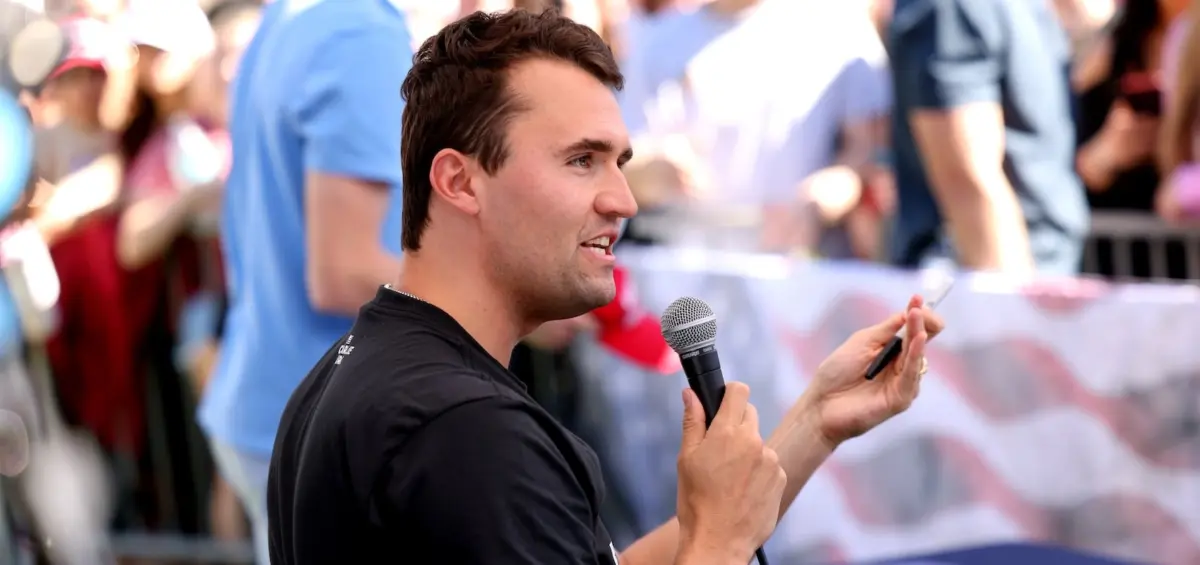
The assassination of conservative activist Charlie Kirk on September 10, 2025, sent seismic shocks through American politics and the broader evangelical landscape. Standing at the vanguard of a generation defined by the rise of Donald Trump, Kirk was more than a political provocateur; he was an institutional architect who harnessed digital media, aggressive public engagement, and traditional religious conviction to mobilize Generation Z. Entering his thirties at the time of his death, Kirk had spent a decade building Turning Point USA (TPUSA) into an ideological and organizational juggernaut.
His sudden and violent death acted as a catalyst for a massive religious and cultural reaction. Far from silencing his movement, the tragedy triggered a surge in church attendance, historic Bible sales, unprecedented conference turnouts, and an accelerated expansion of the TPUSA church network. This phenomenon has intensified an ongoing debate among sociologists, theologians, and political analysts: Is American Christianity experiencing a genuine, large-scale spiritual awakening, particularly among young men, or are we witnessing the solidification of a fiercely partisan, culturally assertive movement often termed "MAGA-fied Christianity"?
This report examines the life, death, and enduring institutional legacy of Charlie Kirk, analyzing the data behind the post-assassination religious surge, the anatomy of the new evangelical populism, and the stark ideological divide cleaving contemporary American religious life.
Read Also
Detailed Chronology: The Rise, Fall, and Aftermath of an Evangelical Entrepreneur
The Genesis of a Movement
Born toward the tail end of the Millennial generation, Charlie Kirk’s public career ascended in tandem with Donald Trump’s political orbit. Possessing a towering physical presence and a confident, confrontational, yet deeply relational communication style, Kirk emerged as a magnetic figure for Gen Z youth searching for ideological certainty in an increasingly fragmented world.
Though he did not complete a traditional college degree, Kirk was an early adopter of digital self-education, driven by a zealous evangelical thirst to master theology, history, and political philosophy. Observers frequently compared him to a young Ron Nash—the late evangelical philosopher who blended intellectual rigor with populist media savvy, unafraid of courting controversy to establish a robust Christian worldview for late-modern society.
In 2012, Kirk co-founded Turning Point USA at the age of 18. Over the next decade, he diversified his strategies, simultaneously pursuing political advocacy, Christian apologetics, and high-level networking with wealthy donors and influential figures. Central to these efforts was a singular objective: reclaiming Gen Z for God, family, and country. By synthesizing legacy evangelical values with cutting-edge digital entrepreneurship, Kirk constructed an apparatus capable of rivaling long-standing establishment institutions.
The Turning Point: September 10, 2025
Kirk was at the absolute height of his cultural and political influence when an assassin’s bullet cut him down on September 10, 2025. The attack not only eliminated one of the most prominent conservative voices of his generation but also served as a watershed moment for the American religious right.
The immediate aftermath was characterized by unprecedented emotional and numerical mobilization within conservative evangelical spaces. Churches across the United States reported standing-room-only crowds in the weeks following the assassination. Kirk’s memorial service drew an estimated 90,000 to 100,000 mourners in person, while drawing over 100 million views via global livestreams.
The momentum quickly translated into measurable institutional growth:
- Scripture Demand: Major retail data and publishing outlets recorded an extraordinary 36 percent increase in Bible sales across the United States for September 2025.
- Network Expansion: The network of congregations affiliated with TPUSA Church experienced exponential growth, more than doubling to approach nearly 10,000 participating churches.
- AmericaFest 2025: TPUSA’s marquee annual conference shattered previous attendance records, drawing a crowd of over 30,000 people to its December gathering.
Supporting Context & Metrics: Challenging the Secularization Narrative
The surge in religiosity following Kirk’s assassination did not occur in a vacuum; it amplified a series of religious revival events that began with the spontaneous Asbury University prayer outpouring in February 2023. For over two decades, cultural commentators had pointed to the inexorable rise of the "nones"—those claiming no religious affiliation—as proof of America’s steady march toward secularization. By 2014, Pew Research data indicated that religious "nones" had climbed to roughly 23 percent of the population.
However, recent scholarship has begun to challenge this declension narrative. In their seminal work The Death of Religion?, historians Thomas Kidd and Byron Johnson utilize the U.S. Congregational Census alongside granular local studies of three diverse counties in Texas, Washington, and Virginia to demonstrate that traditional demographic surveys have consistently undercounted practicing Christians. Their findings reveal substantial, localized growth in Baptist, Pentecostal-Charismatic, and non-denominational congregations between 2010 and 2020—precisely the demographic segments driving the new evangelical populism.
Furthermore, demographic indicators point to a distinct counter-trend among young men. While secularization made deep inroads among young women and urban populations over the past decade, recent sociological data reveals a plateauing of the religiously unaffiliated demographic and a measurable uptick in religious observance among young men. This demographic shift has been accompanied by a broader cultural embrace of traditional Christian aesthetics and values, creating fertile ground for figures like Kirk.
Official Statements and Institutional Reactions
The bifurcation of American public life was laid bare in the varied reactions to Kirk’s assassination, which functioned as a sociological Rorschach test for the nation’s spiritual health.
The Populist Evangelical Coalition
The stage at Kirk’s memorial service offered a vivid cross-section of the coalition he helped forge. Political heavyweights including Donald Trump, JD Vance, and members of the presidential cabinet shared the platform with Pentecostal-Charismatic worship leaders, prominent apologist Frank Turek, and Pastor Rob McCoy of Godspeak Calvary Chapel.
This alliance represents a potent fusion: the historic evangelical emphasis on intellectual apologetics and comprehensive worldview formation merged seamlessly with the emotive, high-energy musicality of contemporary worship collectives. Through initiatives like the Make Heaven Crowded Tour—spearheaded by TPUSA Faith Director Lucas Miles, pastor of the Charismatic non-denominational Nfluence Church in Indiana—the organization successfully wed spiritual revivalism with political activism. Turning Point Education further reinforced this mission, deploying curricula and training seminars designed to inject Christian principles into education, business, and civic life.
The Critique from Former Evangelicals
Conversely, the progressive and post-evangelical communities viewed Kirk’s life and legacy through a sharply critical lens. While former evangelicals universally condemned the violence of the assassination, they fiercely rejected the hagiography surrounding him.
Prominent critics, writing in outlets such as The Atlantic, characterized Kirk not as a martyr for the faith, but as a chief architect of "MAGA-fied Christianity"—a movement they argue conflates orthodox Christian theology with Christian nationalism and hard-right partisanship.
This friction highlighted a generational schism within American evangelicalism itself, specifically between older and younger Millennials. Figures associated with the "exvangelical" movement—a term coined in 2016 by podcaster Blake Chastain, an older Millennial who exited the church during the New Atheism wave of the 2010s—viewed Kirk’s brand of Christianity as the logical, toxic culmination of decades of politicized religion.
Exvangelicals, many of whom underwent a painful process of deconstruction, trace their disillusionment to various historical flashpoints:
- The rigid purity culture that dominated evangelical youth groups in the 1990s.
- The religious fervor surrounding the political rhetoric of the George W. Bush administration and the post-9/11 "War on Terror."
Having abandoned traditional orthodoxy, former evangelicals have embraced progressive social frameworks, integrating critical race theory, queer studies, and secular activism into their worldview. Rather than retreating from public life, this cohort maintains an active, unyielding critique of traditional evangelicalism, operating as a vocal counterweight to the populist wave embodied by Kirk.
Future Outlook: The Trajectory of New Evangelical Populism
As the dust settles on the turbulent events of late 2025, the landscape of American religion stands fundamentally altered. The evangelical populism championed by Charlie Kirk has not receded in the wake of his death; rather, it has been galvanized, weaponized, and institutionalized.
The synthesis of Pentecostal-Charismatic spiritual fervor, rigorous intellectual apologetics, and aggressive political populism has forged a resilient theological and social framework. This movement operates with a high degree of agility, bypassing legacy denominational structures in favor of non-denominational networks, digital broadcasting platforms, and grassroots youth organizations.
Whether this newly energized coalition possesses the institutional durability to outlast its founders and current political figureheads remains an open question for sociologists and historians. Yet, the potency of its immediate impact is undeniable. Charlie Kirk has transitioned from a polarizing activist into a potent ideological symbol—a martyr for a burgeoning populist movement that views the public square not as a neutral territory to be navigated, but as a spiritual battleground to be conquered. As the demographic and cultural currents continue to shift, the legacy of Charlie Kirk will cast a long, decisive shadow over the soul of American public religion for decades to come.





Comments
Facebook App ID not configured. Please add it in the Customizer.