
In a milestone announcement for educational literature and civil rights advocacy, the National Education Association (NEA) has officially selected Mia Wenjen’s acclaimed picture book, Barbed Wire Between Us, as a featured Elementary Book of the Month for April 2027. Published by Red Comet Press and illustrated with striking sensitivity by Violeta Encarnación, the title will anchor the NEA’s national “Build Belonging” initiative. This month-long campaign is designed to foster empathy, cross-cultural understanding, and inclusive classroom environments across thousands of school districts nationwide.
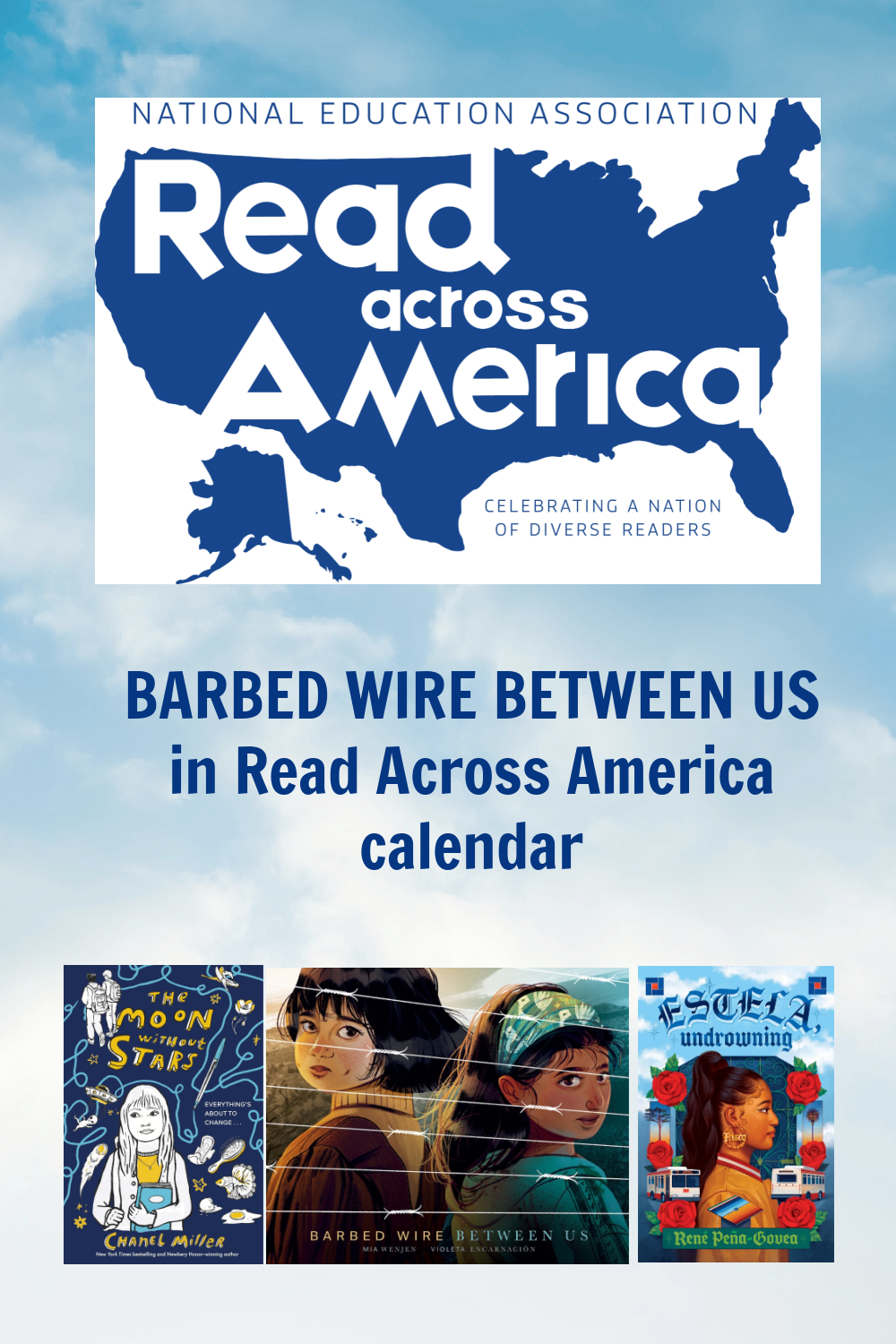
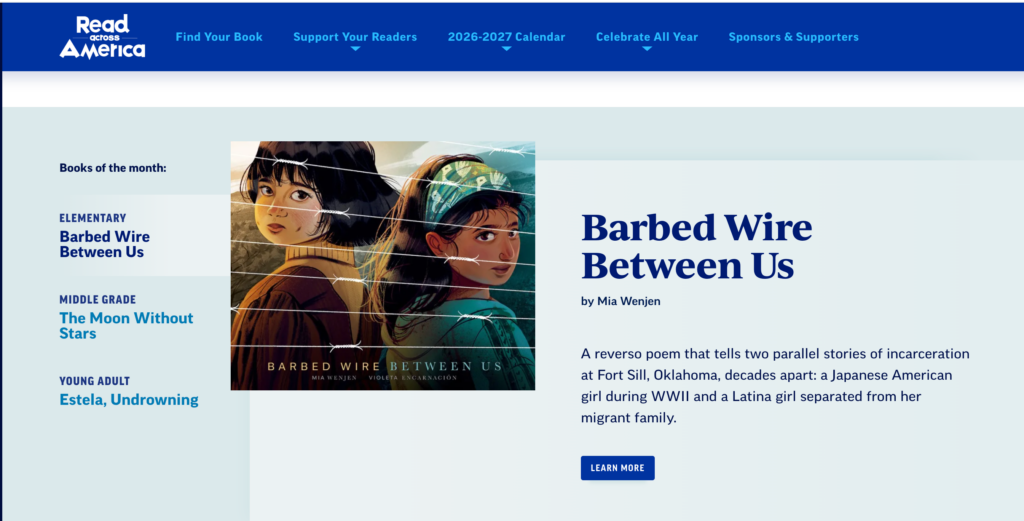
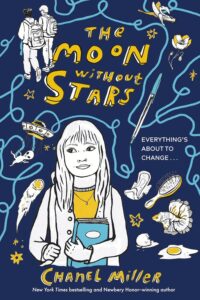
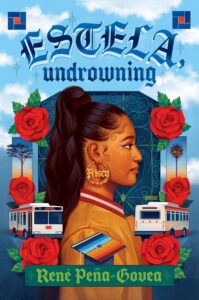
Set against the tragic backdrop of historical and contemporary displacement, Barbed Wire Between Us employs an innovative reverso poetry structure to weave two parallel narratives of incarceration and separation at Fort Sill, Oklahoma, separated by decades. The selection places Wenjen’s work alongside other notable curriculum selections for older readers—including Chanel Miller’s middle grade novel The Moon Without Stars (Philomel Books) and René Peña-Govea’s young adult title Estela, Undrowning (Quill Tree Books).
The NEA recognition underscores a broader cultural shift within American education: an increasing demand for literature that directly confronts systemic injustices while offering young readers pathways toward healing and solidarity. This article provides a comprehensive examination of the selection, exploring the structural brilliance of the book, its curricular implications, its connection to a wider literary catalogue by the author, and the national dialogue it seeks to spark.
Read Also

Detailed Chronology: From Concept to National Recognition
The journey of Barbed Wire Between Us to the NEA Read Across America calendar represents a culmination of rigorous historical research, artistic collaboration, and targeted educational outreach. Understanding the trajectory of this milestone requires a chronological examination of its development:
- Historical Research and Inspiration (Pre-2025): Author Mia Wenjen began investigating the multi-layered history of Fort Sill, Oklahoma—a site that served as a Department of Justice internment camp for Japanese Americans during World War II and, decades later, as a detention facility for migrant children separated from their families. Recognizing the profound thematic echoes across generations, Wenjen conceptualized a text that would bridge these historical traumas without collapsing their distinct contexts.
- Literary Structuring and Artistic Partnership (2025): Wenjen adopted the reverso poem format—a poetic form that can be read forward to tell one story and backward to reveal an entirely different, yet interconnected, perspective. Illustrator Violeta Encarnación joined the project to bring visual depth to the dual narratives, utilizing a color palette and visual motifs that tie the experiences of a young Japanese American girl during WWII to a contemporary Latina girl caught in family separation. Red Comet Press committed to publishing the manuscript.
- Cover Reveal and Pre-Launch Awareness (August 2025): The official cover reveal generated early buzz among educators, librarians, and multicultural literature advocates, signaling a powerful addition to contemporary historical fiction and poetry for children.
- Publication and Critical Reception (2026): Upon its release, Barbed Wire Between Us received widespread acclaim from literary critics and educators. In tandem with the release, Wenjen and educational advocates rolled out supplemental materials, including comprehensive teacher guides, origami crane activities tied to themes of hope and peace, and in-depth interviews in publications like Publishers Weekly.
- NEA Read Across America Selection (August 2026 / April 2027 Implementation): The National Education Association officially announced the inclusion of the book in its 2027 calendar under the "Build Belonging" theme. Scheduled for April 2027, the designation positions the book as a cornerstone text for elementary classrooms seeking to engage students in conversations about empathy, civil rights, and human dignity.
Supporting Context & Metrics: The Power of Representation and Curriculum Integration
The NEA Read Across America program reaches millions of students, educators, and families annually, making it one of the most influential children’s literacy initiatives in the United States. The decision to center April 2027 around the theme of "Build Belonging" reflects quantitative and qualitative shifts in educational priorities:
- Demographic Alignment: Modern American classrooms are increasingly multicultural. Educational research consistently demonstrates that students of all backgrounds benefit academically and emotionally when exposed to literature that mirrors diverse human experiences and validates marginalized histories.
- Thematic Resonance: By focusing on Fort Sill, Oklahoma, Barbed Wire Between Us introduces elementary students to complex civic lessons in an age-appropriate format. The reverso poetry structure acts as a cognitive tool, teaching young readers how to hold two seemingly distinct historical realities in dialogue with one another, thereby strengthening critical literacy and historical empathy.
- Cross-Curricular Adaptability: The availability of free, downloadable teacher guides—alongside interdisciplinary activities such as origami crane folding and geographical mapping of internment sites—transforms the book from a standalone reading experience into a holistic curricular unit. Educators can seamlessly integrate the text into social studies, language arts, and art curricula.
Official Statements and Literary Context
The selection of Barbed Wire Between Us aligns with Mia Wenjen’s broader mission as a writer, activist, and educator. Known for her diverse portfolio of children’s and young adult literature, Wenjen has consistently used her platform to illuminate hidden histories, champion social justice, and celebrate multicultural heroes.

Her extensive body of work includes titles such as:

- Postcards from Malcolm X: How Yuri Kochiyama Became a Civil Rights Activist (illustrated by Keith Henry Brown), which explores the life of a seminal Asian American civil rights leader and her alliance with Malcolm X.
- Fortune Cookies for Everyone! (Smithsonian) (illustrated by Colleen Kong-Savage), which uncovers the surprising cultural history of a ubiquitous treat.
- The Traveling Taco, exploring the diverse, transnational roots of popular foods.
- We Sing from the Heart: How the Slants® Took Their Fight for Free Speech to the Supreme Court, detailing the landmark legal battle for artistic expression and anti-racist advocacy.
- Food for the Future: Sustainable Farms Around the World (illustrated by Robert Sae-Heng), a Bank Street Best Book of the Year.
- Biographical and sports-focused titles such as Changing the Game: Asian Pacific American Female Athletes and collaborative guides like How to Coach Girls (co-authored with Alison Foley).
While celebrating the NEA recognition, literary analysts have noted that Wenjen’s work—alongside companion monthly selections like Chanel Miller’s The Moon Without Stars and René Peña-Govea’s Estela, Undrowning—represents a renaissance in socially conscious youth literature. These titles do not shy away from institutional failure, anxiety, or societal prejudice; instead, they equip young readers with the emotional vocabulary and historical context needed to navigate an increasingly complex world.

Future Outlook: Implications for Educators and the Publishing Industry
As schools prepare for the April 2027 rollout of the NEA’s "Build Belonging" campaign, the impact of this recognition is expected to ripple across multiple sectors:

- Classroom Adoption: School districts across the nation are expected to incorporate Barbed Wire Between Us into their spring reading lists, library acquisitions, and lesson planning workshops. The accessibility of teacher guides ensures that even educators unfamiliar with teaching poetry or complex historical topics will have robust instructional support.
- Publisher Momentum: For Red Comet Press, the NEA spotlight validates their commitment to publishing daring, emotionally resonant, and socially vital children’s literature. It highlights the viability of verse novels and poetry picture books as effective pedagogical tools for young learners.
- Ongoing Advocacy: Through author visits, signed book initiatives, and digital resources provided via platforms like PragmaticMom, Mia Wenjen continues to bridge the gap between creators and classrooms. The sustained engagement with themes of civil rights, historical memory, and community care suggests that Barbed Wire Between Us will remain a staple of progressive elementary education for years to come.
Ultimately, the NEA’s endorsement of Barbed Wire Between Us serves as a powerful reminder of literature’s capacity to transcend physical and temporal barriers—replacing barbed wire with bridges of understanding, empathy, and enduring human connection.



Comments
Facebook App ID not configured. Please add it in the Customizer.