There is a familiar, somewhat cynical trope deeply embedded in modern American cultural commentary: Americans will happily empty their savings to amble through the historic, cobblestone corridors of Rome or Paris, or even to stroll down the carefully curated, ersatz Main Street of a Disney theme park. Yet, upon returning home to their sprawling suburban developments, endless asphalt parking lots, and attached two-car garages, they will fiercely maintain that such pedestrian-oriented designs could never work in the United States.
For decades, this sentiment has formed the ideological bedrock of American suburban planning. A vocal, highly organized contingent of residents across the country routinely mobilizes to resist zoning reforms and infrastructure changes that would introduce denser, mixed-use, pedestrian-friendly development into their backyards. Local planners and urban developers are continually told that while walking-centric streets might make charming historic preservation projects for older societies, sprawl-loving Americans simply do not want to live that way.
Seemingly validating this perspective, recent data from organizations like the Pew Research Center has frequently generated headlines declaring that a "majority of Americans prefer spread-out communities with big houses."
However, this framing fundamentally misinterprets the data and obscures a much more complex reality. A closer examination of Pew’s own datasets—alongside comprehensive surveys from the National Association of Realtors (NAR), the Centers for Disease Control and Prevention (CDC), and the National Association of Home Builders (NAHB)—reveals a massive, highly suppressed pent-up appetite for a walking-friendly lifestyle across the United States.
The core issue is not a lack of consumer demand, but rather a profound, structural shortage of supply. In the land of the free, finding a neighborhood where one can safely walk to pick up everyday necessities or grab a cup of coffee has become an elusive luxury. This scarcity highlights a silent, rarely acknowledged domain in which Americans lack genuine freedom of choice: the freedom to choose how they move through and experience their daily environments.
Crucially, expanding walkable communities does not mean eradicating the sprawling, car-dependent suburbs that millions of Americans genuinely prefer and cherish. Instead, solving this crisis is about unlocking housing abundance, expanding genuine consumer choice, and restoring human-scale neighborhoods to a country that has spent the last three-quarters of a century building exclusively for the automobile.
Detailed Chronology: How the American Landscape Shifted to the Automobile
To understand how the United States arrived at its current housing and transportation impasse, it is necessary to examine the historical trajectory that dismantled the nation’s walkable urban fabric.
Pre-War Urbanism: The Golden Age of the Pedestrian Scale
Prior to the mid-20th century, nearly all American cities, towns, and streetcar suburbs were built at a human scale. Because walking, bicycling, and mass transit were the primary modes of transportation, neighborhoods were naturally organized as mixed-use ecosystems. Homes, corner stores, schools, places of worship, and workplaces existed in close physical proximity. A typical American could conduct their daily errands entirely on foot, fostering a high degree of local civic interaction and economic resilience.
Post-WWII Suburbia and the Rise of the Highway
The landscape shifted dramatically in the wake of the Second World War. Propelled by returning veterans, government-backed mortgage programs like the G.I. Bill, and the systematic subsidization of highway construction, the United States embarked on an unprecedented experiment in decentralized, car-dependent development.
Federal policies, zoning codes, and lending guidelines actively penalized mixed-use development. Municipalities across the country adopted Euclidean zoning—a system that strictly separated residential areas from commercial and industrial zones. The traditional grid street pattern was replaced by looping cul-de-sacs and arterial stroads designed to maximize automobile throughput while rendering walking dangerous or impossible. By the 1960s, the car had ceased to be merely a tool of convenience and had become an absolute prerequisite for participating in American social and economic life.
The Legislative and Regulatory Lock-In (Late 20th Century)
Throughout the 1970s, 1980s, and 1990s, minimum parking requirements, mandatory setback laws, and low-density single-family zoning became deeply entrenched in local municipal codes. These regulations made it illegal to build the kind of neighborhoods that Americans had previously taken for granted. Consequently, the construction of new walkable, human-scale communities ground to a near-total halt. Aside from historic downtown districts and a handful of heavily regulated resort towns, virtually all residential development built over the last 50 years has been engineered exclusively around the automobile.
The 21st-Century Awakening and the YIMBY Counter-Movement
In recent years, a combination of soaring housing costs, traffic congestion, and a growing cultural appreciation for vibrant public spaces has sparked a counter-movement. Urbanists, housing advocates, and organizations under the broad "YIMBY" (Yes In My Back Yard) banner have begun challenging exclusionary zoning laws. Cities like Minneapolis have eliminated single-family-only zoning, while states like California and Oregon have enacted sweeping reforms to allow duplexes, triplexes, and accessory dwelling units (ADUs) in previously restricted neighborhoods. Yet, despite these legislative victories, the mismatch between the high demand for walkable neighborhoods and the minuscule supply of available housing remains one of the defining economic and social crises of 21st-century America.
Supporting Context & Metrics: What Americans Actually Want
While conventional political rhetoric often paints Americans as unyielding defenders of absolute car dependency, empirical data paints a radically different picture. When pollsters dig deeper into residential preferences, they find that the nation is far more evenly divided than previously assumed.
Deconstructing the National Surveys
The Pew Research Center (2026): A nationally representative survey of 8,512 respondents found that while 55 percent stated a preference for living where houses are larger and farther apart (with schools and stores several miles away), an astonishing 44 percent—nearly half the country—indicated they would rather live in a neighborhood where homes are smaller and closer together, but everyday destinations are within easy walking distance.
The National Association of Realtors (NAR) 2026 Survey: Sampling 2,000 adults across the 50 largest U.S. metropolitan areas, the NAR found an even tighter split. 59 percent of respondents preferred houses with small yards where daily needs were easily walkable, compared to 41 percent who opted for large yards requiring constant driving. Given America’s historic cultural affinity for sprawling properties, a dead-even split on walkability represents a massive constituency.
The Centers for Disease Control and Prevention (CDC) Analysis: Reviewing public health and community design data, CDC-analyzed research revealed that 55.7 percent of U.S. adults either "favored" or "strongly favored" community designs that placed stores and destinations within walking distance, even if it meant homes were situated closer together.
The National Association of Home Builders (NAHB) 2024 Survey: While two-thirds of home buyers identified single-family detached houses as their ideal preference, two-thirds also rated walkable communities as "desirable" or "essential." Even when forced to trade off against larger homes and yards, walkable designs consistently captured a major share of consumer interest.
The Stark Supply-Demand Mismatch
The profound disconnect lies not in public opinion, but in market availability. According to an analysis by Smart Growth America, a nonprofit advocating for compact development, only 6.8 percent of Americans living in the country’s 35 largest metro areas currently reside in walkable communities. Similarly, a 2025 EPA-backed study estimated that a mere 10.8 percent of the U.S. population lives in areas officially designated as "most walkable."
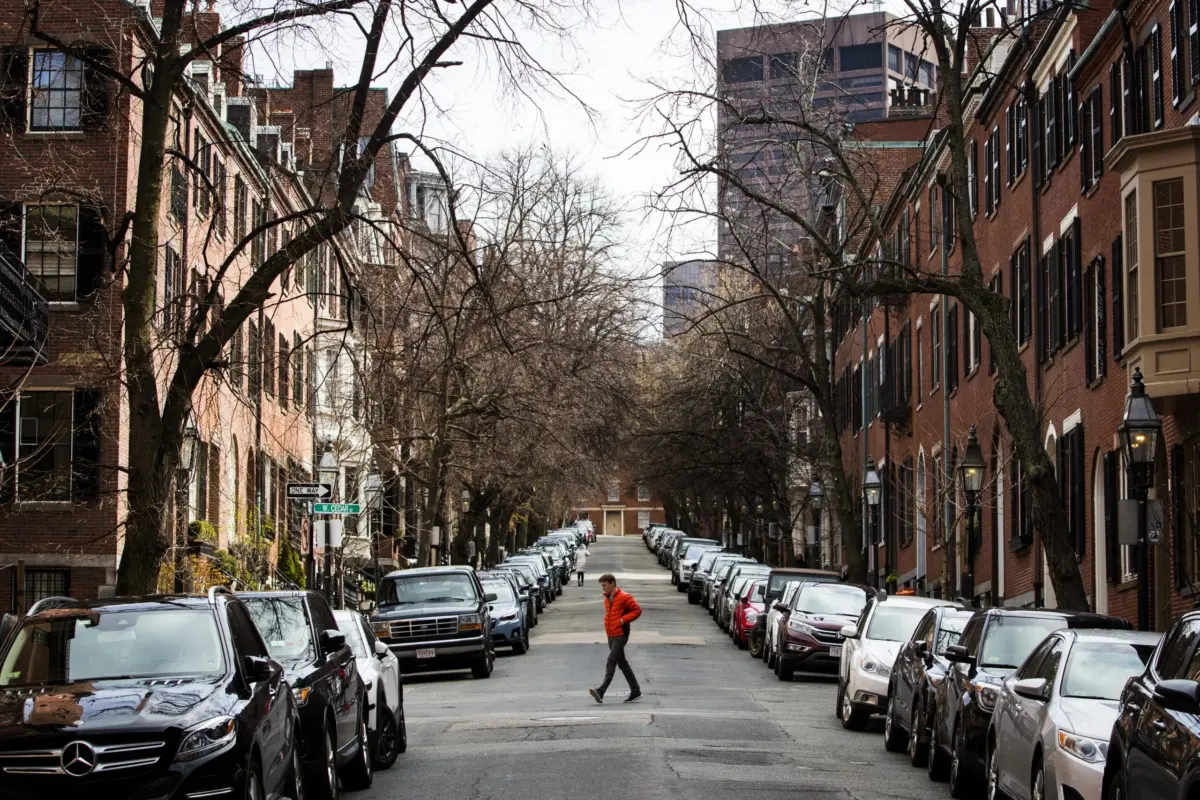
This massive imbalance explains why real estate prices in America’s few surviving walkable urban neighborhoods—from Boston’s Beacon Hill to Charleston’s French Quarter and Seattle’s Capitol Hill—are stratospheric. When supply is restricted to a tiny fraction of the housing stock while demand approaches 44 to 59 percent of the population, astronomical pricing is the inevitable economic result.
Official Statements & Expert Insights
Industry leaders, public health officials, and urban economists have increasingly voiced concern over the structural barriers preventing the creation of more human-scale communities.
Dr. Jonathan R. Mollenkopf, a leading urban sociologist, noted in a recent policy briefing:
"We have engineered a society where physical isolation is the default setting. When you make it impossible for people to interact with their neighbors without strapping themselves into a two-ton metal box, you erode the social fabric of civic life. The polling proves that millions of Americans recognize this deficit, yet municipal zoning codes continue to criminalize the traditional neighborhood forms that could fix it."
Urban planner and author Henry Grabar, writing on the cultural psychology of space, highlighted the fierce resistance that emerges whenever the status quo is challenged:
"Americans love the idea of the walkable village until you touch their parking spaces. We want the charm of the European piazza, but we demand the free asphalt convenience of the interstate highway system. You simply cannot geometry-bend your way into having both infinite free parking and vibrant, human-scale pedestrian life."
Public health researchers have also emphasized the profound physiological and psychological toll of mandatory car dependency. A landmark study published in Nature (2025) confirmed that built environments deliberately engineered for walking directly correlate with reduced rates of chronic illness, lower vehicular emissions, and significantly elevated self-reported mental well-being. Walking, as essayist Rebecca Solnit famously observed in Wanderlust, is "the intentional act closest to the unwilled rhythms of the body, to breathing and the beating of the heart"—an innate human scale that modern suburban design has systematically suppressed.
Future Outlook: Restoring Choice and Affordability to the American Metropolis
Looking toward the future, the path forward for American housing and urban planning hinges on a single, vital objective: expanding consumer choice.
Acknowledging the Trade-Offs
Honest discussions about urban reform must confront difficult trade-offs. Creating dense, walkable neighborhoods requires accepting that driving and parking cannot remain endlessly subsidized, cheap, and ubiquitous. Just as single-payer healthcare polls well until voters confront the reality of tax restructuring, walkability is universally admired until local residents face the removal of street parking or the addition of multi-family infill housing. Navigating this political friction will require courageous local leadership.
The Path of Least Resistance: Upzoning Existing Walkable Areas
Rather than attempting to bulldoze and rebuild sprawling post-war suburbs from scratch—an economically and logistically daunting task—the most pragmatic solution is to legalize more housing within existing, high-demand walkable urban cores.
If major metropolitan hubs like New York City, Boston, San Francisco, Seattle, and their inner-ring suburbs liberalized their zoning laws to permit missing middle housing (such as duplexes, triplexes, courtyard apartments, and townhomes), millions of Americans would finally be able to access the walkable lifestyle they desire. This approach does not require constructing monolithic, unpopular high-rises; rather, it relies on gentle, incremental density that seamlessly integrates into historic neighborhood textures.
A Win-Win Vision for American Life
Ultimately, creating more walkable neighborhoods is not about forcing suburbanites out of their cars or imposing a monolithic urban lifestyle upon an unwilling populace. It is about correcting a market failure that has persisted for over 75 years.
If roughly half of the American population expresses a clear preference for living within walking distance of everyday destinations, our housing and transportation policies should reflect that reality. By dismantling exclusionary zoning and permitting the organic growth of human-scale communities, the United States can alleviate its crippling housing affordability crisis while offering genuine freedom of choice.
For those who cherish wide-open spaces, large yards, and automobile-centric privacy, those communities will remain plentiful. But for the millions of Americans who yearn to step out their front door and walk to buy a cup of coffee, purchase groceries, or greet a neighbor without starting an engine, the future must offer a viable, attainable alternative. Greenwich Village may not be everyone’s idea of heaven on Earth—and in a truly free housing market, no one should ever be forced to live there. But for those who desire it, that way of life should no longer be an impossibly expensive luxury.








Comments
Facebook App ID not configured. Please add it in the Customizer.