

Executive Overview
The personal narrative titled "He Was My Father" by Hannah Levy presents a detailed exploration of complex grief, intergenerational emotional abuse, and the posthumous unraveling of secret lives. Grounded in a blend of personal memory and psychological observation, Levy’s account details the rapid medical demise of her father, a prominent law partner whose volatile temperament and emotional withdrawal shaped her early life. The text examines the dual nature of an abusive yet charismatic patriarch—a figure described as both a suffocating storm and a source of intense light—and documents the subsequent emotional and administrative fallout experienced by his surviving family.
Through an investigation of Levy’s account, several key themes emerge: the persistence of hyper-vigilance in children raised by volatile parents, the non-linear trajectory of bereavement following complicated relationships, and the disruptive impact of posthumous revelations concerning secret financial and romantic ties. Levy’s experience highlights the psychological phenomenon of inherited trauma, wherein the behavioral traits of an abusive parent are unconsciously echoed by offspring despite active efforts to resist them. This analysis structures the chronological events of her father’s death and its aftermath, synthesizes supporting qualitative metrics on grief, outlines expert perspectives on mourning rituals and corvid behavior, and evaluates the future outlook for survivors attempting to break cycles of generational dysregulation.
Detailed Chronology
Phase I: Formative Development and Paternal Volatility
The foundation of Levy’s relationship with her father was defined by extreme behavioral oscillations, financial privilege, and severe emotional withdrawal.
Read Also
- The Porsche Era: During her early childhood, following his elevation to partner at a Southern California law firm, Levy’s father purchased a black Porsche with tan leather upholstery. Levy recalls riding unbuckled in the passenger seat, forced to sit with her knees against her chest in the cramped interior while her father shifted gears and sang along to Counting Crows. During these drives, he allowed her to place her hand over his on the gearshift, creating a momentary sense of shared agency and control.
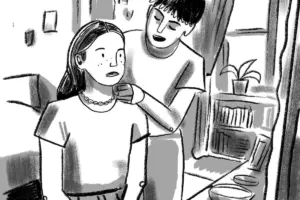
- Age 10 (The Closet Incident): Levy recalls standing in her father’s closet, handling his collection of silk ties—his sole hobby. He instructed her on dressing for success while tying a necktie featuring a shark pattern, which Levy subsequently wrapped around her wrist until her hand grew numb. Later that evening, during a sleepover, she performed the "Bloody Mary" ritual in front of a mirror, questioning what entity would come for her.
- Age 12 (Emotional Abandonment): Following a conflict, Levy’s father initiated a one-month silent treatment, treating her as non-existent within the family home. Levy navigated the house silently, suppressing her emotional distress until nightfall. During this period, her father frequently slammed doors, departed the household for days at a time, or retreated to his private office.
- Age 16 (Las Vegas Pilgrimages): Levy accompanied her father on one of his frequent trips to Las Vegas. After a night of heavy gambling losses followed by a winning streak, he gave her a stack of twenty-dollar bills. Left alone at The Mirage hotel while he gambled, Levy wandered near the white tiger enclosure, waiting in the heat and smoke for the animals to acknowledge her presence.
- College Years (Financial Friction): While dropping Levy off at the airport for a college semester, her father offered her cash despite her assurances that she was financially independent through her own employment. When she declined the offer, he threw a wad of cash onto her lap and center console as she opened the car door, insisting he did not want the money.
+-----------------------------------------------------------------------------------+
|                            PATERNAL BEHAVIORAL PATTERNS                           |
+-----------------------------------------------------------------------------------+
|  [CHARISMATIC / GENERATIVE]                  [VOLATILE / WITHDRAWN]               |
|  • Law firm partnership                      • Sudden explosive outbursts         |
|  • Luxury vehicles & trips to Las Vegas      • Extended silent treatments         |
|  • Shared driving/gear-shifting moments      • Multi-day/week household departures|
|  • Lavish financial offerings                • Labeling child as "problem"        |
+-----------------------------------------------------------------------------------+
Phase II: The Terminal Event
- Initial Notification: Levy received news of her father’s impending death while sitting on a golf course surrounded by redwoods in Northern California—the only location in the town with cell phone reception. The caller informed her that her father was experiencing systemic organ failure.
- Hospital Arrival: Two days after the call, Levy arrived at the hospital. She noted the wide, quiet hallways and attempted to make eye contact with medical staff. Upon entering her father’s room, she observed 17 distinct monitoring machines connected to his body via an overwhelming network of wires and tubes.
- Death: Exactly two hours after Levy’s arrival at his bedside, her father expired. Levy reported feeling an absence of tears, describing her internal state as operating like "another machine in the room."
Phase III: The Post-Mortem Phase (Months 1 to 12)
- Immediate Post-Mortem (Months 1–3): Levy experienced auditory and visual nocturnal hallucinations of her father moving through her bedroom in a business suit, opening drawers to retrieve bundled shadows. She undertook solo hikes near an abandoned military outpost six miles from the San Andreas Fault in Northern California, observing concrete bunkers and listening to offshore buoy bells.
- Month 4 (Posthumous Revelations): Four months after the funeral, the estate uncovered extensive hidden aspects of her father’s life. Investigations revealed numerous extramarital affairs, hidden liabilities, and multiple individual bank accounts opened under his name for various girlfriends outside his marriage.
- Month 9 (Mother’s Day & Corvid Event): Exactly nine months after his passing, on Mother’s Day, a dense flock of crows gathered above Levy’s residence, creating a prolonged auditory disturbance. On the same day, her young daughter presented her with a message expressing deep maternal attachment.
- Month 12 (The Yahrzeit / One-Year Mark): Levy visited her father’s grave site one year after his death. Struggling with conventional terms such as "anniversary" or "memorial," she acknowledged the Yiddish term Yahrzeit. Before leaving the grave, she collected a handful of soil from the headstone area and placed it inside her bag.
Supporting Context & Metrics
Qualitative Data on Grief Responses
To contextualize her complex grief reaction, Levy examined findings from a survey titled "Experiences of Grief," which aggregated 235 anonymous freeform responses detailing reactions to the loss of family members, partners, and friends. The survey responses revealed a broad spectrum of non-traditional emotional states that contrast sharply with classic models of bereavement.
                    SPECTRUM OF GRIEVAL EXPERIENCES
  [Dissociation / Elation] <-----------------------> [Internalized Trauma]
  • Feeling "high" or "zingy"                       • Recklessness
  • Sudden bursts of energy                         • Slow unraveling
  • Absence of crying / loss feeling                • Repeating verbal outbursts
  • Sense of relief / ecstasy                       • Out-of-body alienation
Key thematic categories identified in the survey data include:
- Somatic and Energetic Shifts: Respondents reported sensations of being "high," "zingy," or experiencing sudden surges of physical energy immediately following a death.
- Absence of Mourning: Multiple accounts described an complete lack of tears or perceived sense of loss, accompanied by feelings of relief or elation.
- Depersonalization: Surveyed individuals frequently noted feeling like "a stranger" or operating entirely outside of their physical bodies.
- Recklessness and Disorientation: Participants documented a transition into erratic behavior and a slow unraveling of their daily realities.
Environmental and Psychological Correlates
Throughout her narrative, Levy links psychological states with specific environmental and behavioral metrics:
| Observation Context | Metric / Observed Detail | Psychological / Behavioral Signifier |
|---|---|---|
| Hospital ICU Room | 17 active electronic monitoring machines | Quantification of medical trauma; overwhelming clinical environment |
| Post-Mortem Estate | 10+ extramarital partners; multiple bank accounts | Systematic duplicity; high-appetite hidden lifestyle |
| Northern Coast Hikes | 6 miles from San Andreas Fault; active shift zone | Alignment with physical instability; "Land in motion" metaphor |
| Corvid Observation | Dense flocking behavior (crow funeral) | Investigative behavioral response to mortality within animal species |
| Maternal Dynamic | Destruction of a scarlet runner bean plant | Somatic expression of child anguish; reflection of inherited fragility |
Official Statements & Cultural Contexts
Religious and Rabbinical Commentary
During the immediate funeral preparations, the attending rabbi outlined specific traditional Jewish customs regarding death and mourning:
"When a Jewish person dies, you must cover all the mirrors in the house."
— Attending Rabbi, Funeral Service
In her account, Levy notes that this custom was not executed in her father’s home. The absence of covered mirrors resulted in repeated psychological projections, where Levy reported encountering her father’s reflection across various rooms, eventually finding herself repeating his punitive phrases ("you are so selfish") to her own image.
Ornithological Insights on Corvid Behavior
Regarding the gathering of crows observed nine months post-mortem, scientific literature referenced in the narrative provides an objective analysis of animal reactions to death:
"A dense flock circling and cawing in a concentrated area signals a crow has died, and the crows are trying to figure out how. They are not mourning. They are trying to figure out how to live. How to keep living."
— Ornithological Behavioral Assessment
This perspective emphasizes that corvid "funerals" serve an evolutionary, investigative purpose—evaluating risk factors in the environment to ensure group survival—rather than performing a emotional ritual of grief.
Future Outlook
Intergenerational Trauma and Cycle Breaking
Levy’s narrative illustrates the persistent challenge of emotional inheritance. Despite recognizing her father’s cruelty, Levy documents moments where his behavioral patterns surface in her own household, including verbal outbursts directed at her young daughter and persistent feelings of internal toxicity.
       GENERATIONAL TRAUMA TRANSMISSION & INTERRUPTION

  [ Generation I: Father ]
  • Volatility, outbursts, emotional isolation
  • Secret financial/personal life
             │
             ▼
  [ Generation II: Hannah Levy ]
  • Re-enactment: Explosive statements, mirrored self-criticism
  • Active Interruption: Bitless horseback riding, somatic groundedness
             │
             ▼
  [ Generation III: Daughter ]
  • Somatic expressions of grief (wailing over ruined plant)
  • Curiosity regarding physical decay and bone preservation
To counteract this inherited trajectory, Levy actively engages in specific regulatory activities:
- Equine Therapy: Engaging in weekly bitless horseback riding lessons, a practice funded by her father in childhood and abruptly terminated. Riding allows Levy to practice gentle assertion, spatial awareness, and non-coercive control over an animal that responds to subtle physical cues.
- Maternal Engagement: Supporting her daughter through emotional episodes—such as the destruction of a school-assigned scarlet runner bean plant—by validating her expressions of grief rather than resorting to emotional withdrawal or punitive measures.
- Physical Reclamation: Collecting soil directly from her father’s grave site during Yahrzeit, symbolic of integrating his presence into a tangible, manageable form rather than allowing his memory to exist as an unexamined spectral presence.
Long-Term Psychological Integration
The account concludes with a recognition that complete detachment from a volatile parent is rarely achievable. Instead, recovery involves acknowledging the dual legacy of trauma and moments of unexpected joy. As Levy notes through recollections of driving through Death Valley toward Las Vegas, the path forward requires navigating a complex internal landscape where sudden rage and unexpected light exist simultaneously. By bringing to light the financial secrets, emotional abuse, and personal contradictions of her father’s life, Levy shifts from being a passive recipient of filial trauma to an active recorder of her own psychological recovery.




Comments
Facebook App ID not configured. Please add it in the Customizer.