
By Reuters
September 12, 2026
Executive Overview
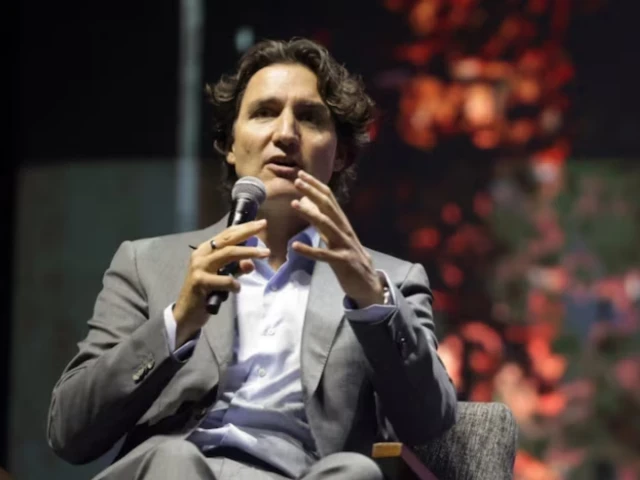
In a surprising yet calculated transition from the high-stakes arena of global politics to the dynamic world of entertainment, former Canadian Prime Minister Justin Trudeau has officially launched a new media and entertainment production company, Hope & Hard Work. Unveiled on Friday, September 12, 2026, the company represents a major pivot for the 54-year-old former leader, who stepped down from his post in early 2025 after a transformative nine-year tenure at the helm of Canada’s federal government.
Co-founded alongside Katie Telford—Trudeau’s fiercely loyal and long-serving former Chief of Staff—Hope & Hard Work aims to build a multi-platform storytelling empire. According to the venture’s newly launched corporate website, the banner’s core mission is to bring people together through narrative mediums that "help us see, understand, and connect with one another across film, television, audio, and live experiences."
Read Also
The timing of the announcement is strategically calculated. The corporate rollout coincides precisely with the prestigious Toronto International Film Festival (TIFF), which kicked off on Thursday and runs through September 20, 2026. By choosing the heart of Canada’s cultural capital during its most internationally visible week, Trudeau has signaled his intent to immediately position his new venture within the upper echelons of the creative economy.
While Trudeau joins a growing roster of former world leaders leveraging their unique access, global networks, and personal narratives to enter the media landscape—most notably former U.S. President Barack Obama and former First Lady Michelle Obama with Higher Ground Productions—his entry into the entertainment industry invites intense scrutiny. Observers are already weighing the commercial viability of his brand against the political baggage of his final years in office, his shifting personal life, and the complex geopolitical climate of a post-premiership era.
Detailed Chronology: The Road to Hope & Hard Work
To fully understand the genesis of Hope & Hard Work, one must trace the arc of Justin Trudeau’s political career, his dramatic exit from power, and the subsequent months of calculated reinvention.
The Political Genesis (2013–2025)
The phrase "Hope and Hard Work" is far from a random marketing creation; it is a direct nod to Trudeau’s political lexicon. First popularized after he assumed the leadership of the Liberal Party of Canada in April 2013, the mantra became the rhetorical bedrock of his unexpected majority government victory in 2015. Throughout his nine years as Prime Minister, Trudeau frequently invoked the phrase to frame his vision for a progressive, inclusive, and forward-looking Canada.
However, the final chapters of his premiership were defined by a starkly different reality. By late 2024 and early 2025, Trudeau faced mounting internal pressure from Liberal lawmakers increasingly alarmed by plummeting poll numbers. With a looming general election and growing voter fatigue over economic pressures, housing crises, and post-pandemic political realignments, the writing was on the wall. In January 2025, Trudeau bowed to the inevitable, announcing his decision to step down as Prime Minister and leader of the Liberal Party. He was subsequently succeeded by fellow Liberal stalwart Mark Carney, who assumed leadership amid high public expectations for economic renewal.
The Quiet Interregnum (2025–2026)
Following his departure from official office, Trudeau maintained a relatively subdued public profile compared to his high-octane years on Parliament Hill. He resisted immediate media blitzes, though he remained visible on the international lecture circuit. Notably, he delivered a heavily scrutinized address at the World Economic Forum in Davos, Switzerland, reflecting on the fragility of global democracies and the rise of populism.
Beyond the geopolitical lecture circuit, Trudeau’s post-premiership life has frequently courted tabloid and mainstream media attention. Most notably, his high-profile relationship with U.S. pop superstar Katy Perry has kept him in the global spotlight, bridging the unconventional gap between international politics and celebrity culture.
The Launch: September 2026
The culmination of this transition arrived on Friday, September 12, 2026. Partnering with Katie Telford—who managed his political fortunes through three federal election campaigns and countless legislative crises—Trudeau formally unveiled Hope & Hard Work. The launch bypassed traditional press conferences, opting instead for a sleek digital rollout timed to capitalize on the cultural oxygen of the Toronto International Film Festival.
Supporting Context & Metrics: Navigating the Creator Economy
Trudeau’s entry into media production is not an isolated phenomenon; it represents a burgeoning asset class for former heads of state and high-profile public figures seeking to monetize their personal brands and shape their historical legacy through modern storytelling platforms.
The Political-Entertainment Industrial Complex
In recent years, the boundary between public service and content creation has dissolved. The premier blueprint for this transition was established by Barack and Michelle Obama. In 2018, the former U.S. first couple founded Higher Ground Productions, subsequently signing a multi-year, multi-million-dollar deal with Netflix Inc. Higher Ground has since produced Academy Award-winning documentaries (American Factory), critically acclaimed dramas (Leave the World Behind), and hit podcasts, proving that political capital can be effectively converted into compelling commercial media.
Other figures, from former UK Prime Ministers writing multi-million-pound memoirs to former heads of state launching speaking bureaus, have long sought post-political revenue streams. However, television, film, and audio production represent a uniquely powerful vehicle: they offer creative control, global distribution reach via streaming giants, and the ability to frame historical narratives on the creators’ own terms.
Strategic Infrastructure and Leadership
The inclusion of Katie Telford as co-founder is perhaps the strongest signal of Hope & Hard Work’s operational seriousness. Telford is widely regarded as one of the most formidable political strategists in modern Canadian history. Her ability to navigate complex organizational structures, manage high-stakes public relations, and coordinate large teams will be critical as the production company scales its operations from concept to execution.
While specific financial backing, venture capital investments, or platform distribution deals (such as potential partnerships with Netflix, Amazon Prime, or Apple TV+) have not yet been publicly disclosed, industry insiders suggest that the company is actively pitching projects tailored to the global streaming market. The stated focus on "film, television, audio, and live experiences" indicates an ambition to build a vertically integrated media ecosystem rather than a boutique vanity project.
Official Statements and Industry Reactions
The announcement of Hope & Hard Work has generated a polarized wave of reactions across the political spectrum, cultural institutions, and the domestic media landscape.
Corporate Mission and Branding
The official launch statement released via the company’s digital portal emphasizes a unifying ethos:
"In a fractured world, stories possess the unique power to bridge divides. Hope & Hard Work is built on the fundamental belief that narrative art can help us see, understand, and connect with one another across film, television, audio, and live experiences. We are here to partner with visionary creators who dare to imagine a more cohesive and empathetic future."
While poetic, the statement has invited both praise and cynicism from industry analysts trying to decode what kind of content the banner will actually produce. Will it lean heavily into socio-political documentaries, scripted historical dramas, or uplifting human-interest stories? Early speculation points toward content that mirrors Trudeau’s progressive political branding: climate change narratives, social justice advocacy, and international diplomacy.
Political and Public Reception
Reaction from political commentators in Canada has been predictably divided:
- Supporters view the venture as a natural extension of Trudeau’s lifelong engagement with arts and culture—noting his pre-political career as a teacher, his deep ties to Canada’s creative community, and his international popularity.
- Detractors and opposition critics have seized upon the launch as further proof of a disconnect from everyday economic anxieties, questioning whether a former prime minister should be diving into Hollywood-style entertainment while ordinary Canadians grapple with the lingering effects of cost-of-living crises.
Meanwhile, representatives from the Toronto International Film Festival have maintained a neutral, welcoming stance, noting that TIFF has historically served as a global nexus where politics, culture, and cinema intersect.
Future Outlook: The Road Ahead for Hope & Hard Work
As Hope & Hard Work takes its first steps into the fiercely competitive global media marketplace, several critical questions will determine its long-term viability and cultural impact:
- Content Strategy and Distribution: Will the company secure a major output deal with a global streamer like Netflix, Disney+, or Apple? Without robust distribution pipelines, even the most well-funded production banners struggle to achieve cultural cut-through.
- The Celebrity Factor: How will Trudeau’s high-profile personal life—particularly his relationship with Katy Perry and his ongoing status as a global celebrity—impact the brand? While it guarantees immediate media attention, it may also polarize audiences who view the venture through a cynical lens.
- Creative Independence vs. Political Legacy: Can a company founded by a polarizing former head of state produce content that is perceived as genuinely objective, artistic, and engaging, rather than a thinly veiled exercise in reputation management?
For Justin Trudeau, Hope & Hard Work represents a high-stakes gamble. Having traded the rigid constraints of the House of Commons for the fluid, unpredictable rhythms of the entertainment industry, the former Prime Minister is betting that his voice—and his enduring brand—still hold resonance on the global stage. Whether that bet pays off will ultimately be decided not by voters at a ballot box, but by audiences in darkened theaters and streaming living rooms around the world.




Comments
Facebook App ID not configured. Please add it in the Customizer.