
Executive Overview
For devoted followers of the sprawling multimedia phenomenon that began with Avatar: The Last Airbender, the calendar year marks an extraordinary renaissance. Following the July release of Avatar Aang: The Last Airbender—the inaugural offering from the newly minted Avatar Studios—creators and franchise architects are accelerating their output with a starkly different narrative direction. Arriving next month on Paramount+, Avatar: Seven Havens promises to subvert two decades of established lore, transforming the iconic mantle of the Avatar from a universal symbol of hope into a harrowing liability.
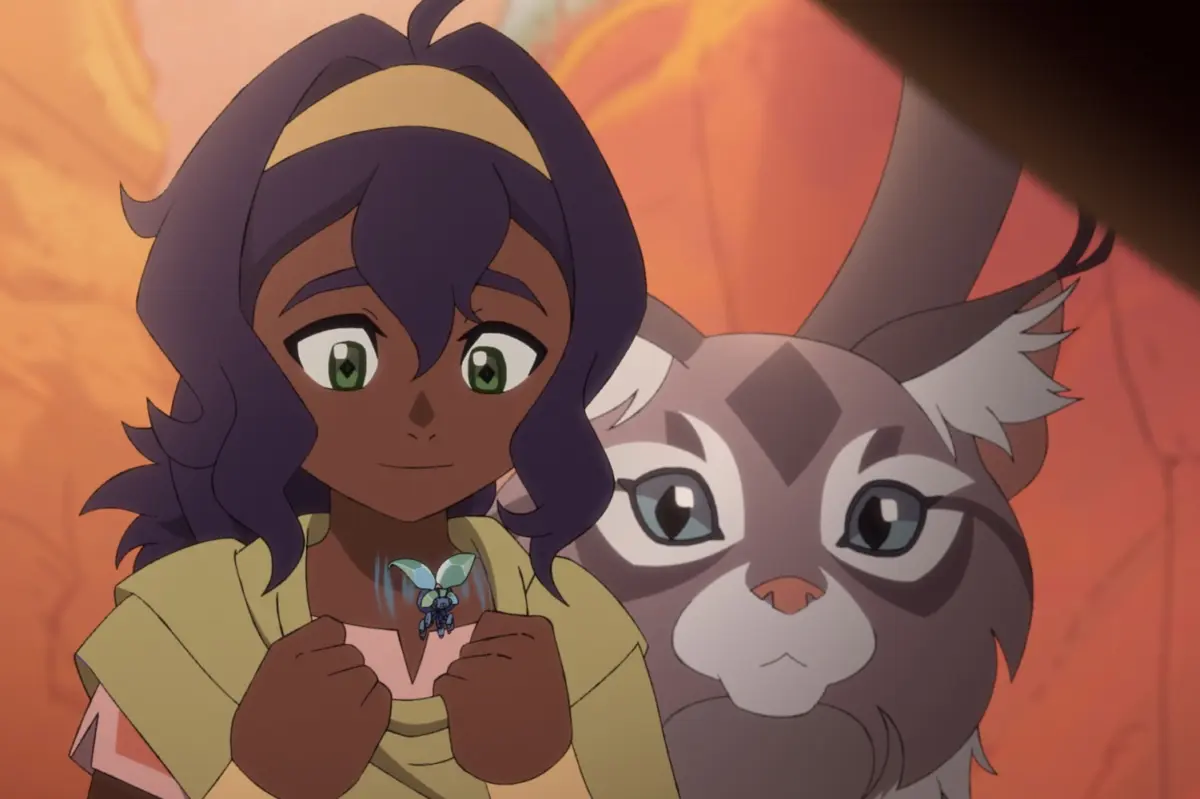
Set approximately 225 years after the tenure of Avatar Korra, the series plunges audiences into a society fundamentally altered by an unexplained planetary catastrophe. The narrative centers on Pavi, a resilient young Earthbender voiced by Saheli Khan, who discovers she is the successor to the Avatar lineage. Yet, in this fractured era, the revelation of her divine identity does not invite reverence; instead, it brands her as a hunted pariah—humanity’s presumed destroyer rather than its savior.
Co-created by original franchise masterminds Michael Dante DiMartino and Bryan Konietzko, Seven Havens breaks away from the high-fantasy adventure format of its predecessors. It leans heavily into a serialized, mystery-driven framework designed to interrogate the historical memory of the Avatar universe. With a dystopian landscape, complex socio-political fractures, long-lost twins, and a narrative structure prioritizing existential dread and investigative storytelling, Avatar: Seven Havens stands poised to redefine the thematic boundaries of bending lore.
Read Also
Detailed Chronology: Unraveling the Post-Korra Era
To understand the precarious reality of Avatar: Seven Havens, one must map the immense temporal and cultural chasm separating this series from the events of The Legend of Korra. According to executive producer Sehaj Sethi, approximately two and a quarter centuries have passed since Korra walked the physical plane. In the span of two hundred and twenty-five years, oral histories have decayed, archives have vanished, and the once-glorious achievements of the modernizing Republic City era have been swallowed by a catastrophic global upheaval.
The Teaser’s Ominous Reveal
The promotional rollout began with a teaser trailer that sent shockwaves through the fandom. Rather than presenting a triumphant succession, the footage provided a deeply unsettling glimpse into Korra’s twilight years or legacy. Flashing a distinct white streak in her dark hair—a visual shorthand for profound trauma, immense power expenditure, or corrupted spiritual energy—Korra is depicted seemingly wreaking apocalyptic havoc upon the world.
This single striking image serves as the catalyst for the ideological shift defining Seven Havens. Whatever transpired at the conclusion of Korra’s cycle has been warped, exaggerated, and weaponized by generations of propaganda. The title of the Avatar, once synonymous with diplomatic mediation and universal balance, is now cursed. To the survivors huddled in the remaining strongholds of civilization, the Avatar is remembered not as a protector, but as an existential threat—a harbinger of ruin whose return signals doom.
The Descent into the Seven Havens
The series drops viewers directly into a world struggling to maintain the bare minimum of civilization. Humanity and various spirit factions have retreated into isolated, fortified enclaves known as the Seven Havens. These strongholds represent the last gasps of organized society, separated by lawless, monster-ridden, and environmentally volatile wastes born from the cataclysm.
Into this tense ecosystem steps Pavi. Her journey begins not with grand revelations from ancient masters, but with survival. As an Earthbender navigating a landscape hostile to her very existence, Pavi’s physical vulnerabilities—highlighted by co-creator Michael Dante DiMartino when discussing the mystery of how she lost her leg—emphasize a gritty realism previously unseen in the franchise. She is not an invincible god-warrior; she is a survivor bearing the literal and figurative scars of a broken world.
Supporting Context & Metrics: Production Scale and Lore Expansion
While narrative risks drive the creative vision of Seven Havens, the production boasts an impressive structural and logistical framework designed to ensure top-tier execution.
Season Structure and Unconventional Release Schedule
Paramount+ has commissioned a robust 13-episode first season, officially titled Avatar: Seven Havens Book 1. However, the platform has adopted a staggered, eventized rollout strategy that breaks from standard binge-model conventions:
- October 9: Premiere featuring the first three episodes, establishing the world, introducing Pavi, and setting up the central mystery.
- October 16: Release of episodes 4 through 6, deepening the exploration of the Seven Havens and introducing key political antagonists.
- October 23: Release of episodes 7 through 9, ramping up the tension as Pavi and her allies are hunted across the wastes.
- October 30: A massive four-episode finale block culminating the narrative arc of Book 1, followed immediately by confirmation that Book 2 is already in development.
Voice Talent and Animal Companions
The voice cast blends fresh talent with seasoned franchise veterans. Saheli Khan leads the series as Pavi, capturing the youthful determination and underlying vulnerability of a reluctant Avatar. Halfway through the narrative, Pavi crosses paths with her long-lost twin sister, Nisha, voiced by Aishu Devan. The dynamic between the separated sisters introduces an emotional core to the high-stakes survival narrative.
No Avatar property would be complete without iconic animal guides, and Seven Havens delivers a unique twist. Both Pavi and Nisha are accompanied by distinct cat companions named Geet and Ruhi. Bringing these creatures to life is legendary voice actor and Avatar franchise alum Dee Bradley Baker, whose decades-long mastery of creature vocalizations guarantees these animal characters will achieve instant fan-favorite status.
The Return of the Order of the White Lotus
Navigating a hostile world requires allies, and Pavi will not be entirely defenseless. Hints from production suggest the re-emergence of the Order of the White Lotus. Once an ancient, secret society dedicated to sharing philosophy, art, and protecting the Avatar, the Lotus has evolved over the 225-year gap. In an era where the Avatar is hunted by both humans and spirits alike, the White Lotus may operate as an underground resistance movement, smuggling the young Earthbender from haven to haven while debating whether the current Avatar can redeem the title’s tarnished legacy.
Official Statements: Inside the Minds of the Creators
The creative philosophy driving Avatar: Seven Havens represents a deliberate evolution for the franchise. In an in-depth interview with Polygon, original co-creator Michael Dante DiMartino laid bare the thematic ambitions undergirding the new series.
"This idea started with the setting and the desire to drop the viewer into a world that had experienced a cataclysmic event," DiMartino explained.
By refusing to offer immediate exposition, the creative team deliberately constructed a narrative labyrinth. DiMartino noted that the series leans heavily into investigative storytelling:
"Early on, we also decided we wanted this to be more of a mystery show than the last two series, so that a viewer would enter the story with a lot of questions: How did the world get so bad? Why does everyone hate the Avatar? How did Pavi lose her leg? We want the audience to always hunger to know more."
This mystery-box approach marks a stark departure from the traditional "hero’s journey" arcs of Aang and Korra. While Aang had to master four elements to defeat an external imperialist threat, and Korra had to navigate ideological revolutions in a rapidly modernizing society, Pavi faces an internal cultural crisis. Her greatest enemy is not a distinct warlord or anarchist revolutionary, but the collective memory of a traumatized civilization that views her divine office as an existential curse.
Executive Producer Sehaj Sethi further contextualized the temporal weight of the project, noting that the 225-year buffer allows the creative team to wipe the slate clean while leaving tantalizing archaeological and historical breadcrumbs for longtime fans to discover. The distance from the past ensures that Seven Havens can stand entirely on its own merits, inviting new viewers who have never watched a single episode of The Last Airbender or The Legend of Korra, while rewarding dedicated lore historians with profound historical ironies.
Future Outlook: The Reimagining of an Empire
As the October 9 premiere date approaches, anticipation among animation enthusiasts and fantasy fans has reached a fever pitch. Avatar: Seven Havens is more than just a sequel series; it is a stress test for the longevity and adaptability of the Bender universe.
By deconstructing the central mythology—asking what happens when the ultimate savior figure becomes public enemy number one—DiMartino, Konietzko, and the team at Avatar Studios are proving that the franchise is willing to mature alongside its audience. The transition into a gritty, mystery-driven survival drama opens the door for darker thematic explorations of historical revisionism, institutional trauma, and the heavy price of maintaining balance in a universe that has repeatedly broken itself apart.
With 13 episodes of Book 1 waiting to unfold on Paramount+, Pavi and Nisha’s quest to uncover their mysterious origins, evade ruthless human and spirit hunters, and preserve the last remaining bastions of human civilization will undoubtedly dominate pop-culture discourse this autumn. The world has shattered, the Avatar is hunted, and the race to save the Seven Havens is about to begin.




Comments
Facebook App ID not configured. Please add it in the Customizer.