
Executive Overview
For millions of consumers, the ritual of the annual smartphone upgrade has curdled into a cynical exercise. We examine our aging devices, weigh the marginal camera improvements or minor processing boosts, and ask ourselves a demoralizing question: Is this really worth a grand?
Right now, a silent game is being played across the globe. Users actively stress-test their three-year-old devices—deliberately draining batteries, pushing limits, and seeking out authorized service centers—not to enhance performance, but to squeeze another year or two out of hardware that still functions adequately. They are desperately trying to avoid participating in a consumer tech market characterized by rising prices, stagnant innovation, and a noticeable degradation in value.
This phenomenon is not happening in a vacuum. Apple, Samsung, and Google have all pushed through significant price hikes over recent cycles, charging up to 29 percent more for hardware while global component shortages choke the industry. Industry analysts refer to a massive crunch in the Dynamic Random-Access Memory (DRAM) market, largely driven by the explosive, insatiable appetite of AI data centers. Semiconductor giants like Micron, SK Hynix, and Samsung Electronics are reaping record-breaking profits by redirecting their manufacturing lines toward enterprise AI infrastructure, leaving everyday consumer electronics stranded in a supply squeeze.
Read Also
The result is a bitter pill for the modern consumer: we are paying significantly more money for devices that feel increasingly iterative, less revolutionary, and prematurely vulnerable to software obsolescence.
To understand where consumer technology is headed, we do not need to look forward into speculative silicon roadmaps; we can look backward. Fifty years ago, the American automotive industry collided with its own catastrophic reality check. Rising fuel prices, tighter emissions laws, and economic shocks birthed the "Malaise Era"—a decade of bloated, underpowered, and unreliable cars that permanently altered how society viewed the automobile.
Today, consumer tech is entering its own Malaise Era, marked by corporate "enshittification" and systemic hardware inflation. Yet, just as the automotive crisis of the 1970s ultimately empowered buyers to look toward more reliable foreign alternatives and embrace long-term stewardship, today’s tech crunch offers a vital opportunity. By embracing the burgeoning right-to-repair movement, leaning into the thriving secondary market, and shifting our psychological relationship with personal electronics, consumers can finally break free from the exhausting, expensive upgrade cycle.
Detailed Chronology: From the Golden Age of Iteration to the Silicon Squeeze
To trace how we arrived at this juncture, it is helpful to examine the timeline of modern consumer electronics and the converging external pressures that broke the longstanding implicit contract between tech giants and their customers.
The Era of Unchecked Progress (2010–2020)
For over a decade, buying a new smartphone every two years felt like participating in a sci-fi movie. Consumers grew accustomed to a reliable trajectory: every annual hardware refresh brought massive leaps in processing power, jaw-dropping camera capabilities, vastly superior battery life, and revolutionary software features—all while baseline pricing remained relatively stable. Apple, Samsung, and other key players promised that buying the latest model meant stepping into the future.
The Pandemic Disruption and Supply Chain Realignment (2020–2023)
As global supply chains buckled during the COVID-19 pandemic, component shortages began to ripple through every tier of manufacturing. Initially, tech companies absorbed these costs or passed them off gradually. However, consumer demand began to cool around 2022 as inflation soared and economic uncertainty set in. Sensing a softening market, memory manufacturers cut back on capital investments to expand semiconductor fabrication plants, anticipating a prolonged dip in consumer demand.
The AI Gold Rush and the DRAM Cliff (2024–Present)
This strategic pullback by memory chip makers coincided precisely with the historic capital pivot toward generative AI. Tech giants began pouring hundreds of billions of dollars into massive data centers designed to run foundational models like ChatGPT and Claude. These facilities require astronomical volumes of high-performance RAM and flash storage.
Consequently, component makers found a much more lucrative customer base in enterprise AI buyers than in individual smartphone shoppers. Memory prices skyrocketed. By late 2024 and extending through 2026, tech corporations could no longer absorb the exploding cost of silicon components. Price hikes swept across the industry. Apple raised prices across its entire ecosystem—affecting not just brand-new flagships, but legacy models as well. Google and Samsung quickly followed suit, transforming what was once a steady baseline cost of personal technology into an escalating luxury expense.
Supporting Context & Metrics: The Anatomy of a Hardware Crisis
The numbers underlying the current tech landscape paint a stark picture of an industry optimizing for corporate margin preservation at the expense of accessibility.
According to data compiled by market intelligence firm IDC, global smartphone shipments are projected to drop by nearly 17 percent. Yet, remarkably, the total market value of those shipments is expected to increase by more than 6 percent. The math is simple and bruising for consumers: fewer devices are being sold, but because average selling prices have spiked drastically, manufacturers are bringing in higher revenues overall.
+-----------------------------------------------------------------+
|               THE 2026 SMARTPHONE MARKET PARADOX                |
+-----------------------------------------------------------------+
|  Global Smartphone Shipments:     DOWN ~17%                     |
|  Total Global Market Value:       UP >6%                        |
|  Primary Driver:                  Aggressive component-driven   |
|                                   price hikes across all tiers  |
+-----------------------------------------------------------------+
Francisco Jeronimo, vice president for data and analytics at IDC, warns that consumers must recalibrate their financial expectations for electronics. "Forget the prices most of us were used to paying for any consumer electronics," Jeronimo notes. "Even when the crisis gets better, prices will come down, but not to the same price level that we saw a year ago."
Industry analysts from Counterpoint Research echo this sober sentiment, indicating that the memory crisis is not a transient, one-quarter blip, nor is it a decade-long structural failure. Experts project that supply chain bottlenecks and elevated pricing baselines will persist until at least early 2028. Until then, true hardware innovation will likely plateau, software updates will lean heavily on cloud-based AI gimmicks rather than physical capability, and consumers will be asked to pay premium prices for incremental upgrades.
Official Statements & Expert Perspectives
The shifting sentiment among academics, industry veterans, and consumer advocates highlights a growing consensus: the golden age of blind consumer loyalty to tech hardware is drawing to a close.
Lee Vinsel, a professor at Virginia Tech and co-author of The Innovation Delusion: How Our Obsession With the New Has Disrupted the Work That Matters Most, points out the psychological friction that occurs when a mature technology becomes more expensive without delivering revolutionary utility.
"It just doesn’t feel that revolutionary anymore," Vinsel observes. "When a technology settles down and you’re being asked to pay more for it and it doesn’t feel like you’re getting that much more, it’s frustrating."
This frustration forms the bedrock of what science fiction novelist Cory Doctorow termed "enshittification"—the gradual process by which platforms and manufacturers degrade user experiences to extract financial value for themselves and their business partners.
When applied to consumer hardware, enshittification looks like software updates that deliberately slow down legacy processors, glued-in batteries that make replacement cost-prohibitive, and artificial software lock-ins designed to force premature upgrades.
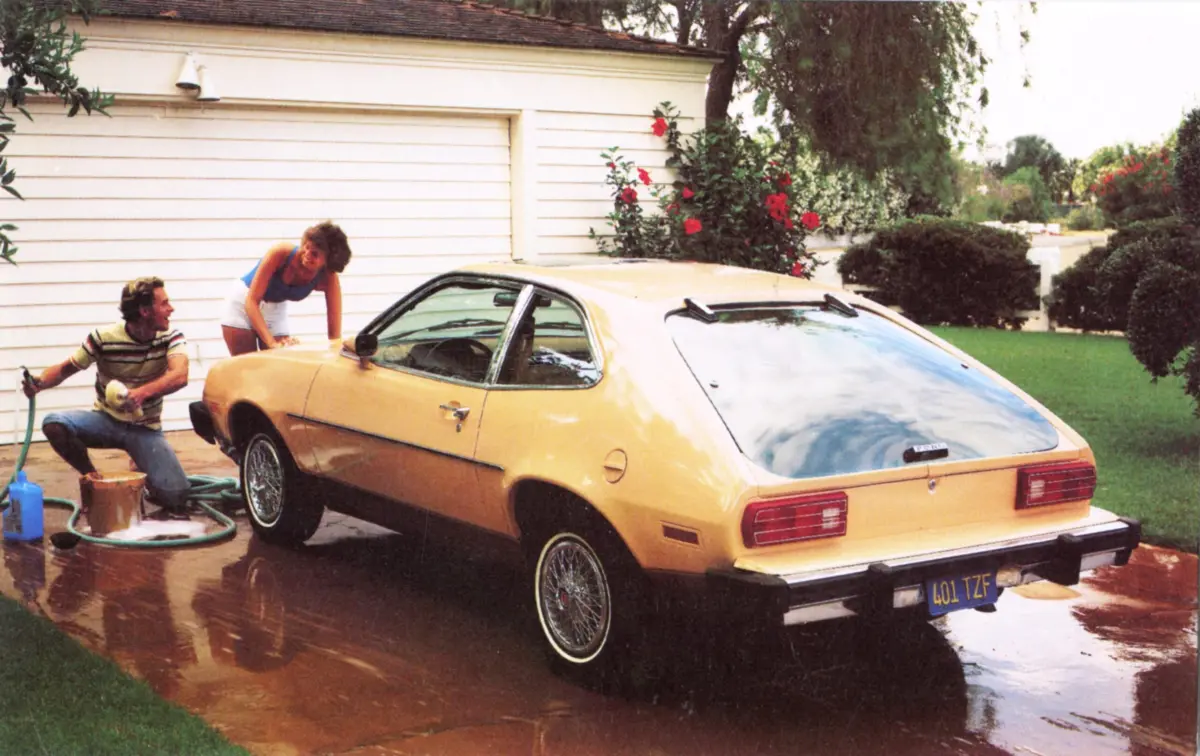
John Heitmann, professor emeritus at the University of Dayton and an automotive historian, draws a direct historical parallel between today’s tech market and the dark days of the American automotive Malaise Era. In the 1970s, strict new emissions regulations mandated by the Clean Air Act, combined with the OPEC oil embargoes, forced Detroit automakers to hastily redesign their massive, high-horsepower engines. The results were underpowered, unreliable, and aesthetically awkward vehicles like the Ford Pinto and Chevy Vega.
"There was a whole host of cars that appeared on the scene that were anything but desired by the public," Heitmann explains. "In a nutshell, that was the Malaise Era and it marked, some would say, the end of the love affair with the car."
Yet, out of that automotive despair came a silver lining: consumers pushed back. Disillusioned with domestic quality, American buyers turned to foreign imports from Toyota, Honda, and Volkswagen, forcing domestic manufacturers to radically reform their engineering practices. Today, as consumers face stagnant tech innovation and inflated prices, a similar behavioral shift is taking root.
Future Outlook: The Rise of the Empowered Consumer and the Right to Repair
If the parallel to the Malaise Era holds true, the current corporate squeeze will not spell the end of consumer technology—it will redefine how we interact with it. Just as the 1970s birthed a culture of automotive preservation, maintenance, and foreign alternatives, today’s tech landscape is fostering a powerful counter-movement rooted in sustainability, repairability, and financial pragmatism.
1. The Maturation of the Refurbished Market
The secondary market for personal electronics is no longer a shady corner of the internet; it is a booming, professionalized multi-billion-dollar ecosystem. Savvy consumers are bypassing carrier stores altogether, opting instead to purchase certified refurbished flagships.
A high-end pro model from a couple of generations ago—complete with titanium builds, pro-grade camera arrays, and brilliant OLED displays—can frequently be acquired on the secondary market for a fraction of the cost of a brand-new base model. Because annual hardware iteration has slowed to a crawl, a refurbished phone from two years ago is practically indistinguishable in daily utility from a brand-new release.
2. Legislative Victories in the Right to Repair
Regulatory bodies are finally stepping in to protect consumers from forced obsolescence. Across the United States, state-level "Right to Repair" legislation is gaining unprecedented momentum, forcing manufacturers to supply consumer-accessible spare parts, diagnostic software, and repair manuals.
Simultaneously, sweeping regulations enacted in the European Union are actively dismantling anti-consumer design practices. The EU’s stringent battery and repairability laws are forcing global manufacturers to redesign their internal hardware architectures. Apple’s recent engineering pivots—such as making internal components more modular and accessible—prove that regulatory pressure can successfully override corporate obstruction.
Kyle Wiens, co-founder and CEO of iFixit, emphasizes that a cultural shift in how we view electronics is long overdue:
"People treat their cars like precious objects and we worry about them," Wiens notes. "We need to start thinking about electronics as something that we’re going to baby and treat carefully and preserve as long as we can."
Conclusion: Reclaiming Control
We are living through the Malaise Era of consumer technology. The era of cheap, rapidly advancing gadgets that effortlessly justified biannual upgrades is gone, buried beneath AI data center demands, silicon shortages, and corporate profit-maximizing strategies.
But this realization should feel liberating rather than depressing. By stepping off the treadmill of annual upgrades, embracing the thriving refurbished marketplace, demanding rigorous right-to-repair protections, and treating our personal electronics with the care once reserved for classic automobiles, we can break the cycle of enshittification. You don’t need to play the battery-drain game forever. Sometimes, the most radical act of consumer empowerment is simply deciding that the device in your hand is already good enough.





Comments
Facebook App ID not configured. Please add it in the Customizer.