
Executive Overview
In the landscape of modern literature, the essay occupies a unique, highly intimate territory—one where the border between rigorous truth and poetic discovery constantly shifts. In a recent exploration of her own creative process, author and scholar Erin Wunker dissects the mechanics of writing creative nonfiction, drawing inspiration from literary icons like Joan Didion to champion a style rooted in the small, the quotidian, and the uncanny.
This comprehensive analysis examines Wunker’s essayistic philosophy, exploring how writers can harness the power of stray observations, curated compendiums of quotes, and a "magpie’s mind" to craft compelling prose. By marrying factual fidelity with the atmospheric tools of literary craft, writers can transform ordinary details into profound reflections on human experience. Furthermore, this piece highlights Wunker’s latest work, All the Waking Hours, providing a practical look at how these theoretical principles manifest in published literature.
Detailed Chronology: The Evolution of an Essayist’s Mind
To understand how contemporary essayists approach the blank page, it is helpful to trace the intellectual lineage and mechanical steps that govern the creation of works like those championed by Wunker.
Read Also
The Didion Blueprint (1965)
The foundational ethos of this writing style traces back to 1965, when legendary essayist Joan Didion published a piece in Vogue magazine regarding the reopening of the New Mexico Museum of Anthropology. Near the conclusion of the essay, Didion famously observed:
"One comes away remembering certain small things, haunted by oddities."
This prescient summary—saying everything yet nothing specific all at once—established a blueprint for modern associative nonfiction. Decades later, writers like Wunker adopted this exact philosophical framework: the belief that major emotional and intellectual truths are often unlocked through minor, eccentric details rather than grand pronouncements.
The Spark of Curiosity: Gathering and Incubation
For writers who favor the quotidian and the uncanny, the writing process rarely begins with a rigid outline. Instead, it starts organically:
- The Hunt: The writer tracks a hunch, a persistent question, or an unexplained curiosity.
- The Collection: Images seen in print or real life, as well as surprising phrases encountered during daily reading, are transcribed into notebooks or digital folders. This "magpie’s mind" approach allows the writer to collect shiny fragments of thought over months or years.
- The Cross-Pollination: When facing a blank page, the writer returns to this compendium of ideas. By inhabiting another writer’s syntax or studying a lingering image, the creative spark is ignited.
Drafting and Association
Once an anchor quote or image is selected, the drafting phase proceeds through intuitive association. One thought triggers another, building a winding path through the writer’s consciousness. As Wunker notes, these early drafts are rarely clear-cut thoroughfares; rather, they are "tricky little paths through my own thinking" that require subsequent navigation.
Revision and Polishing
The transition from a chaotic stream of associations to a hospitable, readable essay occurs during the revision process. Threads are woven together, the through-line is polished, and the strange, associative leaps are rendered accessible to the reader without losing their original atmospheric charge.
Supporting Context & Metrics: The Anatomy of Creative Nonfiction
To contextualize the resurgence and structural importance of associative creative nonfiction, we must examine the intersection of literary journalism, cognitive psychology, and reader engagement metrics within the contemporary publishing landscape.
The Intersection of Fact and Strangeness
Creative nonfiction operates under a strict social contract: fidelity to truth is paramount. However, unlike standard journalism or academic writing, creative nonfiction leverages the tools of poetry and fiction—such as metaphor, simile, and narrative arc—to convey that truth.
| Literary Element | Function in Creative Nonfiction | Impact on Reader |
|---|---|---|
| The Quotidian | Centers the narrative in recognizable, everyday experiences. | Builds immediate trust and relatability. |
| The Uncanny | Introduces subtle strangeness or defamiliarization to ordinary objects. | Provokes curiosity and sustained cognitive engagement. |
| The Metaphor | Transports the reader via indirect associations (tenor and vehicle). | Creates memorable, resonant emotional echoes. |
Psychological studies on narrative processing suggest that readers retain information longer when it is presented through evocative, sensory-rich metaphors rather than dry exposition. By treating strangeness and fact as "each other’s familiars," writers activate both the analytical and imaginative hemispheres of the reader’s brain.
The "Magpie Mind" in the Digital Age
In an era dominated by micro-content and fractured attention spans, the traditional research notebook has evolved. Modern essayists utilize digital clipping tools, physical moleskines, and cloud-based folders to archive fragments of culture. This curation process serves as a psychological anchor, providing a creative sanctuary where writers can combat isolation by entering into "communion with the thinking and writing of others."
Official Statements and Literary Perspectives
Wunker’s reflections offer profound insights into the mechanics of the essay form. Below are key tenets derived from her methodology on creative nonfiction:
- On the Goal of an Essay:
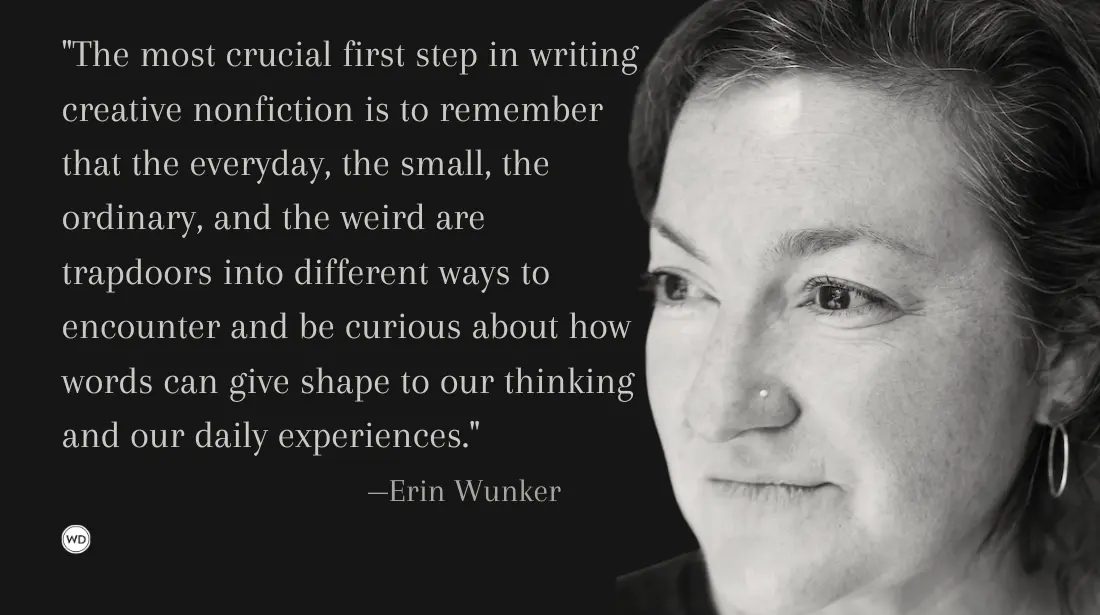
"The most crucial first step in writing creative nonfiction is to remember that the everyday, the small, the ordinary, and the weird are trapdoors into different ways to encounter and be curious about how words can give shape to our thinking and our daily experiences."
- On Literary Craft and Metaphor:
"I love to be surprised by an unexpected association or set of images. A bizarre and evocative simile, a metaphor whose tenor and vehicle transport me both closer to, and by the long way, further from the original referent, are precious writerly crafts to me as a reader."
- On the Ultimate Measure of Success:
"And if I manage to leave a reader ‘remembering certain small things, haunted by oddities,’ then I feel the essay has been successful."
These perspectives reinforce the notion that writing is not merely about transmitting data, but about creating an experiential space where the reader is invited to wonder, question, and reflect.
Future Outlook: The Enduring Appeal of the Essay in Modern Literature
As the literary world continues to navigate rapid technological advancements and shifting cultural landscapes, the demand for authentic, deeply reflective prose remains strong. The essay—particularly the lyric and associative creative nonfiction essay—offers a vital antidote to the noise of modern media.
Trends in Contemporary Nonfiction
- The Rise of the Lyric Essay: More contemporary authors are blurring boundaries between poetry and prose, embracing fragment-based narratives that mirror human consciousness.
- Reclaiming the Domestic: Far from trivializing daily life, writers are increasingly turning the lens toward the quotidian—domestic labor, minor griefs, and quiet joys—finding universal resonance in microscopic observations.
- Collaborative Lineages: As seen in Wunker’s practice of engaging directly with quotes and historical texts, contemporary essayists are positioning their work within an ongoing, intergenerational conversation with past thinkers.
Spotlight on All the Waking Hours
For readers eager to see these theoretical principles put into practice, Erin Wunker’s book All the Waking Hours offers a masterclass in associative, deeply felt creative nonfiction. Merging sharp intellectual inquiry with emotional vulnerability, the work exemplifies what it means to write from a place of radical curiosity.
To explore and purchase the book, check out Erin Wunker’s All the Waking Hours on Amazon.
Ultimately, the future of the essay lies in its capacity for surprise. As long as writers are willing to follow a strange hunch, collect bright linguistic fragments like magpies, and trust their readers to be haunted by oddities, the essay form will continue to thrive as a vital mirror of the human condition.

Comments
Facebook App ID not configured. Please add it in the Customizer.