
Executive Overview
When George Lucas released American Graffiti in August 1973, he revolutionized the cinematic landscape by deploying a wall-to-wall jukebox soundtrack. Rather than relying on a traditional orchestral score to dictate emotional responses, Lucas utilized pop and rock records already embedded in the collective consciousness of his audience. The opening bars of a familiar track instantly transported viewers to the strip without requiring the plot to do any heavy lifting.
For James Patrick Rooney, author of the memoir For the Love of Money, this cinematic device proved to be a profound psychological key. Over a 34-year career on a Merrill Lynch sales and advisory desk spanning from 1983 to 2017—the most transformative era in Wall Street history—Rooney did not consistently maintain a journal. Faced with the arduous task of reconstructing decades of high-stakes finance, shifting market dynamics, and deep personal upheaval, standard biographical methodologies fell short. Timelines, historical documents, and archived corporate reports provided the facts, but they could not recreate the sensory reality of the trading floor: the scent of the room, the visceral nature of professional fear, or the auditory landscape of a tense phone call.
Rooney found his solution not in traditional archival research, but in music. By employing songs as mnemonic portals, he accessed a deeply buried archive of sensory and emotional data. This article explores the intersection of music, memory reconstruction, and memoir-writing, examining how an auditory timeline can anchor historical narratives, bypass the limitations of unassisted human recall, and serve as a bridge across monumental life transitions.
Read Also
Detailed Chronology: A Life Marked by Music and Markets
To understand Rooney’s methodology, one must examine the dual timelines that defined his life: the physical trajectory of a man navigating a catastrophic injury, and the corporate chronology of Wall Street during its most volatile decades.
Phase One: The Divide (Pre-1983)
Before his career in finance began, Rooney’s life was abruptly altered at age 19 when he became a paraplegic. The physical transition from an active, walking, and skating young man to a wheelchair user changed his relationship with communal spaces like rock concerts. Shifting from the front-row energy of the floor to the elevated isolation of the back row, he learned to experience music with quiet introspection. Yet, while his physical habits evolved, his internal soundtrack remained untouched, acting as an unbroken thread connecting his life before the injury to the one that followed.
Phase Two: The Penny-Stock Trenches (Mid-1980s)
By the time Rooney entered the financial sector in the early 1980s, the environment was chaotic, aggressive, and largely unregulated compared to modern standards. Entering a penny-stock "chop shop," Rooney struggled initially to recall specific conversational exchanges or chronological milestones. However, playing The Pretenders’ “Back on the Chain Gang” immediately unlocked the sensory architecture of that era.
The track summoned the moral dissonance of pitching speculative penny stocks to elderly, low-income prospects. It brought back the precise details of the office whiteboard listing six proprietary stocks, the prices of which were artificially manipulated upward or downward every thirty minutes to the chime of a school bell. It recalled scenes of top producers snorting cocaine off desktops on initial public offering (IPO) days, and office managers driving up in new pink convertible Cadillacs as tangible incentives for doubled call volumes.
Phase Three: The Digital Transformation (The 1990s)
As Rooney transitioned to his long tenure at Merrill Lynch, the technological landscape of finance shifted beneath his feet. The arrival of personal computers, early internet infrastructure, and electronic trading revolutionized the advisory business.
When attempting to date these paradigm shifts, Rooney relied on a different temporal anchor: Bob Dylan’s “The Times They Are A-Changin’.” Though recorded decades earlier in 1964, the song served as the definitive emotional soundtrack for the mid-1990s trading floor. It encapsulated the existential choice facing traditional brokers: adapt to the digital ecosystem or become obsolete.
Phase Four: Crisis and Continuity (Late 1990s–2017)
Not every era of Rooney’s memoir was accompanied by a musical score. During periods of profound crisis—such as the dot-com crash of the early 2000s, which wiped 80% from the Nasdaq peak and brought him to the brink of professional exhaustion—music fell silent. In these voids, Rooney relied on physical documentation, specifically the "Market Letters" written to him by his father, a literary figure he dubbed the "Bronx Bard."
The memoir concludes with Jim Croce’s 1973 recording “Hey Tomorrow,” a poignant track written just months before Croce’s tragic death in a plane crash at age 30. For Rooney, the song mirrors his nightly reflection: an expression of profound vulnerability, gratitude for surviving another day in high-pressure environments, and a humble request for the opportunity to try again.
Supporting Context & Metrics: The Science of Musical Memory
The reliability of music as a retrieval tool for autobiographical memory is supported by extensive cognitive neuroscience research. Unlike factual data, which is processed in the semantic memory networks of the brain, music engages widespread neural circuitry, including the motor cortex, the limbic system, and the medial prefrontal cortex.
| Memory Type | Primary Neural Region | Vulnerability to Time | Role in Memoir Construction |
|---|---|---|---|
| Semantic (Facts/Timelines) | Temporal Lobe / Hippocampus | High (subject to distortion and decay) | Establishes objective milestones, SEC filings, and corporate dates. |
| Episodic (Sensory/Emotional) | Prefrontal Cortex / Amygdala | Moderate (tends to abstract over time) | Recalls room ambiance, psychological states, and interpersonal dynamics. |
| Musical-Evoked (MEMA) | Auditory Cortex / Limbic System | Low (exceptionally resilient to cognitive decline) | Unlocks visceral emotional states, authentic dialogue, and precise historical context. |
The Mechanics of Music-Evoked Autobiographical Memories (MEAMs)
Cognitive psychologists refer to the phenomenon experienced by Rooney as Music-Evoked Autobiographical Memories (MEAMs). Studies demonstrate that musical cues often trigger memories that are more vivid, emotionally intense, and temporally specific than those elicited by visual or verbal cues.
On Wall Street, where professionals are subjected to sustained periods of high stress, physiological markers often suppress standard episodic recall. The constant influx of market data, regulatory updates, and transactional pressures creates a form of cognitive crowding. By introducing a familiar song from a specific period, a memoirist can bypass this psychological clutter, re-entering the subjective emotional state of the room rather than merely observing it from an analytical distance.
Official Insights & Methodological Frameworks
Reflecting on the creation of For the Love of Money, Rooney has outlined three core tenets for writers attempting to reconstruct unrecorded periods of their lives using auditory cues.
1. Start with the Song, Not the Scene
Traditional writing advice dictates outlining a narrative arc before drafting prose. Rooney’s counter-methodology prioritizes the sensory index over the structural outline. By playing a track associated with a specific era, the writer allows somatic and emotional reactions to surface organically before imposing narrative structure. The song acts as an index; the specific historical details (such as whiteboard prices, office layouts, and colleague behaviors) are filed directly beneath it.
2. Let the Song Date the Room
Human memory is notoriously malleable, prone to compressing or expanding timelines based on subsequent experiences. Songs, however, remain anchored to specific calendar years through release dates, personal rotation, and cultural context. When chronological placement is uncertain, matching the emotional tone of an event to contemporary music prevents anachronisms and ensures historical authenticity.
3. Respect the Silence
A critical pitfall in sensory-driven writing is the temptation to manufacture continuity where none exists. As Rooney experienced during his spinal cord rehabilitation and the severe market contractions of the early 2000s, grief and exhaustion frequently lack a musical score. Attempting to force a soundtrack onto periods defined by trauma or mechanical survival risks diluting the truth of the narrative. Effective memoirists must know when to step away from the playlist and rely instead on letters, legal documents, or unadorned prose.
Future Outlook: The Evolution of Memoir and Digital Archives
As the literary landscape evolves, the intersection of multimedia and memoir writing is expanding. Future authors face a paradox: while modern society generates an unprecedented digital paper trail—through emails, instant messaging, cloud storage, and social media logs—this surplus of data often lacks the emotional resonance required for compelling creative non-fiction.
The Limits of Digital Paper Trails
Modern financial professionals and corporate leaders operate in environments saturated with searchable data. Every transaction, Slack message, and calendar invite is archived on corporate servers. Yet, hyper-documented lives do not automatically translate into resonant memoirs. An internal corporate email archive can verify that a trade was executed on October 14, 1998, but it cannot capture the psychological weight of the trading floor during a liquidity crisis.
Consequently, writers increasingly turn to sensory-based retrieval methods to bridge the gap between objective data and subjective experience. Just as Rooney utilized classic rock and folk tracks to re-enter the Merrill Lynch sales desk, contemporary authors are exploring how curated playlists, ambient soundscapes, and personal audio archives can serve as structural frameworks for life writing.
Preserving the Human Element in High-Stakes Narrative
The methodology demonstrated in For the Love of Money offers a sustainable model for autobiographical writing across demanding professions, including finance, medicine, law, and public service. By recognizing that songs function as archival keys, writers can construct narratives that balance institutional history with intimate human vulnerability.
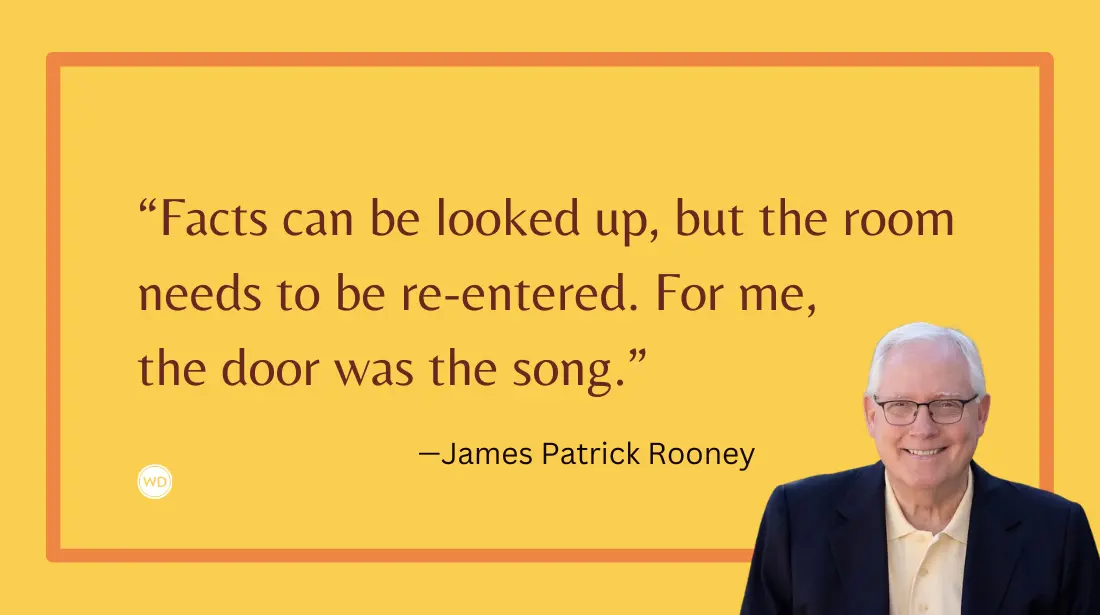
As the boundary between digital preservation and personal memory continues to shift, the core lesson remains unchanged: facts can be verified through research, but the emotional truth of a room must be unlocked from within. Whether through a 1970s jukebox classic, a folk anthem from the 1990s, or the quiet reflection of a closing track, the soundtrack of a life ensures that the historical record retains its humanity.





Comments
Facebook App ID not configured. Please add it in the Customizer.