
Executive Overview
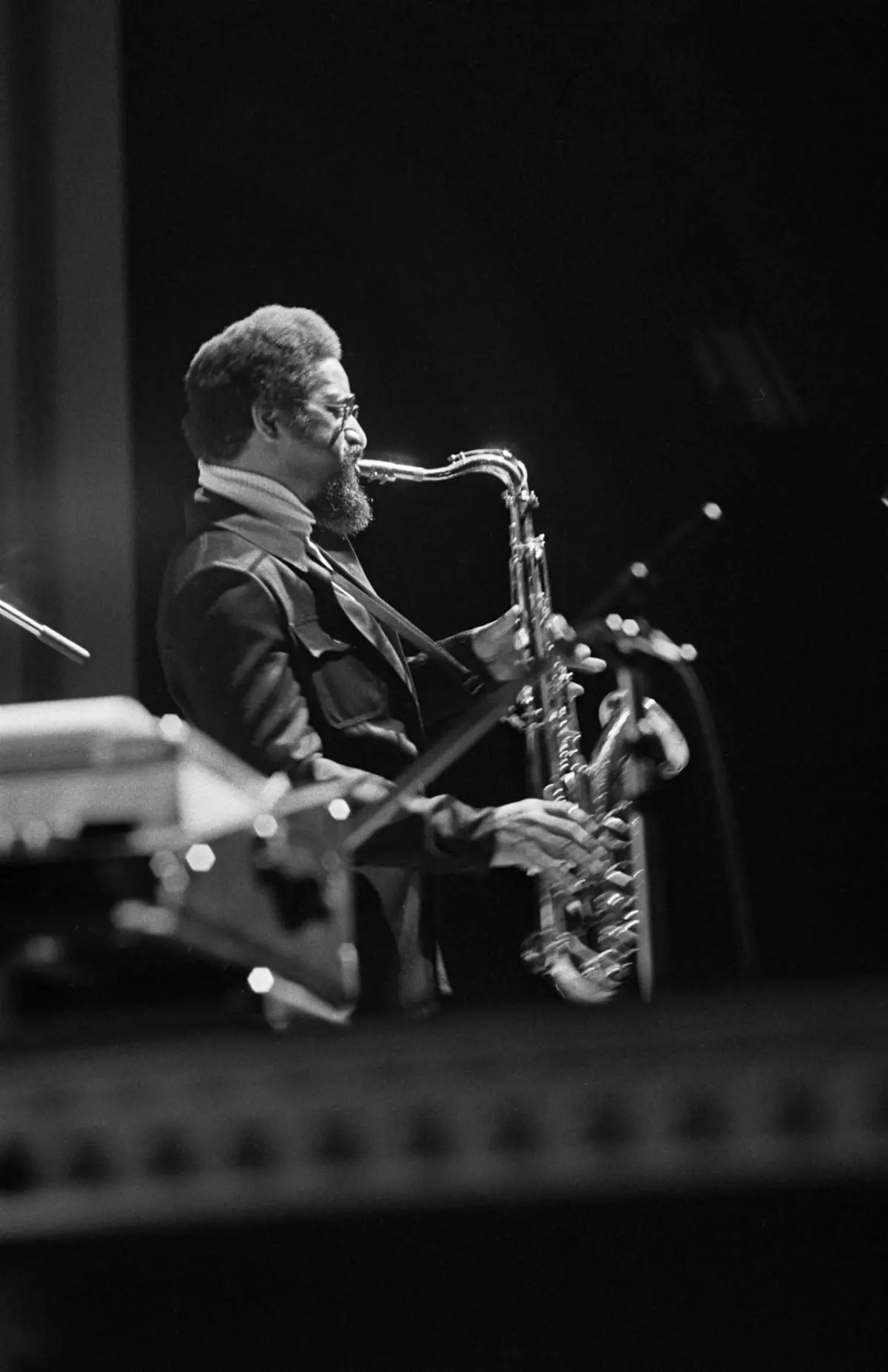
The global music community mourns the passing of Walter "Sonny" Rollins, who died on May 25 at the age of 95. Rollins was more than a master of the tenor saxophone; he was the last surviving colossus of an era when jazz drove the vanguard of American artistic expression. His career bridged the foundational eras of swing, bebop, hard bop, free jazz, and fusion.
Rollins’s journey was defined by relentless reinvention. From his early days recording with bebop pioneers to his famous self-imposed exiles—most notably practicing alone for hours on the Williamsburg Bridge—he consistently rejected artistic complacency. His massive, brick-solid tone, asymmetrical phrasing, and fearless approach to improvisation set a standard for what jazz could achieve.
As the cultural landscape reflects on his departure, critics and musicians alike are forced to confront a sobering reality: with Rollins’s passing, an entire chapter of American musical history has closed. He was the final peer to legends like Charlie Parker, John Coltrane, and Miles Davis. His death marks not only the loss of a singular virtuoso, but the sunset of an era when jazz embodied unbridled spontaneity, risk, and radical individual freedom.
Read Also
Detailed Chronology: The Life and Times of a Saxophone Titan
1930–1955: Harlem Roots, Bebop, and the Crucible of Addiction
Walter "Sonny" Rollins was born in Harlem on September 7, 1930, to parents who had immigrated from the islands of Saint Croix and Saint Thomas. Largely self-taught, Rollins demonstrated a prodigious, obsessive dedication to the saxophone from a young age. By his teens, he was already performing and recording with bebop royalty, including singer Babs Gonzales and trombonist J. J. Johnson.
However, the vibrant post-war jazz scene exacted a heavy toll on its practitioners. Like many of his contemporaries—including Charlie Parker and Miles Davis—Rollins fell into the grip of heroin addiction. The cycle of substance abuse culminated in a nine-month stint at Rikers Island for theft in the early 1950s. While brief periods of sobriety were punctuated by relapses and further legal troubles, Rollins ultimately achieved a permanent recovery. His battle with addiction, and his subsequent triumph over it, forged the hardened emotional resilience that would come to define his musical voice.
1955–1959: The Ascent to the Summit
A newly clean Rollins exploded onto the national stage in 1955, joining a dynamic quintet led by drummer Max Roach and trumpeter Clifford Brown. The tragic death of Brown and pianist Richie Powell in a 1956 car crash devastated Rollins, yet it also ignited a fierce, almost monastic work ethic. Channeling Brown’s legendary dedication, Rollins practiced unceasingly.
Within months, he had established himself as an unstoppable force on the instrument. The year 1956 alone yielded two masterworks of the American canon: Saxophone Colossus and Tenor Madness (featuring John Coltrane). Rollins was at the absolute peak of his creative and commercial powers. Yet, true to his restless nature, he was just getting started.
1959–1961: The Williamsburg Bridge Exile
At the height of his fame in late 1959, Rollins abruptly vanished from public view. Seeking to push his musical boundaries beyond the limits of contemporary performance, he ceased all public appearances and studio recordings for nearly two years.
His chosen sanctuary was the pedestrian walkway of the Williamsburg Bridge, looming high over New York’s East River. There, safe from the complaints of urban neighbors, Rollins practiced for hours a day in the open air. This idiosyncratic ritual reshaped his sound. When he returned to the studio in November 1961 to record The Bridge, his tone had transformed into something colossal, rich, and entirely his own—a departure from the conventional bebop vocabulary into pure, unfiltered Rollins.
1961–1970s: Avant-Garde Exploration and Caribbean Roots
Throughout the 1960s, Rollins navigated the turbulence of the jazz revolution. While free-jazz innovators like Ornette Coleman and Cecil Taylor systematically dismantled traditional chord changes, Rollins approached musical freedom from a different angle. He drew fluidly upon the entire history of the medium, seamlessly integrating swing-era growls, standard show tunes, and avant-garde atonality.
Following another two-year hiatus in the early 1970s—spent studying yoga and meditation at an ashram near Mumbai—Rollins reconnected with his Caribbean heritage. A first-time visit to the islands sparked a deep fascination with calypso, the infectious, syncopated dance music born from 19th-century Trinidad and Tobago. Calypso rhythms harmonized perfectly with his angular phrasing. Incorporating soul and funk elements as well, albums like 1978’s Don’t Stop the Carnival showcased his refusal to be categorized.
2014–2025: The Hermit Magus and Final Years
Health concerns, specifically respiratory issues, forced Rollins to officially retire from performing in 2014. Yet he remained a towering figure in American letters and music. Laying down his horn transformed him into a revered elder statesman—a "hermit magus" whose rare interviews revealed a mind as sharp as ever.
His life and art were further cemented in public consciousness through Aidan Levy’s acclaimed 2023 biography and the publication of Rollins’s own notebooks in 2024. When he passed away on May 25, 2025, at the age of 95, he left behind a legacy that transcended genre boundaries, placing him firmly in the pantheon of America’s greatest cultural iconoclasts.
Supporting Context & Metrics: The Anatomy of a Sound
To understand Rollins’s enduring impact, one must analyze the physical and artistic mechanics of his playing. Musicologists and biographers frequently contrast his tone with that of his peers:
- The Tone: Unlike John Coltrane’s emotional, cascading "sheets of sound" or Eric Dolphy’s bright, birdlike flights, Rollins’s sound has been described by critics as a "brick"—compact, solid, and saturated with overtones across every register. Decades of projecting into the open winds of the East River permanently widened his acoustic footprint.
- Rhythmic Elasticity: Rollins treated time as a malleable substance. While contemporaries like Coltrane pushed forward aggressively on the front edge of the beat, Rollins played across, behind, and directly on top of quarter notes in a single phrase, deliberately keeping audiences and rhythm sections off-balance.
- Discographic Milestones:
- Saxophone Colossus (1956) and Tenor Madness (1956): Defined the hard bop era.
- A Night at the Village Vanguard (1957): Demonstrated his prodigious, non-repeating improvisational stamina in a live trio setting.
- The Bridge (1961): Marked his triumphant return from self-imposed exile.
- East Broadway Run Down (1967): Pushed the outer limits of post-bop structural freedom.
Official Statements and Tributes
The global arts community responded to Rollins’s passing with an outpouring of grief and profound appreciation for his contributions to culture:
"Sonny Rollins was the connective tissue of modern music. He took the horn, looked history in the eye, and dared it to challenge him. There will never be another spirit so fierce, so uncompromising, and so deeply human."
— Leading Contemporary Jazz Publication"When you listen to Sonny, you are listening to the sound of absolute freedom. He didn’t just play the saxophone; he interrogated it until it revealed the truth about who we are."
— Prominent American Saxophonist & Composer
Cultural institutions, academic departments of music, and international jazz festivals held moments of silence and dedicated retrospective performances to honor the master’s memory in the days following his passing.
Future Outlook: The Post-Rollins Landscape
Rollins’s death raises existential questions regarding the future trajectory of jazz. In an era where institutional jazz education has standardized technique and fostered an environment of reverent historical preservation, Rollins stood as a beacon of wild, untamed invention.
The Domestication of an Art Form
As jazz transitions from smoky, experimental night clubs to university lecture halls and concert preservation societies, critics note a shift toward safe replication. Young virtuosos are frequently lauded for their technical polish and ability to faithfully reproduce past masterpieces rather than for taking existential risks.
Rollins, by contrast, treated every performance as a high-wire act where total failure was a genuine, thrilling possibility. His improvisations were acts of courage—confronting the unknown and pulling back from the brink at the last possible second.
Can the Music Endure?
The vital question facing the current generation of musicians is whether jazz can sustain the raw spontaneity and power that Rollins and his peers embodied. Without the direct lineage of living titans to pass down the unwritten lore of risk and self-discovery, the genre risks becoming a museum piece.
Yet, Rollins’s ultimate lesson was not merely technical mastery, but artistic autonomy. For those willing to sit between their speakers, listen to the closing moments of tracks like Lover Man, and embrace the audacity required to push past accepted boundaries, Sonny Rollins remains an eternal north star. The titan is gone, but the challenge he laid down to the American artistic conscience remains unbroken.





Comments
Facebook App ID not configured. Please add it in the Customizer.