When the Thirteen Colonies formally declared their independence from Great Britain on July 4, 1776, the ensuing conflict was not merely a localized political dispute over tariffs and representation. It was a sprawling imperial war that fundamentally reshaped the Western world. While the historical spotlight frequently falls on elite Virginia planters, Boston merchants, and European military luminaries like the Marquis de Lafayette and Friedrich Wilhelm von Steuben, a massive and decisive demographic force largely powered the Continental Army and Navy from the shadows of historical oversight: people of Irish heritage.
Driven from their ancestral homelands by centuries of brutal British conquest, economic disenfranchisement, and aggressive religious persecution, hundreds of thousands of Irish-born immigrants and their immediate descendants flooded the ranks of the Patriot cause. Despite accounting for roughly 10 percent of the total population of the American colonies during the war, individuals of Irish heritage comprised an astonishing 25 to 50 percent of the Continental Army’s active-duty ranks.
From the maritime heroics of Commodore John Barry—frequently heralded as the "Father of the U.S. Navy"—to high-stakes espionage operations masterminded by figures like tailor Hercules Mulligan and Quaker listener Lydia Barrington Darragh, the Irish footprint on the American Revolution was ubiquitous. Irish patriots served as foot soldiers, intelligence gatherers, field surgeons, major generals, signatories to the Declaration of Independence, and architects of the nascent American government. Their fierce, deeply ingrained resistance to imperial tyranny not only guaranteed a Continental victory but also established a revolutionary blueprint that would directly inspire the Irish uprisings of the decades to follow.
Detailed Chronology: From the Shores of the Emerald Isle to the Battlefields of North America
Centuries of Subjugation: The Making of the Irish Exile
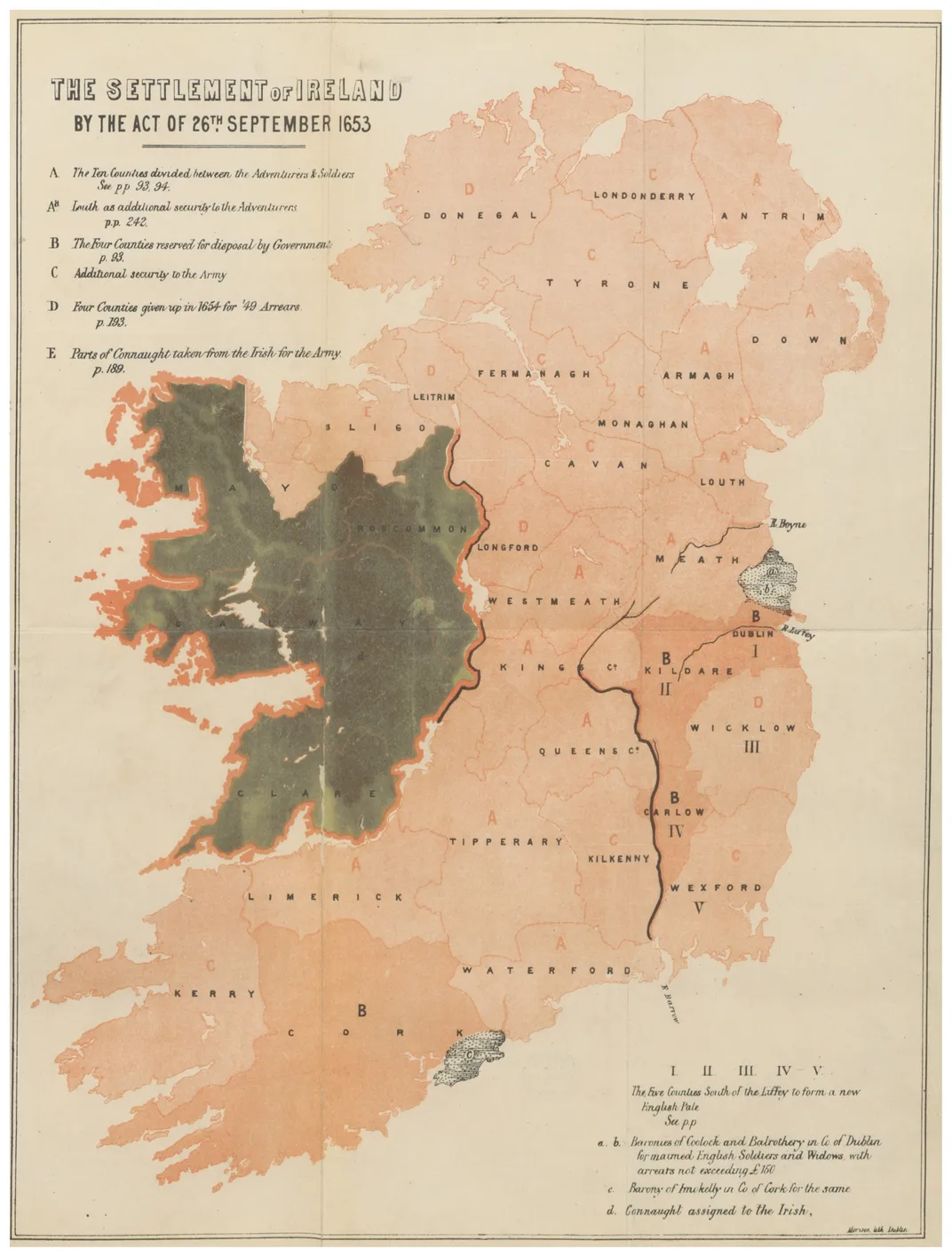
To fully comprehend why Irish immigrants threw their weight so decisively behind the American rebellion, one must examine the 600-year history of English colonial exploitation in Ireland, often described by historians as England’s "first colony."
Following the initial 1171 invasion by Henry II, English monarchs systematically dismantled indigenous Gaelic society. By the dawn of the 17th century, the Tudor and Stuart dynasties had devastated Ireland’s ecosystem by clear-cutting vast old-growth forests to provide timber for the Royal Navy. Kings like James I orchestrated the "Plantations," seizing fertile land from native Irish Catholics and forcibly redistributing it to thousands of loyal Scottish and English Protestants—particularly in the northern province of Ulster.
Simultaneously, the religious upheavals of the Protestant Reformation introduced a rigorous apparatus of state-sanctioned discrimination. Under Elizabeth I and her successors, the Crown outlawed Catholic Mass, executed scores of Catholic priests for treason, and ultimately enacted the draconian Penal Laws. These punitive legal codes stripped non-Anglicans of basic human rights: Catholics were barred from voting, holding public office, entering professions, owning weapons, or possessing a horse valued at more than five pounds. Furthermore, inheritance laws dictated that Catholic estates had to be subdivided equally among all male heirs upon a landowner’s death, systematically fragmenting generational wealth and reducing families to agrarian poverty.
While Catholics bore the brunt of this state-sponsored terror, Protestant dissenters did not escape unscathed. Presbyterians, largely concentrated in Ulster and primarily descended from Scottish immigrants, faced severe legal and social restrictions. Their marriages were unrecognized by the state, they were subjected to heavy fines for refusing to conform to the Anglican Church, and they were forced to pay tithes to a religious hierarchy they rejected. As Nathan Mannion, head of exhibitions and programs at Dublin’s Epic The Irish Emigration Museum, notes, if Catholics were treated as third-class citizens, Presbyterians were effectively relegated to second-class status.
The Great Migration and the Seed of Rebellion
Faced with escalating religious persecution, economic dead-ends, and forced banishment, hundreds of thousands of Irish citizens chose exile over subjugation. Beginning with a historic migration of five ships carrying Presbyterian congregations to New England in 1718, an estimated 250,000 Scots-Irish immigrants had crossed the Atlantic by 1775.
While Irish Catholics largely viewed emigration as a form of forced exile—hesitating to relocate to Protestant-dominated American colonies where they expected similar mistreatment—the wave of Ulster Presbyterians brought with them an inherited, deeply ingrained skepticism of overbearing government control. Ian Crozier, CEO of the Ulster-Scots Agency, points to the traditional cultural concept of thranness—a stubborn, unyielding resistance to arbitrary authority—as a defining trait of these communities. When Parliament attempted to impose imperial taxes and military mandates on the colonies, these immigrants recognized the familiar fingerprints of British tyranny. Consequently, when the revolution broke out, British officials and observers frequently referred to the conflict back home as "the Presbyterian Rebellion."
The Revolutionary Vanguard: From the Declaration to Yorktown
Once hostilities commenced, Irish Americans integrated into every layer of the Patriot infrastructure:
The Printing of Liberty: Immediately after the Continental Congress adopted the Declaration of Independence on July 4, 1776, delegates rushed the manuscript to Irish-born printer John Dunlap in Philadelphia. Working through the night, Dunlap produced the iconic broadsides that disseminated the news of freedom to the public.
The Signers: Of the 56 men who signed the Declaration of Independence, at least eight were of direct Irish descent, including Irish-born jurist James Smith, whose family had fled landlord oppression.
Military Command: General George Washington relied heavily on Irish-born talent. Nine of his general officers were born in Ireland, including Major General Edward Hand and Brigadier General Stephen Moylan, who commanded a regiment of light dragoons. Furthermore, physicians and aides-de-camp like Dr. James McHenry and John Fitzgerald served as trusted members of Washington’s inner military circle.
Naval Supremacy: John Barry, born in County Wexford, utilized his formidable seafaring skills to capture numerous British prizes before taking command of the Alliance. After safely escorting vital shipments of Cuban gold to fund the first national bank, Barry was appointed by President Washington as the very first commissioned officer in the U.S. Navy.
+-------------------------------------------------------------------------+
|                  THE IRISH ARCHITECTURE OF THE REVOLUTION               |
+--------------------------+----------------------------------------------+
| Demographic Footprint    | 25% to 50% of Continental Army ranks         |
| Naval Leadership         | Commo. John Barry ("Father of U.S. Navy")    |
| Intelligence & Espionage | Hercules Mulligan & Lydia Barrington Darragh |
| Founding Documents       | John Dunlap (Broadside Printer)              |
| Constitutional Draft     | 4 Irish-born Delegates to the Convention     |
+--------------------------+----------------------------------------------+
Supporting Context & Metrics
To appreciate the scale of Irish involvement, quantitative data from the revolutionary period reveals a demographic reality that dramatically outpaces standard historical narratives:
10% vs. 50%: While individuals of Irish birth or extraction comprised roughly 10 percent of the white colonial population on the eve of the war, modern demographic analyses indicate they made up between 25 and 50 percent of the Continental Army’s enlisted personnel.
1 in 6 British Soldiers: Conversely, economic desperation also drove an estimated one-sixth of the British Army’s rank-and-file soldiers to be recruited from Ireland. Yet, even within British forces, ideological defections were common; sergeants like Thomas Sullivan deserted the Crown to join Patriot General Nathanael Greene, explicitly citing their desire to destroy the very yoke that had crushed their homeland.
The Intelligence Underground: Espionage proved vital to Patriot survival. Hercules Mulligan, an Irish immigrant tailor in New York, utilized his high-society clientele of British officers to gather vital intelligence, twice saving George Washington from capture and foiling an assassination plot. Concurrently, Dublin-born Quaker Lydia Barrington Darragh eavesdropped on British officers planning a surprise attack in Philadelphia, smuggling the operational details across enemy lines at extreme personal peril.
Official Statements and Expert Insights
Historians and cultural preservationists emphasize that the alliance between Irish grit and American republicanism was far from accidental; it was forged in the fires of shared opposition to imperial overreach.
Melanie McComb, a senior genealogist at American Ancestors, highlights the relentless push-and-pull dynamics of the era:
"Lured by the promise of greater religious freedom and plentiful land, hundreds of thousands sought a new life away from the systematic decay of their economic and personal liberties under the British crown."
Nathan Mannion of Epic The Irish Emigration Museum notes the philosophical continuity that tied the struggles together:
"If you were a member of the Roman Catholic faith, land had to be subdivided equally between all male children upon death, diluting family wealth and making survival nearly impossible. That brand of Irish defiance saw right through British imperialism and used Enlightenment republican ideas to create an alternative society for free people."
Robert N. Fanelli, biographer of intelligence asset Lydia Darragh, underscores the ethical boundaries crossed by ordinary citizens driven by the cause of liberty:
"She knew she had to do something with the information, even though her religious community strictly forbade getting involved in warfare. The stakes were simply too high to remain passive."
Future Outlook: A Legacy Carved Across Two Worlds
The success of the American Revolution served as a profound catalyst for global anti-colonial movements, acting as a historical mirror for the oppressed populations of Europe. Inspired by the birth of the United States, radical Irish nationalists founded the Society of United Irishmen in Belfast and Dublin in 1791. Dedicated to uniting Catholics and Protestants under a single secular republic, these revolutionaries launched the bloody Irish Rebellion of 1798.
Although British imperial forces violently crushed the 1798 rising, the ideological template had been successfully cast. The successful decoupling of the American colonies from London proved that the seemingly invincible British military apparatus could be systematically outmaneuvered, outfought, and defeated by an ideologically driven coalition of underdogs.
Today, the legacy of these Irish patriots is celebrated not merely as a footnote of ethnic migration, but as a foundational pillar of the American republic. From the broadsides printed by John Dunlap on July 5, 1776, to the naval dominance cemented by Commodore John Barry, the enduring spirit of thranness—that stubborn, unyielding refusal to bow before crown or empire—remains permanently etched into the foundational identity of the United States.

/https://tf-cmsv2-smithsonianmag-media.s3.amazonaws.com/filer_public/5a/a2/5aa2280c-a29c-4ff3-9ff9-2599e3910337/ireland.png)
/https://tf-cmsv2-smithsonianmag-media.s3.amazonaws.com/accounts/headshot/Sonja_headshot.png)
:focal(750x500:751x501)/https://tf-cmsv2-smithsonianmag-media.s3.amazonaws.com/filer_public/5a/a2/5aa2280c-a29c-4ff3-9ff9-2599e3910337/ireland.png)
/https://tf-cmsv2-smithsonianmag-media.s3.amazonaws.com/filer_public/8b/fa/8bfa7b2d-9a25-41bf-aa1a-02c2dbaaeab3/commodore_john_barry.jpg)
/https://tf-cmsv2-smithsonianmag-media.s3.amazonaws.com/filer_public/ad/64/ad64fa9a-5b24-40c9-9a93-e0371bde295c/ireland-map.jpg)
/https://tf-cmsv2-smithsonianmag-media.s3.amazonaws.com/filer_public/4c/99/4c998226-1e28-47b0-8ac2-972913bdb995/carlow_cathedral_st_patrick_preaching_to_the_kings_2009_09_03.jpg)
/https://tf-cmsv2-smithsonianmag-media.s3.amazonaws.com/filer_public/1b/2a/1b2a63d3-64f2-4b97-908d-85dbc2622f17/prendergast1870_p_415_map_of_the_settlement_of_ireland_by_the_act_of_26th_september_1653.jpg)

/https://tf-cmsv2-smithsonianmag-media.s3.amazonaws.com/filer_public/bd/4f/bd4f307f-abc5-4890-a0af-45a61aab3b54/1920px-dunlap_broadside_copy_of_the_united_states_declaration_of_independence_loc.jpg)
/https://tf-cmsv2-smithsonianmag-media.s3.amazonaws.com/filer_public/16/16/16168cca-e722-4f2a-b3c1-a61b740480ed/jmchenry.jpg)


Comments
Facebook App ID not configured. Please add it in the Customizer.