
Executive Overview
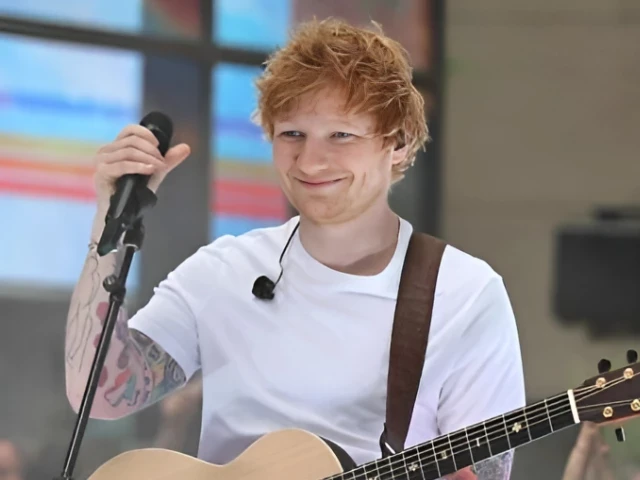
What began as a routine high-profile global concert trek has rapidly descended into a multi-tiered public relations and logistical crisis for British pop superstar Ed Sheeran. In the wake of controversial cancellations sparked by geopolitical activism, Sheeran’s prominent supporting acts have orchestrated a mass walkout from the remaining dates of his high-profile Loop Tour. The cascading departures—encompassing indie favorites, international folk bands, and chart-topping artists alike—have left the multi-platinum singer-songwriter without a single opening act for his upcoming performances, casting a heavy shadow over the remainder of his global itinerary.
The sweeping boycott was triggered by the abrupt removal of American rapper Macklemore from select tour dates, a decision made after the hip-hop artist openly chanted "Free Palestine" during live performances at New Jersey’s MetLife Stadium. Macklemore’s subsequent claims that powerful outside figures pressured tour organizers to drop him ignited a fierce debate within the music industry regarding freedom of expression, corporate influence in the arts, and the boundaries of political discourse on global stages.
As artists continue to grapple with the intersection of entertainment and international diplomacy, the fallout has exposed deep fault lines within the live music ecosystem. This comprehensive report explores the chronology of the crisis, examines the official statements from the artists and stakeholders involved, analyzes the logistical fallout for Sheeran’s Loop Tour, and assesses the broader implications for free speech and artist autonomy in the contemporary live entertainment landscape.
Read Also
Detailed Chronology of the Crisis
To understand the current vacuum facing Ed Sheeran’s Loop Tour, it is necessary to trace the sequence of events that transformed a standard concert series into an international flashpoint.
The Catalyst: MetLife Stadium and the "Free Palestine" Chants
The controversy first erupted in early September during high-profile concert appearances at MetLife Stadium in East Rutherford, New Jersey. Macklemore, serving as a high-profile supporting act on the tour, used his platform on September 4 and 5 to voice his political views, explicitly shouting "Free Palestine" from the stage.
The remarks quickly circulated across social media platforms, dividing public opinion and drawing intense scrutiny from industry executives, political advocacy groups, and concert promoters. Within days, festival and venue organizers moved to distance themselves from the rapper. Macklemore was abruptly pulled from subsequent tour dates, a move that immediately ignited discussions regarding censorship and the silencing of political dissent in mainstream music venues.
Escalation: Behind-the-Scenes Pressure and Robert Kraft’s Involvement
Following his removal, Macklemore took to social media to allege that his dismissal was not simply a standard promoter decision, but rather the result of targeted external pressure. According to the rapper, Ed Sheeran had privately informed him that billionaire businessman and New England Patriots owner Robert Kraft was actively involved in efforts to prevent him from performing at other high-profile venues, specifically Gillette Stadium.
This claim added a new layer of corporate and political intrigue to the controversy. Shortly after Macklemore’s revelations went public, representatives for Robert Kraft confirmed his involvement. In a statement addressing the matter, Kraft acknowledged that he had indeed taken part in discussions concerning Macklemore’s appearance at Gillette Stadium, citing concerns over public sentiment and security. The confirmation validated claims of corporate gatekeeping, transforming the dispute from a localized contractual disagreement into a broader debate about the influence of wealthy stakeholders in public entertainment spaces.
The Domino Effect: Aaron Rowe’s Groundbreaking Departure
The first official domino to fall from within Sheeran’s own tour roster dropped on Tuesday, when Irish singer-songwriter Aaron Rowe announced he was withdrawing from all remaining dates of the Loop Tour.
Rowe, who had been scheduled to support Sheeran across upcoming North American dates, released a carefully worded statement explaining that he did not make his decision lightly. Grounding his choice in his Irish heritage, Rowe pointed to historical parallels, personal convictions regarding conflict, and a steadfast stance on occupation and humanitarian issues. His departure served as the opening salvo in what would quickly become an organized artistic protest.
A Unified Exodus: Finneas, Beoga, and Lukas Graham Follow Suit
Rowe’s exit opened the floodgates for other supporting acts to voice their solidarity and register their own protests. Within a 48-hour window, three additional major acts announced their immediate withdrawal from the Loop Tour:
- Finneas: The acclaimed American singer-songwriter, producer, and frequent collaborator of Billie Eilish pulled out of the South American legs of the tour. Finneas released a strongly worded statement arguing that artists must never be silenced, particularly when using their platforms to speak on behalf of oppressed populations.
- Beoga: The celebrated Irish folk band, known for their frequent collaborations with Sheeran, issued a joint statement throwing their full weight behind Macklemore. The band underscored the importance of artistic solidarity in the face of censorship.
- Lukas Graham: The Danish pop and soul band rounded out the exodus, announcing they would no longer perform on the remaining North American dates. In their statement, the band explicitly cited the vital importance of an artist’s right to speak out against war, civilian casualties, and human suffering without fear of professional reprisal.
Supporting Context & Metrics: The Anatomy of the Loop Tour
The sudden collapse of Ed Sheeran’s supporting lineup threatens to disrupt one of the most meticulously planned and commercially lucrative concert treks of the year. To grasp the scale of the crisis, it is essential to examine the logistical and financial architecture of the Loop Tour.
Tour Logistics and Geographic Reach
The Loop Tour has been a sprawling global endeavor, designed to showcase Sheeran’s innovative looping technology and intimate acoustic style across massive stadium and arena venues.
- North American Leg: The itinerary heavily featured major North American markets, where Aaron Rowe and Lukas Graham were slated to provide direct support for the upcoming autumn dates. These shows represented millions of dollars in ticket sales and significant logistical coordination across multiple states and provinces.
- South American Leg: Finneas had been locked in as the primary support act for the South American portion of the tour, a market where Sheeran maintains a massive, highly dedicated fan base.
- The Immediate Horizon: The tour’s next major milestone is scheduled for Philadelphia on September 19. As it stands, promoters are scrambling to fill a massive void, leaving the September 19 date—and subsequent performances—without any announced opening acts.
The Financial and Logistical Toll
While Ed Sheeran remains one of the highest-earning touring artists in modern music history—regularly commanding tens of millions of dollars per leg—the mass walkout introduces unprecedented logistical hurdles:
- Production Adjustments: Without opening acts, tour producers must rethink venue entry times, stage management schedules, and crowd flow dynamics. Typically, supporting acts help stagger stadium entry, reducing congestion at security gates.
- Ticketing Fallout: While it is statistically rare for fans to request refunds solely based on the removal of an opening act, the aggregate loss of high-caliber talent like Finneas and Lukas Graham diminishes the overall value proposition of the ticket package, potentially leading to consumer dissatisfaction.
- Promoter Strain: Promoters are now faced with the difficult task of either running solo-artist shows for the remainder of the tour or hastily booking replacement acts who may inherit the ideological baggage of the current controversy.
Official Statements and Industry Reactions
The cascading cancellations have generated a storm of commentary from the artists directly involved, external stakeholders, and industry analysts. Below is a detailed breakdown of the official positions staked out by key participants.
Ed Sheeran’s Position: Navigating the Middle Ground
Amid mounting pressure, Ed Sheeran and his management team have sought to distance the headliner from the censorship allegations. In various statements released to the music press, representatives for Sheeran clarified that Macklemore’s removal was not an executive decision made by the singer himself.
Instead, Sheeran’s camp emphasized that the final call came directly from venue operators and independent tour promoters who held contractual authority over site policies and security concerns. Insiders close to Sheeran have stressed that the British pop star aims to remain focused on his music and connecting with his global fan base, even as the political firestorm threatens to consume the tour’s narrative.
The Artists’ Manifesto: Defending Free Expression
The statements released by Rowe, Finneas, Beoga, and Lukas Graham collectively form a powerful manifesto regarding the responsibilities of modern artists.
- Aaron Rowe: "My decision was not made lightly. Given my Irish background, my worldview, and my deeply held beliefs regarding conflict, occupation, and human rights, I cannot in good conscience remain on a bill where artistic expression is penalized in this manner."
- Finneas: "Music has always been a vehicle for empathy and social commentary. When we begin to police who can speak up for the oppressed and who cannot, we strip art of its soul. I stand with those who use their voices for justice."
- Lukas Graham: "We cannot look away from the ongoing devastation, civilian deaths, and immense human suffering in the world. Artists must retain the absolute right to address these tragedies without facing professional exile."
The Corporate Response: Robert Kraft and Venue Gatekeeping
The involvement of Robert Kraft has injected a corporate realpolitik dimension into the controversy. Kraft’s confirmation of his intervention highlights a growing reality in the modern live entertainment industry: major venues are increasingly owned or influenced by billionaires, conglomerates, and corporate entities that are sensitive to public relations, geopolitical lobbying, and donor relations.
By stepping in to block Macklemore, Kraft and associated venue stakeholders demonstrated that corporate risk management frequently supersedes artistic freedom, drawing sharp rebukes from civil liberties advocates and music unions alike.
Future Outlook: What Lies Ahead for the Loop Tour?
As the dust begins to settle on one of the most turbulent weeks in modern touring history, the immediate and long-term future of Ed Sheeran’s Loop Tour remains fraught with uncertainty.
Immediate Tour Viability
With the Philadelphia show looming on September 19, the most pressing concern for tour organizers is simple logistics. Can promoters secure replacement acts on short notice, or will Ed Sheeran perform extended, solo headline sets for the remainder of the trek?
Industry insiders suggest that booking replacement talent of equivalent stature—such as Finneas or Lukas Graham—will be nearly impossible under the current circumstances. Most major artists will likely hesitate to touch the tour, fearing either association with the political controversy or backlash from fans on both sides of the aisle. Consequently, fans attending upcoming dates should prepare for an altered concert experience centered entirely on Sheeran’s solo performances.
Long-Term Industry Ramifications
Beyond the immediate fate of the Loop Tour, this controversy serves as a watershed moment for the live music industry. It highlights several emerging trends that will likely define concert touring for years to come:
- The Weaponization of Venues: As billionaires and corporate entities exert greater control over major sports stadiums and entertainment complexes, artists may find their freedom of speech increasingly curtailed by private gatekeepers.
- Artist Solidarity: The swift, coordinated walkout by Rowe, Finneas, Beoga, and Lukas Graham demonstrates that a new generation of musicians is willing to sacrifice lucrative touring slots on the altar of political and ethical solidarity. This collective action could set a precedent for future boycotts.
- The Inseparability of Art and Politics: Despite industry advice to "stick to the music," the events surrounding the Loop Tour prove that contemporary artists are increasingly unwilling—and perhaps unable—to remain silent on global humanitarian issues.
As Ed Sheeran takes the stage in Philadelphia and beyond, he will do so in an altered musical landscape—one where the echoes of geopolitical conflict have successfully penetrated the sanctuary of the concert hall, forever changing the dynamics between artists, promoters, venues, and fans.




Comments
Facebook App ID not configured. Please add it in the Customizer.