
Executive Overview
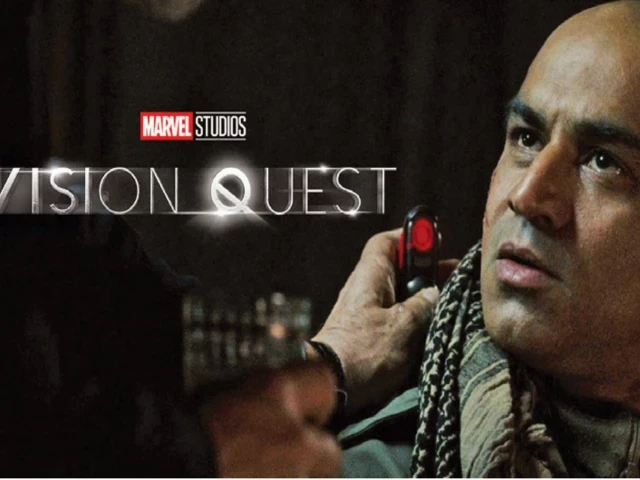
In a cinematic landscape dominated by shifting multiverses, legacy cameos, and deep-cut continuity nods, the Marvel Cinematic Universe (MCU) has delivered one of its most unexpected and rewarding callback moments to date. Pakistani-American acclaimed actor Faran Tahir has officially returned to the sprawling superhero franchise after an 18-year hiatus. Tahir has reprised his iconic role as Raza Hamidmi al-Wazar—the ruthless militant leader who infamously kidnapped Robert Downey Jr.’s Tony Stark in the foundational 2008 film that launched the entire MCU.
Appearing in the pivotal sixth episode of Marvel Studios’ acclaimed streaming series VisionQuest, Tahir’s resurrection of Raza bridges the gap between the very infancy of the cinematic universe and its current, complex television era led by showrunner Terry Matalas. While Marvel fans have grown accustomed to seeing actors return from the dead via variant timelines, cosmic resurrections, or multiverse resets, Raza’s return is unique. He was not pulled from another dimension; instead, he is the very same man who survived the treacherous caves of Afghanistan nearly two decades ago, having undergone a radical metamorphosis in both profession and aesthetic.
Set against the neon-drenched, criminal underworld of Madripoor, Raza’s re-emergence in VisionQuest sheds light on the long-term survival of characters left for dead in Phase 1. Trading his dusty military fatigues for a sharply tailored designer suit and swapping his Ten Rings affiliations for the high-stakes world of modern bounty hunting, Tahir’s updated iteration of the character is both a nostalgic treat for hardcore fans and a fresh narrative threat for Paul Bettany’s resurrected android protagonist. This comprehensive report explores the chronology of Tahir’s return, the narrative mechanics of VisionQuest, the intricate production details behind the character’s reinvention, and what this monumental legacy casting means for the future trajectory of the MCU.
Read Also
Detailed Chronology: From the Caves of Gulmira to the Neon Streets of Madripoor
To fully appreciate the narrative weight of Faran Tahir’s return in VisionQuest, one must look back nearly two decades to the genesis of the Marvel Cinematic Universe.
Phase 1 Origins: The Birth of Raza (2008)
When Jon Favreau’s Iron Man premiered in May 2008, it carried the immense weight of a studio betting its entire corporate future on a B-list comic book character. At the center of Tony Stark’s catalytic transformation from vapid weapons manufacturer to armored superhero was Raza, played with chilling, understated menace by Faran Tahir.
As the second-in-command of the Ten Rings terrorist organization operating in the Middle East, Raza was contracted by Obadiah Stane (Jeff Bridges) to assassinate Stark. Instead, Raza kept Stark alive, coercing the brilliant billionaire into building a miniaturized Jericho missile inside a damp, dimly lit cave. Stark, of course, used the time to construct the Mark I iron suit, escaping his captors and leaving the Ten Rings in disarray.
Later in the film, Raza’s ambition proved to be his downfall. Believing he could leverage the Ten Rings to conquer the region independently, he attempted to negotiate a partnership with Stane. The interaction ended in visceral betrayal: Stane used a sonic paralyzer device—a high-frequency acoustic weapon that induced agonizing neurological feedback—to incapacitate Raza and his men before stealing the blueprints for Stark’s original armor. While Stane left Raza paralyzed and bleeding out, the film never explicitly confirmed his death on screen, leaving a faint breadcrumb trail that Marvel Studios would finally follow up on 18 years later.
The 18-Year Gap and the Shock Announcement (January 2025)
For nearly two decades, Raza was relegated to the trivia annals of MCU history—a memorable opening-act villain overshadowed by larger-than-life cosmic threats like Thanos, Kang, and various multiversal entities. However, the sprawling expansion of the Disney+ television landscape under Marvel Studios allowed creators to dive deep into the MCU’s historical archives.
In January 2025, trade reports and Marvel promotional drops sent shockwaves through the fandom by confirming that Faran Tahir would officially rejoin the franchise in the then-upcoming series VisionQuest. The announcement sparked intense speculation across online forums. How could a low-level terrorist from 2008 fit into a story centered around Vision, artificial intelligence, and the mystical fallout of WandaVision? The answer, as revealed in the series’ sixth episode, proved to be both grounded and thrillingly unexpected.
The VisionQuest Encounter: Madripoor and Beyond
In the sixth episode of VisionQuest—spearheaded by creative mastermind Terry Matalas—the narrative shifts to the wretched hive of scum and villainy known as Madripoor. Paul Bettany’s resurrected android, Vision, embarks on a desperate rescue mission to liberate Thomas Shepherd (also known as Tommy Maximoff), his reincarnated son originally introduced in WandaVision.
Tommy has been targeted and taken hostage by the lethal mercenary Paladin, who aims to use the young speedster as bait to capture Vision for an anonymous, high-paying client. Just as the confrontation reaches a boiling point, the stakes escalate exponentially. Raza arrives at the head of a heavily armed mercenary squad, intent on intercepting Vision for his own mysterious employers.
The ensuing skirmish highlights the grounded, gritty action style of the series. However, Raza’s tactical reentry is cut frustratingly short: during the chaotic melee, Paladin swiftly neutralizes the former warlord, knocking him unconscious with a calculated blow. Despite his brief screen time, Raza’s survival and presence establish him as an active, breathing entity in the modern MCU—one whose ambitions have clearly scaled far beyond the regional insurgencies of his past.
Supporting Context & Metrics: The Evolution of a Character
The reinvention of Raza in VisionQuest is not merely a casting nostalgia trip; it is a masterclass in visual storytelling and character evolution. The production design and costume departments worked meticulously to communicate 18 years of in-universe history through Tahir’s updated appearance.
Visual and Functional Metamorphosis
| Attribute | 2008 (Iron Man) | 2026 (VisionQuest) |
|---|---|---|
| Organization | Ten Rings (Afghanistan Cell) | Independent / Mysterious Mercenary Client |
| Primary Attire | Weathered military fatigues, tactical vests | Bespoke, razor-sharp designer suit |
| Operational Base | Mountain caves and desert hideouts | The cosmopolitan underworld of Madripoor |
| Signature Tech | Basic firearms, makeshift explosive devices | High-frequency defense earpieces, advanced tactical gear |
| Primary Motivation | Regional political dominance, technological acquisition | High-tier corporate bounty hunting, high-paying contracts |
As detailed in the production notes, Raza has traded the desert sands of Afghanistan for the neon-lit, lawless alleyways of Madripoor. No longer tied to the ideological and regional constraints of the Ten Rings, he operates as a free-agent bounty hunter.
Most notably, Raza’s wardrobe has undergone a dramatic upgrade. He has swapped his combat fatigues for a sharply tailored, bespoke suit—signaling a transition from a insurgent guerrilla leader into a high-society corporate operator or syndicate fixer. Furthermore, eagle-eyed viewers noted a subtle yet brilliant continuity nod: Raza is seen wearing a specialized earpiece. This piece of advanced technology appears specifically engineered to shield him against high-frequency sonic attacks—a direct, protective countermeasure designed to prevent a repeat of the brutal incapacitation he suffered at the hands of Obadiah Stane 18 years prior. This singular detail demonstrates a rare, commendable level of long-term character awareness by the writers, showing that Raza learned hard lessons from his past defeats.
The Creative Vision of Terry Matalas
At the narrative helm of VisionQuest is showrunner Terry Matalas, whose critically acclaimed work on Star Trek: Picard Season 3 proved his exceptional ability to honor legacy characters while pushing them into compelling new narratives. Matalas’s vision for VisionQuest is deeply existential, following the resurrected white-suited Vision as he journeys through self-discovery, humanity, and the philosophical implications of artificial intelligence.
By integrating classic elements from the MCU’s history—such as Raza—Matalas grounds the high-concept sci-fi themes of artificial intelligence and alternate realities in the gritty, tangible history of the universe’s earliest days. Raza serves as a bridge between the grounded, tech-centric origin of the MCU and its current cosmic and metaphysical complexity.
Official Statements and Industry Impact
The return of Faran Tahir has generated significant buzz across Hollywood trade publications and fan communities alike, underscoring the cultural footprint of the early MCU era.
Faran Tahir on Rejoining the Marvel Fold
In retrospective interviews regarding his return to the superhero giant, Tahir has expressed immense gratitude and excitement for the opportunity to revisit a character that helped define his career.
"When we shot Iron Man back in 2007, none of us—not Jon Favreau, not Robert [Downey Jr.], none of us—could have fathomed that we were laying the foundation for a multi-billion-dollar cinematic tapestry that would still be expanding nearly two decades later," Tahir noted in early promotional discussions. "Stepping back into Raza’s shoes, but seeing how the world has hardened him, how he has adapted, evolved, and survived when everyone assumed he was dead… it is an actor’s dream. Raza isn’t just a relic of the past; he’s a survivor who learned how to play a much larger, more dangerous game."
Industry Reactions and Fandom Response
Entertainment journalists and pop culture critics have universally praised Marvel’s decision to utilize legacy actors for deep-cut continuity expansions rather than relying solely on endless recasting or digital de-aging. The move has been cited as a prime example of the MCU rewarding attentive fans who have invested in the franchise since its 2008 inception.
Social media platforms exploded following the broadcast of episode six, with hashtags celebrating "Raza’s Return" trending globally. Fans pointed out the narrative poetic justice of Raza surviving the man who betrayed him (Obadiah Stane) only to pivot into the dangerous corporate espionage and bounty-hunting networks that continue to plague post-Blip Earth.
Future Outlook: What Next for Raza in the MCU?
As VisionQuest continues its broadcast run and hurtles toward its explosive season finale, the ultimate fate of Faran Tahir’s Raza remains hanging in a tantalizing balance. Though Paladin temporarily knocked him out during the Madripoor skirmish, Raza’s syndicate connections and his newfound technological adaptations suggest he is far too resilient to be dispatched so easily.
Potential Narrative Trajectories
- The Identity of the Mysterious Client: Raza was operating on behalf of an unnamed employer in Madripoor. Unraveling who is hiring high-level mercenaries to capture Vision will likely open up major narrative threads connecting to other ongoing cosmic or terrestrial threats within the MCU. Could it be a splinter faction of the Ten Rings reacting to Wenwu’s absence, or a corporate entity looking to weaponize Vision’s synthetic biology?
- Continued Antagonistic Presence: Now that Raza is established as an active player in the modern underworld, his path could easily cross with other street-level or espionage-focused characters across the franchise (such as characters within the purview of the Armor Wars mythos or intelligence-focused corners of the universe).
- The Philosophy of Survival: Raza represents a rare human antagonist in the MCU who has managed to live through the monumental upheavals of the Thanos snap, the Blip, and the technological revolutions of Stark Industries. Exploring how a traditional criminal syndicate adapts to a world populated by gods, monsters, and walking AI provides fertile ground for future storytelling.
Conclusion
Faran Tahir’s return as Raza in VisionQuest is far more than a simple Easter egg for die-hard Marvel enthusiasts. It is a triumphant, meticulously crafted masterclass in character evolution that honors the roots of the Marvel Cinematic Universe while boldly pushing its narrative boundaries forward. By transforming a forgotten cave-bound terrorist into a sharp-suited, tech-adapted Madripoor bounty hunter, Marvel Studios has proven that in its sprawling universe, no character is truly gone for good—and the past has a funny way of coming back to settle old scores.





Comments
Facebook App ID not configured. Please add it in the Customizer.