
Executive Overview
The contemporary landscape of television drama, particularly within the South Asian subcontinent, has increasingly found itself trapped in an endless loop of cyclical predictability. For millions of viewers tuning in on a nightly basis, the screen offers a depressingly narrow reflection of society: endlessly recycled tropes of domestic strife, tyrannical mothers-in-law, marginalized daughters-in-law, clandestine affairs, and manipulative plotting within the confines of sprawling, opulent family mansions. While these productions consistently chase viewership ratings and digital advertising revenue, they do so at a devastating cost to artistic integrity, cultural enrichment, and social commentary.
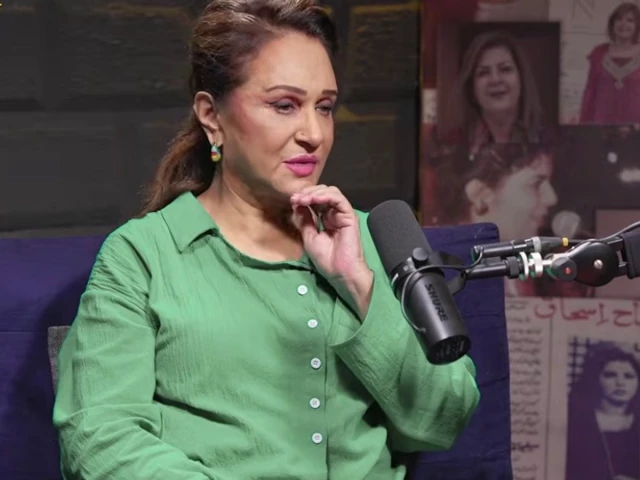
Amid this monotonous landscape, veteran icon Bushra Ansari—a foundational pillar of Pakistani television, theatre, and music—has issued a searing, uncompromising critique of the industry she has helped shape for over half a century. In a recent, wide-ranging interview, Ansari laid bare her profound disillusionment with modern television content, announcing that she has abstained from writing scripts for the past four years due to a pervasive lack of meaningful creative stimulation.
Ansari’s critique transcends mere nostalgia for a bygone era of broadcasting. Instead, it serves as a rigorous diagnostic evaluation of contemporary media’s systemic failure to engage with the structural realities of ordinary citizens. By contrasting today’s formulaic melodramas with the trailblazing, socially conscious programming of television’s golden age, Ansari has reignited a critical debate: Can television reclaim its mantle as an instrument of social awakening, or is it permanently tethered to the lowest common denominator of commercial escapism?
Read Also
This report examines Ansari’s critique within the broader framework of television evolution, tracing her remarkable journey from a budding 1960s vocalist to a multi-hyphenate cultural titan, while analyzing the urgent necessity for modern media houses to pivot toward root-cause storytelling, systemic critique, and intellectual courage.
Detailed Chronology: From Golden Age Pioneers to Commercialized Formulas
To fully comprehend the gravity of Bushra Ansari’s current dissatisfaction, one must retrace the historical trajectory of television broadcasting in the region—a trajectory in which Ansari herself played a central, formative role.
The Genesis of a Cultural Icon: 1968 and the PTV Era
Ansari’s artistic lineage is inextricably linked to the birth and maturation of state television. Entering the Pakistan Television (PTV) ecosystem as a young singer in 1968, Ansari belonged to an artistic vanguard that viewed broadcasting not merely as a commercial enterprise, but as a public trust and a vital medium for cultural preservation.
"When I was born, I was like, I will be a singer," Ansari recalled, reflecting on her early aspirations.
Even as a teenager of 15 or 16, her undeniable raw talent caught the attention of drama directors. However, navigating the entertainment industry in the late 1960s required balancing artistic ambition with deeply entrenched social norms. Ansari’s entry into acting was initially met with hesitation by her father, a dynamic that shifted only after her marriage to a supportive director who championed her continuing professional growth.
The 1980s: An Era of Creative Audacity and Risk-Taking
During the 1980s, television production in the region achieved a legendary status defined by narrative sophistication, stylistic experimentation, and uncompromising social engagement. Ansari’s recollections of this era highlight an artistic climate where creators were actively encouraged to push boundaries, challenge social taboos, and take profound creative risks.
Far from being pigeonholed into superficial archetypes, actors of Ansari’s generation were afforded the luxury of interpretive depth. She vividly recalled experimental productions that utilized unconventional narrative devices—ranging from comedic performances featuring exaggerated costume props and satirical burqa-clad characters to deeply sensitive, avant-garde explorations of aging, complex human relationships, and institutional failings.
Crucially, these narratives operated on the premise that audiences possessed the intellectual capacity to process ambiguity, moral complexity, and unvarnished social truths. The prevailing ethos was clear: entertainment and enlightenment were not mutually exclusive, but rather mutually reinforcing.
The Great Divergence: The Commercialization of the Small Screen
As the decades progressed, the media landscape underwent a seismic, market-driven transformation. The proliferation of private satellite channels, coupled with the relentless pressures of hyper-competition, advertising-driven monetization models, and algorithm-optimized viewer metrics, fundamentally altered the production pipeline.
Scriptwriting transitioned from an artisanal, literature-infused craft into a mass-manufactured assembly line. Production houses quickly realized that high-concept social commentary carried financial risks, whereas sensationalized domestic disputes, emotional blackmail, and patriarchal power struggles offered guaranteed, immediate viewership spikes. Consequently, the complex, multi-dimensional characters championed by Ansari and her contemporaries were systematically replaced by flat, reactionary caricatures designed to provoke visceral, uncritical emotional responses from mass audiences.
Supporting Context & Metrics: The Crisis of Contemporary Storytelling
Ansari’s self-imposed four-year hiatus from screenwriting is not an isolated creative block; it is a symptom of a systemic malaise plaguing the creative arts sector. To understand the depth of the crisis, one must examine the thematic stagnation characterizing contemporary television programming.
The Superficial Depiction of Social Ills
In her critique, Ansari drew a sharp, defining distinction between merely depicting societal symptoms and actively investigating their root causes. Modern serials frequently incorporate heavy-handed themes—such as domestic abuse, cyclical poverty, educational deprivation, and institutional corruption. However, these themes are rarely handled with sociological rigor or investigative depth.
Instead of asking why systemic inequities persist within the socio-economic fabric of the nation, modern dramas routinely utilize these grave realities as cheap emotional backdrops or sensationalized plot devices to drive melodrama. The structural, economic, and political underpinnings of poverty and abuse are conveniently stripped away, replaced by reductive narratives that attribute systemic failures entirely to individual moral failings or domestic malice.
[Traditional Media Paradigm]
Literature & Real Life ---> Structural Observation ---> Root-Cause Analysis ---> Social Enlightenment

[Modern Commercial Paradigm]
Algorithmic Tropes    ---> Sensationalized Conflict ---> Emotional Exploitation ---> Immediate Ratings
The Erosion of Literary and Cultural Foundations
Ansari attributes much of the depth found in her generation’s work to their diverse, cross-disciplinary cultural diet. Growing up, actors, writers, and directors were deeply immersed in global literature, classical theatre, international cinema, and rich musical traditions.
"We used to watch films such as Gone with the Wind, read Wuthering Heights, and follow Indian cinema. Literature, theatre, music and everyday life all fed into the work being produced for television," she noted.
This expansive intellectual horizon ensured that television scripts possessed universal resonance and philosophical weight. In contrast, contemporary television practitioners are frequently trapped within a hyper-localized, insular feedback loop, consuming and regurgitating only the tropes popularized by preceding television serials. This insularity has resulted in a severe impoverishment of language, aesthetic imagination, and philosophical inquiry on screen.
The Benchmark of Alif Noon
To illustrate the pinnacle of socially responsible television, Ansari repeatedly points to iconic productions such as Alif Noon. Created by and starring luminaries like Kamal Ahmed Rizvi and Rafi Khawar (Nana), Alif Noon was a masterclass in socially conscious satire. It seamlessly blended razor-sharp comedy with incisive critiques of societal greed, moral corruption, and commercial exploitation.
Decades after its original broadcast, Alif Noon remains a towering monument to what television can achieve when it respects the intelligence of its audience. It did not preach from an ivory tower; rather, it held up an uncompromising mirror to society, compelling viewers to observe, question, and ultimately reform their collective behavior.
Official Statements and Industry Reflections
The resonance of Bushra Ansari’s recent statements extends far beyond fan circles, striking a nerve among veteran artists, progressive intellectuals, and media critics who have long advocated for structural reform within the entertainment sector.
-
On the Abdication of Creative Responsibility:
Ansari’s declaration—"I haven’t been writing for four years"—serves as an indictment of an industry that has prioritized commercial yield over intellectual contribution. Her refusal to participate in the conveyor belt of domestic melodrama highlights a profound crisis of conscience among elite practitioners who feel alienated by the current commissioning editors and network executives. -
On Character Construction vs. Archetypal Heroines:
Reflecting on the shifting philosophies of character development, Ansari emphasized that her generation was motivated by narrative authenticity rather than vanity or idealized archetypes."We didn’t have the idea of a heroine in our heads. We wanted good characters."
This distinction is vital: while modern scripts obsess over immaculate, infallible protagonists caught in endless loops of victimization, classical television celebrated flawed, dynamic, and genuinely human figures capable of growth, error, and redemption. -
On the Necessity of Periodic Cultural Resets:
Advocating for a return to purposeful programming, Ansari stressed that the media must deliberately construct narratives centered on lessons that matter."We used to make topics on lessons that matter, which I believe is important to do every five years or so to remind people."
This perspective frames television not merely as a passive sedative for weary populations, but as an active, corrective social institution necessary for national self-reflection.
Future Outlook: Can Television Reclaim Its Soul?
As the entertainment industry stands at a critical historical crossroads, the warnings issued by veterans like Bushra Ansari cannot be casually dismissed as generational discontent. The rapid evolution of global streaming platforms, changing consumer consumption habits, and the emergence of digitally native audiences suggest that the appetite for formulaic domestic melodramas may eventually reach a saturation point.
The Imperative for Network Diversification
For television networks and production conglomerates to remain culturally relevant, executive leadership must display the courage to diversify their portfolios. This requires moving beyond risk-averse formulas and investing in high-concept, issue-based storytelling that tackles economic disparity, institutional decay, mental health, and environmental degradation at their roots.
Empowering Writers and Independent Creators
A true renaissance in television will require a structural shift in how writers are valued and compensated. By granting creative autonomy back to authors, playwrights, and visionary directors—rather than micro-managing scripts based on short-term ratings panic—networks can foster an environment where intellectual risk-taking is rewarded.
Conclusion: Honoring the Legacy of Purposeful Art
Bushra Ansari’s enduring legacy is a testament to the transformative power of television when executed with courage, intellect, and profound empathy for the human condition. Her critique serves as both a lament for what has been lost and a roadmap for what can be reclaimed.
If the television industry heeds her call to abandon the shallow waters of domestic melodrama and dive into the deep, challenging currents of real-world root causes, it may yet rediscover its lost soul—transforming the screen once more from an echo chamber of trivial conflicts into a powerful instrument of enduring social enlightenment.




Comments
Facebook App ID not configured. Please add it in the Customizer.