
Executive Overview
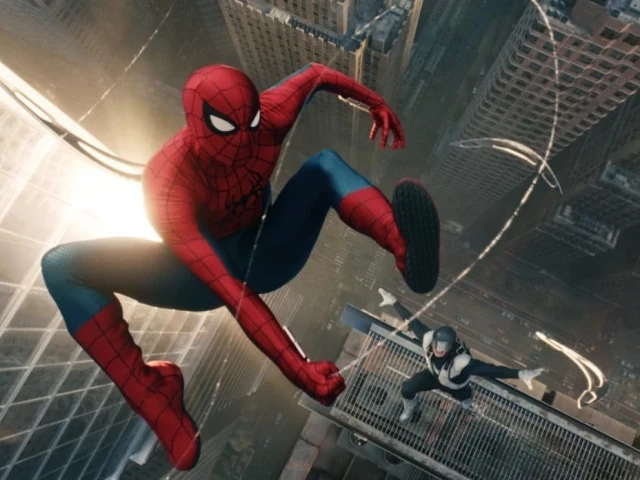
In a seismic shift at the domestic box office that has sent shockwaves through the entertainment industry, Marvel Studios and Sony Pictures’ Spider-Man: Brand New Day has officially dethroned Star Wars: The Force Awakens to become the highest-grossing domestic movie in North American history. Crossing the finish line in a blistering 47 days, the Tom Holland-led superhero epic has pulled in an unprecedented $936.773 million domestically, nudging past the $936 million benchmark that J.J. Abrams’ galactic epic had comfortably guarded since its triumphant theatrical release in December 2015.
This monumental achievement is more than just a passing of the torch between two titan franchises; it is a watershed moment for modern cinema. Coming off the heels of a turbulent, financially unpredictable 2025 for the Walt Disney Company’s broader Marvel Cinematic Universe—which faced uncharacteristic box office stumbles from titles like Captain America: Brave New World and The Fantastic Four: First Steps—Brand New Day has single-handedly revitalized studio confidence in the theatrical ecosystem.
Directed by Destin Daniel Cretton, the film serves as Holland’s fourth solo outing as Peter Parker, picking up the poignant narrative threads left dangling by the multiverse-shattering events of 2021’s Spider-Man: No Way Home. With a staggering global cumulative gross now sitting at $2.45 billion, the film occupies rarified air. It stands proudly as the third-highest-grossing movie of all time worldwide, trailing only James Cameron’s monolithic duo, Avatar and Avengers: Endgame, while successfully leapfrogging modern juggernauts such as Avatar: The Way of Water and cinematic royalty like Titanic.
Read Also
The unprecedented velocity of its box office run—marked by record-shattering weekly holds, fastest-ever pacing to historical milestones, and sustained cultural ubiquity—proves that when the right combination of character affection, narrative intrigue, and theatrical event-status aligns, audiences will return to the silver screen in droves. This report provides an exhaustive breakdown of the milestone, analyzing the historic theatrical run, the underlying context of Marvel’s strategic recovery, and what this paradigm-shifting triumph means for the future of Hollywood.
Detailed Chronology: From Record-Breaking Opening to All-Time Greatness
To truly understand the magnitude of Spider-Man: Brand New Day‘s domestic victory, one must examine the breathless timeline of its theatrical distribution. From its explosive debut in late July to its historic mid-September conquest, the film’s run has been defined by unprecedented velocity and resistance to typical box office fatigue.
The Phenomenal Opening Weekend
The warning signs—or rather, the sirens of historic success—were blaring long before the first weekend figures were officially tabulated. Opening in late July, Spider-Man: Brand New Day shattered expectations by raking in a staggering $360 million domestically in its opening frame alone. Simultaneously, the film captured international imaginations, pulling in a jaw-dropping $932 million globally during its first three days.
Industry analysts had projected a strong opening, given the goodwill generated by No Way Home, but the sheer volume of ticket sales caught even the most optimistic box office prognosticators off guard. Exhibitors reported round-the-clock screenings, with major theater chains adding midnight and early morning showtimes to accommodate unrelenting consumer demand.
Breaching the Ten-Figure Mark and Beyond
If the opening weekend proved the film’s immense pull, its weekday holds cemented its status as an unmitigated cultural phenomenon. Unlike many modern blockbusters that suffer steep 60% to 70% drops in their sophomore frames, Brand New Day displayed preternatural box office stamina.
Driven by strong word-of-mouth, high repeat-viewing rates, and premium format saturation (IMAX, Dolby Cinema, and PLF screens), the film sprinted past the $1 billion threshold globally in a mere six days—one of the fastest paces in cinematic history. Just two weeks later, following its third full weekend in release, the global tally doubled, officially crossing the $2 billion mark.
Domestically, the film rewrote the speed records for every major financial tier. It became the fastest motion picture in North American history to hurtle past the $700 million, $800 million, and $900 million milestones. Until now, Star Wars: The Force Awakens stood almost untouched in its ability to extract capital from domestic audiences, taking 50 days to cross major late-stage hurdles and utilizing the lucrative holiday corridor of late December. Brand New Day, by contrast, accomplished its historic feat during the dog days of summer—a timeframe traditionally considered front-loaded and punishing to multi-week legs.
The Final Stretch to the Crown
By day 40, industry insiders knew the record was within striking distance. The daily tracking figures showed Brand New Day routinely out-earning the inflation-adjusted and raw daily grosses of The Force Awakens during its historic 2015-2016 run.
On day 47, the milestone was officially breached. With the crossing of the $936.773 million mark, Spider-Man: Brand New Day officially claimed the crown as the highest-grossing domestic release of all time, standing as only the second film in cinematic history to ever breach the elusive $900 million domestic threshold.
Supporting Context & Metrics: Decoding the Numbers
The raw statistics behind Spider-Man: Brand New Day tell a story of unmatched commercial dominance, but the context of how these numbers were achieved reveals a changing theatrical landscape.
Global Standing and Financial Hierarchy
With a current global haul of $2.45 billion, Brand New Day has inserted itself into a very exclusive tier of motion pictures. The all-time global box office hierarchy now stands as follows:
- Avatar (2009)
- Avengers: Endgame (2019)
- Spider-Man: Brand New Day (2025)
- Avatar: The Way of Water (2022)
- Titanic (1997)
By surpassing James Cameron’s Avatar: The Way of Water and the legendary Titanic, Sony and Marvel have proven that modern superhero properties can still command the titanic global revenues once reserved strictly for visionary, immersive sci-fi epics and historical tragedies.
Navigating the MCU’s 2025 Correction
The timing of this success could not be more critical for Marvel Studios. The year 2025 had tested the patience of studio executives and shareholders alike. Following years of post-Endgame fatigue, franchise saturation, and shifting consumer tastes, Marvel experienced a decidedly rocky period.
Earlier in the year, high-profile releases such as Captain America: Brave New World and the heavily anticipated franchise reboot The Fantastic Four: First Steps failed to ignite the box office in the manner historical Marvel benchmarks demanded. Critics pointed to narrative bloat, changing audience expectations, and a perceived loss of cultural event status.
Spider-Man: Brand New Day acted as a powerful corrective lens. By returning to a grounded, character-driven narrative—focusing intensely on the psychological toll of Peter Parker’s anonymity—the film answered criticisms that the MCU had become too detached and cosmic. It demonstrated that audiences are not inherently tired of comic book adaptations; rather, they demand high-stakes, emotionally resonant storytelling anchored by beloved actors.
Narrative Foundations & Creative Execution
While the box office receipts capture the financial reality, the creative decisions behind Spider-Man: Brand New Day explain why audiences connected so deeply with the material.
The Post-“No Way Home” Status Quo
Directed by Destin Daniel Cretton—whose empathetic direction in Shang-Chi and the Legend of the Ten Rings proved his aptitude for balancing martial arts spectacle with deep emotional framing—Brand New Day was tasked with an unenviable narrative burden.
Following the conclusion of 2021’s Spider-Man: No Way Home, Peter Parker was left entirely alone. In order to save the universe from fracturing under the weight of multiverse anomalies, a spell was cast that erased Peter Parker from the memories of every human being on Earth, including his best friend Ned, his love interest MJ, and his surrogate family members within the Avengers.
Brand New Day explores the devastating reality of this clean slate. Stripped of his Stark Industries tech, his legal identity, and his support network, Tom Holland’s Peter Parker is forced to operate as a true neighborhood vigilante in New York City. This back-to-basics approach struck a chord with longtime comic book readers who had long advocated for a more street-level, intimate exploration of the character.
Holland’s Defining Performance
Critics and audiences alike have universally praised Tom Holland’s fourth solo outing as his finest performance in the red-and-blue suit. Shedding the teenage innocence of his early MCU appearances, Holland portrays a hardened, weary, yet fundamentally optimistic young man trying to piece together a life in anonymity. The chemistry of the new ensemble cast, combined with Cretton’s grounded pacing, transformed what could have been a standard CGI-heavy blockbuster into a poignant character study disguised as an action epic.
Official Statements and Industry Reaction
The unprecedented success of Spider-Man: Brand New Day has prompted an outpouring of celebratory statements from studio heads, creative talent, and industry analysts.
In an official joint statement released by Sony Pictures Entertainment and Marvel Studios, executives highlighted the collaborative nature of the historic achievement:
"Today marks a historic milestone not just for our studios, but for the theatrical experience as a whole. ‘Spider-Man: Brand New Day’ is a testament to the enduring power of great storytelling, the brilliance of Destin Daniel Cretton, the unmatched dedication of Tom Holland, and above all, the passion of moviegoers around the globe who continue to make the theater a shared home for communal emotion. To break a record held by an institution like ‘Star Wars: The Force Awakens’ is beyond our wildest dreams."
Tom Holland took to social media to express his gratitude to the fans, posting an emotional video message from the set of his next project:
"I am utterly speechless. To the fans who went once, twice, and ten times—who laughed, cried, and cheered in theaters across North America and the world—this belongs to you. Playing Peter Parker has been the privilege of a lifetime, and seeing how much this character means to all of you is what keeps us going. Thank you for making history with us."
Exhibitor associations also weighed in, noting the vital economic impact the film provided during the tail end of the summer season. Major theater chains reported that Brand New Day single-handedly bolstered third-quarter profit margins, proving that the theatrical window remains a remarkably profitable enterprise when fueled by premier intellectual property.
Future Outlook: What Brand New Day Means for Hollywood
As the theatrical run of Spider-Man: Brand New Day gradually cools from its record-shattering peak, industry analysts are already dissecting the long-term implications of its historic triumph.
1. The Blueprint for Franchise Longevity
Hollywood studios have spent the past several years attempting to replicate the interconnected cinematic universe model pioneered by Marvel. However, Brand New Day suggests a pivot in strategy. Rather than leaning heavier into sprawling, multiverse-spanning crossovers that risk alienating casual viewers, studios may look toward "smaller, bigger" stories—narratives that scale down the stakes to focus on intimate character arcs while retaining blockbuster production values.
2. The Health of the Summer Box Office
For years, pundits have debated the viability of the traditional summer movie season, citing streaming competition and changing consumer habits at home. By shattering a record previously held by a December holiday release, Brand New Day has proven that summer remains a prime hunting ground for billion-dollar blockbusters, provided the product possesses unassailable event status.
3. The Future of the Spider-Man Franchise
With Brand New Day crossing $2.45 billion globally and securing its place in the pantheon of cinema history, questions surrounding the future of Sony and Marvel’s collaboration have reached a fever pitch. While executive contracts and future slate details remain closely guarded secrets, one reality is indisputable: Tom Holland’s Peter Parker is currently the most valuable commodity in modern Hollywood.
As Sony and Marvel chart the course for Phase 6 and beyond, Spider-Man: Brand New Day will stand as a monumental reminder of what is possible when cinematic craftsmanship meets generational affection—a glorious, history-making swing that permanently altered the record books of American cinema.





Comments
Facebook App ID not configured. Please add it in the Customizer.