

Executive Overview
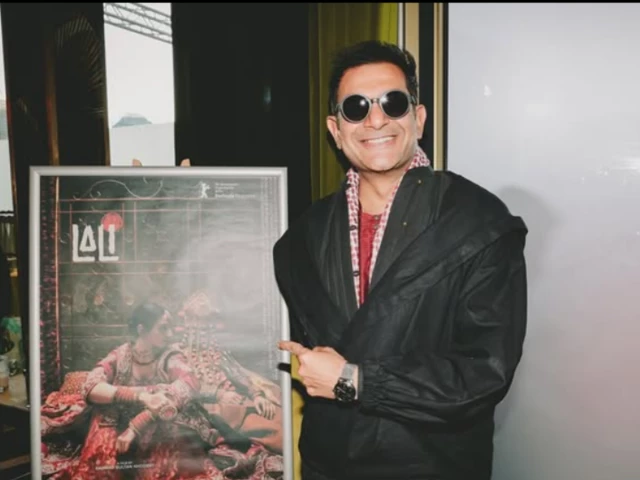
The triumphant international journey of contemporary Pakistani cinema reached another significant milestone as acclaimed filmmaker Sarmad Khoosat secured the prestigious Best Director award for his groundbreaking Punjabi-language drama, Lali, at the 15th annual DC South Asian Film Festival (DCSAFF). This latest recognition underscores a transformative year for the film, which has steadily captivated global audiences, critics, and film festival juries across North America and Europe.
The announcement, made public via DCSAFF’s official social media channels, places Lali at the forefront of the festival’s 2026 "Bridging Cultures Through Films" programming. This specific slate celebrated diverse cinematic achievements across the South Asian diaspora, honoring notable projects such as Boong (Best Feature Film), Hills Don’t Dance Alone (Best Short Film), and recognizing Kritika Kamra as Best Actress for her compelling performance in The Great Shamsuddin Family.
For Khoosat, this victory carries a distinct sense of continuity and personal achievement. This marks his second Best Director win at DCSAFF, having previously claimed the same accolade in 2023 for his universally praised feature, Kamli. Yet, the trajectory of Lali extends far beyond regional festival circuits. Co-written by Khoosat and Sundus Hashmi, the film has broken traditional barriers for Pakistani storytelling on the global stage.
Read Also
From making history in February as the first fully Pakistani-produced feature to screen at the prestigious 76th Berlin International Film Festival (Berlinale), to garnering critical acclaim at the Indian Film Festival of Los Angeles (IFFLA) and securing a prominent opening-day slot at the 70th BFI London Film Festival, Lali has firmly established itself as a masterclass in modern indie filmmaking. As the film prepares for its upcoming red-carpet gala screening as the opening-night feature at the Mississauga International South Asian Film Festival (MISAFF) in Canada, this comprehensive report explores the multifaceted journey of Lali, examining its narrative core, its stellar ensemble cast, its monumental festival run, and its broader impact on the global renaissance of Pakistani cinema.
Detailed Chronology: A Triumphant International Circuit
The ascent of Lali within the global cinematic ecosystem is a testament to meticulous craftsmanship, profound storytelling, and strategic festival positioning. Its journey through the international film circuit has been nothing short of historic, charting a course that redefines the parameters of what Pakistani—and specifically Punjabi-language—cinema can achieve on the world stage.
1. The Berlinale Breakthrough (February)
The watershed moment for Lali occurred in February at the 76th Berlin International Film Festival. In a historic first for the nation’s cinematic history, the film was selected to screen at the Berlinale, making it the first fully Pakistani-produced feature film to achieve this honor. Competing and showcasing alongside the world’s most innovative cinematic voices, Lali introduced international critics to the rich, textured landscape of contemporary Punjabi filmmaking. The selection signaled a definitive shift away from localized distribution models toward international artistic integration, validating years of independent labor by Pakistani auteurs working outside traditional studio systems.
2. Critical Recognition in Los Angeles (April)
Building upon its European momentum, Lali traveled across the Atlantic in April to compete at the Indian Film Festival of Los Angeles (IFFLA). The festival’s feature jury awarded the film a coveted Honorable Mention, explicitly praising its remarkable genre fluidity and visual richness. By defying rigid categorical boundaries—seamlessly blending elements of traditional folklore, psychological drama, and dark social commentary—Lali demonstrated a narrative sophistication that resonated deeply with North American cinephiles and industry insiders alike.
3. The London Showcase (October)
Earlier this month, the film’s international footprint expanded further as it secured a high-profile screening on the opening day of the 70th BFI London Film Festival. Running from October 7 to 18, the festival selected Lali to anchor its vibrant "Laugh" strand. This placement highlighted the film’s multifaceted tonal palette, proving that even within narratives addressing heavy societal stigmas and patriarchal constructs, there exists a profound undercurrent of dark humor, resilience, and human absurdity.
4. DCSAFF Victory and the Canadian Horizon (Current)
Most recently, the film’s festival run was punctuated by Khoosat’s Best Director win at the 15th DC South Asian Film Festival. This victory serves as a psychological and cultural bridge as the production looks northward toward Canada. Lali is officially scheduled to open the Mississauga International South Asian Film Festival (MISAFF) as its red-carpet gala presentation. This upcoming screening is anticipated to draw significant attention from the vibrant South Asian diaspora in North America, further cementing the film’s commercial and critical viability abroad.
Narrative Core and Artistic Execution
At the heart of Lali lies a haunting, deeply atmospheric narrative that interrogates deeply entrenched cultural superstitions, patriarchal control, and female agency. The film centers on Zeba, brought to life by a mesmerizing lead performance by Mamya Shajaffar. Zeba finds herself marginalized and psychologically terrorized by a community that brands her a "cursed bride" following the mysterious, untimely deaths of her previous three suitors.
Navigating a society that weaponizes superstition to subjugate women, Zeba’s fate is once again traded when she is arranged to marry Sajawal, portrayed with nuanced vulnerability by Channan Hanif. The script, co-penned by Sarmad Khoosat and Sundus Hashmi, refuses to lean into simplistic melodrama. Instead, it utilizes the psychological thriller and folk-horror adjacent tropes to construct a blistering critique of systemic misogyny.
A Powerhouse Ensemble and Collaborative Mastery
The artistic weight of Lali is exponentially magnified by its stellar supporting cast and behind-the-scenes powerhouse collaborators. The film features standout performances from Rasti Farooq, celebrated for her work in the globally acclaimed Joyland, and Meher Bano, recognized internationally for her dynamic role in Churails.
Furthermore, the creative pedigree behind the camera is equally formidable. Saim Sadiq, the visionary director whose film Joyland fundamentally shifted the global perception of Pakistani art-house cinema, lent his acute creative sensibility to Lali as its editor. Sadiq’s editorial pacing enhances the film’s visual richness, allowing scenes to breathe while maintaining a tense, hypnotic rhythm that keeps audiences perpetually off-balance.
Supporting Context & Metrics: The Renaissance of Pakistani Indie Cinema
To fully comprehend the significance of Lali’s sweep across the international festival circuit, one must examine the broader socioeconomic and cultural landscape of contemporary Pakistani filmmaking. Over the past decade, Pakistan’s film industry has experienced a bifurcated existence: a commercial mainstream heavily reliant on formulaic romantic comedies and urban actioners, contrasted with an insurgent independent art-house movement that tackles taboo subjects with uncompromising artistic integrity.
| Festival / Event | Date / Period | Accolade / Milestone Achieved |
|---|---|---|
| Berlin International Film Festival | February | First fully Pakistani-produced feature to screen at the Berlinale. |
| Indian Film Festival of Los Angeles | April | Feature Jury Honorable Mention for genre fluidity and visual richness. |
| BFI London Film Festival | October 7–18 | Opening-day screening within the festival’s "Laugh" strand. |
| DC South Asian Film Festival | October | Best Director Award (Sarmad Khoosat); DCSAFF 2026 "Bridging Cultures" slate. |
| Mississauga International South Asian Film Festival (MISAFF) | Upcoming | Official Opening-Night Red Carpet Gala Film (Canada). |
The commercial viability and critical reception of projects like Lali, Kamli, and Joyland indicate a fundamental paradigm shift. International funding bodies, prestigious European and North American film festivals, and discerning global audiences are no longer viewing Pakistani cinema as a regional novelty. Instead, they recognize it as a vital, urgent frontier of world cinema.
Furthermore, the choice of the Punjabi language for Lali carries profound sociolinguistic importance. While Urdu traditionally dominates mainstream Pakistani media and cinema, the deliberate turn toward regional dialects like Punjabi allows filmmakers to tap into authentic cultural specificities, folklore, and vernacular rhythms that resist homogenization. This localization paradoxically grants the art a universal resonance, proving that deeply rooted regional narratives can transcend geographic and linguistic barriers.
Official Statements and Industry Reactions
The reception of the DCSAFF Best Director award elicited gracious and reflective responses from both the festival organizers and the filmmaker himself.
In its official announcement across digital platforms, the DC South Asian Film Festival lauded Khoosat’s directorial vision as a cornerstone of its 2026 mission statement: "Bridging Cultures Through Films." The jury emphasized how Lali transcends conventional storytelling by marrying cinematic aesthetics with urgent social commentary.
Sarmad Khoosat took to Instagram to share his profound appreciation, utilizing his platform to acknowledge the tireless labor of cultural institutions that champion South Asian narratives abroad. In his story update, Khoosat expressed heartfelt gratitude to the organizers and audiences who have "been bringing our stories to America for the last 15 years with so much warmth and dedication." He further extended his praise to the entire ensemble and crew of Lali, whose collaborative efforts brought the complex emotional landscape of the film to vibrant life.
This victory also holds symbolic weight for Khoosat personally. Having won the same category in 2023 for Kamli, his consecutive dominance at DCSAFF solidifies his status as one of South Asia’s most formidable and consistent auteur directors—a filmmaker capable of bridging the gap between deeply intimate regional traumas and universal artistic excellence.
Future Outlook: The Canadian Screenings and Beyond
As the dust settles on its triumphant run in Washington D.C., the immediate horizon for Lali points directly toward Canada. The upcoming gala screening at the Mississauga International South Asian Film Festival (MISAFF) represents a critical juncture for the film’s North American life cycle. MISAFF, known for curating boundary-pushing diaspora and South Asian cinema, provides an ideal platform for Lali to engage directly with multicultural audiences, media critics, and prospective international distributors.
Beyond the Canadian screenings, industry insiders are closely monitoring whether Lali will secure broader commercial distribution across North American streaming platforms and theatrical art-house circuits. Given its unprecedented run at the Berlinale, IFFLA, BFI London, and DCSAFF, the film has effectively de-risked itself for foreign buyers seeking prestige international content.
Ultimately, the journey of Lali serves as an inspiring blueprint for independent filmmakers across the subcontinent. It proves that uncompromising artistic vision, coupled with collaborative brilliance and authentic cultural roots, can conquer traditional distribution hurdles. As Sarmad Khoosat continues to chart new territories for Pakistani cinema, Lali stands as a monumental achievement—a dark, poetic, and visually stunning exploration of survival that will continue to resonate, provoke, and inspire global audiences for years to come.


Comments
Facebook App ID not configured. Please add it in the Customizer.