
Executive Overview
For decades, the contemporary art world has operated under a standardized, high-stakes blueprint: monolithic mega-fairs staged in cavernous convention centers or sprawling tent cities, characterized by sky-high booth fees, exhausting logistics, and an unforgiving environment for smaller players. For independent gallerists, surviving this ecosystem has increasingly felt like a high-stakes gamble against an unpredictable market.
Enter James Cope. A Dallas-based dealer who never envisioned a second career as an art fair organizer, Cope has quietly engineered a quiet revolution from the ground up. Four years ago, he launched the Dallas Invitational with a singular, counter-intuitive premise: strip away the impersonal scale, abandon the bureaucratic application process, and replace the corporate chill with genuine hospitality, community, and curated connection.
Now, that radical experiment in human-centric commerce is going global. Next month, coinciding with the high-octane frenzy of Frieze Week, Cope will launch the inaugural London Invitational at the newly minted Chancery Rosewood in Mayfair. Featuring 12 carefully selected midsize and emerging galleries from the US and UK, the debut marks a watershed moment for a boutique fair model that has captured the imagination—and pocketbooks—of collectors, advisers, and dealers alike. As traditional gallery models face unprecedented financial headwinds and skyrocketing operational overhead, Cope’s intimate, low-overhead alternative offers a compelling blueprint for the future of art market commerce.
Read Also
Detailed Chronology: From a Dallas Hotel Room to Mayfair’s Newest Landmark
The genesis of the Invitational was modest, born out of a desire for camaraderie rather than commercial empire-building.
Phase 1: The Accidental Fair (Dallas Roots)
When James Cope first conceived of the concept four years ago, he envisioned a one-off gathering that would last a couple of days. Frustrated by the alienation and exorbitant costs of exhibiting at larger commercial fairs, he wanted to convene a handful of trusted colleagues in a Dallas hotel for a weekend of shared business and socialization.
"I’m primarily a gallerist, so I never thought I would be an art fair owner or organizer," Cope reflects. "What I’m trying to build with the Invitational is a group of like-minded people coming together to spend a few days together."
Following that initial pop-up, the informal gathering quickly outgrew its domestic footprint. Other galleries began reaching out to inquire about application deadlines, only to discover a defining characteristic of the enterprise: true to its moniker, the fair is strictly invite-only. There are no cold submissions or anonymous jury panels. Instead, growth is dictated by organic relationships, shared aesthetic values, and mutual trust.
Phase 2: Scaling with Hospitality (The Rosewood Partnership)
As the event gained traction, its venue evolved to match its elevated ambitions. In 2025, the Dallas Invitational relocated to the prestigious Mansion on Turtle Creek, a cornerstone of the Hong Kong–based Rosewood Hotels & Resorts portfolio.

In its inaugural year at the Mansion, the fair hosted 15 galleries. Building on that momentum, the following April edition expanded to a second floor, successfully accommodating 22 exhibitors. This disciplined, measured expansion caught the attention of the hotel’s executive leadership. Impressed by the bespoke curation and the high-value clientele the fair attracted, Rosewood representatives approached Cope with an audacious proposal: bring the concept to London.
Phase 3: The International Leap (London Invitational)
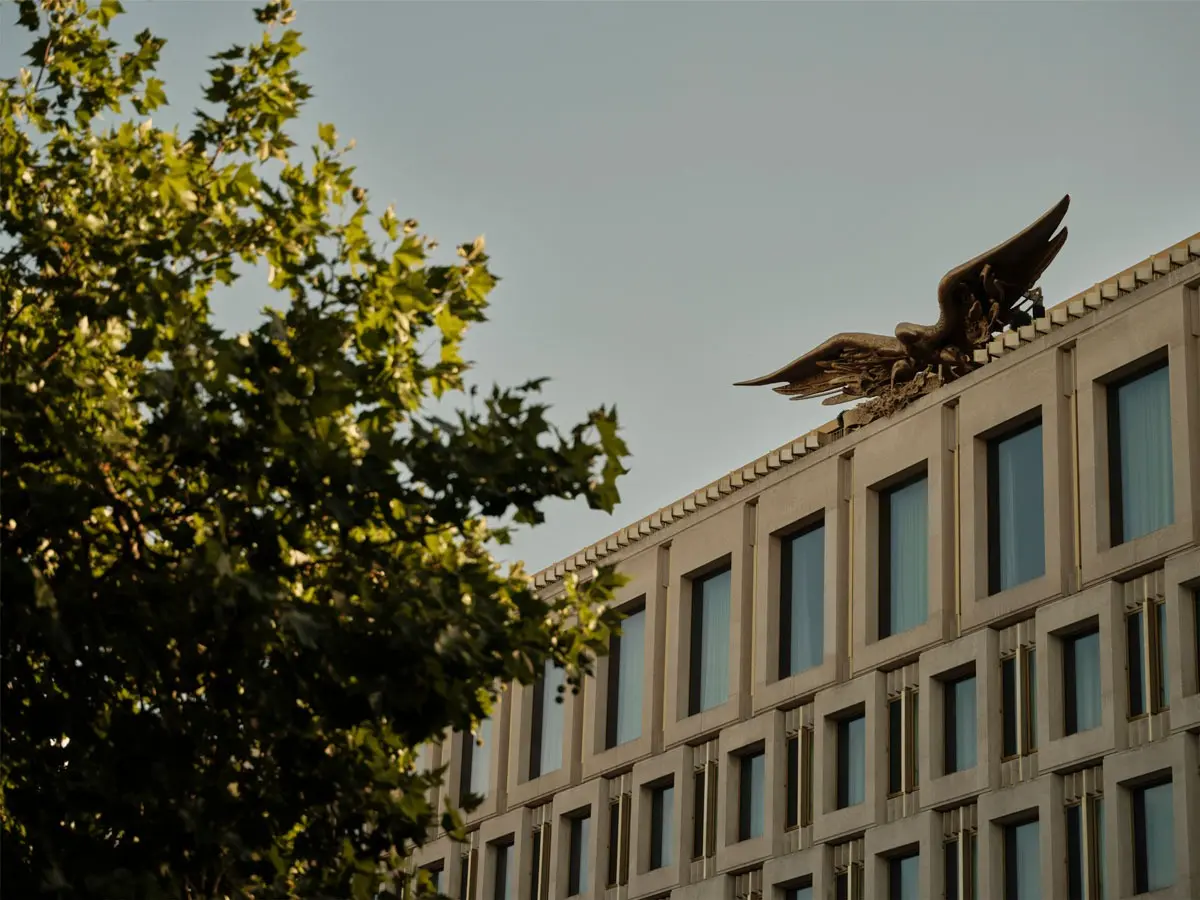
The opportunity converged around Rosewood’s most ambitious European property to date: The Chancery Rosewood. Opening last September, the hotel occupies the former US Embassy on Grosvenor Square in the heart of London’s elite Mayfair district, following a massive, critically acclaimed architectural overhaul led by David Chipperfield.
Invited to tour the property during Frieze Week last year, Cope realized the location offered the exact intersection of heritage, luxury, and intimacy that defined his vision. The result is the upcoming London Invitational, a tightly curated 12-exhibitor presentation running parallel to one of the world’s most important contemporary art weeks.
Supporting Context & Metrics: Navigating an Industry in Transition
The rapid ascent of the Invitational format is not happening in a vacuum. It arrives at a precarious juncture for the global art market.
The Macroeconomic Pressures on Modern Galleries
Over the past several years, structural economic pressures have forced a reckoning across the gallery sector. In both the United States and international hubs, a wave of midsize and emerging galleries have shuttered their permanent spaces. Industry observers frequently point to a toxic cocktail of factors:
- Volatile Patronage: Shifting macroeconomic indicators have made high-net-worth collectors increasingly selective.
- Escalating Overhead: Rising rents, labor costs, and shipping logistics have squeezed operating margins.
- The "Fair Tax": Participating in premier global art fairs can easily cost a midsize gallery tens of thousands of dollars in booth fees, freight, insurance, and travel—frequently turning into a financial loss if sales fall flat.
The Boutique Counter-Strategy
Cope’s model directly addresses these systemic pain points. By keeping the scale manageable and partnering with luxury hospitality venues that are eager to subsidize and activate their own spaces, overhead is aggressively contained.
"The philosophy is to make it accessible for younger galleries and also established galleries to go to a city and do business, because at the end of the day, we’re there to do business," Cope explains. "How can we do that in a way that doesn’t make us go bankrupt?"
Anatomy of the London Lineup
For its inaugural London outing, the fair has assembled a powerhouse roster of 12 galleries that balance international pedigree with local relevance. Ten exhibitors hail from the United States, representing major cultural hubs from Los Angeles to New York and Miami, while two are anchored in London.

Among the London contingent is Vardaxoglou, a dynamic gallery founded in 2020 that has quickly emerged as a critical darling of the British capital’s contemporary scene, notably mounting the first solo exhibition for current Turner Prize nominee Tanoa Sasraku.
| Exhibitor | Location(s) |
|---|---|
| Andrew Reed Gallery | Miami |
| Bel Ami | Los Angeles |
| Broadway | New York |
| Charles Asprey | London |
| EUROPA | New York |
| François Ghebaly | Los Angeles, New York |
| James Cope Gallery | Dallas |
| James Kelly Contemporary | Dallas, Los Angeles |
| LOMEX | New York, Las Vegas |
| Marinaro | New York |
| Franklin Parrasch Gallery | New York |
| Vardaxoglou | London |
Official Statements: Cultivating Community Over Corporate Scale
A cornerstone of Cope’s leadership philosophy is redefining how gallerists are treated when they travel for work. Rather than viewing exhibitors as transient revenue generators who pay for square footage and fend for themselves, Cope treats them as honored guests.
"We really tried to host the galleries when they come to Dallas," Cope notes, detailing how past editions have featured intimate welcome dinners, private tours of prominent collectors’ private homes, and curated introductions to local patrons and museum curators. "I want to treat the galleries like how I feel I want to be treated if I’m going to a fair. I want to create the environment where new connections are happening, business is being done, and we’re enjoying what we’re doing as gallerists."
To scale this high-touch hospitality internationally without compromising quality, Cope expanded his operational leadership team, bringing in two trusted industry veterans as strategic consultants:
- Jessica Nowitzki: An established art adviser and philanthropist who first crossed paths with Cope while working together at the Goss-Michael Foundation. Today, she serves as president of the Dirk Nowitzki Foundation and sits on the board of trustees for the Zeitz Museum of Contemporary African Art (MOCAA) in Cape Town, South Africa.
- Melissa Ireland: The former director of Two x Two for AIDS and Art, Dallas’s premier annual art auction and fundraising gala.
Reflecting on the unexpected trajectory of his curatorial venture, Cope admits the global leap caught even him by surprise. "I didn’t really have any expectations of that when I started," he says. Yet, the convergence of institutional backing from Rosewood and desperate market demand for low-stress sales environments proved irresistible.
Future Outlook: The New Standard for Boutique Fairs?
As the art world descends upon London next month for Frieze Week, the debut of the London Invitational will serve as an essential stress test for the viability of hyper-curated, hospitality-integrated micro-fairs on an international stage.
If the model succeeds in Mayfair—matching the organic enthusiasm, robust sales figures, and community goodwill that characterized its expansion in Dallas—it may well signal a broader paradigm shift. In an era where mega-fairs are increasingly criticized for corporate fatigue and impersonal scale, James Cope has proven that small can be mighty.
By prioritizing human relationships over foot traffic metrics, and sustainable business models over astronomical booth fees, the Invitational framework offers a resilient, highly attractive alternative for the next generation of contemporary art commerce. The question is no longer whether boutique fairs can survive in a volatile market, but how quickly the rest of the industry will attempt to follow Cope’s lead.



Comments
Facebook App ID not configured. Please add it in the Customizer.