
Executive Overview
For over a decade and a half, Amazon Lab126—situated in the heart of Sunnyvale, California—has served as the clandestine incubator for some of the most ubiquitous consumer hardware in modern history. From the foundational lines of the original Kindle to the sweeping adoption of Fire tablets and Fire TV devices, this Bay Area research and development powerhouse has quietly steered how millions consume digital media.
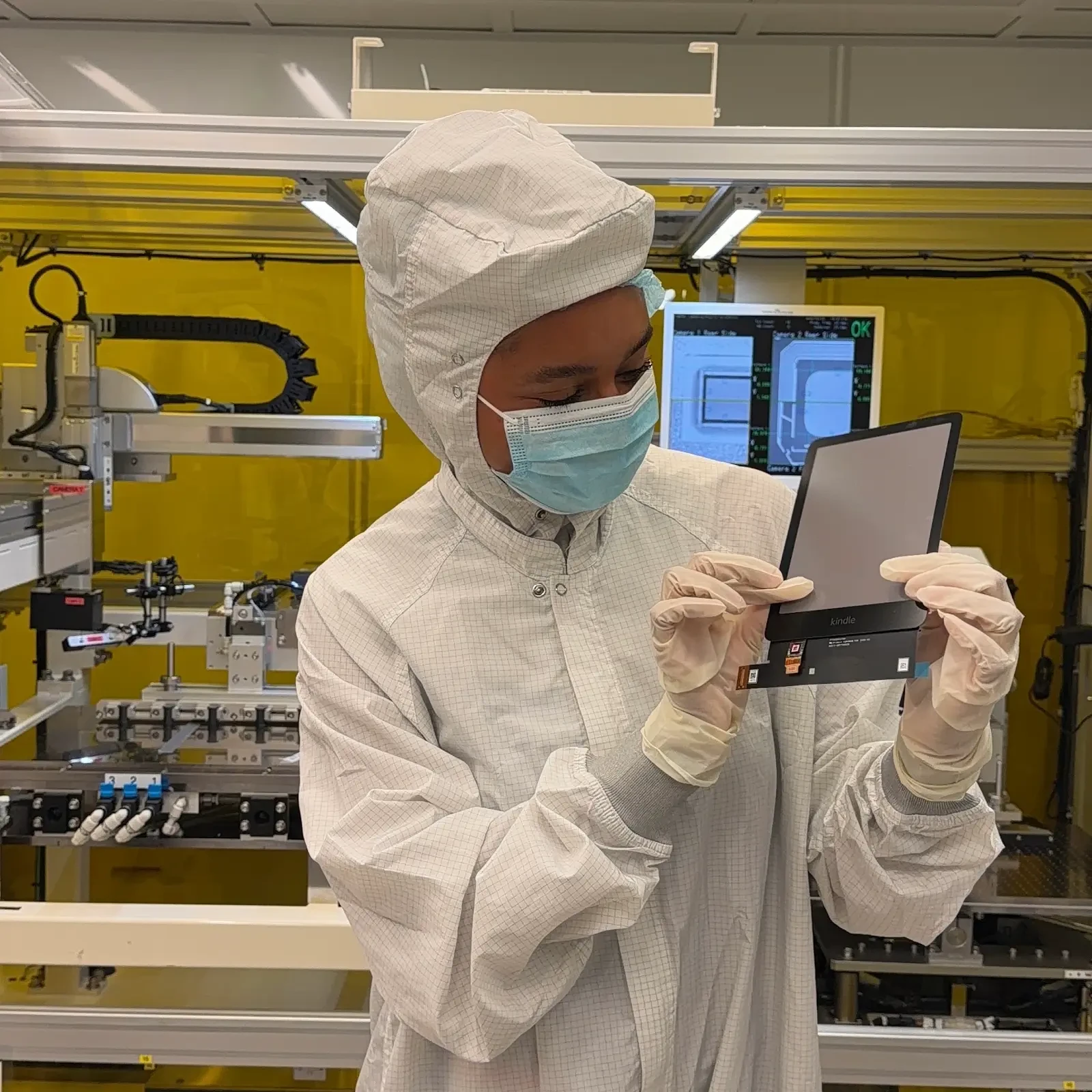
Recently, however, Lab126 opened its heavily guarded doors to a select group of digital creators and young influencers, including Lottie Smalley, Khalilah D., and Kendall Ferrari. This rare, behind-the-scenes access offered the public an unprecedented glimpse into the industrial design laboratories and engineering workshops where the next generation of reading technology is forged.
While the tour provided captivating visuals of cleanrooms, specialized testing machinery, and prototype assemblies—highlighted by upcoming hardware like the anticipated Kindle Scribe Colorsoft—the visit also underscored a massive transition currently underway at Amazon. Industry insiders and leaks point to a sweeping hardware refresh slated for late 2026. Driven by a combination of advancing artificial intelligence integration and stringent new international regulations, Amazon is fundamentally altering how its e-readers are engineered, manufactured, and maintained.
Read Also
The forthcoming generation of Kindles will not merely feature incremental software upgrades; they represent a structural pivot toward enhanced processing power, advanced generative AI features, and—most notably—user-replaceable batteries designed to comply with forthcoming European Union legislation. This report explores the implications of the Lab126 tour, the technological catalysts driving these new devices, and what consumers can expect from Amazon’s hardware division as it navigates a shifting regulatory and technological landscape.
Detailed Chronology of the Lab126 Insider Event
The sequence of events leading up to this recent public relations milestone began months earlier as Amazon’s hardware teams finalized designs for their upcoming product cycles. Historically, Lab126 operates under a strict veil of secrecy, shielding its prototyping phases, acoustic testing chambers, and stress-test laboratories from external view.
The Invitation and Access
In a departure from traditional corporate secrecy, Amazon extended exclusive invitations to prominent digital influencers known for their deep engagement with book culture, lifestyle technology, and reading communities. Creators Lottie Smalley, Khalilah D., and Kendall Ferrari were invited to step past the secure entry points of the Sunnyvale facility.
During the visit, these influencers engaged directly with Amazon’s core engineering teams, industrial designers, and high-ranking product executives. The itinerary was curated to demystify the hardware development pipeline—a process that typically takes anywhere from 18 to 36 months from initial conceptual sketch to mass production.
Behind the Cleanroom Glass
Visitors were guided through specialized labs where materials science, optics, and ergonomics intersect. Of particular interest was the physical handling of next-generation hardware prototypes, including devices designed to test the limits of electronic paper (E Ink) technology. Discussions focused heavily on the meticulous balancing act required to engineer devices that are lightweight, durable, and energy-efficient.
The timing of this open-door event coincided with mounting industry speculation regarding Amazon’s hardware roadmap. By allowing creators to document elements of their visit—culminating in a series of digital features and video walkthroughs titled “I Went Inside the Secret Kindle Lab… Here’s What I Saw”—Amazon signaled a strategic shift toward transparency, attempting to build anticipation for a device lineup that addresses long-standing consumer grievances while adapting to impending global mandates.
Supporting Context & Metrics: The Forces Shaping the Next Kindle Generation
To understand why Amazon is overhauling its Kindle architecture, one must examine the dual pressures of software evolution and international regulatory compliance. Two major pillars are dictating the design of the upcoming 2026 and 2027 hardware generations: the demands of sophisticated onboard artificial intelligence and the ironclad mandates of European Union environmental law.
1. The AI Revolution on E-Ink Displays
For years, e-readers were defined by their simplicity: long battery life, a monochromatic display mimicking real paper, and minimal processing overhead. However, consumer expectations have shifted. Features like Kindle Recaps and the Story So Far narrative summaries have proven that users desire intelligent, context-aware assistance while reading.
To take these capabilities further, Amazon’s upcoming late-2026 e-reader lineup is engineered to feature significantly faster processors and expanded RAM capacity. Running advanced large language models or localized machine-learning algorithms requires computational overhead that legacy Kindle chips simply cannot handle. By upgrading internal silicon, Amazon aims to introduce real-time translation, context generation, and interactive reading companions that operate smoothly without sacrificing the signature responsiveness and eye-comfort of E Ink screens.

2. The EU Battery Directive and the Death of Glue
Perhaps the most disruptive catalyst for change is regulatory. E-reader manufacturers, long accustomed to sealing devices with industrial adhesives to achieve ultra-slim profiles and water resistance, are now facing a hard legal deadline.
The European Union’s landmark battery regulations, slated to take full effect in early 2027, mandate that portable batteries in consumer electronics must be easily removable and replaceable by the end-user using commercially available tools. Companies that fail to comply face severe market restrictions within the EU bloc—a penalty far too steep for global enterprises like Amazon.
According to development insights, Amazon has responded by redesigning the structural chassis of its upcoming Kindles. Abandoning the traditional glued-in battery cells, the new models will feature common, accessible screws on the back panels. This mechanical pivot allows consumers or service technicians to swap out degraded batteries effortlessly. While engineering a waterproof, dust-resistant device with a screw-secured back panel presents significant design challenges, Lab126 engineers have reportedly solved this through precision gasket engineering and modular internal frameworks.
| Feature / Metric | Legacy Kindle Standard (Pre-2026) | Next-Gen Kindle Standard (Late 2026/2027) |
|---|---|---|
| Primary Enclosure | Sealed with industrial-grade adhesives | Modular back panel secured with common screws |
| Battery Serviceability | Non-replaceable / factory-sealed only | User-replaceable to meet EU standards |
| Processing Power | Optimized solely for basic page-turns and rendering | Upgraded multi-core processors & expanded RAM |
| AI Integration | Basic text indexing and simple dictionary lookups | Advanced generative AI (Kindle Recaps, Story So Far, etc.) |
| Compliance Driver | Industry standard consumer electronics design | Mandatory EU Battery Law (Effective early 2027) |
Official Statements and Industry Insights
While corporate communications from Amazon remain measured regarding specific unannounced product release dates, executive commentary during the Lab126 tour highlighted a renewed commitment to human-centric design and sustainable engineering.
Product development leads at Sunnyvale emphasized that balancing user utility with environmental accountability is the primary hurdle for contemporary hardware designers. One senior industrial designer noted during the creator roundtable:
"Designing a device that feels weightless in the hand while adhering to stringent repairability standards requires us to rethink every square millimeter of internal architecture. We aren’t just building readers anymore; we are engineering platforms designed to last for a decade while keeping pace with rapid software innovations."
Industry analysts tracking the consumer electronics space view Amazon’s proactive stance as a bellwether for the entire e-reader industry. Competitors such as Kobo and Boox are likewise grappling with the looming 2027 EU deadlines, but Amazon’s sheer scale allows it to pioneer modular, repair-friendly designs at a mass-market price point. By integrating user-replaceable hardware into high-volume consumer goods, Amazon is effectively setting a new benchmark for device longevity in the digital reading sector.
Future Outlook: What Lies Ahead for Digital Reading
The convergence of advanced artificial intelligence, modular hardware design, and strict environmental legislation marks the close of an era for the traditional, disposable e-reader. As Amazon Lab126 prepares to roll out its new wave of devices—culminating in iterations of the Kindle Scribe Colorsoft and standard monochrome models equipped with enhanced computational power—the consumer experience is poised for a profound transformation.
The Consumer Impact
For the everyday reader, these changes will manifest in tangible ways. Devices will offer faster search capabilities, more intuitive AI-driven reading aids, and—crucially—extended life cycles. No longer will a degraded battery mean discarding an entire device and purchasing a replacement; the inclusion of screw-secured, accessible battery compartments means users can easily refresh their hardware after years of heavy use.
The Broader Tech Landscape
Looking further ahead, the innovations developed within the cleanrooms of Sunnyvale will likely influence other hardware categories within Amazon’s ecosystem. As global sustainability laws tighten, the lessons learned in designing repairable, high-performance E Ink screens will serve as a blueprint for sustainable electronics manufacturing worldwide.
Ultimately, the recent insider look at Lab126 reveals an engineering division at a fascinating crossroads. By embracing the challenges of AI processing and regulatory compliance, Amazon is ensuring that the Kindle brand remains not only relevant, but pioneering, as it enters its next chapter.





Comments
Facebook App ID not configured. Please add it in the Customizer.