
Executive Overview
If you have been on a romantic date recently, the phrase "love is a battlefield" may feel less like a nostalgic pop lyric and more like a grim tactical assessment. Modern dating has evolved into an arena of hyper-vigilance, pre-emptive defense mechanisms, and pervasive distrust. Today’s singles are caught in a paradox: they deeply desire emotional intimacy, yet they approach the dating process armored with skepticism, strict ideological checklists, and a profound weariness born from past digital encounters.
This widespread cultural exhaustion has a name. Coined by writer Asa Seresin, "heteropessimism"—the outward, vocal disdain for heterosexuality and traditional romantic dynamics—now pervades contemporary courtship. But the crisis of connection extends far beyond straight relationships, infecting queer communities and every intersection of modern love. Driven by a volatile mix of algorithmic amplification, polarizing political shifts, shifting gender norms, and the endless scroll of trauma-dumping on social media, dating has transformed.
Instead of viewing a new romantic prospect with baseline human curiosity, modern daters frequently approach strangers like opposing counsel in a deposition. This article examines the anatomy of contemporary romance, exploring how dating apps, internet subcultures, and historical shifts have conspired to make us forget how to be human with one another—and what it will take to lower our guard.
Read Also
Detailed Chronology: Anatomy of a Modern Disastrous Date
To understand the daily toll of this cultural shift, one need only look at how modern dates actually unfold in real-time. The experience of 51-year-old author Lisa Marie Wilson serves as a textbook micro-study in the contemporary dating ritual—one defined by immediate suspicion, projection, and defensive posturing.
Wilson matched with a man on a popular dating application. His profile claimed two things: that he stood 5-foot-10 and that he lived by the beach. When the two finally met in person for a planned coastal walk, only the coastal geography proved accurate. Wilson immediately observed that she and her date were eye-to-eye—and she was well aware that she was not 5-foot-10.
Wisely, Wilson planned to let the minor fabrication slide, recognizing that online dating profiles are often padded with mild exaggerations about height or lighting. However, her date had other plans. Before even offering a warm hello or a standard pleasantry, he turned the weaponized scrutiny inward.
"He told me I wasn’t really 5’9,” Wilson recalled in an interview with Vox.
Even though her date accused her of dishonesty before the conversation had even begun, Wilson extended the benefit of the doubt and proceeded with their walk. Yet, the atmosphere had instantly soured. Rather than enjoying the ocean breeze or learning about each other’s lives, Wilson felt as though she were under interrogation.
"The whole time it was like he was an investigative reporter asking me questions, but kind of like if you were interviewing someone you didn’t like," she noted.
By the conclusion of the walk, Wilson was entirely certain she never wanted to see him again. When he casually offered her a post-date massage, she politely declined, cut the date short, and departed. The turning point was his unwarranted, accusatory comment about her height.
"I was like, ‘I’m not a liar,’" Wilson said. "Pero I think he was—because he obviously wasn’t as tall as he was saying he was."
To add insult to injury, the psychological post-mortem of the date arrived the next morning: Wilson’s date emailed her to formally break things off with her, preemptively rejecting the woman he had already alienated.
This dynamic is not an isolated anomaly. Alex Alberti, a 35-year-old education researcher, experienced a remarkably similar phenomenon when meeting a date at a local coffee shop.
"Literally from the jump, he kind of felt on the defensive and a little bit guarded from just buying coffee," Alberti explained.
Even after transitioning their meeting to a scenic walk around a nearby lake, the date spent the majority of the time venting about his previous romantic trauma—recounting how shallow, rude, and awful other men had been. Halfway through the outing, Alberti checked out mentally, realizing there would be no second date.
According to Alberti, his date was attempting to weaponize past negative experiences as a protective shield, hoping to "beat the bad thing to the punch" by calling out perceived toxicity before it could manifest. Instead, this pre-emptive hostility served only to drive Alberti away.
Supporting Context & Metrics: The Hard Data on Modern Romance
The anecdotal friction experienced by Wilson and Alberti is validated by a growing body of sociological and psychological research tracking the health of human relationships in the mid-2020s. The landscape of romance has shifted dramatically over the past decade, shaped by data points that reveal a population increasingly reluctant to risk heartbreak.
The Rising "Checklist" Mentality
According to data from the Kinsey Institute Singles in America Survey, the percentage of single individuals who maintain a rigid "checklist" of non-negotiable criteria for a prospective partner rose sharply from 25 percent in 2021 to 34 percent. Rather than allowing attraction to spark organically through shared experiences, modern daters increasingly treat partner selection like an automated HR recruitment process, filtering out human beings for minor deviations from an idealized blueprint.
Political Polarization as a Dealbreaker
Romance has also become deeply partisan. Recent studies published in academic sociological journals reveal that a prospective date’s political affiliation—particularly when it diverges from one’s own—has become a primary, non-negotiable dealbreaker. In an era marked by intense political friction, ideological conformity has superseded emotional compatibility.
The Return of Traditional Roles
Simultaneously, traditional gender roles and hyper-conservative values have made a notable cultural resurgence. Gallup polling data highlights a shifting moral acceptability surrounding traditional behaviors, hardening societal ideas of what romance "ought" to look like. This has warped expectations across the board: young men are increasingly influenced by internet subcultures promoting hyper-masculinity and female subservience, while women navigate a landscape where chivalry is frequently conflated with control.
The Dating Recession and Youth Isolation
This structural hostility has tangible consequences: people are simply dating less. A prominent study by the Wheatley Institute on the "dating recession" found that more than half of single young adults aged 22 to 35 stated that past breakups made them explicitly reluctant to pursue new relationships. Meanwhile, Pew Research Center data indicates that roughly one-third of single Americans who have never married have never been in a committed romantic relationship at all.
Official Statements & Expert Perspectives
To parse why modern courtship feels so combative, Vox consulted leading psychologists, historians, and relationship researchers who have dedicated their careers to studying human connection.
Paul Eastwick, a psychology professor at the University of California, Davis, and author of Bonded By Evolution: The New Science of Love and Connection, points out that modern dating apps have fundamentally broken the traditional "slow-burn" model of human attraction.
"If you’re eternally suspicious, that tends to be a boundary to attraction," Eastwick told Vox. He notes that historically, human beings formed romantic attachments gradually through shared social networks—churches, schools, workplaces, or family gatherings—where mutual friends could vouch for a stranger’s character.
Since the early 2010s, however, apps have replaced natural community vetting with an endless queue of absolute strangers.
"It’s not like, I got to know this person naturally," Eastwick explains. "When somebody is a stranger, it’s maybe a little easier to come in with whatever negative assumptions you’ve gleaned from these online spaces."
Daniel Cox, director of the Survey Center on American Life and author of Generation Uncoupled: America’s New Gender Divide and the Crisis of Human Connection, emphasizes that contemporary daters exhibit a complete intolerance for ordinary interpersonal friction.
"There’s a growing discomfort with the normal friction, that if you say or do the wrong thing, it’s cringe, it’s disqualifiable; there’s no appetite for any kind of misstep," Cox stated. This leaves singles operating under an impossibly high standard of perfection—one that inevitably leads to quick dismissals and perpetual singlehood.
Rebecca Davis, a professor of history and women and gender studies at the University of Delaware, notes that while venting about romantic frustrations has always been a communal bonding ritual—from 1970s feminist consciousness-raising groups to men complaining at local pubs—social media has distorted this mechanism. Platforms like TikTok, Reddit, and Instagram reward extreme, sensationalized content through algorithms that amplify generalizations like "all men are toxic" or "all women are shallow."
"People are good at finding a reason to externalize the difficulty of dating," notes writer Asa Seresin, who coined the term heteropessimism. It is psychologically much easier to blame an entire gender or structural dating app economy than it is to examine one’s own behavioral contributions to a failed romance.
Future Outlook: Lowering the Guard in an Age of Cynicism
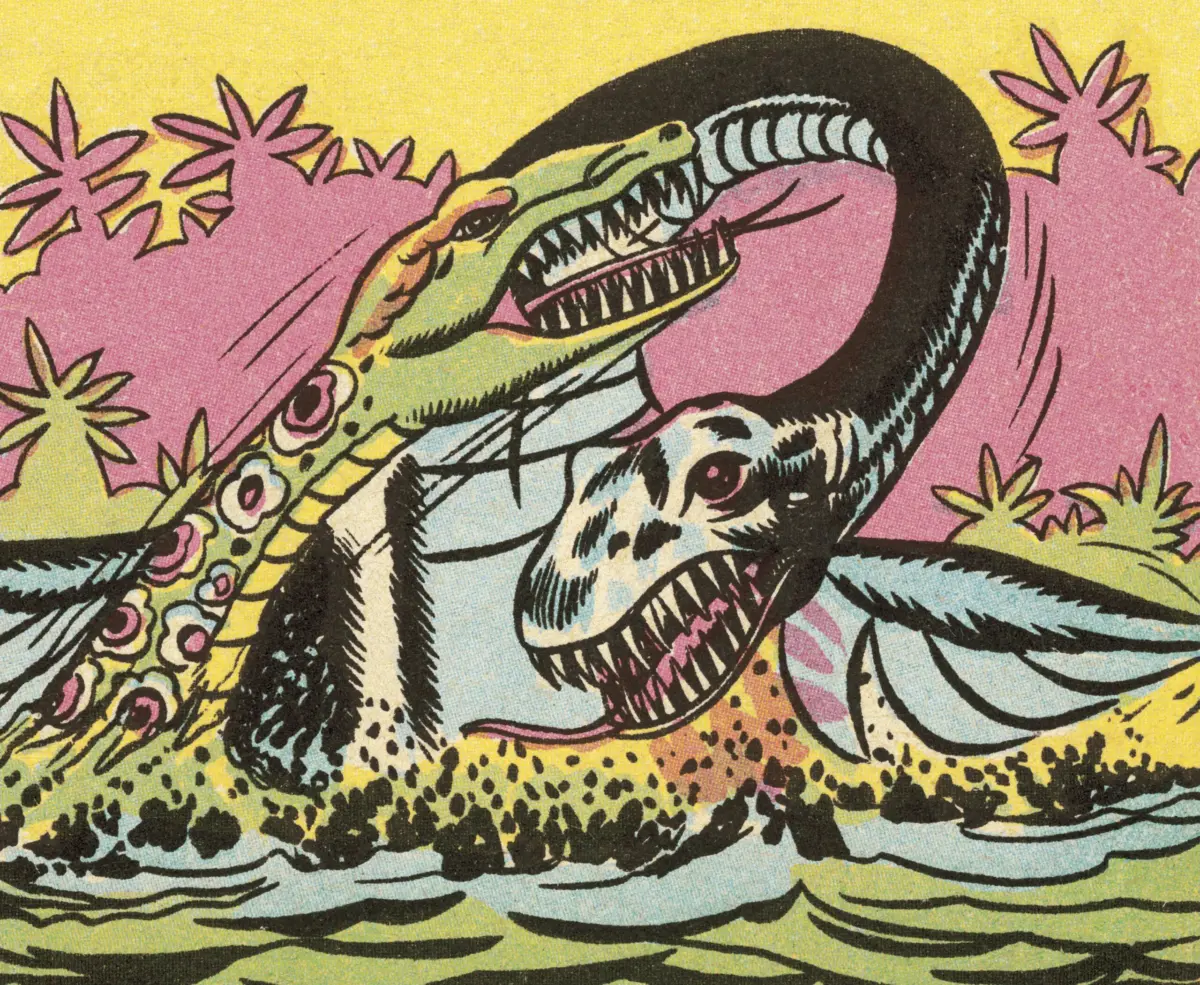
As we look toward the remainder of the decade, the fundamental question facing single people is clear: How can humanity reclaim romance from the jaws of algorithms and deep-seated cynicism?
The defensive walls that modern daters construct—summarized by the psychological defense mechanism of “You can’t hurt me if I never let you in”—ultimately serve as self-fulfilling prophecies. When individuals approach a first date armed with suspicion, interrogation tactics, and pre-emptive grievances, they suffocate the vulnerability required to spark genuine affection.
Experts agree that escaping this trap requires a conscious, radical shift in perspective. Singles must learn to separate their past trauma from present opportunities. A single bad date or a toxic former partner does not serve as an infallible predictor for every future interaction.
Instead of entering dates with a prosecutorial mindset designed to catch someone in a lie or evaluate their compliance with an impossible checklist, daters must cultivate curiosity. True connection requires accepting that the person sitting across the table is simply a flawed, complicated human being who has likely also experienced pain, and who is navigating the exact same digital wilderness in search of warmth.
Until society learns to quiet the algorithms that monetize outrage and turns down the internal volume of preemptive defense mechanisms, the dating battlefield will remain hostile. But for those willing to embrace the inherent risks of vulnerability, the reward remains unchanged: the possibility of finding someone willing to lower their armor, too.


Comments
Facebook App ID not configured. Please add it in the Customizer.