
Executive Overview
In an era defined by perpetual connectivity, fragmented attention, and the relentless hum of digital notifications, the act of deep, uninterrupted writing has evolved from a routine artistic practice into a radical act of cognitive reclamation. For writers across all genres—whether crafting investigative journalism, speculative fiction, personal memoir, or corporate prose—the ultimate objective is rarely just the physical output of words. Instead, it is the pursuit of a specific psychological state characterized by total immersion, energized focus, and profound enjoyment: the state of flow.
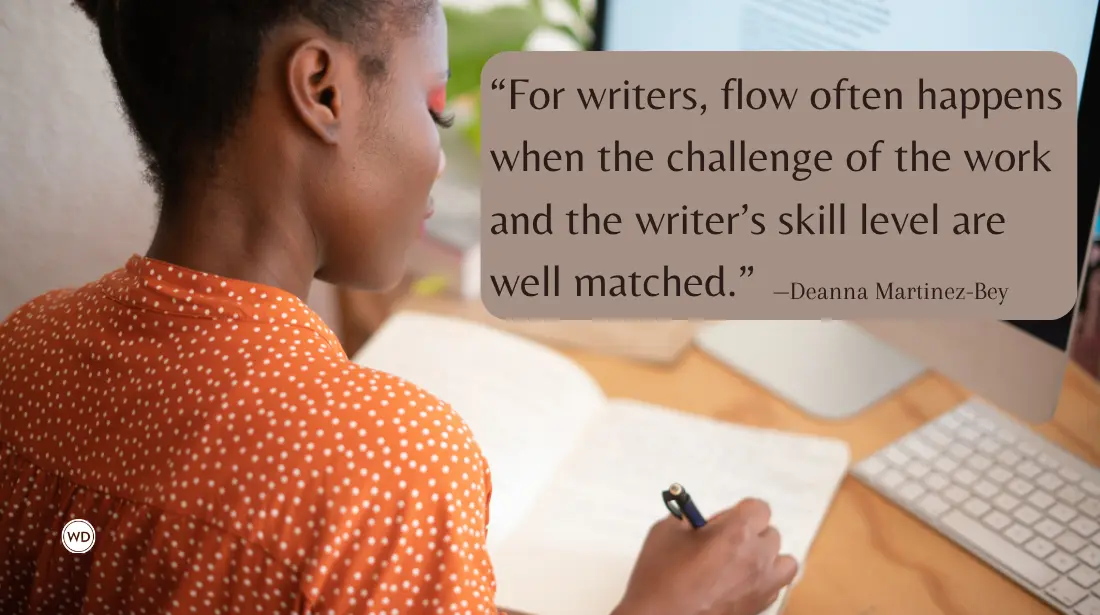
First conceptualized and popularized by pioneering psychologist Mihaly Csikszentmihalyi, flow represents the optimal human experience where challenge and skill intersect in perfect equilibrium. When a writer achieves this state, the external world—with its laundry, domestic chores, financial anxieties, and societal pressures—fades into the periphery. Time warps, self-consciousness dissolves, and the act of writing becomes intensely self-rewarding.
Beyond its obvious utility as a productivity engine that populates blank documents, the flow state offers a far more vital, under-discussed benefit: a restorative mental reset. Modern life forces the human brain to operate with dozens of cognitive "tabs" running simultaneously in the background, spanning professional obligations, familial responsibilities, and the endless stream of social media stimuli. Immersion in creative writing acts as a powerful cognitive circuit breaker, systematically closing those background tabs and offering psychological clarity.
Read Also
However, flow is neither a mystical accident nor a rare lightning strike reserved for the literary elite. It is a trainable mental state governed by behavioral triggers, environmental design, and deliberate habit formation. By dismantling the myths of passive inspiration, lowering the friction of entry, relinquishing the shackles of perfectionism, and embracing micro-habits over marathon sessions, any writer can systematically unlock the transformative power of the zone.
Detailed Chronology: The Evolution and Mechanics of Creative Immersion
To understand how writers access and sustain the flow state, it is necessary to examine how our relationship with focus and creativity has transformed over the past century—and the specific sequence of events that occurs within the human mind during a successful writing session.
Phase One: The Pre-Digital Era vs. The Modern Distraction Economy
Historically, writers operated within environments characterized by natural friction. Prior to the advent of the personal computer, the internet, and the smartphone, the physical acts of drafting—typing on a manual typewriter or writing longhand in a bound notebook—demanded deliberate pacing. Physical corrections required liquid paper, erasers, or entirely fresh sheets of paper. This inherent physical barrier acted as a natural filter against distraction.
As the publishing and communications landscape shifted toward digital word processing, writers gained unprecedented editing speed and research capabilities, but they also inherited a Trojan horse of constant connectivity. The modern writing chronology now begins not with the opening of a notebook, but with the high-stakes battle to transition from a hyper-stimulated state—checking email, scrolling social feeds, reading breaking news alerts—into a mono-tasking cognitive state.
Phase Two: Entering the Threshold (The Friction Point)
The chronological journey of a writing session typically commences with a 10-to-20-minute transition phase fraught with psychological resistance. This is the moment when the human brain, naturally wired to conserve energy and seek immediate rewards, resists the abstract, effortful challenge of facing a blank page.
During this threshold phase, the writer experiences micro-impulses to check notifications, tidy the workspace, or make an unnecessary cup of coffee. Successfully navigating this window requires overcoming the initial activation energy. Writers who rely on willpower alone often fail here; those who rely on established behavioral cues cross the threshold seamlessly.
Phase Three: The Onset of Flow
Once the initial resistance is broken and the writer engages with the material—matching their current skill level to a manageable narrative or structural challenge—the neurochemical shift occurs. Dopamine, norepinephrine, and endorphins flood the neural pathways, enhancing pattern recognition, suppressing the inner critic (the ventromedial prefrontal cortex, associated with self-monitoring, temporarily downregulates), and locking attention onto the immediate task.
At this point in the timeline, the writer ceases to judge individual sentences as they materialize. The psychological distance between thought and text collapses. Time distortion sets in: hours can pass in what feels like minutes, and physical discomforts such as hunger or fatigue temporarily vanish.
Phase Four: The Post-Flow Resolution
The final phase of the creative cycle is the transition out of flow. Whether triggered by an external interruption, physical exhaustion, or the natural completion of a scene, exiting the zone often brings a sudden wave of physical fatigue coupled with a distinct sense of mental buoyancy. Crucially, the writer who navigates this phase strategically will leave a deliberate breadcrumb—an unfinished sentence or a structural note—guaranteeing that the next entry into the chronological cycle encounters significantly less friction.
Supporting Context & Metrics: The Cognitive Architecture of the Zone
While creative writing is often viewed through a purely artistic lens, cognitive science and empirical productivity metrics provide a rigorous framework for understanding why flow matters and how it alters brain function.
The Psychology of Challenge and Skill
Csikszentmihalyi’s foundational research established that flow occurs in a narrow channel between boredom and anxiety. If a writing task is too simple relative to the writer’s capability (e.g., proofreading a basic email), the brain grows bored and seeks stimulation elsewhere. Conversely, if the task exceeds the writer’s skill level without adequate scaffolding (e.g., attempting an experimental, multi-layered literary structure without prior practice), anxiety and frustration take over.
| Mental State | Skill Level | Challenge Level | Psychological Outcome |
|---|---|---|---|
| Boredom | High | Low | Disengagement, wandering attention |
| Anxiety | Low | High | Overwhelm, paralysis, perfectionism |
| Flow | Balanced | Balanced | Deep focus, timelessness, high output |
The Cost of Digital Fragmentation
Modern psychological metrics illustrate the severe toll that digital interruptions take on creative work. According to research from the University of California, Irvine, it takes an average of 23 minutes and 15 seconds to return to a deep focus task after a single interruption.
For writers, this means that glancing at a single smartphone notification does not merely cost five seconds; it effectively resets the chronological countdown required to enter the flow state. When multiplied across a typical workday—where knowledge workers are interrupted every few minutes—the cumulative loss of deep creative time explains why many writers feel profoundly exhausted at the end of the day despite having produced very few substantive words.
The Mental Health Dividends
Beyond word counts and structural coherence, writing in a flow state serves an essential emotional function. Clinical psychology recognizes expressive writing as a powerful tool for processing trauma, managing grief, and organizing complex emotional landscapes. When a writer becomes fully immersed in a narrative or a piece of personal essay, the brain utilizes symbolic language to externalize internal chaos.
Transforming abstract emotional friction into concrete syntax on a page allows the human psyche to examine, reorganize, and integrate difficult life experiences. In essence, the blank document becomes a container for mental clutter, clearing cognitive bandwidth for everyday functioning.
Official Perspectives: Insights from Cognitive Scientists and Literary Masters
To further contextualize the mechanics of creative focus, we turn to the observations of prominent researchers and celebrated authors who have dedicated their lives to mastering the art of deep work.
Dr. Mihaly Csikszentmihalyi on the Autotelic Experience
In his seminal work on optimal experience, Dr. Csikszentmihalyi emphasized the concept of the autotelic activity—an activity that is intrinsically rewarding, where the end goal is secondary to the sheer pleasure of the process itself.
"The best moments in our lives are not the passive, receptive, relaxing times… The best moments usually occur if a person’s body or mind is stretched to its limits in a voluntary effort to accomplish something difficult and worthwhile."
For writers, this perspective dismantles the transactional view of writing solely as a means to secure publication, financial gain, or social validation. When writing becomes autotelic, the act of stringing words together becomes its own justification, bypassing the paralyzing anxiety of market reception.
Authorial Insights on Routine and Ritual
Celebrated novelists and journalists have long understood that waiting for divine inspiration is a trap.
- Stephen King, in his memoir-manifesto On Writing, famously advocates for closed-door discipline: "Write with the door closed, rewrite with the door open." King emphasizes that physical boundaries and consistent daily quotas signal to the subconscious mind that the professional work of creation has commenced.
- Toni Morrison, balancing a high-powered career as an editor and single mother, famously carved out her writing time in the early morning hours before her children awoke, noting that the discipline of the routine was what allowed her deep creativity to flourish without demanding elaborate environmental perfection.
- Haruki Murakami, known for his rigorous physical and mental endurance, attributes his prolific output not to sporadic bursts of genius, but to strict adherence to a daily routine that includes waking at 4:00 AM, writing for five or six hours, and running 10 kilometers. For Murakami, habit is the engine that drives the flow state.
Future Outlook: Protecting Deep Creativity in an Automated World
As we look toward the future of writing and creative work, the value of the flow state is poised to appreciate exponentially.
The Rise of Generative AI and the Human Imperative
The rapid proliferation of artificial intelligence tools capable of generating syntactic prose, summarizing data, and drafting surface-level content fundamentally shifts the definition of writing value. If automated tools can instantly produce standard, formulaic text, the economic and artistic differentiator will no longer be mere word generation.
Instead, the true value of human writing will lie in authentic voice, deep emotional resonance, idiosyncratic vulnerability, and original thought—qualities that can only be forged when a human being dives deep into the cognitive flow state. Artificial intelligence can process information, but it cannot experience the psychological clarity, therapeutic release, or existential discovery of a human writer wrestling with a complex truth on a blank page.
Designing the Future Writer’s Sanctuary
As external distractions multiply through augmented reality, constant ambient connectivity, and information saturation, the future of sustainable writing will rely heavily on deliberate environmental design. Writers and knowledge organizations will increasingly adopt structured "deep work" protocols, offline sanctuaries, and cognitive boundaries designed to protect human attention.
Strategies for the future writer include:
- Hard Technological Separation: Utilizing dedicated, offline writing machines devoid of web browsers, email clients, and notification systems.
- Micro-Session Acceptance: Abandoning the myth of the three-hour uninterrupted block in favor of 20-to-30-minute high-intensity micro-habits that cumulatively build profound creative output.
- Leaving Strategic Breadcrumbs: Ending every writing session with a deliberately unfinished sentence or explicit structural roadmap, ensuring zero activation friction on the following day.
- Embracing Bad First Drafts: Actively disabling the internal editor during initial drafting phases to protect the fragile beginning of the flow state from the corrosive effects of perfectionism.
Conclusion
Ultimately, getting lost in the act of writing is not a detachment from reality; it is a profound re-engagement with what it means to think, feel, and create. The outside world—with its endless administrative demands, glowing screens, and ringing phones—will always be waiting when the session concludes. But a writer who masters the art of entering the zone returns from that journey not only with a manuscript populated by new words, but with a clearer mind, a quieter nervous system, and a renewed sense of cognitive sovereignty. And in the modern world, that quiet clarity is the rarest magic of all.

Comments
Facebook App ID not configured. Please add it in the Customizer.