
Executive Overview
The Church of England is enduring a turbulent season defined by compounding administrative missteps, cultural controversies, and structural reforms that threaten to alter the ancient relationship between church and state. Within a matter of weeks, the venerable institution has lurked from one public relations crisis to another—ranging from the commercialization of sacred architecture to international diplomatic embarrassments driven by vetting oversights.
Compounding these internal struggles is a legislative pivot from Downing Street. Prime Minister Andy Burnham has introduced a bill designed to dismantle centuries-old constitutional restrictions, permitting Catholics and Jews to formally participate in the appointment process of Church of England bishops. While theoretically designed to correct historical exclusions dating back to the Relief Acts of the nineteenth century, the move has ignited intense debate regarding the modern identity of the state church, the nature of secular interference in sacred governance, and the relentless drift of Anglican leadership toward progressive cultural conformity.
This report provides a comprehensive examination of the multifaceted crises facing the Church of England. Through a detailed chronology of recent events, an analysis of the new legislative framework, official responses from stakeholders, and a forward-looking assessment of ecclesiastical stability, this article investigates whether these developments represent a superficial gesture toward inclusivity or a deeper, irreversible symptom of an institution losing its theological anchor.
Read Also
Detailed Chronology of a Tumultuous Season
The current crisis facing the Church of England is not an isolated event but rather the culmination of consecutive public relations failures and tectonic shifts in constitutional protocol.
1. The St. Paul’s Cathedral Controversy
The trouble began when officials at St. Paul’s Cathedral—Sir Christopher Wren’s iconic masterpiece and the spiritual heart of the capital—announced a commercial agreement with a high-end London nightclub. The deal permitted the sacred space to be utilized as an event venue, triggering immediate blowback from traditionalists, architectural purists, and regular congregants alike. Critics argued that leasing out an architectural and spiritual monument for secular nightlife trivialized its consecrated purpose, signaling a desperate scramble for revenue at the expense of ecclesiastical dignity.
2. The Lambeth Palace Interfaith Award Debacle
Scarcely had the echoes of the St. Paul’s controversy faded when Lambeth Palace became embroiled in an international embarrassment. To mark the twenty-fifth anniversary of the September 11 terrorist attacks, the archbishop of Canterbury presented an interfaith award to Hafiz Tahir Ashrafi, a prominent Muslim cleric from Pakistan.
Within days, the award was hastily revoked after public outcry highlighted past comments made by Ashrafi praising Osama bin Laden. The controversy deepened when it was revealed that a basic, publicly available internet search would have immediately flagged the cleric’s controversial background.
Lambeth Palace’s defense—that Ashrafi claimed his remarks were taken out of context—did little to quell the storm. The context in question dated back to 2007, when British author Salman Rushdie, a law-abiding citizen and celebrated literary figure, was named for a knighthood. In response, the Pakistan Ulema Council, chaired by Ashrafi, announced it would confer upon bin Laden the title of Saifullah, which Ashrafi publicly championed as "the highest title for a Muslim warrior." The failure of Church vetting protocols to uncover such a prominent public stance underscored a staggering operational disconnect at the highest levels of Anglican leadership.
3. Prime Minister Burnham’s Constitutional Reform
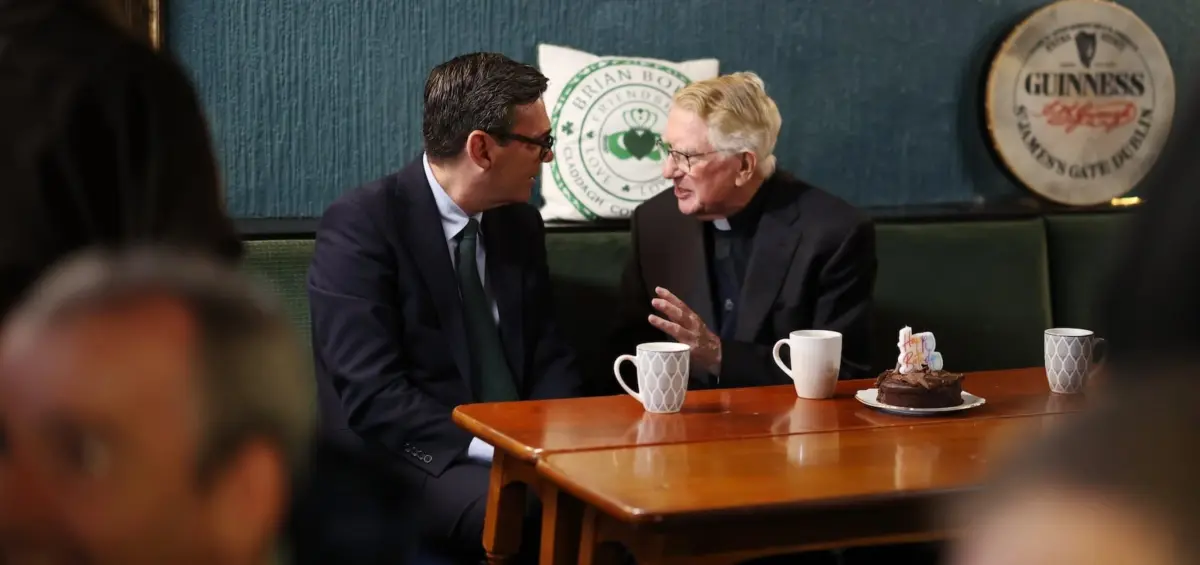
Amid these self-inflicted wounds, Prime Minister Andy Burnham introduced formal legislation aimed at removing antiquated constitutional rules that bar Catholics and Jews from participating in the appointment of Church of England bishops.
Up until the nineteenth century, non-Protestants were systematically excluded from public life, including service in Parliament. While these barriers were nominally dismantled by the Roman Catholic Relief Act of 1829 and the Jews Relief Act of 1858, both statutes maintained a specific carve-out: Catholic and Jewish prime ministers remained legally prohibited from advising the monarch on episcopal candidates.
Burnham, a lifelong Catholic residing at Number 10, represents a historical milestone. While past prime ministers like Benjamin Disraeli were ethnically Jewish, Disraeli was baptized into the Church of England. Furthermore, recent decades have seen leaders of various backgrounds—such as the atheist Keir Starmer and the Hindu Rishi Sunak—navigate these archaic rules without statutory obstruction, largely because the mechanics of the appointment process have evolved from a dual-recommendation model under the Crown Nominations Commission to a streamlined single-candidate presentation.
Supporting Context & Metrics: The Mechanics of State Church and Secular Politics
To understand the weight of Burnham’s proposed legislation, one must analyze the interplay between modern demographics, political motivations, and the historical reality of Erastianism—the subordination of ecclesiastical authority to the state.
The Political Calculus of Gesture Politics
From a practical standpoint, Burnham’s legislative reform solves a problem that has never actively materialized. Catholics and Jews do not represent an aggrieved demographic clamoring for representation on the Crown Nominations Commission. The pool of potential go-betweens linking the commission to the king has never been a hot-button issue for suburban families or inner-city voters.
Instead, political analysts view the move as an exercise in symbolic "gesture politics." The Labour Party maintains deep political ties to urban constituencies and increasingly mobilized Muslim voting blocs, where rhetoric surrounding Middle Eastern foreign policy—such as Gaza—regularly outperforms domestic constitutional housekeeping. However, adjusting the religious eligibility criteria for handling episcopal paperwork offers a convenient vehicle for signaling progressive pluralism without touching core economic or geopolitical tripwires.
The Myth of the Unbroken Reformation
When examining the broader historical canvas, the idea that this legislation signals the "end of the Reformation" is overstated. The entanglement of the secular state with church governance and liturgy is as old as the English Reformation itself. It served as a primary driver of religious and political bloodshed throughout the sixteenth and seventeenth centuries.
As religious diversity in the United Kingdom has expanded exponentially over the past century, maintaining public legitimacy for a state-established church has grown increasingly elusive. For generations, the leadership of the Church of England has attempted to resolve this conundrum by adopting a "religious veneer" tailored to contemporary English cultural values—specifically, progressive touchstones like radical inclusivity, environmentalism, and secular tolerance.
However, these values are entirely untethered from distinctively Christian dogmas. Over time, they have frequently morphed into positions antithetical to historic Christian orthodoxy and traditional moral teaching.
Official Statements and Stakeholder Perspectives
Reactions to the proposed legislation and the Church’s recent missteps have laid bare deep ideological fault lines among theologians, politicians, and ordinary observers.
- Government Representatives: Proponents of the legislation argue that the bill is a necessary housekeeping measure that eliminates discriminatory relics from the statute books. A government spokesperson emphasized that removing outdated constitutional rules aligns modern British governance with contemporary standards of religious equality and inclusion.
- Ecclesiastical Insiders: Official commentary from Lambeth Palace and diocesan leadership has remained relatively muted regarding the constitutional changes, preferring to focus on ongoing modernization efforts and interfaith dialogue. However, behind closed doors, clergy members have expressed fatigue over continuous public relations crises that distract from pastoral missions.
- Traditionalist and Academic Critics: Observers from traditional orthodox perspectives have offered biting critiques. One theologian remarked that introducing orthodox Catholics into the appointment mix would ironically inject a refreshing rigor into an Anglican apparatus that has frequently struggled with foundational doctrines, such as the Trinity, the Incarnation, the Resurrection, and the very existence of God—pointing back to historical anomalies like the non-realist theology popularized by figures such as Anglican priest Don Cupitt.
Future Outlook: The Administrative Church and Cultural Drift
If Prime Minister Burnham’s legislation successfully passes through Parliament, it will likely serve as a quiet, definitive confirmation of a reality that many have suspected for decades: the Church of England functions primarily as an administrative body, a ceremonial arm of the state rather than a spiritually militant vanguard.
While isolated bright spots occasionally emerge—such as the current leadership’s more robustly Christian stance against assisted suicide compared to previous eras—these represent incremental victories in an otherwise broad institutional retreat. The overarching trajectory of the Church’s leadership remains firmly anchored to the secular zeitgeist, frequently prioritizing lectures on systemic racism, corporate capitalism, and ecological catastrophe over the proclamation of historic gospel truths.
Key Indicators to Watch:
- Legislative Passage: Whether the Repeal Bill clears parliamentary hurdles without major amendments or unexpected resistance from Anglican traditionalists in the House of Lords.
- Episcopal Appointments: How future prime ministers—regardless of personal faith—utilize their advisory roles under the updated framework, and whether non-Protestant leaders actively shape the theological leanings of upcoming diocesan bishops.
- Institutional Secularization: The ongoing debate surrounding the disestablishment of the Church of England, as cultural divergence between national progressive values and traditional Christian doctrine widens.
Ultimately, amending the pool of intermediaries who transmit names from the Crown Nominations Commission to the monarch will do little to alter the spiritual trajectory of the Church of England. The Protestant identity of the establishment was relinquished across generations of theological compromise and cultural accommodation. Whether administered by Protestants, atheists, Hindus, or Catholics, the contemporary Church faces an existential challenge that requires far more than legislative modernization: a return to the foundational truths of its faith.





Comments
Facebook App ID not configured. Please add it in the Customizer.