
Executive Overview
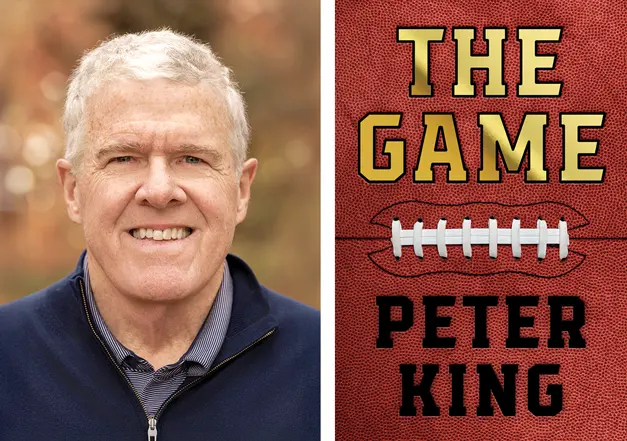
In the grand tapestry of modern American culture, few institutions wield the monolithic influence, economic power, and psychological grip of the National Football League (NFL). For over forty years, the sport has transformed from a seasonal pastime—closely rivaling America’s traditional pastime, baseball—into a near-year-round cultural juggernaut. This monumental shift forms the beating heart of The Game, a sweeping new literary and journalistic chronicle by veteran sportswriter Peter King. Drawing on a legendary career that spans four decades on the front lines of professional football, King offers a panoramic view of an industry undergoing perpetual metamorphosis.
This article examines the trajectory of the NFL as detailed through King’s reflective insights, probing the tectonic shifts in media dominance, the evolving legacy of league commissioners, the existential shadow of player safety and chronic traumatic encephalopathy (CTE), and the resilient pipeline of athletic talent that guarantees the sport’s dominance for decades to come. As the cultural footprint of football expands, understanding its past is no longer merely a matter of sports history; it is an essential study in the architecture of modern entertainment, capitalism, and public obsession.
Detailed Chronology: From Seasonal Sport to 11.5-Month Monolith
To truly understand the NFL today, one must measure the distance between the league of the early 1980s and the hyper-commercialized colossus of the mid-2020s. When King first began covering professional football as a beat reporter, the landscape was markedly different. Statistically, football held a razor-thin advantage over baseball—leading by a mere single percentage point in national popularity polls. It was a sport anchored firmly in autumn and winter, a five- or six-month affair that commanded Sunday afternoons and Monday nights before retreating into the shadows of the spring and summer.
Read Also
[1980s: Seasonal Sport] ---> [2000s: Strategic Expansion] ---> [Present Day: 11.5-Month Obsession]
(Slight lead over baseball;      (Draft & Free Agency boom;        (Year-round news cycle, global
 Autumn/Winter focus)             NFL Network launch)             games, 365-day engagement)
The transformation from a seasonal sport into an omnipresent American obsession did not happen by accident. It was engineered through a combination of visionary media strategies, technological adaptations, and an aggressive corporate mindset designed to dominate the sports calendar. Over the decades, the league systematically colonized the off-season. Events that were once quiet administrative functions—such as the NFL Draft, the Scouting Combine, and the opening of free agency—were converted into prime-time television spectacles, generating massive ratings and endless media cycles.
King points out that the league’s leadership became acutely cognizant of a singular marketing imperative: total calendar ownership. By carefully spacing out milestones across the spring and summer—from the release of the regular-season schedule in May to training camps in July and August—the NFL effectively eliminated its own off-season. Today, football commands attention for eleven and a half months out of the year, leaving barely a two-week vacuum before the cycle resets. This relentless pacing has altered the psychology of the American sports consumer, cementing the NFL not just as a game to be watched, but as an ongoing narrative universe that demands daily engagement.
Supporting Context & Metrics: The Architecture of Modern Dominance
The expansion of the NFL’s calendar footprint is supported by staggering economic and cultural metrics. No longer content with domestic television contracts, the league has evolved into a global economic engine.
The Financial Engine and Media Rights
The valuation of NFL franchises has skyrocketed over the past forty years, driven by multi-billion-dollar media rights agreements with major broadcasting networks and streaming giants. While early television deals were lucrative for their time, modern agreements encompass tens of billions of dollars distributed across traditional linear television, cable, and subscription-based streaming platforms like Amazon Prime Video and YouTube TV. This multi-platform approach ensures that every demographic—from digital-native Gen Z consumers to legacy television viewers—remains tethered to the product.
| Era | Primary Media Focus | Off-Season Engagement | Cultural Standing |
|---|---|---|---|
| 1980s | Sunday broadcasts, Monday Night Football | Minimal (Print media, radio recaps) | Neck-and-neck with baseball |
| 2000s | Cable expansion, NFL Network, early internet | Growing Draft & Free Agency coverage | Clear domestic sports leader |
| Present Day | Streaming, global series, social media integration | 11.5-month cycle, year-round news | Uncontested entertainment titan |
Furthermore, the league’s international series—expanding regular-season games into London, Munich, Madrid, and Mexico City—demonstrates a calculated push toward global market saturation. The metrics indicate that football’s appeal transcends geographic and cultural boundaries, converting international audiences into loyal consumers of American gridiron culture.
Official Statements & Leadership: The Commissioners Who Shaped the League
The trajectory of the NFL cannot be separated from the men who occupied the commissioner’s office. In The Game, King reflects on the distinct leadership styles of three major figures who defined the modern era of professional football: Pete Rozelle, Paul Tagliabue, and Roger Goodell. According to King, a fundamental axiom governs the role: a successful commissioner should ideally be seen and not heard. In a public-facing sport of this magnitude, however, remaining entirely in the background is an impossible luxury. How a commissioner arbitrates disputes, manages crises, and structures business deals dictates the very destiny of the sport.
Pete Rozelle: The Legal Battles and Public Stature
Pete Rozelle, who presided over the league from 1960 to 1989, is widely credited with architecting the modern NFL through the merger with the American Football League (AFL) and the expansion of television revenue sharing. However, King notes the immense friction of Rozelle’s final years in office. During his last seven years, Rozelle effectively faced "two strikes," mired in relentless antitrust litigation and legal battles that tested the structural integrity of professional sports administration. Rozelle’s tenure proved that the commissioner’s office would henceforth be as much a courtroom as a boardroom.
Paul Tagliabue: The Business Architect
Succeeding Rozelle in 1989, Paul Tagliabue shifted the administrative focus squarely toward economic expansion and labor stability. Tagliabue navigated delicate collective bargaining negotiations and solidified the league’s financial footing. However, looking back with the benefit of hindsight, King observes that Tagliabue—alongside the broader football establishment—was "late to the party on head trauma." While Tagliabue’s tenure was characterized by masterclass business acumen and labor peace, it occurred during an era when the long-term neurological consequences of repetitive sub-concussive impacts were largely ignored or downplayed by the sports establishment.
Roger Goodell: Growth at All Costs
Roger Goodell assumed the mantle of commissioner in 2006, inheriting a league of unprecedented wealth alongside an unfolding public health crisis regarding player safety. King characterizes Goodell’s leadership as an unyielding drive to ensure the game continues to grow, "even if some elements of that growth might not be for the best."
Goodell has aggressively pursued international expansion, digital media partnerships, and revenue diversification. Yet, this expansion has frequently brought him into direct conflict with players, fans, and medical advocates over disciplinary consistency, the expansion to a 17-game regular season, and the ongoing struggle to mitigate player injuries. In King’s assessment, Goodell represents the quintessential modern executive: hyper-focused on scale and profitability, navigating the tightrope between moral responsibility and corporate expansion.
The Existential Shadow: Head Trauma, CTE, and Moral Reckoning
No discussion of modern football can ignore its most pressing existential threat: the prevalence of head trauma, concussions, and chronic traumatic encephalopathy (CTE). For decades, the link between repetitive football collisions and degenerative brain disease was minimized, obfuscated, or outright denied by league officials. Today, however, the scientific consensus is clear, leaving fans, players, and journalists to confront a difficult reality.
King addresses this moral dilemma with candid pragmatism. He asserts that anyone who truly loves football must eventually come to a personal peace regarding the inherent dangers of the sport. The empirical evidence is stark: numerous former NFL players, post-mortem brain examinations have revealed widespread markers of CTE, a progressive degenerative brain disease found in people with a history of repetitive brain trauma.
+-------------------------------------------------------+
|               THE FAN'S DILEMMA                       |
|                                                       |
|  [Moral Concern: CTE & Safety]                        |
|              VS.                                      |
|  [Cultural Love: Entertainment & Narrative]           |
|                                                       |
|  Resolution: Justifying the danger through informed   |
|              player agency and personal acceptance.   |
+-------------------------------------------------------+
To reconcile this passion with the sport’s violent toll, observers must balance their affection for the game against the sobering knowledge of its physical consequences. King’s justification rests upon the principle of informed agency: adult athletes enter the professional ranks with a clear, eyes-open understanding of the physical risks involved. They are compensated handsomely for their labor, and while the league has instituted sweeping rule changes, helmet technology upgrades, and independent neurological spotters to improve safety, the fundamental nature of tackle football remains high-impact and inherently hazardous.
This uneasy truce—between the beauty of athletic mastery and the tragedy of neurological decline—remains the central paradox of modern fandom. It forces every stakeholder to continually evaluate their complicity in a sport that extracts a heavy physical toll from its gladiators.
Future Outlook: The Next Forty Years of Gridiron Dominance
As sportswriters and analysts project the trajectory of the NFL into the distant future, skepticism frequently collides with demographic reality. Critics point to youth participation declines in tackle football, parental anxiety over concussions, and changing media consumption habits as signs of potential vulnerability. King, however, remains resolutely bullish on the league’s prospects.
Looking forward over the next thirty to forty years, King argues that football is not going away. The cultural machinery underpinning the sport is simply too robust. The NFL is not merely a game; it is the premier driver of leisure time and entertainment for tens of millions of Americans.
Crucially, the pipeline of athletic talent shows no signs of drying up. The generational cycle of inspiration remains vibrant and self-sustaining. King paints a vivid picture of the modern youth experience:
"There are kids right now who are four, five, or six years old who are going to watch TV and say, ‘I want to be Lamar Jackson. I want to be Patrick Mahomes. I want to be Ja’Marr Chase.’"
These dynamic, transcendent superstars capture the imagination of children across the globe, ensuring that a fresh crop of elite athletes will continuously emerge to fill the ranks. While predicting the state of the league a century from now may be an exercise in futility due to rapid technological and societal shifts, King is confident in the medium-term horizon. Over the next three to four decades, there is virtually zero danger of football losing its primacy in the American cultural consciousness.
Conclusion
Peter King’s reflections in The Game serve as both a nostalgic look backward and a sharp analytical treatise on the state of modern sports. Over forty years of covering the NFL, King has witnessed the maturation of a seasonal pastime into an all-powerful corporate and cultural empire.
While the journey has been fraught with legal battles, commissioner controversies, and the dark cloud of neurological trauma, the sport’s adaptive genius has kept it firmly at the center of the American experience. As long as millions of viewers tune in every autumn weekend—and as long as young children dream of emulating the acrobatic brilliance of modern icons—the gridiron will remain the undisputed throne of the American sports landscape.




Comments
Facebook App ID not configured. Please add it in the Customizer.