
Executive Overview
The Star Trek franchise has always thrived on temporal trickery, timeline alterations, and reality-bending anomalies. When a series like Star Trek: Strange New Worlds dives headfirst into "What if?" scenarios, it opens the floodgates for easter eggs, deep-cut callbacks, and clever winks at long-time fans. The latest episode of the Paramount+ critically acclaimed series is no exception, delivering a narrative dense with enough speculative fiction and chronological chicanery to keep internet forums buzzing for weeks.
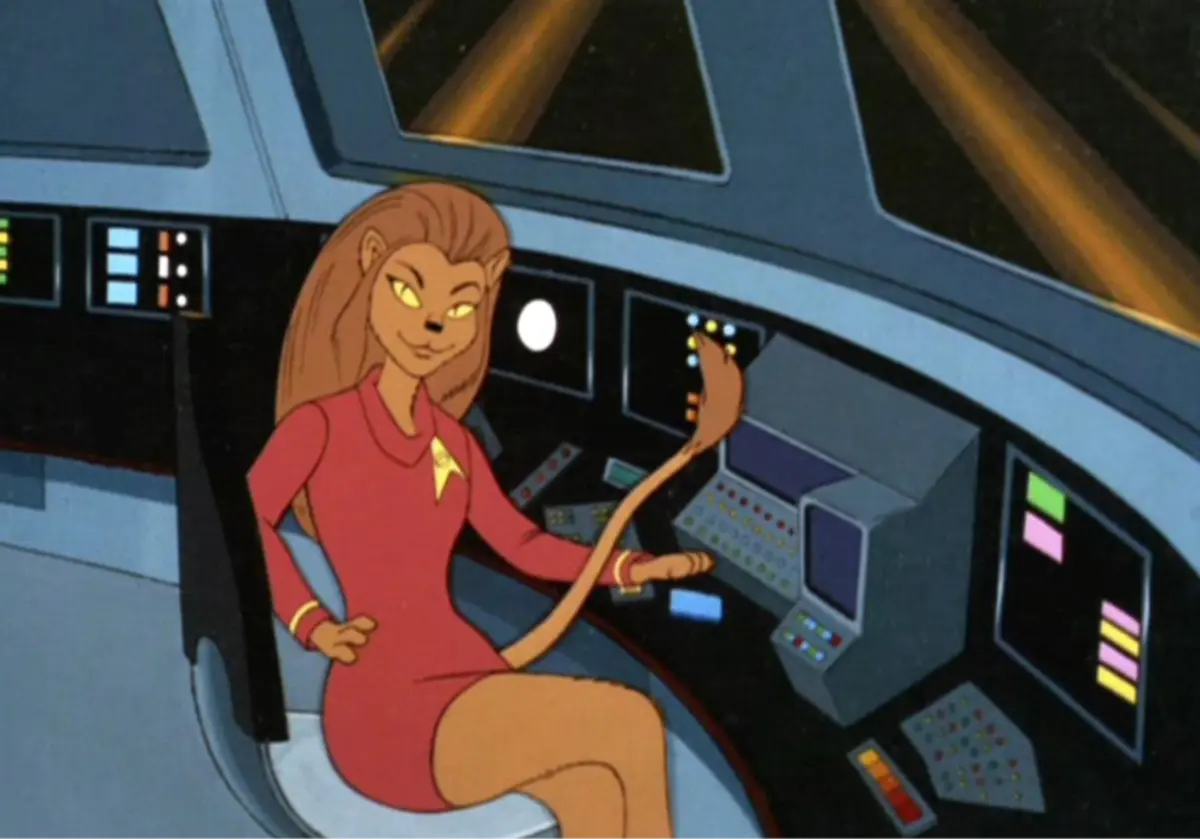
However, amidst the high-stakes drama and mind-bending temporal mechanics, two specific background appearances have completely stolen the spotlight: blink-and-you’ll-miss-it cameos by classic, albeit obscure, alien characters from the franchise’s animated past. Sharp-eyed viewers have identified what appear to be none of other than M’Ress—the feline Caitian officer—and Aleek-Om—the avian Aurelian—seamlessly integrated into the bustling corridors and shuttle bays of the USS Enterprise.
These subtle nods to Star Trek: The Animated Series (TAS) represent much more than mere background window dressing. They bridge decades of television history, challenge established franchise lore, and force die-hard continuity enthusiasts to reevaluate how modern showrunners navigate the sacred yet fragile glass canon of the Star Trek universe. This report provides an in-depth analysis of these background appearances, exploring their production context, chronological implications within the Star Trek timeline, and what they signal for the future of world-building in the franchise.
Read Also
Detailed Chronology: Unpacking the "Tomorrow’s Enterprise" Easter Eggs
To truly appreciate the weight of these recent cameos, one must first examine the specific sequence of events within the episode and map them against the broader, often convoluted timeline of Star Trek lore.
The cameo frenzy erupts during a high-tension sequence where Lieutenant Nyota Uhura is preparing for a hazardous spacewalk. As the camera tracks the meticulous preparations inside the ship’s primary shuttle bay, the background is rich with standard Starfleet operational activity. Yet, peering past the primary action, eagle-eyed viewers caught sight of an unmistakable feline humanoid clad in a classic Starfleet science division uniform.
The M’Ress Conundrum
This towering, fur-covered figure bears all the unmistakable physical characteristics of a Caitian, a feline species introduced to live-action canon much later in Star Trek IV: The Voyage Home, but originally popularized by Lieutenant M’Ress in Filmation’s Star Trek: The Animated Series (1973–1974). In TAS, M’Ress served as a relief communications officer—frequently stepping in for Uhura—and occasionally took the helm as science officer when Commander Spock was deployed on away missions.
However, introducing M’Ress (or a member of her species) into the visual landscape of Strange New Worlds creates an immediate, delightfully nerdy continuity puzzle:
- The Timeline Clash: Presuming Strange New Worlds takes place around the year 2263, the crew is operating roughly half a decade before the events of The Animated Series, which is canonically indexed around 2269.
- Age and Assignment: If this individual is indeed M’Ress, it suggests she was serving aboard the Enterprise or within active Starfleet vessels years earlier than previously documented in alpha-canon records.
While critics of strict continuity might groan at this chronological compression, showrunners have effectively utilized a clever narrative safety valve. By framing the appearance as a fleeting background detail rather than a central plot point, the creative team has left themselves a "chronological out." Whether this individual is M’Ress herself—perhaps visiting the vessel on a temporary tour, participating in an exchange program, or simply stationed aboard early—or merely another Caitian officer paying silent homage to the character, it enriches the living-inhabited feel of the ship without shattering the foundational bedrock of franchise canon.
Enter Aleek-Om: The Avian Enigma
If the Caitian cameo wasn’t enough to send lorehounds scrambling to Memory Alpha, the episode doubles down with an even more obscure reference moments later in the same sequence. In the very same vicinity of the shuttle bay, viewers with a keen eye for alien anatomy spotted a tall, yellow, bird-like extraterrestrial.
This avian figure closely mirrors Aleek-Om, a member of the Aurelian race who originally debuted in the beloved TAS episode "Yesteryear"—a narrative masterclass that explored Spock’s childhood on Vulcan.
The inclusion of an Aurelian opens up thrilling thematic avenues:
- Historical Parallels: In "Yesteryear," Aleek-Om’s species and culture intersected with temporal mechanics and historical observation, deeply tied to the mysterious Guardian of Forever.
- Expanded Universe Ties: Within licensed Star Trek novels—which many fans treat as semi-canonical guideposts—Aleek-Om’s later career sees him joining the Department of Temporal Investigations (DTI).
Given that the plot of this Strange New Worlds episode revolves heavily around time anomalies and temporal instability, the presence of an Aurelian—or a character reminiscent of Aleek-Om—creates a poetic, recursive loop. If this individual shares an institutional or personal tie to temporal monitoring, their quiet observation of Uhura’s temporal predicament is a brilliantly layered piece of environmental storytelling.
Supporting Context & Metrics: The Evolution of Animated Canon
For decades, Star Trek: The Animated Series occupied an awkward, contested space within the franchise’s hierarchy of canon. Commissioned by Filmation and running for two seasons, TAS featured the return of almost the entire original live-action cast voicing their iconic characters, supplemented by rich alien concepts that live-action television budgets of the 1970s simply could not support.
For a long time, traditionalists debated whether animated adventures counted as "real" Star Trek history. However, modern franchise stewards under executive producers like Alex Kurtzman have systematically worked to reclaim and validate elements from TAS, integrating them into high-budget live-action productions.
| Feature / Element | Star Trek: The Animated Series (1973) | Star Trek: Strange New Worlds (Modern Era) |
|---|---|---|
| Medium | Traditional 2D Animation (Filmation) | High-Definition Live-Action VFX |
| Budgetary Constraints | Restricted by 1970s television animation limits | Blockbuster-tier cinematic television budgets |
| Treatment of M’Ress | Regular supporting bridge/communications officer | Background cameo / visual easter egg |
| Treatment of Aleek-Om | Featured in the iconic time-travel episode "Yesteryear" | Visual nod within a temporal anomaly narrative |
| Canon Status | Historically disputed; officially integrated into modern lore | Fully embraced as part of expanding prime timeline |
This systematic reclamation is not merely about fan service; it is a vital metrics-driven strategy for audience engagement. Streaming platforms rely heavily on viewer retention, social media amplification, and community-driven discourse. Easter eggs function as high-value currency in the digital age. When a background extra sparks a thousand-word Reddit thread or a dedicated video essay on YouTube, it mathematically expands the show’s digital footprint, driving organic marketing and deepening fan loyalty.
Official Statements & Creative Intent
While Paramount+ executives and series showrunners Akiva Goldsman and Henry Alonso Myers often keep the specifics of upcoming plot points tightly under wraps, previous interviews regarding the creative philosophy of Strange New Worlds shed immense light on why these deep cuts are prioritized.
In past panels discussing the world-building philosophy of the series, the creative team emphasized a desire to treat the entire tapestry of Star Trek history as an open playground. Rather than viewing older, lesser-known iterations of the franchise as liabilities or outdated media to be ignored, the modern production teams view them as a vast chest of buried treasure.
"We want the ship to feel lived-in, vibrant, and deeply connected to every era of Star Trek that came before it," a production source close to the series noted during a recent behind-the-scenes featurette. "If you love The Animated Series, we want you to feel seen. If you’ve never heard of M’Ress or Aleek-Om, they simply look like fascinating, alien members of a diverse Starfleet crew that make the Enterprise feel authentic and expansive."
This dual-layer storytelling ensures that casual viewers are never alienated by continuity deep-dives, while franchise purists are rewarded for their decades-long dedication with visual details that validate their deep knowledge of Star Trek lore.
Future Outlook: What This Means for the Franchise
The successful integration of legacy animated characters into the live-action aesthetic of Strange New Worlds signals a very promising trajectory for the broader Star Trek universe. As the franchise continues to expand across multiple series, eras, and platforms, the rigid boundaries separating "live-action canon" from "animated history" are effectively dissolving.
Looking forward, fans can anticipate several exciting developments based on this creative trend:
- Expanded Alien Diversity in Live-Action: The successful translation of complex, non-humanoid or non-standard humanoid designs like Caitians and Aurelians proves that modern practical creature effects, prosthetics, and CGI can bring any classic species into live-action with dignity and realism. We may see more diverse alien officers stepping out of the background and into speaking roles.
- Deeper Cuts into Franchise Lore: With the success of these cameos, writers rooms across upcoming Star Trek projects will likely feel emboldened to pull even deeper from the extended universe, incorporating references to comic books, novels, video games, and lesser-seen television eras.
- Reimagining Established Characters: Should the narrative demand it, the door is now wide open for characters like M’Ress to transition from silent background cameos into fully realized, speaking live-action characters in future seasons or spin-off projects.
Ultimately, these temporal shenanigans and background easter eggs do more than just entertain—they reinforce the core philosophical message of Star Trek itself: infinite diversity in infinite combinations. By honoring its past while boldly charting new narrative frontiers, Strange New Worlds continues to prove why it remains one of the finest iterations of science fiction on television today.



Comments
Facebook App ID not configured. Please add it in the Customizer.