
Executive Overview
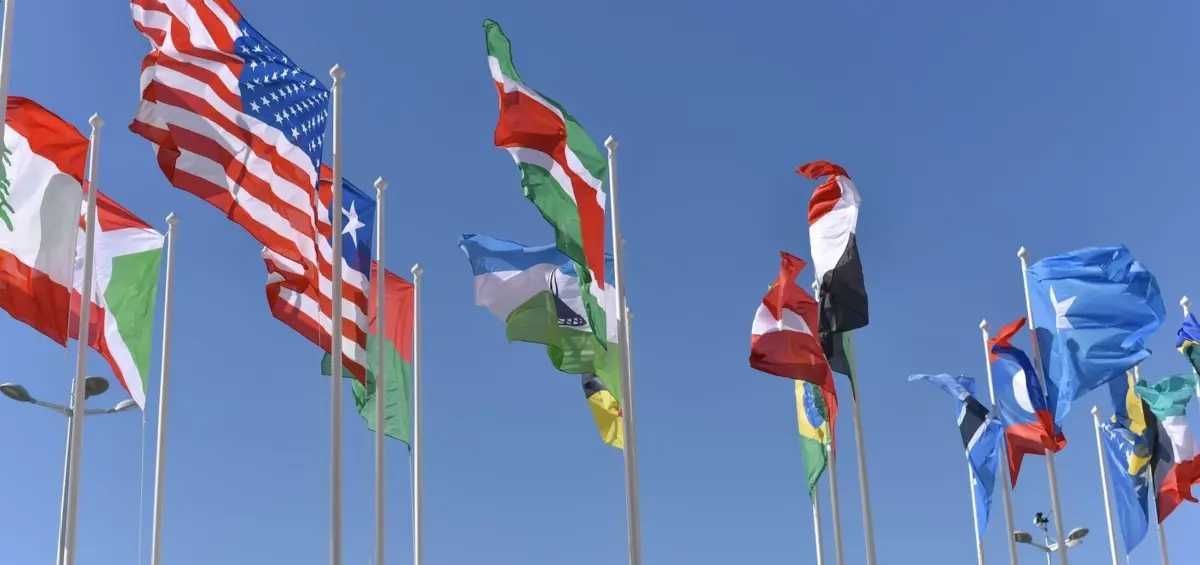
To the modern observer, the political architecture of our planet appears neatly compartmentalized into roughly two hundred distinct, sovereign nation-states. Each is endowed with cleanly cartographic borders, a unified central government, a dominant national language, a codified culture, and a collective psychological consensus of shared identity. This Westphalian ideal—symbolized by the iconic blue-tinted glass of the United Nations headquarters overlooking Manhattan’s East River—provides a comforting, rough-and-ready blueprint of global order.
Yet, this tidy geographic and political consensus dissolves upon closer inspection. The assumption that humanity is naturally divided into uniform, homogenous "nations" is a relatively recent historical fiction. In reality, the global political landscape is a complex tapestry of overlapping tribal loyalties, historical imperial residues, coerced linguistic unifications, and porous economic dependencies.
This profound conceptual mismatch is far from mere academic pedantry; it has immediate, high-stakes consequences for real-world governance and foreign policy. When political leaders invoke vague doctrines of "national interest" or craft "nationalist" platforms based on a flawed, monolithic definition of the state, the resulting policies are inherently erratic and contradictory. Whether debating immigration controls, economic protectionism, or international military intervention, societies repeatedly collide with the reality that the term "nation" is too pliable a category to guide a principled, effective statecraft. To navigate an increasingly volatile world, policymakers must abandon outdated cartographic dogmas and embrace a more refined taxonomy of political species.
Read Also
Detailed Chronology: The Evolution and Fracture of Political Formats
To understand the fragility of the modern nation-state, one must examine the historical trajectory of human political organization. The sovereign nation-state is not an eternal human default; rather, it is a fleeting chapter in a much longer narrative of power.
- Ancient and Classical Imperial Dominance (c. 1500 BCE – 500 CE): For the vast majority of recorded history, humanity lived under imperial or dynastic paradigms rather than nation-states. Ancient Egypt dominated northeast Africa for a millennium and a half, projecting power deep into the Levant without regard for ethnic or linguistic homogeneity. Similarly, the Aztec and Mayan civilizations governed sprawling networks of diverse city-states and linguistic groups across Mexico and Central America, while successive Chinese dynasties unified vast swaths of the Far East under imperial bureaucratic rule.
- The Imperial Genesis of Modern Nationalism (19th Century): Paradoxically, modern nationalism emerged not in opposition to empire, but as its offspring. During the 19th century, European empires expanded their global footprints while simultaneously fostering internal nationalist movements as tools of ideological mobilization. Concurrently, subject populations utilized the very language of European liberalism and nationhood to resist imperial domination.
- De-colonization and Proxy Conflicts (Mid-to-Late 20th Century): The collapse of traditional European overseas empires in the post-World War II era birthed a wave of newly independent states. However, the borders of these new entities were frequently inherited directly from colonial administrative maps drawn arbitrarily in European boardrooms. During the Cold War, many of these newly minted "nations" found their sovereignty compromised as they were conscripted as proxy states in the ideological duel between the United States and the Soviet Union.
- The Contemporary Crisis of Sovereignty (21st Century): Today, the classical nation-state faces unprecedented internal and external stressors. Globalized supply chains, mass migrations, digital information networks, and transnational security threats routinely bypass traditional borders, laying bare the fiction that governments hold absolute, self-contained control over their designated territories.
Supporting Context & Metrics: The Myth of Homogeneity
The foundational myth of the nation-state relies on two pillars: geographical integrity and cultural-linguistic unity. Both pillars crumble under empirical scrutiny.
The Cartographic Illusion
Consider the state of Afghanistan. Standard political maps present Afghanistan as a unified country with a fixed boundary. In reality, it is a historical pastiche of clans, encompassing roughly a dozen major ethnic groups and hundreds of individual tribes. None of these groups constitutes a definitive 50 percent majority of the population.
A similar cartographic violence was inflicted across the African continent during the scramble for Africa, where colonial powers drew borders for administrative convenience rather than demographic reality.
- The Maasai People: Split directly down the middle by borders drawn between Kenya and Tanzania.
- The Somali Population: Fractured and distributed across five distinct territories in East Africa (Somalia, Ethiopia, Kenya, Djibouti, and parts of the Somali region).
- The Malinke People: Dispersed across six separate nations in West Africa.
Which of these administrative entities represents the authentic "nation"? The question exposes the absurdity of the term.
The Linguistic and Cultural Façade
Most classical theorists of nationalism identify a common language as the core prerequisite of a nation. Yet, global metrics flatly contradict this correlation:
- Lingua Francas: Fifty-eight countries list English as an official language, while it is widely spoken as a secondary medium in dozens of others.
- Multilingual States: Approximately half of all sovereign countries officially recognize more than one language.
- Coerced Unity: Where linguistic and cultural uniformity does exist, it is frequently the product of aggressive state coercion. For instance, the dominance of the Russian language was forged through the 19th-century Tsarist "Russification" programs, which systematically forced ethnic minorities to abandon their native tongues, adopt the Russian Orthodox Church, and assimilate into Russian customs.
Furthermore, powerful "nations" routinely behave like empires, projecting hard and soft power far beyond their borders. The impulse is driven by two immutable realities of statecraft: commerce and border security. As the philosopher Ludwig Wittgenstein famously observed, one cannot even identify a boundary unless one is able to look beyond that boundary. A government cannot secure its internal domain without exercising influence, surveillance, or intervention on the other side of its territorial limits.
Official Statements and Policy Paradoxes
The theoretical confusion surrounding the definition of a "nation" manifests directly in the contradictions of domestic and foreign policymaking. When political movements rally around slogans of "national interest," they are often masking deep ideological fractures rooted in incompatible definitions of what the nation actually is.
The Immigration and Economic Dilemma
Consider contemporary debates surrounding national borders and economic policy. Populist and nationalist platforms frequently prioritize cultural and racial cohesion, arguing for aggressive crackdowns on undocumented immigration, mass deportations, and protectionist tariffs. The stated goal is simple: secure jobs and cultural continuity for native-born citizens.
However, this policy instantly collides with economic reality. Modern post-industrial economies often rely heavily on immigrant labor to sustain critical sectors, from agriculture and hospitality to advanced technology and healthcare. The demand for top-tier global talent in STEM fields—recruiting engineers and researchers from nations like India and China—creates an immediate policy paradox. Is the "national interest" best served by cultural isolation or by aggressive participation in the global marketplace for human capital? Because different factions within the political sphere hold divergent conceptions of the nation—one cultural, the other economic—coherent consensus remains elusive.
The Foreign Policy Conundrum
Foreign policy presents an equally volatile battleground. Isolationist movements often advocate for retrenchment: bringing soldiers home, shuttering overseas military bases, slashing defense budgets, and ending global entanglements.
Yet, as historical precedent demonstrates, pure isolationism is rarely viable. When Barbary pirates interfered with Mediterranean shipping during the early days of the American republic, Thomas Jefferson—an advocate of limited government—was forced to deploy the U.S. Marines to the "shores of Tripoli."
Similarly, in an interconnected globalized era, a country cannot simply turn its back on international crises. As economic shocks, pandemics, financial collapses, and environmental disasters on the other side of the planet reverberate immediately across domestic markets, the isolationist promise of total detachment shatters. "Who cares?" is no longer a viable geopolitical strategy when systemic instability abroad inevitably translates to domestic insecurity at home.
Future Outlook: Navigating the Post-Westphalian Era
As we look toward the future, the limitations of the 19th-century nation-state model will only become more pronounced. Climate migration, cyber warfare, multinational corporate power, and decentralized digital currencies are steadily eroding the traditional monopoly on power once held by sovereign capitals.
To avoid repeating the policy failures of the past, political scientists and global leaders must undergo a paradigm shift:
- Abandoning Monolithic Assumptions: Policymakers must stop treating foreign populations and domestic constituencies as uniform, interchangeable blocks labeled "nations." Effective diplomacy requires deep, granular understandings of sub-national tribal, religious, and economic dynamics.
- Refining Political Taxonomies: Academic institutions and think tanks must develop sophisticated new analytical models that account for transnational identities, failed states, mega-cities, and digital communities that exert as much influence as traditional governments.
- Dismantling Rhetorical Slogans: The phrase "national interest" must be subjected to rigorous cost-benefit analysis rather than accepted as a catch-all justification for erratic policy swings. When leaders invoke nationalism, society must ask: Which vision of the nation is being protected, and at what cost to internal cohesion and external stability?
Ultimately, "nation" has proven to be too pliable and overloaded a category to produce a principled, reliable set of political guidelines. Until political discourse catches up with geopolitical reality, national interest will remain little more than rhetorical cover for decisions made on the fly—leaving civilizations ill-equipped to navigate the complexities of a fragmented, border-blurred world.





Comments
Facebook App ID not configured. Please add it in the Customizer.