The mid-2026 speculative fiction publishing season represents a profound crossroads for the genre. Far from offering mere escapism, this summer’s slate of releases reveals an industry deeply engaged with the anxieties, contradictions, and structural transformations of our contemporary world. From the ethical challenges of artificial intelligence in healthcare to the lingering scars of colonial history, and from the reclamation of queer temporalities to the persistent allure of cosmic dread, today’s speculative writers are dismantling traditional genre boundaries to forge highly hybridized, socially conscious narratives.
This comprehensive investigation analyzes ten landmark releases slated for publication between February and July 2026. Featuring highly anticipated debuts, long-awaited trilogy conclusions, and landmark anthologies, this literary cohort showcases how authors are utilizing the tools of science fiction, fantasy, and horror to interrogate systemic power structures, redefine historical legacies, and explore the psychological landscape of a rapidly changing global society.
Detailed Chronology: The Mid-2026 Speculative Slate
The rollout of these titles highlights a strategic distribution across major publishing houses and specialized independent presses, demonstrating a balanced marketplace where mainstream accessibility coexists with avant-garde genre experimentation.
[Feb 2026] ──> [May 2026] ──> [June 2026] ───────────────────────────> [July 2026]
   │              │              │                                      │
   ├─ J.C. Key    └─ K. Heartfield ├─ S.C. Bandreddi (YA Dark Fantasy)    ├─ E. Datlow (Anthology)
  (AI Medicine)     (Shakespeare   ├─ M. Broaddus (Space Opera Finale)    ├─ H. Markov (Slavic Horror)
                     Prequel)      ├─ A. Kaster (Hard SF Anthology)       └─ A. Shvartsman (Satire)
                                   ├─ J. St. Jude (YA Queer Fantasy)
                                   └─ A. Tchaikovsky (Career Retrospective)
Spring 2026: Early Harbingers of Technological and Literary Revisionism
The Hospital at the End of the World by Justin C. Key (Harper, February 2026)
Initiating the year’s critical discourse on technological overreach, Justin C. Key’s near-future science fiction novel offers a chillingly plausible look at a healthcare system fully surrendered to automation. In Key’s vision, hospitals are governed entirely by artificial intelligence, reducing human doctors to the status of glorified software engineers.
The narrative follows Pok, a medical student forced into a unique form of exile: practicing at the sole remaining medical facility that relies on human touch and clinical intuition rather than algorithmic dictates. As Pok learns to navigate the messiness of face-to-face patient care, he is simultaneously drawn into a dangerous conspiracy involving his father’s hidden past. Key’s novel serves as a timely warning regarding the erosion of human empathy in the name of technological efficiency.
Mercutio by Kate Heartfield (Harper Voyager UK, May 2026)
In May, Kate Heartfield delivers a masterclass in historical fantasy and literary revisionism. Serving as a speculative prequel to William Shakespeare’s Romeo and Juliet, Mercutio shifts the spotlight onto one of Western literature’s most charismatic yet tragic figures.
In Heartfield’s reimagining, Mercutio’s famed wit and volatile nature are tested when he partners with none other than Dante Alighieri. Together, this unlikely duo must navigate a secret war to prevent a devastating Faerie invasion from breaching the mortal realm. Heartfield seamlessly blends Elizabethan drama with medieval theology and high fantasy, offering a fresh perspective on a classic tragedy.
Mid-Summer 2026: Epic Finales, YA Horizons, and Scientific Rigor
The Game of Oaths by S.C. Bandreddi (Candlewick, June 2026)
June marks the debut of S.C. Bandreddi with The Game of Oaths, a young-adult historical dark fantasy set against the backdrop of 1896 Paris. Bandreddi introduces readers to a magical circus where the performers are bound by predatory, inescapable contracts. To entertain the global elite, these artists are forced to compete in a lethal tournament where the ultimate prize is promised freedom.
However, the story subverts expectations through a protagonist driven not by survival, but by cold, calculated revenge. Bandreddi’s debut combines visceral, high-stakes action with a diverse cast of characters, using the historical setting of Belle Époque Paris to critique the extractive, human cost of European colonialism.
       ┌─────────────────────────────────────────────────────────┐
       │               THE GAME OF OATHS (YA Debut)              │
       ├─────────────────────────────────────────────────────────┤
       │ • Setting: 1896 Paris (Belle Époque)                    │
       │ • Core Concept: Magical Circus Tournament               │
       │ • Underlying Themes: Colonialism, Contractual Bondage  │
       │ • Character Focus: Revenge over Survival                │
       └─────────────────────────────────────────────────────────┘
A City Dreaming by Maurice Broaddus (Tor, June 2026)
In the realm of epic space opera, Maurice Broaddus concludes his acclaimed Astra Black trilogy with A City Dreaming. This final installment delivers a masterfully woven narrative of political intrigue and interstellar conflict.
The plot is ignited by a mysterious signal emanating from a newly discovered wormhole, hinting at the arrival of an unknown force. This catalyst ignites proxy wars and ideological schisms across the solar system, threatening to tear apart the fragile fabric of the Muungano Empire. Broaddus excels at balancing vast, systemic worldbuilding with intimate character arcs, offering a satisfying conclusion to one of modern science fiction’s most ambitious space epics.
The Year’s Top Hard Science Fiction Stories 10 edited by Allan Kaster (Infinivox, June 2026)
For purists of scientific speculation, Allan Kaster’s tenth annual anthology serves as an essential barometer of the subgenre. Collecting eleven of the most rigorous and imaginative hard science fiction stories published in 2025, this volume features a premier lineup of speculative talent.
Contributors include Nancy Kress, Peter Watts, Isabel J. Kim, Vera Brook, Allen M. Steele, and the collaborative powerhouse of Bruce Sterling and Paul Di Filippo. The collection explores cutting-edge concepts in astrophysics, biotechnology, and quantum computing, illustrating that hard SF remains highly capable of addressing complex philosophical questions.
Where You’ll Find Us by Jen St. Jude (Bloomsbury US, June 2026)
Jen St. Jude delivers an emotionally resonant young-adult contemporary fantasy that explores the intersections of trauma, identity, and community. The novel follows a disowned queer teenager who stumbles upon an anomaly: a mysterious, timeless farmhouse that exists outside the normal flow of history.
Within its walls, queer youth from different decades have found a safe haven, sharing their stories and healing from their respective eras’ prejudices. However, the fragile stability of this sanctuary is shattered when the farmhouse’s temporal freeze begins to thaw, forcing the residents to confront the reality of time. St. Jude’s novel is a poignant metaphor for the vital importance of intergenerational queer solidarity.
The Best of Adrian Tchaikovsky by Adrian Tchaikovsky (Subterranean, June 2026)
Concluding the June releases is a massive retrospective celebrating one of the most prolific and inventive voices in modern speculative fiction. The Best of Adrian Tchaikovsky compiles thirty-seven short stories curated by the author himself, spanning the breadth of his career.
With an introduction by John Scalzi, this collection highlights Tchaikovsky’s remarkable versatility, jumping between hard science fiction, epic fantasy, and the bizarrely "weird." Notably, Tchaikovsky chose to omit stories from his Shadows of the Apt series and his Lovecraftian mythos works, leaving a curated selection of standalone narratives that showcase his unique literary voice.
Late Summer 2026: Cosmic Dread, Folk Horror, and Satirical Cosmologies
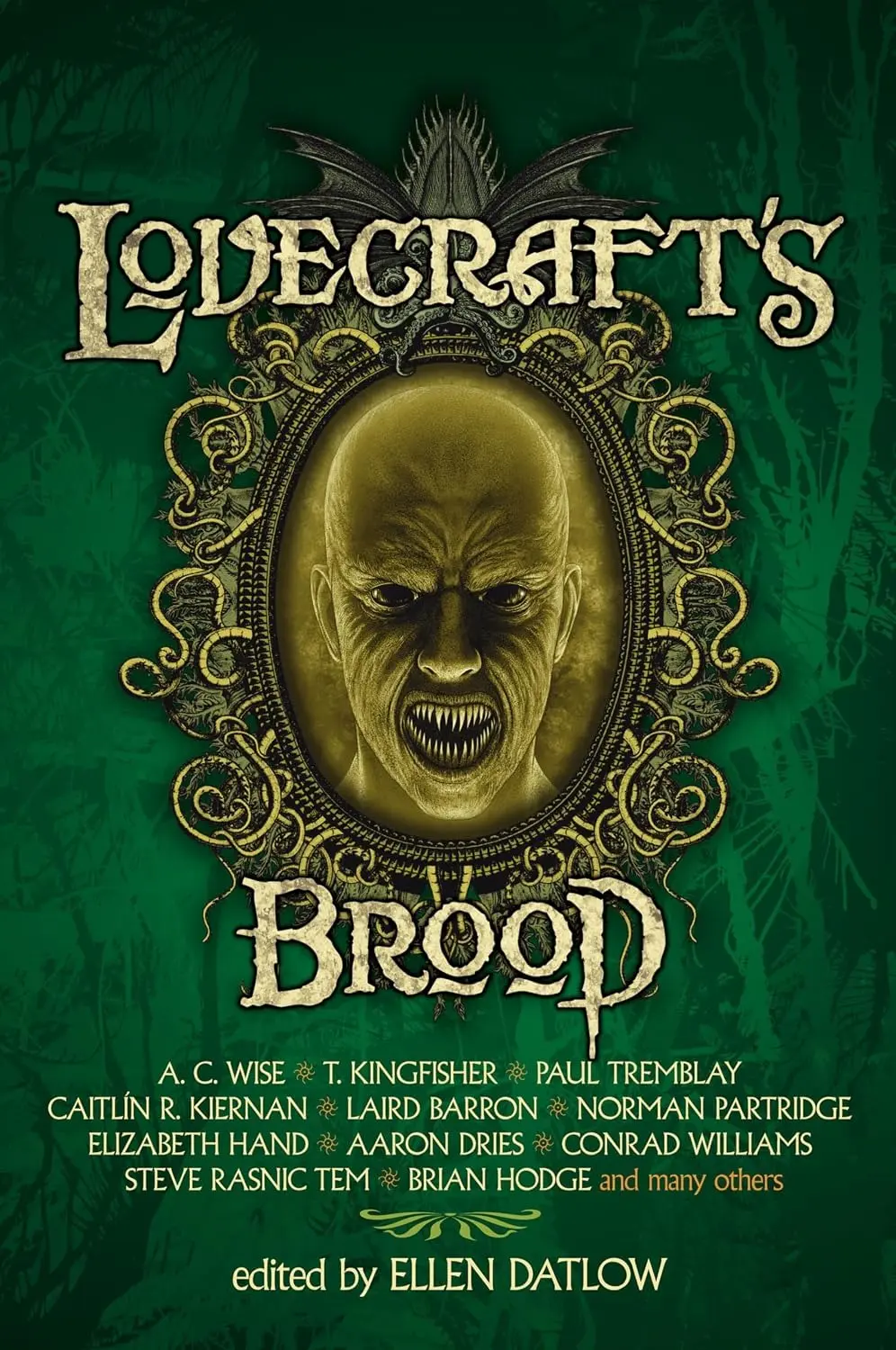
Lovecraft’s Brood edited by Ellen Datlow (Tachyon, July 2026)
As summer reaches its peak, legendary editor Ellen Datlow presents Lovecraft’s Brood, a definitive anthology of modern cosmic horror. Compiling nineteen stories published over the last two decades, Datlow curates a diverse array of perspectives that deconstruct, reinvent, and transcend classic Lovecraftian themes.
By showcasing authors such as Caitlín R. Kiernan, Laird Barron, T. Kingfisher, Elizabeth Hand, Paul Tremblay, Steve Rasnic Tem, and L. Marie Wood, the anthology strips away the historical prejudices of early cosmic horror, focusing instead on existential dread, psychological isolation, and the terrifying vastness of the unknown.
The Language of Knives by Haralambi Markov (Mythic Delirium, July 2026)
In his debut collection, Bulgarian writer Haralambi Markov offers thirteen stories of dark fantasy and folk horror, including four brand-new tales. Featuring an introduction by Ann VanderMeer, The Language of Knives draws heavily on Slavic mythology, blending it with dark humor, body horror, and explorations of queer identity. Markov’s prose is sharp and uncompromising, establishing him as a distinct new voice in the international dark speculative fiction scene.
The Best of All Possible Planets by Alex Shvartsman (UFO Publishing, July 2026)
Providing a welcome contrast to the season’s darker offerings, Alex Shvartsman’s The Best of All Possible Planets is a satirical space opera. Heavily inspired by Voltaire’s classic satire Candide—with a healthy nod to Douglas Adams—the novel follows a mismatched crew on a chaotic quest across the galaxy to secure a protective force shield for Earth (affectionately referred to as "Planet Dirt"). Shvartsman’s work is packed with genre parodies and pop-culture easter eggs, offering a lighthearted, fast-paced antidote to real-world anxieties.
Supporting Context & Thematic Analysis
An analysis of these ten titles reveals several major thematic trends shaping speculative fiction in 2026. Rather than operating in isolation, these works form an ongoing dialogue regarding the role of speculative storytelling in addressing modern social and technological realities.
Theme
Key Titles
Narrative Function
Algorithmic Anxiety & Humanism
The Hospital at the End of the World
Explores the dehumanization of healthcare and the loss of empathy in an AI-dominated society.
Colonial Reckoning & Historical Power
The Game of Oaths, Mercutio
Uses historical fantasy to critique imperialist exploitation and dismantle classic Eurocentric narratives.
Temporal Safe Spaces & Queer Identity
Where You’ll Find Us, The Language of Knives
Creates safe havens across time and utilizes folklore to explore queer identity and community.
Cosmic Nihilism vs. Satirical Absurdism
Lovecraft’s Brood vs. The Best of All Possible Planets
Contrasts existential dread with satirical humor to cope with the complexities of the modern world.
Critical Assessments and Industry Insights
Early critical reception highlights the artistic achievements and cultural relevance of this season’s releases, emphasizing how these authors are pushing the boundaries of their respective subgenres.
Evaluating Justin C. Key’s The Hospital at the End of the World, critic Ian Mond highlights the novel’s timely engagement with the medical establishment’s reliance on technology:
"Key masterfully contrasts the cold efficiency of algorithmic medicine with the messy, vital reality of human care. In Pok, we find a protagonist who must unlearn the clean logic of software to discover the true, often painful art of healing."
In her review of Alex Shvartsman’s The Best of All Possible Planets, Adrienne Martini commends the novel’s lighthearted, escapist quality:
"An exhaustive hunt for every Easter Egg would go against the spirit of this breezy read. Just relax and let the ride take you away from the actual world for a bit. Shvartsman delivers a wonderfully chaotic space opera that reminds us of the power of literary joy."
In his introduction to The Best of Adrian Tchaikovsky, John Scalzi reflects on Tchaikovsky’s unique standing in the field, noting:
"What makes Tchaikovsky such a vital writer is his refusal to stay in one place. Whether he is examining the consciousness of a genetically modified spider or the quiet tragedy of a dying star, his work is consistently defined by a profound empathy and an insatiable curiosity."
Future Outlook
The mid-2026 speculative fiction lineup demonstrates that the genre is in a state of vibrant evolution. Rather than relying on outdated tropes, publishers and authors are embracing complex, boundary-pushing narratives that reflect our increasingly interconnected and technologically complex world.
The prominent role of independent and specialized presses—such as Tachyon, Subterranean, Mythic Delirium, and UFO Publishing—alongside major houses like Tor, Harper, and Bloomsbury underscores a healthy, diverse publishing ecosystem. These smaller presses continue to serve as crucial incubators for experimental voices, short fiction collections, and translated works, ensuring that speculative fiction remains a dynamic space for artistic risk-taking.
As these works find their way onto readers’ shelves, they will undoubtedly inspire new conversations, challenge long-held assumptions, and reaffirm the enduring power of speculative fiction to help us navigate the complexities of our shared reality.
Speculative fiction continues to serve as a vital mirror to our world, offering both critical warnings and visions of hope. To support the continued preservation, critique, and celebration of this essential literary field, consider supporting dedicated genre publications and independent review platforms.




Comments
Facebook App ID not configured. Please add it in the Customizer.