
Executive Overview
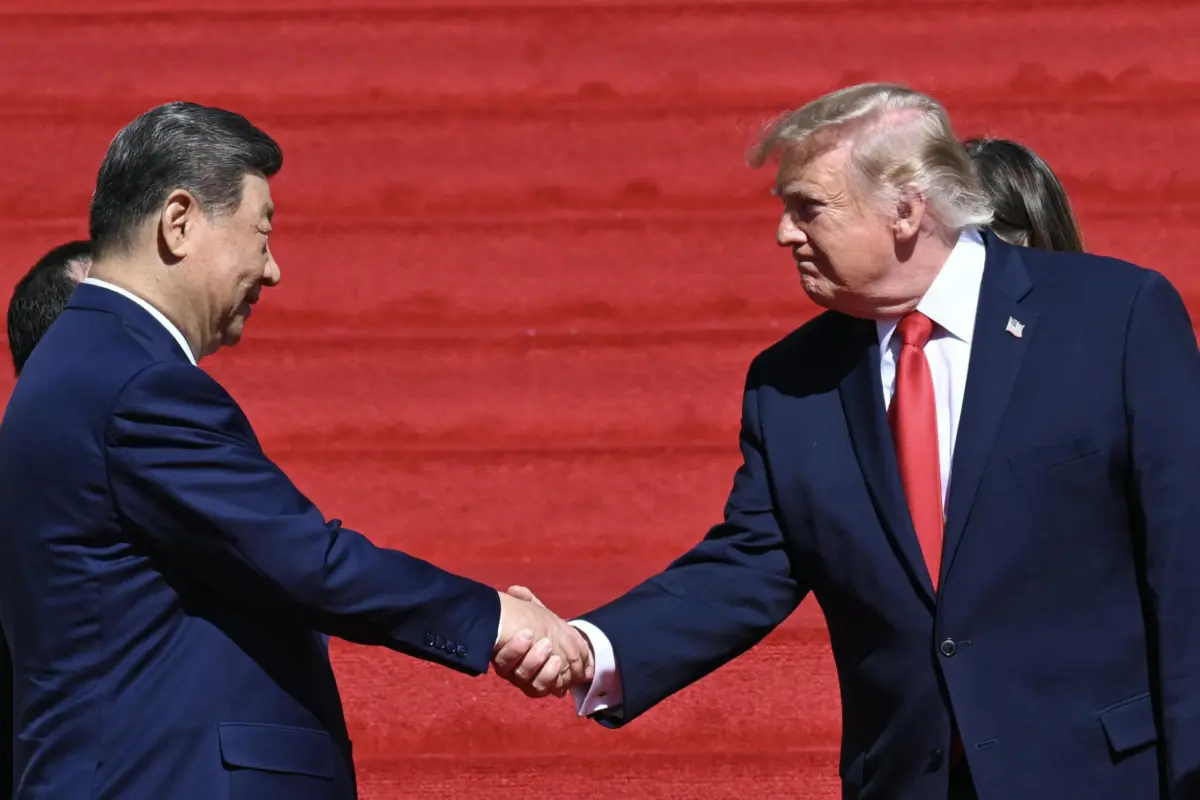
In a sudden yet calculated diplomatic shift following Chinese President Xi Jinping’s high-stakes, three-day visit to Washington, D.C., the United States and China have announced a suspension of tariffs on $60 billion worth of imported goods. The relief package covers a wide array of everyday consumer items, including holiday mainstays like Christmas ornaments, children’s toys, and seasonal novelties.
Yet, beneath the surface of this apparent de-escalation lies a complex web of economic friction, political irony, and logistical timing. Because global retail supply chains operate on months-long horizons, the tariff rollbacks arrive too late to meaningfully alter this year’s holiday shopping bills. Furthermore, the agreement remains glaringly incomplete. It deliberately bypasses the most fiercely contested geopolitical flashpoints of the modern economy: critical rare earth minerals vital for clean energy infrastructure, advanced microchips essential for artificial intelligence development, and retaliatory Chinese duties on American agricultural exports like soybeans.
For President Donald Trump, this pivot represents a striking about-face. For nearly a decade, aggressive economic confrontation with Beijing served as the cornerstone of his political brand, driving his populist appeal across America’s industrial heartland. By easing these restrictions, Trump appears to be circling back to the historical, pre-populist Republican orthodoxy that championed unfettered global trade as a universal economic good—a doctrine first popularized by Richard Nixon over half a century ago.
Read Also
This in-depth report examines the mechanics of the new trade agreement, the historical context of Republican free-trade ideology, the socio-economic scars left by the early 2000s "China trade shock," and the political gamble of a leader attempting to defuse contemporary inflation anxiety by undoing the very trade barriers he once erected.
Detailed Chronology of the Diplomatic Breakthrough
The path toward the current tariff suspension was paved during a tense, closely watched three-day summit in the nation’s capital. President Xi Jinping’s visit to Washington marked a critical juncture in bilateral relations, which had plummeted to historic lows over the preceding years. At the height of the tariff escalation in the previous year, the administration had slapped punishing levies of up to 145 percent on targeted Chinese products, threatening to sever key economic arteries between the world’s two largest economies.
Following days of closed-door negotiations between trade representatives, finance officials, and diplomatic attachés, the White House and Beijing jointly announced the targeted suspension.
- The Scope: Approximately $60 billion in bilateral trade flows will experience temporary tariff relief.
- The Beneficiaries: Importers, distributors, and ultimately consumers of seasonal goods, household trinkets, toys, and holiday decorations.
- The Logistics Gap: Retailers routinely secure their winter inventory months in advance, often shipping holiday merchandise across the Pacific by late summer or early fall. Consequently, the financial relief negotiated in Washington will not materialize in time to lower prices for consumers wrapping gifts this December. For real-world relief at the cash register, shoppers must look ahead—barring any unforeseen trade retaliation—to future retail cycles.
Despite this localized relief, the diplomatic breakthrough carefully skirts systemic structural reforms. Crucial sectors remain entirely untouched by the new framework:
- Rare Earth Elements: Essential inputs for defense manufacturing, electric vehicles, and renewable energy grids.
- Advanced Semiconductors: The digital lifeblood powering next-generation artificial intelligence applications and high-performance computing.
- Agricultural Tariffs: China’s retaliatory tariffs on American agricultural commodities—most notably soybeans—remain fully in place, continuing to squeeze farming communities in the Midwest.
Supporting Context & Metrics: The Dual-Edged Sword of Globalization
To understand the profound weight of the current trade maneuver, one must evaluate the historical ledger of US-China economic integration. The intellectual architecture supporting free trade with Beijing was erected decades ago. Fifty-four years ago, Richard Nixon shattered diplomatic taboos by becoming the first sitting US president to visit Beijing, initiating an era of engagement. Subsequent Republican administrations embraced this trajectory. In 2001, celebrating China’s formal entry into the World Trade Organization (WTO), President George W. Bush championed the partnership, predicting it would bring "great benefits to all our peoples."
In strictly macroeconomic terms, those predictions were partially accurate. The influx of low-cost Chinese manufacturing into the American market triggered a deflationary wave that lowered consumer prices across the board throughout the early 2000s, expanding the purchasing power of average households.
However, the localized human cost was devastatingly uneven:
- The "China Trade Shock": As documented by numerous economic studies, the rapid elimination of trade barriers exposed American industrial towns to intense import competition.
- Manufacturing Deficits: Entire sectors—ranging from furniture and textiles to electronics assembly—saw massive plant closures. Hundreds of thousands of manufacturing jobs vanished, concentrated heavily in the industrial Midwest and the Rust Belt.
- Long-Term Labor Market Scars: Economists note that unlike workers displaced by technological automation, workers displaced by the China trade shock frequently experienced permanent wage drops, chronic unemployment, or exit from the labor force entirely. Communities hit hardest by import competition never fully recovered their former economic dynamism.
The Political Fallout: How Trade Policy Built and Dethroned Presidents
The socio-economic dislocation caused by the post-WTO trade boom did not merely alter local economies; it reshaped American electoral politics. Groundbreaking economic research has traced a direct line from the China trade shock to the tectonic political realignments of the 21st century:
- Radicalization of Electorates: Research indicates that congressional districts most severely impacted by Chinese import competition began electing increasingly polarized and extreme candidates as early as 2010.
- The 2016 Realignment: These same economically battered communities delivered decisive margins for Donald Trump during his inaugural presidential run, anchoring his populist, "America First" trade platform.
- The Counterfactual Presidency: A widely cited 2016 study by a prominent team of economists modeled an alternate historical reality: had US-China trade grown at half its actual velocity between 2001 and 2016, traditional manufacturing hubs such as North Carolina, Pennsylvania, Wisconsin, and Michigan would likely have remained in the Democratic column, handing the White House to Hillary Clinton.
By breaking away from the Republican Party’s traditional pro-trade orthodoxy a decade ago, Trump tapped into authentic, deep-seated economic anxieties. Today, by orchestrating a partial rollback of these very tariffs, he faces a mirror-image challenge: attempting to soothe contemporary anxieties regarding inflation and the soaring cost of living by walking back the protectionist walls he built.
Official Statements and Stakeholder Reactions
Reaction to the White House’s announcement has been marked by a mixture of cautious optimism from business lobbies and intense skepticism from political commentators and agricultural advocates.
Business associations representing retail giants and supply-chain logistics firms welcomed the $60 billion suspension, noting that any reduction in tariff burdens helps margin-pressed businesses navigate inflationary pressures. However, industry leaders privately expressed frustration over the timing, reiterating that supply chains cannot pivot overnight to reflect sudden diplomatic agreements.
Meanwhile, agricultural lobbies voiced profound disappointment over the exclusion of farm products from the truce. Representatives for American soybean growers pointed out that rural communities continue to bear the brunt of lingering trade retaliations, noting that sustained economic pressure has led some historically reliable agricultural voters to reconsider their partisan loyalties and eye alternative political coalitions.
Administration defenders framed the tariff suspension as a pragmatic masterclass in economic negotiation—proof that Washington can maintain a firm stance on strategic technologies while offering tactical relief to consumers on everyday goods. Critics, conversely, argued that the policy reversal amounts to an admission that protectionist barriers disproportionately punish domestic consumers without achieving long-term structural reforms from Beijing.
Future Outlook: The Nixon-to-China Paradox
As the global economy navigates the remainder of the decade, the overarching question remains: Will American voters reward Donald Trump for dismantling trade barriers that he himself erected?
Political scientists have long utilized the idiom "Nixon-goes-to-China" to describe a scenario where a leader with an unassailable hardline reputation can execute a dramatic policy reversal without risking their political base. Just as only an ardent anti-communist like Richard Nixon could safely normalize relations with Beijing without inviting accusations of being "soft on communism," an economic nationalist like Trump may be uniquely positioned to soften trade policies in the name of consumer relief.
Yet, this gambit carries substantial risks:
- Voter Accountability: Consumers squeezed by persistent inflation may feel little gratitude for tariff rollbacks that arrive late, apply only to a fraction of consumer goods, and leave foundational economic pressures intact.
- Strategic Inconsistency: By leaving high-stakes sectors like rare earth minerals and advanced semiconductors unaddressed, the administration leaves American supply chains vulnerable to future geopolitical shocks.
- The Rust Belt Legacy: Any permanent departure from protectionism risks alienating the core populist constituencies that view aggressive tariffs as non-negotiable insurance for domestic blue-collar jobs.
Ultimately, the latest US-China tariff truce highlights the inescapable gravity of global economic interdependence. Whether viewed as pragmatic statesmanship or an ironic political backtrack, the suspension on $60 billion in goods signals that while political rhetoric can erect high walls, the practical realities of consumer demand, supply chains, and inflation will ultimately force leaders back to the negotiating table.



Comments
Facebook App ID not configured. Please add it in the Customizer.