History is rarely a straight, unbroken path of triumph; more often, it is paved with difficult truths, systemic injustices, and profound human resilience. For educators, parents, and young readers alike, introducing complex historical events requires a delicate balance of honesty and hope. How do we explain displacement, war, systemic racism, and human rights violations to children without crushing their spirit?
In today’s special guest feature, acclaimed award-winning neurodivergent author and educator Jolene Gutiérrez presents a curated list of seven powerful picture books addressing "Hard History + Hope." These masterfully crafted literary works bridge the gap between past atrocities and contemporary struggles, proving that even in the darkest chapters of human experience, literature can foster empathy, historical awareness, and an enduring yearning for justice.
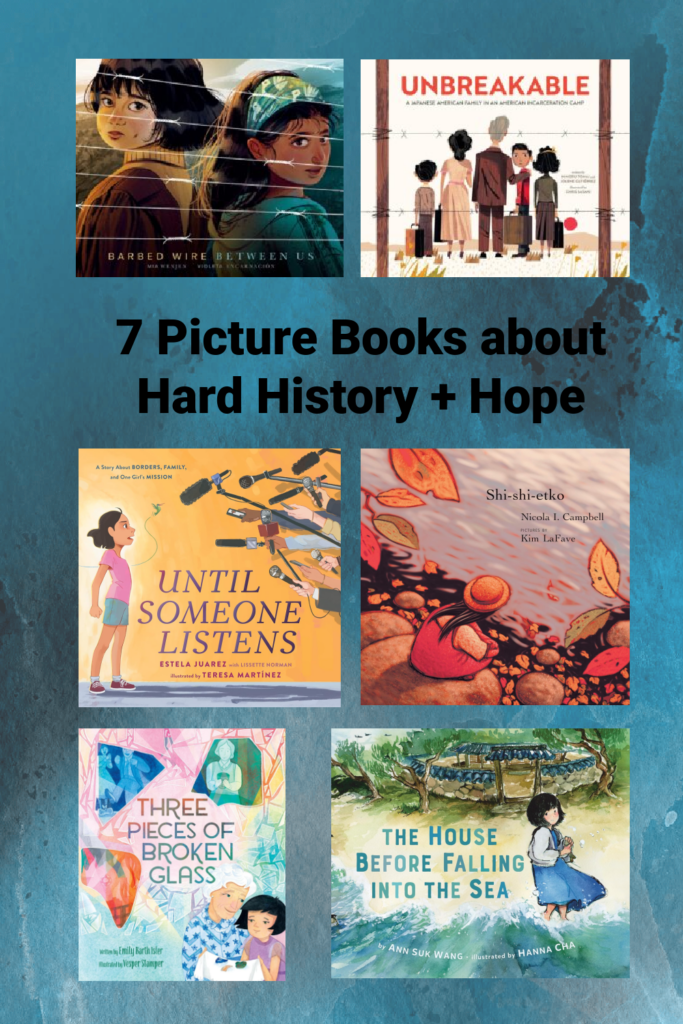
To celebrate this vital conversation, this feature includes a special book giveaway featuring two remarkable titles: Barbed Wire Between Us by Mia Wenjen and Unbreakable by Minoru Tonai and Jolene Gutiérrez.
Detailed Chronology: The Historical Trajectories Behind the Books
The picture books highlighted in this collection trace a sweeping, multi-century timeline of global and domestic injustices. Below is a detailed chronological mapping of the historical epochs examined within these seven literary works:
Pre-Civil War to the Civil Rights Movement (United States): Explored through lyrical storytelling in Troubled Waters, the timeline spans centuries of systemic oppression, including the eras of enslaved people, the forced displacement of the Trail of Tears, Jim Crow-era sharecropping, and the pivotal marches of the 1960s Civil Rights Movement, culminating in Bloody Sunday.
The Holocaust and World War II Internment (Europe and the United Kingdom):Three Pieces of Broken Glass captures the terror of Kristallnacht in 1938 Nazi Germany and the subsequent unjust imprisonment of refugees categorized as "enemy aliens" in British internment camps. Concurrently, Unbreakable and Barbed Wire Between Us document the forced mass incarceration of Japanese Americans following Executive Order 9066 in the early 1940s.
The Korean War Era (1950–1953):The House Before Falling Into the Sea places readers on the front lines of the Korean Peninsula humanitarian crisis, focusing on the flood of refugees fleeing war-torn northern regions to find sanctuary in Busan.
Late 19th to Late 20th Century (Canada and North America):Shi-shi-etko introduces young readers to the devastating generational trauma inflicted by the Canadian Indian residential school system, a decades-long state-sponsored assimilation policy.
Contemporary Immigration and Detention (United States and Mexico Border): Bringing hard history into the present day, Until Someone Listens and the modern-day framing of Barbed Wire Between Us reflect ongoing contemporary immigration policies, family separations, and the utilization of historical detention facilities like Fort Sill for modern child migrants.
Supporting Context & Metrics: The Power of Hard History in Early Literacy
The inclusion of difficult themes in early childhood education has long been a subject of debate among educators and caregivers. However, empirical studies in developmental psychology and literacy indicate that children encounter concepts of fairness, exclusion, and loss at an early age.
Empathy Development: Research published by literacy coalitions shows that reading diverse historical narratives increases empathetic behavior in children ages 4 through 9 by exposing them to perspectives outside their lived experience.
Global Reach: Works like those by Jolene Gutiérrez have transcended domestic borders, being translated into eight languages across nine countries, demonstrating a universal appetite for stories that pair historical trauma with localized resilience.
The Multi-Generational Impact: Books such as Unbreakable and Three Pieces of Broken Glass rely on primary-source family history—bridging generations to ensure that survivor testimonies are preserved for the youngest members of society.
The 7 Picture Books about Hard History + Hope
1. Unbreakable: A Japanese American Family in an American Incarceration Camp
Authors: Minoru Tonai and Jolene Gutiérrez
Illustrator: Chris Sasaki
Target Audience: Ages 4 and up
Based directly on the childhood experiences of co-author Minoru "Min" Tonai, this powerful book opens with FBI agents interrogating Min’s father. Soon, the family is torn apart, forced into an assembly center and later incarcerated at the Amache concentration camp in Colorado. When Papa is finally released after two years of unjust imprisonment, young Min runs to greet him, attempting to carry his suitcase. The luggage is unnervingly heavy—filled entirely with rocks that Papa collected at every single prison facility he was transferred through. Together, Min and Papa transform those heavy stones into something beautiful. Featuring four starred reviews, this poignant title includes an author’s note, illustrator’s notes, and an expansive historical timeline.
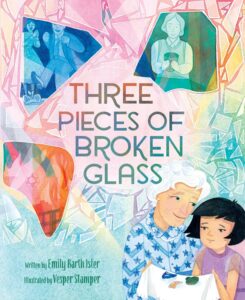
2. Three Pieces of Broken Glass
Author: Emily Barth Isler
Illustrator: Vesper Stamper
Target Audience: Ages 4 and up
Rooted in the author’s grandmother’s life, Three Pieces of Broken Glass tracks the journey of three distinct shards, each symbolizing a milestone in Grandma Inge’s survival. One piece originates from her wedding day, another from the horrors of Kristallnacht, and the third from her time interned as an "enemy alien" in Great Britain after escaping Nazi Germany. Separated from her support network, Inge endured months in a remote work camp. Hope arrives in a moment of domestic fragility: when Inge’s mother accidentally drops her favorite glass, she interprets it as a prophetic sign of imminent release—a premonition that swiftly comes true. The narrative powerfully asserts that "something broken can be so beautiful," supported by extensive back matter detailing the family’s history.
3. Troubled Waters: A River’s Journey Toward Justice
Author: Carole Boston Weatherford
Illustrator: Bryan Collier
Target Audience: Ages 5 and up
Written in poetic, lyrical verse from the perspective of the Alabama River itself, this narrative witnesses centuries of American history unfold along its banks. The river chronicles the arrival of enslaved people, the heartbreak of the Trail of Tears, the grueling labor of sharecroppers, and the electrifying momentum of the Civil Rights Movement. Addressing difficult themes such as lynching, voting rights obstruction, and the violence of Bloody Sunday, the book honors the tireless activism of Dr. Martin Luther King, Jr. With the recurring refrain, "One more river to cross," and a concluding reflection—"Some say water is the mightiest force on earth. But the yearning for freedom is even stronger"—the book serves as a monument to perseverance.
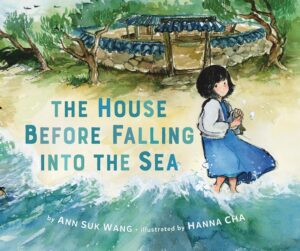
4. The House Before Falling Into the Sea
Author: Ann Suk Wang
Illustrator: Hanna Cha
Target Audience: Ages 6 and up
As refugees flee the violent upheaval of the Korean War’s northern front, they arrive at the doorstep of young Kyung Tak’s home in Busan—the literal last stop on the peninsula "before falling into the sea." While Kyung initially yearns for a return to normalcy, her mother imparts a timeless lesson: "visitors are not stones we can toss to the sea." Her father reinforces this ethos of community care by urging the family to "hold each other up." Based on the author’s mother’s real-life experiences hosting refugees, this book is an essential teaching tool on displacement and hospitality.
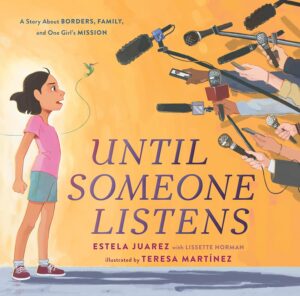
5. Until Someone Listens: A Story about Borders, Family, and One Girl’s Mission
Author: Estela Juarez with Lissette Norman
Illustrator: Teresa Martínez
Target Audience: Ages 4 and up
Estela’s mother immigrated from Mexico to the United States seeking safety and opportunity, eventually marrying a U.S. citizen and military veteran and raising two children. Despite these deep roots, she was abruptly deported back to Mexico, fracturing the Juarez family. Refusing to accept despair, young Estela launched an advocacy campaign, writing letters to newspaper editors, members of Congress, and the President of the United States. Mirroring the lived realities of countless mixed-status families, this book offers young readers a blueprint for civic engagement and provides robust resource guides in its back matter.
6. Shi-shi-etko
Author: Nicola I. Campbell
Illustrator: Kim LaFave
Target Audience: Ages 4 and up
The days leading up to young Shi-shi-etko’s departure for a state-mandated residential school are marked by a bittersweet urgency. Knowing she will not return home for a long time, she spends her remaining moments absorbing the landscape, listening to tribal stories, and making deeply ingrained memories with her family. This gentle yet unflinching narrative serves as a critical entry point for discussing the generational trauma of indigenous residential schools, paving the way for companion texts like Shin-chi’s Canoe.
7. Barbed Wire Between Us
Author: Mia Wenjen
Illustrator: Violeta Encarnación
Target Audience: Ages 7 and up
Utilizing a structural "reverso poem" format as a profound metaphor for history repeating itself, Mia Wenjen connects two tragic chapters separated by eight decades. The first half of the book recounts the World War II incarceration of a Japanese American girl at Fort Sill, Oklahoma. The poem then reverses, transforming into the story of a Latina girl held in a detention center at the exact same military installation eighty years later. Complete with historical context on Fort Sill, this title challenges readers to examine cyclical institutional injustices.
Official Statements & Author Insights
Guest author Jolene Gutiérrez shares her core philosophy on writing for young minds:
"I write for young readers and hope my books will help some readers feel seen and will help others learn and grow in compassion."
As an award-winning neurodivergent educator who has worked with neurodivergent learners since 1995, Gutiérrez infuses her work with profound empathy. Her celebrated bibliography includes Unbreakable (co-authored with Minoru Tonai), Mamiachi and Me, the Crystal Kite Award-winning The Ofrenda That We Built (co-authored with her daughter Shaian), and Too Much! An Overwhelming Day.
Future Outlook: The Continuing Evolution of Historical Empathy in Literature
As publishing houses continue to embrace diverse narratives, the market for picture books tackling hard histories is expanding. Authors, educators, and literacy advocates are proving that children are capable of processing complex moral concepts when guided by sensitive storytelling and striking illustration.
Initiatives like Jolene Gutiérrez’s curation and generous book giveaways ensure that these vital conversations do not remain confined to academic circles, but rather find their way into living rooms, classrooms, and community libraries across the nation. By equipping the next generation with historical truth and active hope, these picture books lay the foundation for a more compassionate and just society.








Comments
Facebook App ID not configured. Please add it in the Customizer.