
Executive Overview
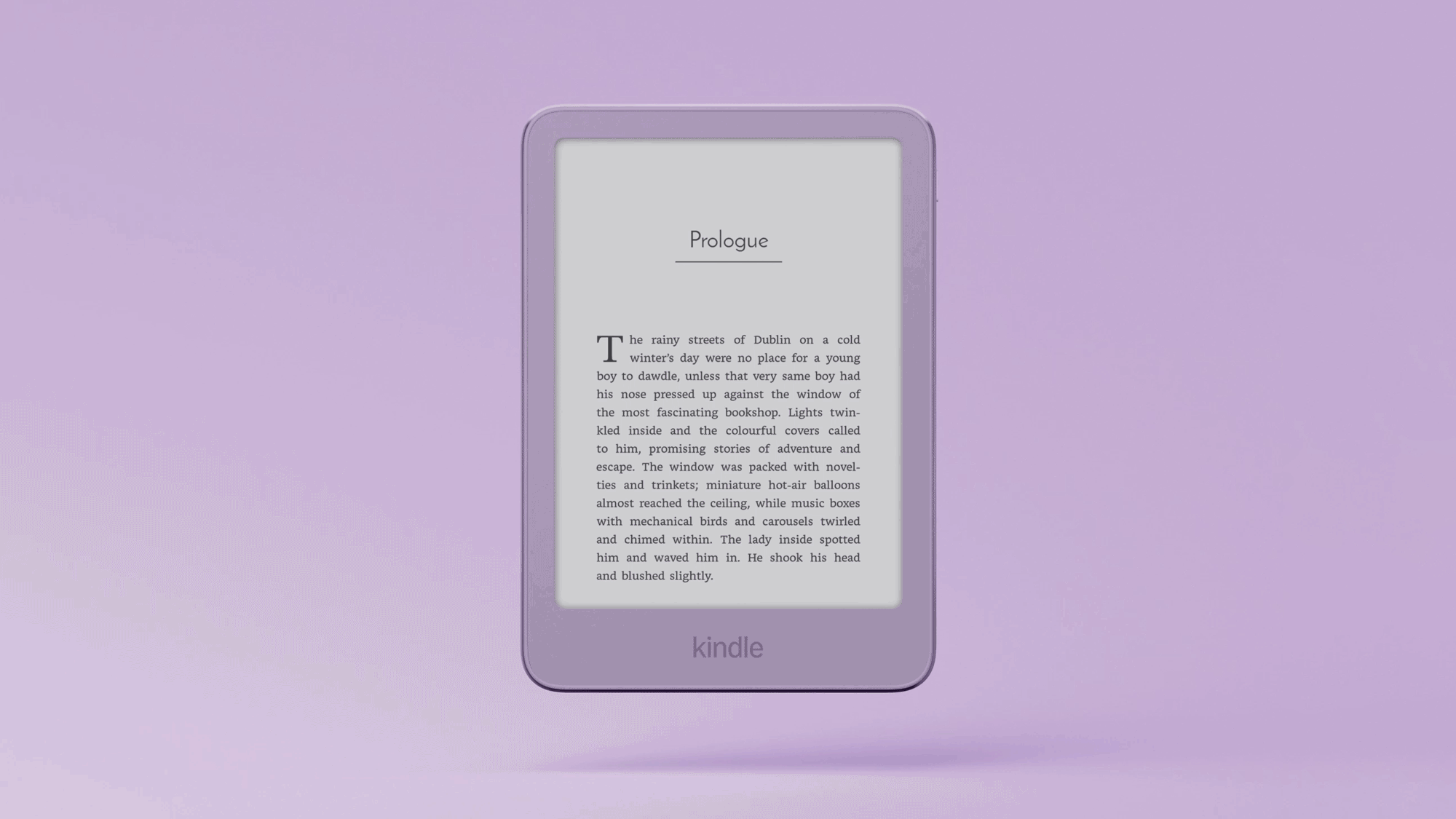
As the Amazon Kindle approaches its landmark 20th anniversary in 2027, the world’s preeminent e-reader platform is experiencing a cultural and commercial renaissance. Far from being displaced by smartphones, tablets, or audio-centric media, the dedicated hardware category is defying tech-industry trends through consecutive years of explosive, double-digit growth. Amazon leadership reports that 2025 marked the highest sales year for the Kindle lineup in over a decade, culminating in a historic milestone this past January, which recorded the highest single-month Kindle reading volume in the device’s history.
This resurgence is not merely a byproduct of loyal legacy users upgrading their hardware. Instead, it is being forcefully propelled by younger generations. Demographics once thought lost to hyper-stimulating short-form video platforms—namely Gen Z, millennials, and even the vanguard of Gen Alpha—are embracing dedicated e-readers in unprecedented numbers. Industry data reveals that 60 to 65 percent of contemporary Kindle purchasers are first-time buyers.
To capitalize on this momentous tailwind, Amazon has unveiled a comprehensive strategic roadmap leading up to the 2027 anniversary. The company is preparing a massive overhaul of its operating system, promising a vastly more intuitive user interface and streamlined book discovery features designed to reduce friction between the reader and their next title. Furthermore, Amazon plans to release special anniversary hardware editions to commemorate two decades of digital reading.
Read Also
However, this golden age of e-reading is navigating complex macroeconomic and cultural currents. Persistent global memory shortages have driven up component costs, forcing hardware price bumps across the electronics sector, including recent adjustments to Kindle price points. Simultaneously, a profound cultural counter-movement is underway. Amid an explosion of synthetic media and generative artificial intelligence, consumers are aggressively seeking out analog and dedicated offline experiences. Whether through the tactile reassurance of physical paper or the distraction-free refuge of an e-ink screen, modern readers are investing in deep, authentic literary engagement like never before.
Detailed Chronology: Two Decades of E-Reading Dominance
To fully comprehend the magnitude of the Kindle’s current momentum, it is necessary to examine the trajectory that brought the platform to this juncture. Launched in late 2007 by Amazon founder Jeff Bezos as a proprietary wireless reading device, the original Kindle sold out within five and a half hours, establishing a beachhead for the commercial viability of electronic paper.
Over the subsequent two decades, the Kindle ecosystem evolved through distinct phases of hardware engineering and digital publishing disruption:
- The Early Innovation Era (2007–2011): The initial iterations focused on proving that digital ink could mimic physical paper. The introduction of the Kindle Keyboard and the budget-friendly Kindle with Special Offers democratized access to digital books. During this period, the Kindle Store fundamentally transformed the publishing industry, shifting power dynamics and establishing Amazon as the central hub of the digital literary world.
- The Mainstream Backlit & Touch Era (2012–2018): Innovations such as the Kindle Paperwhite revolutionized the reading experience by introducing integrated front-lighting, allowing users to read in the dark without the eye strain associated with traditional backlit LCD screens. Waterproofing, adjustable warm lighting, and higher-resolution displays gradually transitioned the Kindle from a niche gadget into a mainstream consumer electronics staple.
- Diversification and Premium Expansion (2019–2023): Amazon broadened its hardware portfolio to cater to diverse reading habits. The introduction of the Kindle Oasis appealed to luxury buyers with its ergonomic page-turn buttons and premium aluminum build, while the Kindle Scribe bridged the gap between e-reader and digital notebook, incorporating electromagnetic resonance (EMR) stylus technology for note-taking and document markup.
- The Post-Pandemic Youth Boom and Current Renaissance (2024–Present): Entering the mid-2020s, the Kindle line achieved a structural acceleration in sales. Driven heavily by organic social media phenomena—such as the massive "BookTok" and "Bookstagram" communities—reading transformed into a high-visibility lifestyle aesthetic. Younger cohorts began purchasing Kindles not out of utilitarian convenience, but as a deliberate lifestyle choice to reclaim their attention spans from hyper-connected smartphones.
As the platform nears its 20th anniversary in 2027, Amazon is pivoting from hardware expansion to software refinement. The upcoming OS refresh represents the first ground-up UI modernization of this scale in years, engineered specifically to accommodate libraries that have swelled thanks to the influx of new, digitally native readers.
Supporting Context & Metrics: Decoding the Boom
The numbers underpinning the Kindle’s current era of prosperity tell a story of resilience against broader economic and technological shifts. While general consumer electronics have faced volatile demand curves in the wake of global supply chain disruptions, the e-reader market has decoupled from these downward trends.
Sales Velocity and Demographic Shifts
According to internal metrics cited by Amazon leadership, the Kindle business has maintained consecutive years of double-digit growth. The sales performance in 2025 shattered decade-long records, establishing a new baseline for consumer demand. Most strikingly, the acquisition funnel has inverted: rather than relying on legacy upgraders who bought their first devices a decade ago, 60% to 65% of current device purchasers are brand-new customers.
This demographic pivot is defined by younger demographics:
- Gen Z and Millennials: These digital natives are the primary architects of the modern reading boom. Having grown up entirely in the smartphone era, they are acutely aware of the cognitive fragmentation caused by constant notifications and algorithmic feeds. The Kindle offers a sanctuary of single-tasking.
- Gen Alpha: Even the youngest consumers are entering the reading ecosystem earlier, influenced by family reading habits and aesthetic trends popularized across digital communities.
The Macroeconomic Reality: Memory Shortages and Pricing Pressures
Despite booming demand, the hardware business operates under severe external constraints. Kevin Keith, Amazon’s vice president of devices, candidly addressed the economic realities of manufacturing modern electronics, noting that "memory pricing is a little bit crazy."
Global supply constraints for high-grade flash memory and e-ink controller components have inflated baseline production costs. Consequently, Amazon was forced to adjust the retail pricing of existing Kindle models upward earlier this year. Newly released devices reflect this elevated cost structure, signaling that the era of ultra-cheap baseline e-readers has temporarily yielded to an era of premium-priced, high-spec hardware. Despite these price adjustments, consumer elasticity has proven remarkably robust; buyers are willing to pay a premium for devices that guarantee a distraction-free digital experience.
The Paradox of Modern Reading: Buying More, Reading Deeply
The Kindle’s boom exists within a fascinating broader cultural paradox regarding American reading habits. While aggregate surveys occasionally indicate nominal declines in casual leisure reading time across the general U.S. population, those who do identify as readers are purchasing books at historic, record-breaking volumes.

This behavior highlights a shift toward intentional consumption. Consumers are curating extensive digital and physical libraries, treating books as both intellectual investments and identity markers. The frictionless nature of the Kindle Store—where a book can be purchased and downloaded in seconds—plays directly into this impulse, removing the logistical barriers that historically prevented impulse book purchases.
Official Statements and Industry Insights
The convergence of technological advancement, shifting consumer psychology, and corporate strategy is illuminated by key statements from industry leaders and analysts.
Kevin Keith, Vice President of Devices at Amazon, emphasizes the structural health of the ecosystem:
"The Kindle business is booming. Kindles have seen double-digit growth over the last three years, with 2025 being the highest sales year in more than a decade. 60 to 65 percent of people buying new devices have never had a Kindle before, with Gen Z, millennials, and even Gen Alpha driving the lion’s share. This past January saw the highest single-month Kindle reading volume in history."
Keith’s observations are mirrored by cultural analysts examining why consumers are flocking back to dedicated devices at this exact historical moment. Commentators note that the surge in physical book sales and e-reader adoption cannot be divorced from the rapid proliferation of artificial intelligence across the digital landscape.
As cultural researcher and essayist Green points out:
"More people are turning to both paper books and Kindles. Is this a response to AI? It certainly seems that way—people are seeking out more genuine experiences in a time when authenticity feels scarce."
This sentiment strikes at the heart of the contemporary tech critique. In an era where text, images, and audio can be instantaneously synthesized by generative AI models, human-authored literature represents an anchor of verified human consciousness and emotional labor. The Kindle, acting as a portal exclusively dedicated to human-created text devoid of algorithmic pop-ups, social media feeds, or email notifications, has transformed from a mere convenience gadget into a psychological safe haven.
Future Outlook: What to Expect Leading Up to 2027
As Amazon prepares for the monumental 20th anniversary of the Kindle in 2027, the strategic horizon for the platform is defined by software evolution, user experience optimization, and cultural consolidation.
1. The 2027 Operating System Overhaul
The upcoming refresh of the Kindle operating system represents the most significant software modernization in the platform’s history. According to company disclosures, the initiative focuses on two core pillars:
- Intuitive UI Redesign: Stripping away legacy navigational complexities to create a cleaner, more responsive interface that mirrors the seamlessness of modern mobile operating systems without sacrificing e-ink efficiency.
- Enhanced Discovery Mechanisms: Integrating smarter, context-aware recommendation systems and library management tools. As readers accumulate thousands of books across years of purchasing, finding the right title has become a UX challenge. The updated software aims to make discovery frictionless, helping users unearth forgotten titles within their existing archives while surfacing new reads tailored to evolving tastes.
2. Collector and Anniversary Hardware Editions
To mark two decades of market dominance, Amazon is expected to roll out special anniversary hardware editions. While specific technical specifications remain tightly guarded, industry insiders anticipate limited-run devices featuring upgraded e-ink panels (such as faster refresh rates and enhanced contrast ratios), premium chassis materials, and bespoke packaging designed to appeal directly to the dedicated literary community and tech collectors alike.
3. Fortifying Against the Attention Economy
Looking forward, the long-term viability of the Kindle hinges on its ability to remain an island of deep focus in an increasingly chaotic digital ocean. As augmented reality, spatial computing, and AI-driven interfaces vie for human attention, the radical simplicity of black-and-white electronic paper becomes its greatest competitive advantage. By refusing to compromise its core mission—delivering long-form text without digital noise—Amazon has ensured that the Kindle is not merely surviving the technological transition of the 21st century, but actively dictating its terms.
As the countdown to 2027 begins, the Kindle stands as a rare technology success story: a pioneer that not only survived its initial disruption era but successfully reinvented its cultural relevance for a new generation determined to reclaim the art of deep, uninterrupted reading.




Comments
Facebook App ID not configured. Please add it in the Customizer.