
Executive Overview
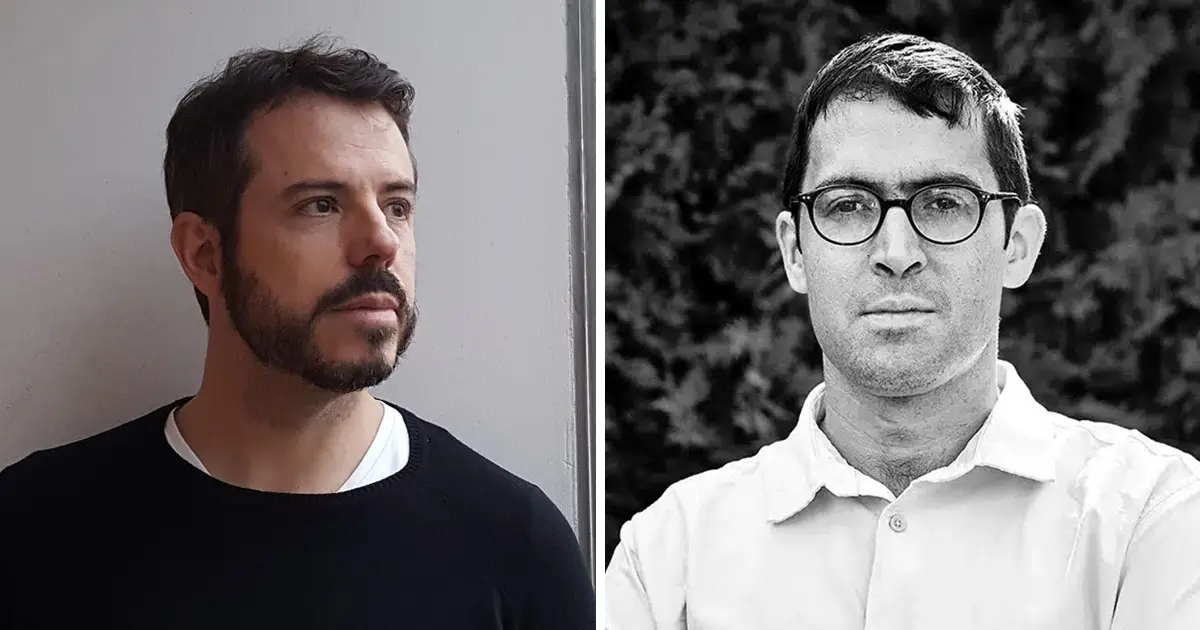
In the contemporary landscape of international literature, few works challenge the mechanical boundaries of prose as fiercely as Centroeuropa, a critically acclaimed novel by Spanish author, essayist, and literary critic Vicente Luis Mora. Originally published in Spanish in late 2020, the novel has recently crossed linguistic and geographic borders, capturing the attention of English-language readers through a meticulously crafted translation by award-winning translator Rahul Bery. Published in the United Kingdom by Peninsula Press and subsequently in the United States by Bellevue Literary Press, the English edition of Centroeuropa has sparked renewed conversations about the intersections of rigorous formal constraint, historical fiction, and the art of literary translation.
At its core, Centroeuropa is not merely a narrative set against a historical backdrop; it is a monument to structural engineering. Mora imposed upon himself an array of punishing formal constraints—most notably, strict, mathematically escalating word counts per chapter and a rigid lexical boundary that forbade the use of any terminology or linguistic constructs unavailable two centuries ago, matching the era in which the narrative is set. For Bery, translating this text was akin to entering an intellectual minefield. To successfully render the book into English, Bery had to wage a war against the natural expansiveness of the English language, maintaining exact chapter word counts while navigating subtle period-appropriate diction, a rogue twentieth-century anachronism, and inventive neologisms.
This feature explores the genesis of Centroeuropa, dissecting the initial creative spark that struck Mora, the grueling editorial mechanics behind Bery’s translation, and the profound collaborative dynamic that ultimately birthed a living, breathing English text. Drawing from extensive interviews and official commentary, this article examines how two literary minds wrestled with an "infernal" blueprint to deliver one of the most intellectually dizzying translingual achievements of the decade.
Read Also
Detailed Chronology: From Prussian History to Transatlantic Acclaim
To understand the magnitude of Centroeuropa, one must retrace the timeline of its conceptualization, composition, domestic publication, and subsequent international translation voyage. The chronology of the project reveals a multi-year labor of obsession, structural discipline, and cross-cultural dialogue.
Phase 1: The Epiphany (Pre-2020)
The genesis of Centroeuropa occurred years prior to its Spanish publication. Vicente Luis Mora was engaged in historical research, reading a text concerning the history of Prussia, when a singular, surreal image materialized in his consciousness. In a flash of sudden clarity, Mora envisioned a collection of frozen corpses of ancient soldiers rooted to the earth, standing upright like desolate scarecrows.
This vision acted as a profound aesthetic epiphany. Mora recognized immediately that he was bound by a creative imperative to chronicle the existence of these spectral men. Over the subsequent weeks, supplemental visions cascaded into his mind. It was during this period of incubation that he encountered Redo, the novel’s central protagonist, residing within what Mora describes as a "luminous corner" of his mind. A dialogue commenced: Mora asked Redo if he wished to co-author a novel of their shared design. Redo accepted, and the labyrinthine composition process was set into motion.
Phase 2: The Spanish Release and the Blogger’s Blueprint (Late 2020)
In late 2020, Centroeuropa debuted in Spain, published to critical intrigue. Alongside the book’s release, Mora published a revealing blog post on his personal site detailing the hidden and overt architectural restrictions he had imposed on the manuscript. He unmasked the underlying rules of the text—the mathematical word counts, the historical lexicon boundaries, and the tactical constraints that shaped every sentence.
It was this blog post that caught the eye of translator Rahul Bery. Having read the Spanish edition shortly after its release, Bery found himself haunted by its brilliance and unsettling atmosphere. The blog post did not deter him; rather, it illuminated the staggering complexity of the book, transforming it from a brilliant novel into an irresistible intellectual challenge.
Phase 3: Pitching and UK Publication (2021–2023)
Driven by a conviction that the English-speaking world needed to experience Mora’s masterwork, Bery invested substantial time and creative energy into developing a comprehensive publishing pitch. His efforts bore fruit when Peninsula Press acquired the UK rights to the novel.
During the translation process, Bery engaged in a continuous, multi-year correspondence with Mora. Beginning with an extensive introductory Zoom call in early 2023, the author and translator exchanged a multitude of emails, untangling obscure references, historical allusions, and semantic double meanings. The UK edition was finalized, edited, and published, setting the stage for a broader transatlantic leap.
Phase 4: US Acquisition and Critical Reception (2024–Present)
The momentum of the translation caught the attention of Erika at Bellevue Literary Press in the United States, who read the finished UK edition and resolved to secure the North American rights. Sensing a rare alignment of linguistic audacity and narrative weight, Bellevue published Centroeuropa as Mora’s first novel to appear in North America.
The reception has exceeded expectations. Bery has expressed astonishment at the warmth and depth of the book’s second life across the Atlantic, while the translation itself has earned widespread critical praise, including a longlisting for the prestigious Queen Sofía Spanish Institute Translation Prize.
Supporting Context & Metrics: The Architecture of Constraints
What sets Centroeuropa apart from contemporary historical fiction is its reliance on extreme formal limitations. In literature, formal constraints are often treated as ornamental gimmicks or fleeting avant-garde experiments. In Centroeuropa, however, constraint is the very foundation of the narrative reality.
The Mathematical Engine
As outlined by Mora and detailed by Bery in his essay for Literary Hub, the book operates on strict mathematical parameters. The most formidable of these is the chapter-by-chapter word count structure. Mora subjected his writing process to precise numerical rules, including chapters where word counts double exactly from one section to the next.
For a translator, this architectural design represents a logistical nightmare. Spanish and English possess fundamentally different syntactical efficiencies. Spanish tends to be more concise, packing dense conceptual weight into fewer syllables, whereas English regularly expands during translation. Bery was confronted with the monumental task of rendering the Spanish source text into an English version that was not only faithful in tone and meaning but strictly more succinct than the original to meet the exact numerical quotas.
This restriction forced Bery to cultivate an unsparing editorial ruthlessness—a skill translators frequently struggle to apply to their own drafts. Furthermore, the editorial process introduced new complications: copyeditors made routine suggestions that shifted the word counts, requiring delicate mathematical rebalancing. While adjusting a chapter of 750 words is manageable, rebalancing a dense chapter of 24,000 words requires surgical precision. Bery utilized post-publication windows for the US edition to audit and refine these counts, ensuring absolute structural integrity.
The Chronological Lexicon
In tandem with the mathematical word counts, Mora and Bery operated under a historical linguistic boundary: the avoidance of any word, phrase, or idiom that did not exist approximately two hundred years ago, coinciding with the era in which the narrative is set.
This constraint demanded intense historical lexicographical vigilance. Surprisingly, the primary challenges did not stem from archaic phrasing, but from modern intrusions. During the editing of the manuscript, Will Rees, an editor at Peninsula Press, identified a subtle yet catastrophic anachronism lurking in both the English translation and the Spanish original: the word "narcissist," a clinical term that did not enter common usage until the twentieth century. The discovery underscored the immense difficulty of maintaining a hermetically sealed historical lexicon.
Neologistic Translation: The Birth of "Paceified"
Translating Centroeuropa also required inventing solutions for localized neologisms. A prime example is Mora’s creation of the portmanteau word “enrutecido.” Derived from “embrutecido” (stupefied, brutalized) and “ruta” (route, track), Mora coined the term to describe a character who combats obsessive, destructive thoughts by embarking on extraordinarily long, exhausting walks.
Faced with the task of capturing this psychological and physical state in English without violating the period-appropriate lexicon, Bery devised the neologism “paceified.” Cleverly blending the concepts of pacing (walking rhythmically) and pacification (calming the mind), the coinage captures the dual essence of the original Spanish portmanteau. Although the solution was so seamless that at least one copyeditor initially flagged it as a typographical error, it stands as a testament to the creative risks required to translate a text built on linguistic innovation.
Official Statements and Authorial Insights
The symbiotic relationship between Vicente Luis Mora and Rahul Bery has redefined the traditional boundaries separating author and translator. Rather than operating in isolation, the two creators maintained a continuous intellectual dialogue throughout the translation lifecycle.
Reflecting on the collaborative process, Rahul Bery highlights the value of Mora’s upfront transparency:
"Vicente already helped hugely, before we had even spoken, by dissecting the novel so thoroughly on his blog. We had a long Zoom call at the beginning, followed by many, many emails over the course of 2023 and then 2024. Nowadays it’s almost a cliché or truism to talk of translations as entirely new texts, but thanks to Vicente, I feel this to be true on both a literal and deeper level."
For his part, Vicente Luis Mora expresses profound admiration for Bery’s linguistic acuity and deep comprehension of the text’s underlying mechanics:
"Throughout the translation process, I was available for Rahul and I did my best to clarify for him the obscure references or the tricky words with double meanings. But he is a great translator and understood the novel better than me. Now, reading the text in English is for me like going through it in Spanish."
When asked to encapsulate the thematic weight and affective resonance of Centroeuropa through metaphor and imagery, both creators turned to stark, haunting visions.
Rahul Bery invokes the defining visual anchor of the novel—the frozen soldiers—while drawing a parallel to literary modernism:
"For me, no image can beat the central one in the novel: the frozen soldiers from the distant past and future, standing in a field, impervious to damage and silently witnessing life around them. If you’ll allow me to be pretentious, I truly believe Vicente is getting at something Samuel Beckett noted when writing about Joyce’s Finnegans Wake: it ‘is not about something; it is that something itself.’"
Vicente Luis Mora offers a surreal psychological metaphor that mirrors the disorienting, immersive experience of reading the novel:
"Well, it’s like experiencing a nightmare backwards: At the end, you’ll wake up comfortably numb."
Future Outlook: The Legacy of Centroeuropa
As Centroeuropa continues to circulate within the North American and British literary spheres, its long-term impact on the fields of translation studies and contemporary fiction is already coming into focus. The novel serves as a masterclass in how formal constraint can liberate rather than restrict artistic expression.
For Rahul Bery, whose translation work spans prominent authors from Portuguese and Spanish—including Fernando J. Muñez, Michel Nieva, and David Trueba—Centroeuropa marks a career-defining milestone. Recognized by two PEN Translates Awards and longlisted for the Queen Sofía Spanish Institute Translation Prize, Bery’s achievement demonstrates that complex, formally experimental fiction from the Hispanic world can successfully conquer the linguistic barriers of English when approached with rigorous scholarship and imaginative courage.
For Vicente Luis Mora, whose academic career at the University of Málaga and former directorship of the Instituto Cervantes in Albuquerque have cemented his status as a leading voice in Hispanic literary criticism, the successful North American rollout of Centroeuropa opens new doors for his expansive bibliography. By proving that structurally demanding, mathematically bound novels can captivate international audiences, Centroeuropa lays down a challenge to contemporary writers and translators alike: to treat language not as a transparent window, but as a dense, workable material capable of holding history, mathematics, and poetry in delicate, permanent suspension.





Comments
Facebook App ID not configured. Please add it in the Customizer.