
Executive Overview
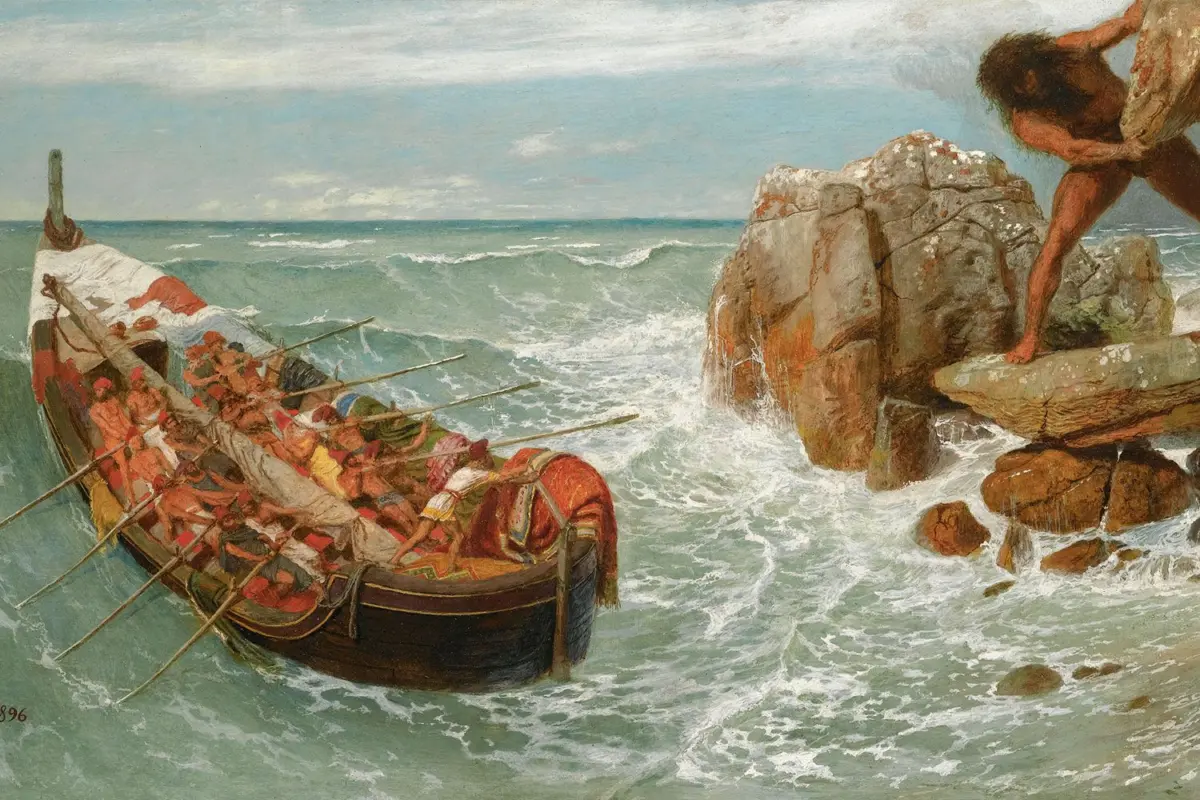
For nearly three millennia, The Odyssey has occupied a foundational pillar in Western literature, shaping our collective understanding of heroism, perseverance, and the long road home. As Christopher Nolan’s blockbuster film adaptation commands global box offices—prompting intense cultural debates about tone, fidelity, and artistic interpretation—the fundamental question resurfaces: Was there ever an original, authoritative version of The Odyssey, and what would Homer think of its countless iterations?
/https://tf-cmsv2-smithsonianmag-media.s3.amazonaws.com/filer_public/38/b1/38b1449a-6437-4ff8-bb93-d552fa88436d/odyssey.jpg)
Spanning from pre-literate Bronze Age oral traditions to third-century B.C.E. Egyptian papyrus fragments, medieval parchment manuscripts, and contemporary digital humanities projects, the text of The Odyssey has never been static. Rather than a singular, fixed masterwork penned by a solitary author, the epic is a living tradition characterized by multiformity, poetic formulas, and endless reinvention. This investigation explores the complex textual history of Homer’s masterpiece, the mechanics of ancient oral performance, and how modern adaptations continue to grapple with the legacy of a hero defined by his "many turns."
/https://tf-cmsv2-smithsonianmag-media.s3.amazonaws.com/accounts/headshot/Ellen_Wexler.png)
Detailed Chronology: From Bronze Age Echoes to the Digital Age
To understand The Odyssey is to trace a winding historical trajectory stretching back thousands of years before the advent of print.
Read Also
:focal(750x500:751x501)/https://tf-cmsv2-smithsonianmag-media.s3.amazonaws.com/filer_public/38/b1/38b1449a-6437-4ff8-bb93-d552fa88436d/odyssey.jpg)
- The Second Millennium B.C.E. (Bronze Age Roots): Material cultures and specific objects described within the epics—such as the boar’s tusk helmet worn by Odysseus—point to historical realities and storytelling traditions dating deep into the Bronze Age, long before the tales were ever committed to writing.
- The Eighth to Seventh Centuries B.C.E. (The Emergence of Fixed Epics): Scholars such as Martin West and Richard Janko argue for the composition of the epics during this window. Whether crafted by a single brilliant, illiterate bard or synthesized through generations of festival performance, the narratives of The Iliad and The Odyssey began to achieve a recognizable, overarching structure.
- The Sixth Century B.C.E. (The Panathenaic Standardization): Under the sponsorship of the Athenian state at festivals like the Panathenaea, performance rules forced bards to recite the poems sequentially in relay. This institutionalization pruned away erratic variations, driving the epics toward a stable, widely recognized baseline.
- The Third Century B.C.E. (The Library of Alexandria): Scholars in Alexandria began collecting, comparing, and annotating diverse papyrus rolls of Homeric poetry. Encountering "wild" or "eccentric" versions containing extra lines, these early editors sought to establish a definitive, correct text.
- The Tenth Century C.E. (Medieval Manuscript Preservation): The creation of foundational parchment manuscripts, such as the famous Venetus A manuscript of The Iliad, preserved the ancient texts alongside invaluable marginal commentary (scholia) that chronicled lost alternative readings.
- The 1610s–1800s (The Birth of English Translation): George Chapman published the first full English translation in the early 17th century, inspiring Romantic poets like John Keats. Over the following centuries, generations of translators attempted to capture the ambiguity of Homer’s opening lines.
- The 1930s (The Oral-Formulaic Revolution): Harvard classicists Milman Parry and Albert Lord traveled to Yugoslavia to record living oral bards. Their fieldwork proved that pre-literate epic poets improvised using metrical formulas and traditional themes rather than memorizing fixed texts.
- The Late 20th to Early 21st Century (Digital Humanities): Scholars Casey Dué and Mary Ebbott launched the Homer Multitext project, utilizing digital archiving to present Homeric poetry without privileging a single authoritative version.
- July 2026 (The Cinematic Milestone): Christopher Nolan’s blockbuster film adaptation of The Odyssey premieres globally, sparking a modern renaissance in public discourse regarding translation, fidelity, and the timelessness of Homeric themes.
Supporting Context & Metrics: The Mechanics of Oral Composition
For centuries, casual readers assumed Homer sat down with a stylus and parchment to draft a meticulously plotted adventure. The twentieth-century breakthrough by Milman Parry and Albert Lord dismantled this illusion. By observing illiterate South Slavic bards—such as the legendary singer Avdo Međedović, who could effortlessly improvise epic songs exceeding 12,000 lines—Parry and Lord demonstrated that The Odyssey was born of an intricate oral-formulaic matrix.
/https://tf-cmsv2-smithsonianmag-media.s3.amazonaws.com/filer_public/3c/ad/3cad558e-d4ae-48eb-ad59-0b98a11268cf/gettyimages-530844208.jpg)
+-----------------------------------------------------------------+
          THE ORAL-FORMULAIC ARCHITECTURE OF HOMER'S EPICS
+-----------------------------------------------------------------+
  [ The Singer / Bard ]
         │
         ├──> Guided by Traditional Themes (e.g., The Return, The Assembly)
         ├──> Bound by Strict Meter (Dactylic Hexameter)
         └──> Employing Fixed Epithets ("the great tactician," "clever Odysseus")
         │
  [ Improvisation in Real Time ] ---> (10 to 20 lines per minute)
         │
  [ Audience Emotional Feedback ] ---> (Weeping, awe, and competitive stakes)
+-----------------------------------------------------------------+
Rather than memorizing thousands of lines verbatim, ancient bards functioned like master improvisers solving a complex metrical puzzle. Working within the rigid constraints of dactylic hexameter, they relied on:

- Epithets: Fixed descriptive tags (e.g., Odysseus as "the great tactician" or "man of twists and turns") selected primarily because their metrical weight fit neatly into specific slots within a poetic line.
- Thematic Building Blocks: Pre-established narrative motifs—such as the arming of a hero, the hosting of a stranger, or a council of gods—that allowed performers to expand or contract narratives dynamically depending on audience engagement.
As classicist Joel Christensen of the CUNY Graduate Center notes, the search for an "original" text is a modern obsession superimposed onto an inherently fluid tradition. "The Odyssey we have has been accepted as authoritative in its own right for almost 2,500 years," Christensen explains. "The more compelling question is: Why is this the Odyssey we have rather than something else?"
/https://tf-cmsv2-smithsonianmag-media.s3.amazonaws.com/filer_public/87/c6/87c68ee5-05fb-438a-b562-a4e04a196a22/funerary_proto-attic_amphora_with_a_depiction_of_the_blinding_-6051448e768428fa5f962702cc267bc7.jpg)
Official Statements & Scholarly Perspectives
The release of Christopher Nolan’s cinematic adaptation has reignited conversations across academic institutions regarding how ancient texts are interpreted, adapted, and consumed in the modern era.
/https://tf-cmsv2-smithsonianmag-media.s3.amazonaws.com/filer_public/44/fa/44fa9e9e-4eb4-407f-9d63-4ec4af904c47/gettyimages-585870020.jpg)
- On Textual Fluidity and Performance:
Dr. Casey Dué (University of Houston) emphasizes that the ancient experience of poetry was fundamentally communal rather than private: "You didn’t sit on the couch with a good book. You went to festivals. You heard performances where the premium was telling the story the right way—the way it’s always been told, verified by the emotional resonance of the crowd." - On the Illusion of a Single Authoritative Source:
Dr. Mary Ebbott (College of the Holy Cross) points out that early papyrus fragments recovered from Egypt—dating back over two millennia—exhibit "multiformity," featuring minor variations, additions, and omissions that challenge the myth of a pristine, unchanging archetype. "You really have to work from the evidence you do have to try and come up with the best model that you can," she notes. - On Adapting the Epic for Modern Media:
Director Christopher Nolan, speaking on his cinematic vision, stressed that his approach prioritized emotional resonance over academic purism. Opting for contemporary English dialogue, Nolan remarked that he sought "language that has emotional, not intellectual, meaning to people," drawing directly from foundational memories of theatrical productions he witnessed in his youth.
Future Outlook: The Digital Future of Antiquity
As box office figures for Nolan’s cinematic adaptation soar to near-record highs, the cultural fallout extends far beyond Hollywood ticket sales. Educational institutions are reporting spikes in library checkouts for classical translations—ranging from Robert Fagles and Robert Fitzgerald to Emily Wilson’s modern, mathematically calibrated pentameter.
/https://tf-cmsv2-smithsonianmag-media.s3.amazonaws.com/filer_public/f7/89/f7892a5a-f441-4c13-a8c6-025bdd94face/2fk59k8.jpg)
Simultaneously, digital initiatives like the Homer Multitext project are transforming how the next generation of classicists engages with antiquity. By stripping away the bias of the single printed book page and displaying medieval manuscripts alongside their rich marginal commentaries, digital preservationists are returning the Homeric corpus to its original, multivalent state.
/https://tf-cmsv2-smithsonianmag-media.s3.amazonaws.com/filer_public/7f/15/7f158ed7-b0a8-4665-8efd-fcaaba723800/gettyimages-588182060.jpg)
Whether Homer would approve of Hollywood action sequences or contemporary English idioms remains an unanswerable riddle. Yet, the enduring vitality of The Odyssey proves that Odysseus—the man of many turns, polytropos—will continue to adapt, survive, and find his way home across whatever cultural shores the future may hold.


Comments
Facebook App ID not configured. Please add it in the Customizer.