
Executive Overview
It is, quite literally, divorce season. Across the cultural and financial capitals of the world, high-net-worth separations are increasingly intersecting with the global fine art and luxury auction markets, creating a unique economic phenomenon where high-profile heartbreaks routinely translate into staggering market valuations.
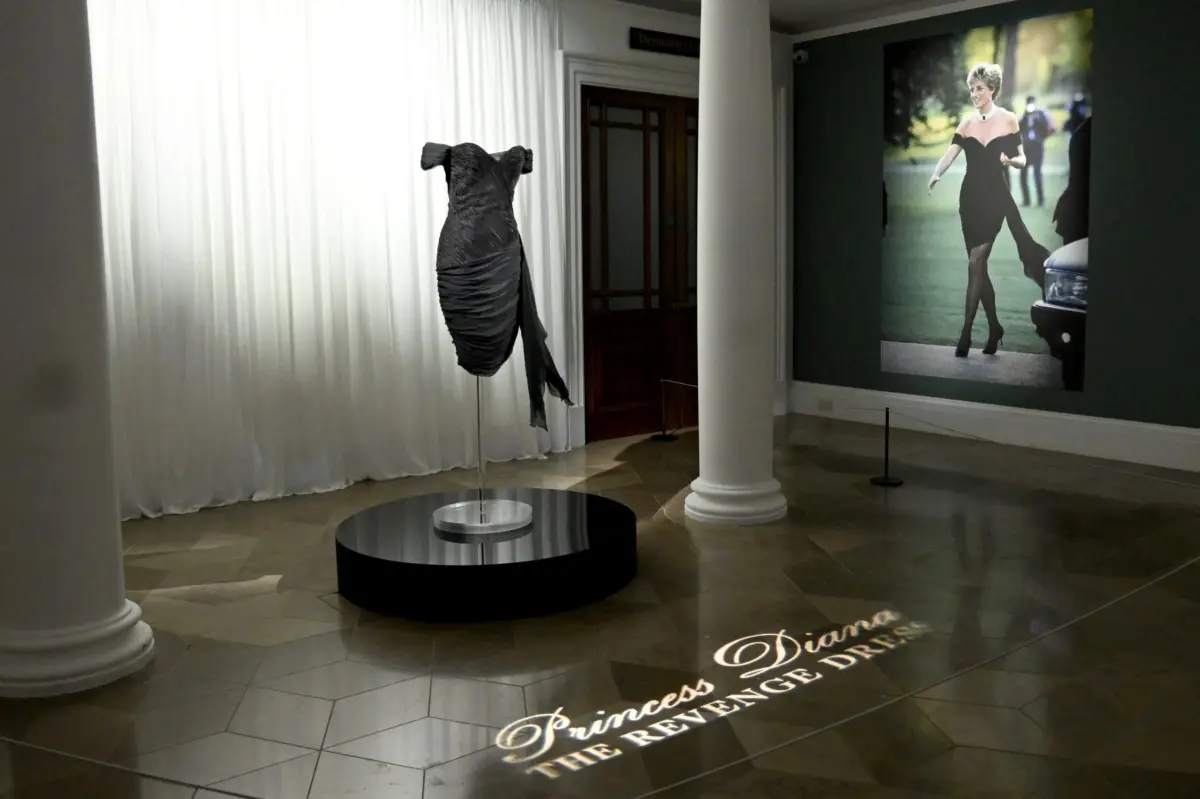
Nowhere is this intersection more apparent than in the upcoming Sotheby’s London auction on December 9, where Christina Stambolian’s iconic little black silk dress worn by Princess Diana—universally dubbed the "revenge dress"—is headed to the auction block with an estimated pre-sale value of $150,000 to $300,000.
This cultural milestone coincides with broader media examinations of high-society splits, such as the dramatic premiere of the Sienna Miller and Dominic West divorce drama War, and a specialized panel discussion hosted by Sotheby’s in Geneva titled "The Art of Divorce."
Read Also
Far from being mere tabloid fodder, the nexus of high-society divorces and high-value cultural assets represents a complex legal, financial, and psychological ecosystem. According to luxury market analysts, a provenance rooted in a famous or contested divorce can frequently triple the market value of a prized possession. When high-net-worth couples part ways, the division of multi-million-dollar art collections, historic fashion, and cultural artifacts often sparks legal battles that permanently reshape the upper echelons of the global art market.
From landmark court-ordered liquidations—such as the record-shattering $676 million Macklowe collection sale—to the quiet consignment of historic royal garments, the business of unwinding marriages has become one of the most lucrative catalysts for the auction houses of London, New York, and Geneva.
Detailed Chronology: From Public Scandals to Auction Blocks
The phenomenon of monetizing high-profile separations is rooted in a decades-long evolution where private heartbreak has repeatedly transformed into public cultural currency.
June 1994: The Birth of the "Revenge Dress"
The timeline of the modern revenge artifact traces directly back to June 29, 1994. On the exact evening that Prince Charles publicly confessed to his adultery with Camilla Parker Bowles in a nationally televised documentary, Princess Diana stepped out of a car at the Serpentine Gallery in Hyde Park.
Dressed in a daring, off-the-shoulder, form-fitting black silk chiffon dress designed by Christina Stambolian—a garment she had reportedly kept in her wardrobe for three years because she considered it "too daring"—Diana weaponized fashion. The imagery instantly eclipsed the Prince of Wales’s admissions. In the span of a single evening, the cocktail dress was transformed into an immutable symbol of autonomy, resilience, and calculated defiance.
November 2021: The Macklowe Collection Liquidations
Decades later, the financial implications of elite divorces reached an institutional apex. In the 2018 New York trial of real estate developer Harry Macklowe and his former wife, Linda Macklowe, the central point of contention was a world-class, 35-piece art accumulation featuring masterpieces by Andy Warhol, Jackson Pollock, and Mark Rothko.
Unable to agree on valuation or division, a New York State Supreme Court justice ordered the couple to liquidate the entire collection and split the proceeds evenly. In November 2021, Sotheby’s New York hosted the resulting sale, which realized an astonishing $676 million. The auction shattered multiple artist records, proving that court-mandated breakups could yield historic financial returns.
December 2023–December 2025: The Current Wave
Fast forward to the current cultural cycle, and the trend has accelerated. The convergence of high-profile cultural media, such as the premiere of Sienna Miller and Dominic West’s divorce drama War, has brought marital dissolution back to the forefront of public discourse.
Simultaneously, the anonymous Scottish consignor who previously purchased Princess Diana’s dress has decided to part ways with the garment following the death of her husband. The dress is now scheduled to headline Sotheby’s London sale, expected to fetch up to $300,000—a testament to how time and historic provenance compound the value of breakup artifacts.
Supporting Context & Metrics: The Economics of Heartbreak
To understand why divorce increases the value of cultural and luxury assets, one must examine the mechanics of the elite secondary market. When an item possesses a dramatic backstory, it transcends its physical composition and becomes a narrative asset.
The "Divorce Premium"
Market analysts have long observed what can be termed the "divorce premium." Items tied to high-stakes litigation, sudden liquidations, or historic personal turning points carry an inherent emotional gravity that appeals to institutional collectors and private buyers alike.
- Tripled Valuations: Industry experts note that items directly associated with a famous divorce can see their baseline market value triple compared to identical pieces lacking such narrative provenance.
- The Macklowe Metrics: During the 2021 Macklowe sale, individual lots significantly outperformed their pre-sale estimates precisely because of the dramatic context of their release. Mark Rothko’s No. 7 (1951) commanded an astonishing $82.5 million; Alberto Giacometti’s skeletal sculpture Le Nez fetched $78.4 million; and Jackson Pollock’s Number 17, 1951 realized $61.2 million—more than double its low estimate of $25 million.
- The Stambolian Trajectory: When the Christina Stambolian dress was originally auctioned in 1997 by Princess Diana herself (as part of a massive charity sale of her wardrobe shortly before her death), it sold for £65,000 to Scottish businessman Iain Henderson. When it hits the block at Sotheby’s London on December 9, its projected valuation of $150,000 to $300,000 reflects both general inflation and the steadily appreciating mythos of the "revenge dress."
Legal and Fiduciary Complexities
Behind the multi-million-dollar hammer prices lies a labyrinth of legal and fiduciary challenges. When ultra-high-net-worth couples divorce, art and cultural property rarely fit neatly into standard asset-splitting formulas.
Unlike liquid cash, real estate, or publicly traded equities, fine art is illiquid, subjective in valuation, and often burdened by sentimental attachments. Determining whether to sell, how to appraise, and where to store multi-million-dollar collections during protracted legal proceedings requires specialized advisors, cross-border legal teams, and wealth-management fiduciary experts.
Official Statements and Expert Insights
The growing intersection of matrimonial law, wealth management, and fine art is the core subject of Sotheby’s Geneva panel discussion, titled "The Art of Divorce."
The Geneva Panel Lineup
Moderated by Julian Washington, Head of Tax, Heritage, and U.K. Museums and Fiduciary Client Groups at Sotheby’s, the panel brings together some of the leading minds in international private client services:
- Judith Chatoo: Head of Private Clients at Saffery Trust.
- Sirin Yüce: Partner at the prominent law firm Charles Russell Speechlys.
- Johan Nauckhoff: Head of Fine Art at Sotheby’s Switzerland.
According to official event descriptions, the panel is designed as a rigorous examination of "the art and cultural property questions that arise in the context of divorce." It addresses how trustees, lawyers, and auction houses navigate ownership disputes, tax implications, and valuation discrepancies when matrimonial assets include museum-quality artifacts.
Reflections from the Owners of History
The emotional weight of these separations—and the objects left in their wake—is often articulated most clearly by the consignors themselves. Speaking about the decision to part with Princess Diana’s historic gown, the wife of the late Scottish businessman who originally purchased it shared a poignant reflection:
"My late husband and I knew that this dress was something special," she said in a statement. "Princess Diana was walking into the worst night of her life and you would never know it to look at her. It went from a cocktail dress to a statement in the time it took to photograph her."
Reflecting on the passage of time and the closing of a chapter, she added:
"Thirty years on, you can say the words anywhere in the world and everyone knows exactly which dress you mean. Bidding at auction and winning it was one of the great days of our life together. With him gone, that chapter has closed, and so should this one. I hope it goes to someone who will enjoy owning it as much as we did."
This sentiment captures the dual nature of divorce-related consignments: they represent the closure of personal chapters for the previous owners, while opening up new narratives for the next generation of collectors.
Future Outlook: Where the Art Market and Family Law Converge
As global wealth continues to concentrate at the very top of the economic pyramid, the intersection of high-net-worth divorces and the fine art market is poised for significant expansion. Several key trends are expected to shape this landscape over the coming years:
1. Increased Institutionalization of Family Law and Fine Art
Law firms and wealth management practices are increasingly partnering directly with auction houses like Sotheby’s and Christie’s long before a divorce is finalized. Rather than leaving art valuation to bitter courtroom battles, forensic accountants and art market specialists are being brought in early as neutral arbiters to assess portfolios, establish realistic liquidation timelines, and minimize tax liabilities across international jurisdictions.
2. The Rise of "Narrative Provenance"
In an oversaturated global art market, provenance is everything. As demonstrated by the Macklowe collection and the perennial fascination with Princess Diana’s wardrobe, buyers are increasingly drawn to items with rich, complex, and dramatic histories. Divorces—particularly those involving public figures or staggering wealth—create immediate, undeniable provenance that institutional buyers and private collectors view as a mark of historical significance.
3. Cross-Border Complications
With global elites holding assets spread across multiple tax havens, shell companies, and international jurisdictions, future high-society divorces will likely involve even more intricate legal battles over cultural property. Issues of repatriation, export restrictions on national treasures, and conflicting family law statutes between countries will keep legal experts like those on Sotheby’s Geneva panel in high demand.
Conclusion
Ultimately, the marriage of divorce and the fine art market is a reflection of human nature meeting cold economics. When relationships dissolve, the material culture accumulated during those years must find a new home. Whether it is a silk dress worn on a night of personal triumph over public humiliation, or a multi-million-dollar Rothko canvas ordered by a judge to be sold to the highest bidder, these objects endure. They serve as tangible reminders that while personal fortunes and marriages may fracture, the market for cultural history remains perpetually, brilliantly resilient.





Comments
Facebook App ID not configured. Please add it in the Customizer.