
Executive Overview
Two decades have passed since the final blows of heavy machinery leveled Baltimore’s Memorial Stadium, yet the ghosts of 33rd Street continue to command a profound cultural presence. For generations of Baltimoreans, this brick-and-concrete fortress was more than a mere athletic venue; it was a civic cathedral, a war memorial, and a crucible where the turbulent social currents of mid-century America met on a patch of impeccably manicured grass.
As we approach the diamond jubilee of the Baltimore Orioles’ transcendent 1966 World Series championship—a historic sweep of the powerhouse Los Angeles Dodgers—the echoes of that era offer vital lessons for a twenty-first-century America gripped by deep political polarization and social fragmentation.
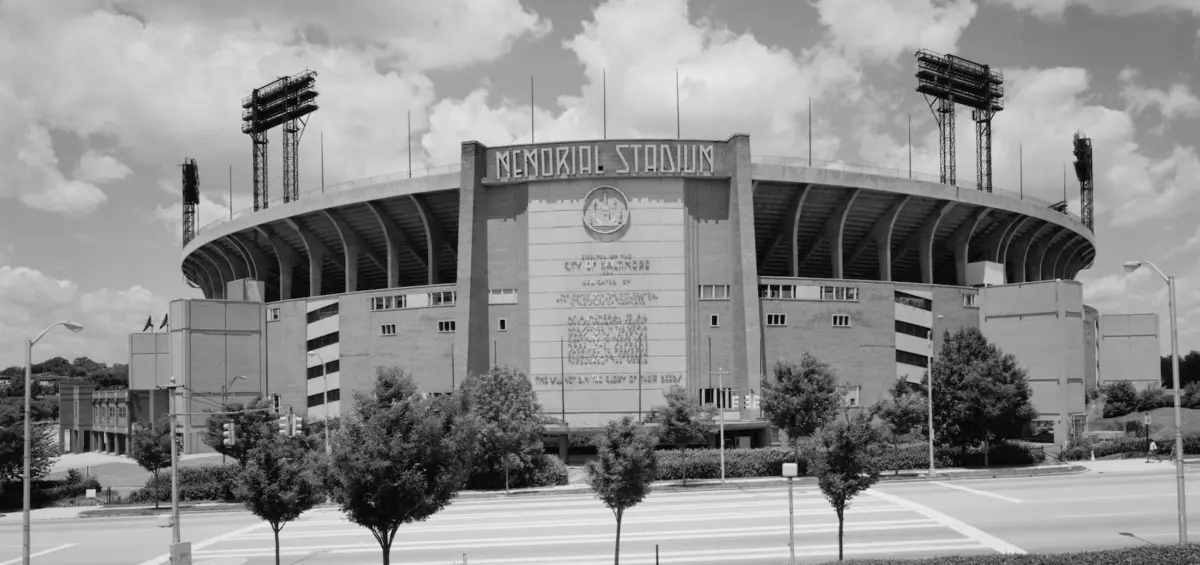
The story of Memorial Stadium is inextricably bound to the solemn dedication etched into its vanished Art Deco facade: erected to honor those who fought and died in the global conflicts of the twentieth century to preserve liberty and equality. While the physical structure was razed in 2001—amidst local heartbreak and a controversial compromise that preserved its historic marquee only briefly before its ultimate demolition—the spiritual legacy of the site endures. Today, the location hosts a youth baseball facility developed by the Cal Ripken Sr. Foundation, with a home plate meticulously aligned to the original diamond.
Read Also
Yet, beyond the nostalgia of old box scores and childhood memories shared with grandfathers, the 1966 Orioles represent a powerful sociological blueprint. In an era when Jim Crow shadows still lingered over the city and the nation, the Orioles forged a model of transcendent teamwork. Anchored by the selfless partnership of Brooks Robinson—a native of Little Rock who ceded clubhouse leadership—and Frank Robinson, a proud, fiercely independent Black superstar who would capture the American League MVP crown that season, the team embodied a unifying excellence.
This retrospective examines the historical architecture of Memorial Stadium, the dramatic chronology of the 1966 Fall Classic, the broader cultural metrics of Baltimore during a time of profound transition, and the enduring relevance of athletic craftsmanship and civic camaraderie in modern public life.
Detailed Chronology: The Fall Classic of October 1966
To understand the magnitude of the 1966 championship, one must recall the precarious expectations surrounding the Baltimore Orioles entering that autumn. Long cast as the underdog in the American League—perennial also-rans compared to the corporate prestige and financial muscle of franchises like the New York Yankees and the Los Angeles Dodgers—the Orioles had arrived at the precipice of baseball immortality through grit, sharp scouting, and elite managerial discipline under Earl Weaver’s organizational umbrella (though managed on the field that year by Hank Bauer).
The stage was set on the sunlit, shirt-sleeve Sunday afternoon of October 9, 1966. Game Four of the World Series brought professional baseball back to 33rd Street following a stunning opening act in Los Angeles. The underdog Orioles had traveled to the West Coast and stolen the first two games, shifting the momentum entirely. On Saturday, October 8, twenty-one-year-old right-hander Wally Bunker delivered a masterclass, tossing a pristine three-hit shutout to secure a 1–0 victory in Game Three.
As fans packed the lower deck of Memorial Stadium—sipping Cokes, shelling peanuts, and absorbing the electric autumn air—the air was thick with high-stakes calculations. Could Orioles southpaw Dave McNally shake off the shakiness of his Game One outing, where he had required the unexpected relief magic of Moe Drabowsky to preserve victory? Could the star-studded Dodgers offense, mired in an unprecedented twenty-four-inning scoreless drought, finally find a spark against Baltimore’s pitching staff? And, above all, could the Baltimore Birds complete a stunning four-game sweep of the defending champions?
The answers unfolded with cinematic precision. McNally pitched with icy poise, blanking the Dodgers’ vaunted lineup and extending their offensive futility. The decisive blow arrived courtesy of the immortal Frank Robinson, whose laser-like line drive off Dodgers intimidator Don Drysdale sailed deep into the left-field bleachers, breaking the scoreless tie and cementing his legendary status.
When center fielder Paul Blair hauled in the final, soaring fly ball to seal the sweep, Memorial Stadium erupted in a seismic shockwave of civic euphoria. Eyewitness accounts and historical retrospectives frequently draw parallels to the spontaneous V-E and V-J Day celebrations in Times Square. The field became a staging ground for unfiltered joy as Brooks Robinson, catcher Andy Etchebarren, and slugger Boog Powell sprinted toward the mound to mob McNally.
In the stands, a profound social barrier dissolved in real time. White and Black fans, sharing rows in a city marked by a painful and deeply entrenched history of segregation, embraced one another. For a fleeting, glorious afternoon, the divisions of the outer world were erased by the shared ecstasy of a championship won through collective excellence.
Supporting Context & Metrics: Architecture, Demographics, and Social Change
The narrative of Memorial Stadium and the 1966 Orioles cannot be divorced from the physical and social landscape of Baltimore during the mid-twentieth century. Opened originally in 1922 as Municipal Stadium and extensively rebuilt and dedicated in 1954, the venue was explicitly conceived as a monument to civic duty and military sacrifice.
The Inscription and Its Promise
The cornerstone of the stadium’s architectural identity was its magnificent brick-and-concrete facade, adorned with stainless-steel Art Deco lettering. The official dedication read:
ERECTED BY THE CITY OF BALTIMORE 1954
DEDICATED BY THE MAYOR AND THE CITY COUNCIL AND THE PEOPLE OF BALTIMORE CITY IN THE STATE OF MARYLAND AS A MEMORIAL TO ALL WHO SO VALIANTLY FOUGHT AND SERVED IN THE WORLD WARS WITH ETERNAL GRATITUDE TO THOSE WHO MADE THE SUPREME SACRIFICE TO PRESERVE EQUALITY AND FREEDOM THROUGHOUT THE WORLD
TIME WILL NOT DIM THE GLORY OF THEIR DEEDS
While modern sports architecture prioritizes sybaritic luxuries—private club suites, gourmet concession plazas, and retractable roofs—Memorial Stadium possessed an unvarnished authenticity. Its design forced fans into intimate communion with the game, framing views of residential row houses along 36th Street beyond the scoreboard. When the venue was ultimately shuttered and demolished in 2001, critics lamented the loss of a tangible link to Baltimore’s industrial and working-class identity. Although the subsequent success of Oriole Park at Camden Yards successfully catalyzed a nationwide renaissance in classic ballpark design, the void left by 33rd Street remained deeply felt in the Waverly neighborhood.
The Sociological Impact of the 1966 Clubhouse
Beneath the athletic metrics—the batting averages, earned run averages, and fielding percentages—lay a profound sociological narrative. The mid-1960s was an era of intense civil rights struggle across the United States. Baltimore was navigating its own turbulent path toward desegregation, wrestling with housing discrimination, school integration, and systemic racial inequality.
Within this volatile environment, the Baltimore Orioles clubhouse functioned as a vanguard of integration and mutual respect. The dynamic between Brooks Robinson and Frank Robinson was central to this cultural shift. Brooks Robinson, the beloved third baseman from Little Rock, Arkansas, was already established as the moral heartbeat of the team and the 1964 AL MVP. When Frank Robinson was acquired via trade from the Cincinnati Reds prior to the 1966 season—a trade infamously dismissed by Reds general manager Bill DeWitt as obtaining a "not-young-anymore" player—Brooks unhesitatingly deferred leadership responsibilities to the newcomer.
Frank Robinson arrived in Baltimore with a fierce, unapologetic pride and an immense competitive fire. Rather than fostering friction, the two superstars forged a seamless partnership built on uncompromising professional excellence. Frank’s stellar play earned him the American League Triple Crown and the unanimous AL MVP award in 1966, while Brooks anchored the infield with his peerless defensive wizardry at third base.
Historians of the era note that witnessing these two men lead a diverse roster of teammates toward a common goal provided Baltimore citizens with a powerful visual and emotional counter-narrative to segregation. The shared celebration in the stands on October 9 was not merely a sports victory; it was a microscopic glimpse of a more integrated, harmonious civic future.
Official Statements and Cultural Reflections
The legacy of Memorial Stadium and the 1966 championship continues to be a subject of reflection among historians, athletes, and cultural commentators who evaluate the intersection of sports, memory, and civic life.
Reflecting on the demolition of the stadium in 2001, observers noted the deep sense of desecration felt by lifelong residents. The destruction of the Art Deco facade—despite assurances that elements of the landmark would be preserved—was viewed by many as a tragic severing of Baltimore’s collective memory.
In subsequent years, civic leaders and sports historians have emphasized the importance of grounding modern urban revitalization in historical continuity. The establishment of the "Youth Development Park" at the 33rd Street site, funded by the Cal Ripken Sr. Foundation, represents a deliberate effort to honor that continuity. By anchoring home plate in its exact historical coordinates, the project ensures that successive generations of young athletes literally step into the footprints of legends like the Robinsons, Palmer, and Weaver.
Cultural critics reviewing the sixty-year arc since the 1966 triumph frequently highlight the character of the Orioles roster as an antidote to contemporary social malaise. Writing in reflections on the era, commentators observe that the 1966 team functioned fundamentally as master craftsmen. They viewed their demanding profession not as a platform for self-aggrandizement, but as rigorous, honest labor executed with professional pride and a distinct joie de combat—a joyful combativeness in the face of daunting challenges.
"They played hard, but they played clean, and they were respected by their competitors for that," notes cultural analyst and author George Weigel. In an era defined by hyper-partisanship, institutional distrust, and a deficit of civic grace, the ethos of the 1966 Orioles stands as an enduring reproach to modern public life—particularly within politics, where compromise is too often viewed as weakness rather than a prerequisite for the common good.
Future Outlook: Lessons for Twenty-First-Century America
As the city of Baltimore and the broader baseball world look toward the upcoming diamond jubilee of the 1966 championship, the commemoration transcends mere athletic nostalgia. It serves as an urgent diagnostic tool for evaluating the health of America’s civic culture.
Rebuilding Civic Camaraderie
The primary lesson of the 1966 Orioles is the transformative power of a shared, transcendent objective. When individuals from disparate backgrounds—different races, social classes, and geographic origins—commit themselves to a standard of excellence, artificial barriers recede. In contemporary America, where social media algorithms and political rhetoric continually incentivize tribalism and division, the model of the Orioles clubhouse offers a compelling counter-model. True national cohesion is not achieved through superficial conformity, but through mutual respect forged in the pursuit of demanding, worthwhile endeavors.
The Ethics of Craftsmanship
Furthermore, the modern professional landscape—spanning corporate boardrooms, public administration, and the political arena—would benefit immensely from recovering the work ethic embodied by the mid-century Orioles. The insistence on doing difficult things exceptionally well, without the constant need for performative validation, is a hallmark of true craftsmanship. As institutional trust languishes at historic lows, restoring a culture of competent, honest, and respectful labor remains an urgent national priority.
Preserving Living History
Finally, the evolution of the 33rd Street site from a grand stadium to a rubble-strewn lot, and finally to a state-of-the-art youth athletic park, underscores the necessity of anchoring urban spaces in living history. Physical monuments matter. When a young ballplayer steps onto the turf at the Cal Ripken Sr. Foundation park and gazes toward the Waverly row houses, they are participating in a living tradition that bridges generations.
Time may march forward, and physical stadiums may crumble into dust, but the architectural and moral foundations laid by the citizens of Baltimore in 1954 and 1966 remain remarkably resilient. As we confront the complexities of the twenty-first century, the enduring message of Memorial Stadium rings as true today as it did when it was first chiseled into stainless steel: Time will not dim the glory of their deeds.




Comments
Facebook App ID not configured. Please add it in the Customizer.