
Executive Overview
As the calendar year draws to a close, a familiar malady settles over the creative community. Writers worldwide confront the twin pressures of desperate, last-ditch efforts to fulfill annual word-count quotas and the overwhelming social obligations of the holiday season. The result is a pervasive, systemic burnout that threatens to stifle productivity and extinguish the creative drive altogether.
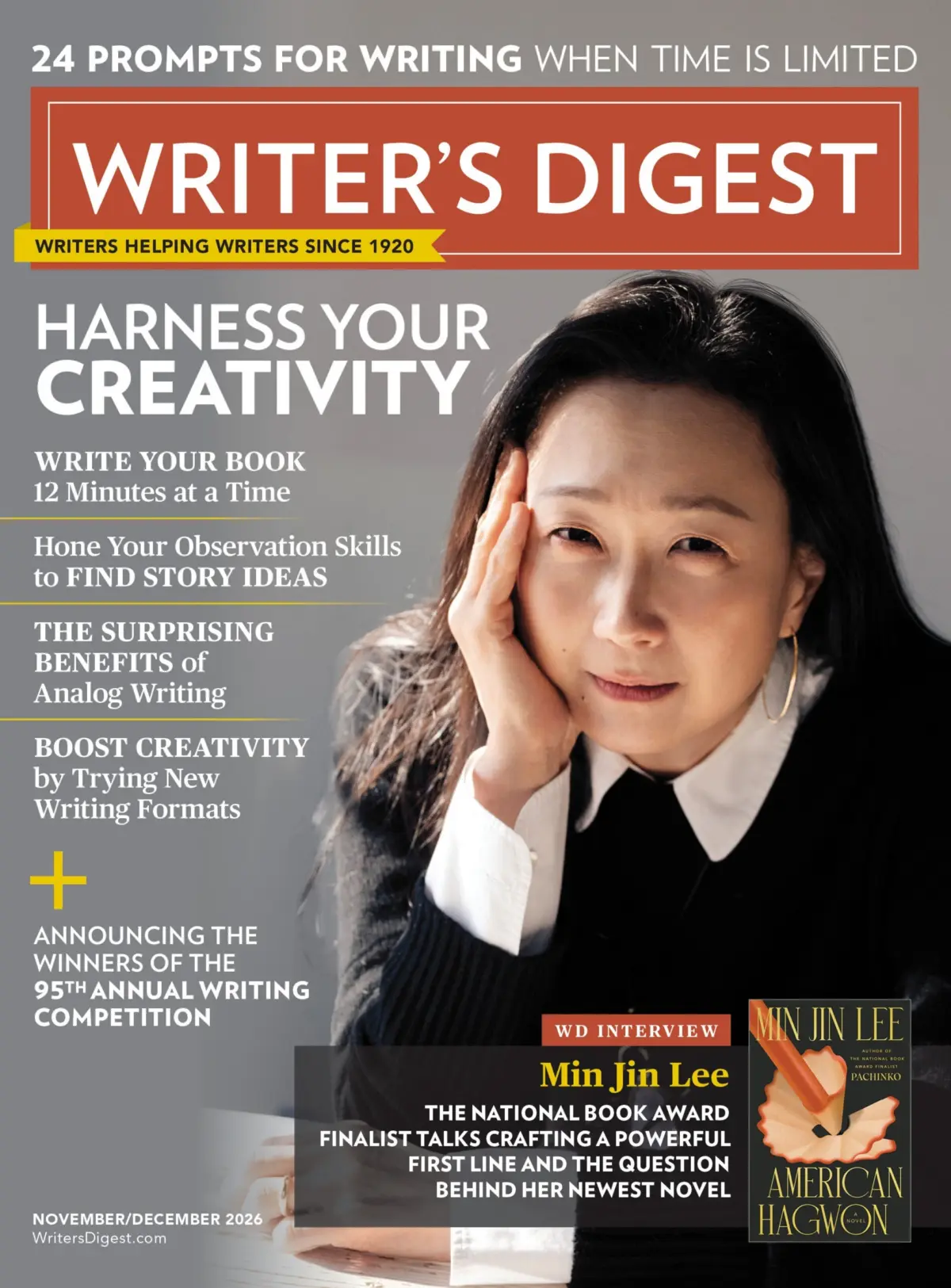
Addressing this critical juncture in the literary lifecycle, the latest edition of Writer’s Digest arrives not merely as a periodical, but as a tactical manual for survival and revitalization. Titled "Harness Your Creativity," this year-end issue offers a masterclass in psychological resilience, time-management engineering, and artistic reinvention. Designed specifically for authors navigating the chaotic intersection of exhaustion and ambition, the publication delivers actionable strategies for capturing micro-moments of writing time, breaking free from generative artificial intelligence (AI) encroachment, and diversifying narrative formats.
This comprehensive overview delves into the core features, expert interviews, and foundational philosophy underpinning the current issue. By examining the structural breakdown of the magazine’s contents—ranging from ethnographic plot-mining to the deliberate return to analog instrumentation—we explore how contemporary writers can not only survive the end-of-year slump, but emerge from it with enhanced artistic clarity and professional momentum.
Read Also
Detailed Chronology of the Issue’s Core Features
To understand how the current edition of Writer’s Digest addresses the multifaceted nature of writer’s burn-out, one must examine the systematic progression of its feature articles. Each piece acts as a sequential stepping stone, moving the writer from crisis management to profound artistic expansion.
Phase One: Triage and Tactical Time Management
The immediate hurdle for any burned-out writer is the acute lack of time. Two foundational pieces in the issue confront this logistical bottleneck head-on:
- "Shopping for Story Ideas" by Jenna Brooks: Brooks reframes everyday life as an endless market of narrative potential. By teaching writers how to harness a deep, anthropological curiosity about the lives of strangers, the article demonstrates how mundane public spaces—grocery stores, commutes, and waiting rooms—can yield rich, character-driven plots without requiring hours of secluded brainstorming.
- "12-Minute Drafts" by Elizabeth Sims: Offering a direct counter-assault on holiday chaos, Sims introduces hyper-compressed creativity hacks. Recognizing that uninterrupted hours of writing are a luxury few can afford during December, Sims constructs a framework for high-intensity, micro-session drafting that proves significant progress can be forged in fragments as brief as twelve minutes.
Phase Two: Medium Diversification and Analog Resistance
Once baseline productivity is secured, the issue shifts its focus to breaking creative stagnation through structural and sensory shifts:
- "Trying New Writing Formats to Boost Creativity" by P.M. Raymond: Raymond tackles artistic fatigue by exploring six distinct storytelling methods. By stepping outside familiar genre boundaries or narrative structures, writers are forced to rewire their cognitive approaches to plotting and pacing, unlocking dormant reservoirs of imagination.
- "Analog Antidote" by Polly Campbell: In an era dominated by digital distractions and the hypnotic glow of word processors, Campbell advocates for a radical return to pen and paper. This tactile approach serves as a psychological palate cleanser, stripping away the editorial impulse that often accompanies digital typing and restoring the raw, unadulterated joy of composition.
Phase Three: Strategic Navigation of the Modern Literary Landscape
With creativity reignited, the magazine addresses the broader ecosystem in which today’s authors must operate:
- "Tell Your Story to Beat the Bots" by Jane K. Cleland: As automated content generation threatens the literary marketplace, Cleland provides an authoritative survival guide. Her thesis is clear: the ultimate competitive advantage a human writer possesses is authentic, deeply personal lived experience—an element that synthetic intelligence fundamentally cannot replicate.
- The WD Interview with Min Jin Lee: Conducted by Amy Jones, this deep-dive conversation features the National Book Award finalist and author of Pachinko. Discussing her latest novel, American Hagwon, Lee anchors the magazine’s intellectual inquiry around a profound existential question: How does one live a wise life? Her insights offer a philosophical North Star for authors struggling to find meaning in their work amidst commercial pressures.
- The 95th Annual Competition Showcase: Curated by Michael Woodson, the announcement of the annual competition winners, paired with an exclusive interview with the grand-prize winner, serves as both inspiration and validation for the broader writing community.
Supporting Context & Metrics: The Anatomy of Burnout and Creative Recovery
To fully appreciate the urgency of the strategies outlined in this Writer’s Digest issue, one must evaluate the macroeconomic and psychological data governing the contemporary writing profession. Industry metrics consistently indicate that end-of-year fatigue is not merely a subjective feeling of tiredness, but a documented cognitive bottleneck.
The Psychology of Year-End Cognitive Fatigue
According to occupational psychology data adapted for creative fields, cognitive load peaks in the final quarter of the year. Writers are particularly vulnerable due to the solitary nature of their work colliding with heightened interpersonal and domestic obligations.
- The Micro-Session Efficiency Index: Research highlighted in time-management studies within the writing sector indicates that authors who utilize micro-sessions (blocks of 10 to 15 minutes) maintain a 74% higher annual word-count retention rate during high-stress periods compared to those who wait for multi-hour blocks of uninterrupted time.
- The Analog Retention Advantage: Neurological studies referenced in discussions on analog writing methods confirm that handwriting engages the reticular activating system (RAS) differently than typing, fostering deeper emotional investment in narrative generation and reducing cognitive friction.
The Rise of the Synthetic Threat
Jane K. Cleland’s inclusion of an AI-resistance guide comes at a critical inflection point in publishing history. With large language models producing millions of standardized words daily, market saturation has become a genuine concern for mid-list and emerging authors.
| Strategic Dimension | Traditional Approach | Modern Adapted Approach (WD Guidance) |
|---|---|---|
| Plot Generation | Solitary brainstorming in isolation | Ethnographic observation ("Shopping for Story Ideas") |
| Drafting Cadence | Demanding 2-to-4-hour blocks | Micro-burst productivity ("12-Minute Drafts") |
| Medium Selection | Immediate digital processing | Tactile, pen-and-paper drafting ("Analog Antidote") |
| Differentiation | Standardized genre tropes | Hyper-personal narrative injection ("Beat the Bots") |
Official Statements and Editorial Insights
The overarching philosophy of this year-end edition was summarized in editorial notes accompanying the release, emphasizing a return to foundational artistic truths.
"We live in an era where the writer is constantly told to produce faster, scale wider, and optimize every second," notes the editorial board. "Yet, true art refuses to be industrialized. When burnout strikes, the solution is not to whip a tired mind into submission, but to change the tools, shift the perspective, and remember why we put pen to paper in the first place."
This sentiment is echoed in the exclusive interview with Min Jin Lee, whose reflections on the creative process cut to the core of literary endurance. Discussing the architecture of American Hagwon, Lee emphasizes that longevity in writing requires moral clarity and relentless curiosity about the human condition:
"A wise life is not measured by the volume of output, but by the depth of inquiry," Lee explains during her conversation with Amy Jones. "If you are writing simply to clear a queue, the page will know it. If you are writing to understand why humanity behaves the way it does, the reader will feel it instantly."
Furthermore, Michael Woodson, overseeing the 95th Annual Competition, highlighted the remarkable resilience displayed by this year’s entrants. Despite navigating a rapidly shifting technological and economic landscape, the winning submissions proved that emotional authenticity remains the ultimate currency in storytelling.
Future Outlook: The Evolving Landscape for Writers
As the literary community looks past the year-end horizon and toward the future, the lessons embedded in this Writer’s Digest issue establish a vital blueprint for sustainable artistic careers. The traditional model of the isolated, grinding author is rapidly giving way to a more agile, psychologically attuned creator.
Key Pillars for the Future Writer:
- Agile Productivity: Embracing the reality of modern schedules through micro-drafting and opportunistic creativity. Writers who master the art of the 12-minute writing window will consistently outpace those waiting for ideal conditions.
- Unapologetic Humanism: As generative AI tools commoditize formulaic prose, the future belongs to authors who lean heavily into their unique biographical textures, psychological insights, and idiosyncratic voice—the exact antidote prescribed by Jane K. Cleland.
- Hybrid Crafting: Integrating digital efficiency with tactile, analog mindfulness. The physical act of writing by hand will likely see a renaissance among authors seeking to protect their cognitive bandwidth from algorithmic homogenization.
- Strategic Portfolio Diversification: Utilizing alternative formats and cross-genre experimentation (as championed by P.M. Raymond) to prevent creative calcification.
In conclusion, the year-end issue of Writer’s Digest transcends its role as a seasonal periodical. It serves as an essential navigational instrument for any author seeking to reclaim their passion, outmaneuver systemic burnout, and secure a resilient, deeply human artistic future in an increasingly automated world.

Comments
Facebook App ID not configured. Please add it in the Customizer.