
Executive Overview
For 25 days, the vibrant coastal metropolis of Karachi will transform into a breathtaking epicenter of international artistic expression as the much-anticipated World Culture Festival returns for its third and most ambitious edition. Scheduled to run from October 29 to November 22, this monumental gathering is set to convene over 1,000 foreign performers from roughly 150 countries alongside more than 500 elite Pakistani artists. Jointly orchestrated by the Arts Council of Pakistan (ACP) Karachi and the Government of Sindh, the festival is far more than a routine calendar of entertainment; it stands as a robust exercise in cultural diplomacy.
With representation spanning all six inhabited continents—including the United States, Iran, Iraq, Palestine, and diverse nations across Latin America—the festival seeks to position art as a universal bridge connecting disparate human experiences. Organizers have intentionally designed the event to counter persistent global misperceptions about Pakistan, Sindh, and Karachi, replacing outdated security narratives with a vivid showcase of hospitality, pluralism, and creative excellence.
Demonstrating a profound commitment to public accessibility and grassroots engagement, roughly 80% of all scheduled programs will be entirely free to the public, requiring only advance registration. Meanwhile, a select six to eight high-profile mega concerts will feature nominal ticket pricing to sustain the scale of the operations. As municipal authorities race to finalize a newly minted "Art Village" surrounding the Arts Council, Karachi is poised to capture the cultural imagination of the world, proving that artistic resilience can flourish in the face of profound geopolitical challenges.
Read Also
Detailed Chronology and Festival Roadmap
The 25-day cultural extravaganza is structured as a tightly curated, multi-venue journey that weaves together traditional roots and avant-garde global performances.
Phase One: The Inaugural Curtain Raiser (October 29 – November 5)
The festival opens its doors on October 29 with an elaborate opening ceremony designed to spotlight international diversity. The first week is dedicated to establishing cross-cultural dialogues, featuring introductory theatrical productions, classical dance recitals, and initial collaborative jam sessions between visiting international artists and local Pakistani maestros. Notably, this window will feature poignant performances by two Palestinian theater groups, whose inclusion carries deep emotional resonance given the tragic losses sustained by members of their troupes amid ongoing conflicts in the Middle East.
Phase Two: Deepening Regional Integration and Heritage (November 6 – November 14)
As the festival enters its second week, the focus expands to honor Pakistan’s rich internal tapestry. Artists representing Sindh, Punjab, Khyber-Pakhtunkhwa, Balochistan, Azad Jammu and Kashmir, and the Seraiki belt will take center stage.
- Mehran Night: A dedicated evening celebrating the distinct cultural heritage of Sindh, focusing on indigenous musical traditions.
- Shah Latif Voices Festival: A newly launched sub-festival paying homage to the timeless Sufi poetry and spiritual philosophy of Shah Abdul Latif Bhittai.
Special emphasis during this phase will be placed on indigenous Sindhi instruments such as the algoza (double-flute) and the borindo (clay acoustic instrument). International delegates and musicians have expressed intense fascination with these rare sonic instruments, setting the stage for improvisational fusion sessions that blend Eastern folk traditions with Western, Latin, and Middle Eastern instrumentation.
Phase Three: Global Fusions and Mega Concerts (November 15 – November 22)
The final week transitions into high-energy collaborative performances and large-scale public spectacles. This phase includes the ticketed mega-concerts, where mainstream Pakistani pop and rock icons will share the stage with global headliners. The closing days will feature retrospectives of the festival’s collaborative workshops, art installations, and international film screenings, culminating in a grand closing ceremony that evaluates the lasting bridges built during the 25-day blitz.
Supporting Context & Metrics: Scaling Up Cultural Diplomacy
To truly grasp the magnitude of the third edition of the World Culture Festival, one must examine its exponential growth trajectory since inception.
The Metrics of Growth
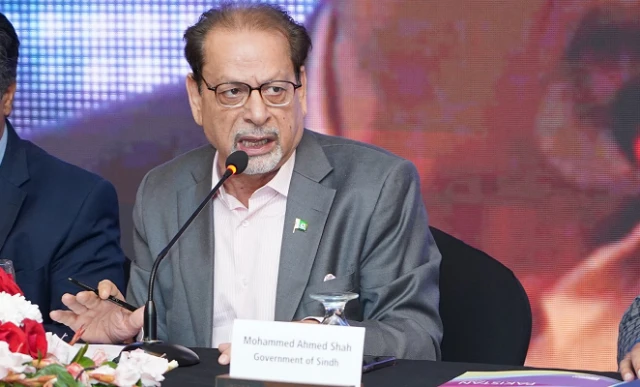
According to Arts Council President Ahmad Shah, the festival has scaled upward at an astonishing rate:
- The Inaugural Edition: Welcomed participants from 43 countries.
- The Second Edition: Expanded dramatically to encompass artists from 144 countries.
- The Third Edition (Current): Reaches a historic high, drawing participants from approximately 150 countries across all six continents.
This quantitative leap reflects a deliberate strategy of international outreach. By inviting artists from volatile and peaceful regions alike—ranging from the Americas to conflict-affected territories like Palestine—Karachi is being framed not as an isolated urban center, but as a cosmopolitan hub capable of hosting the world.
Economic and Tourism Impact
The festival arrives at a time of measured revival for Pakistan’s tourism and hospitality sectors. Ministry data indicates that international tourist arrivals at Pakistan’s primary heritage and scenic destinations have surged by approximately 50% over the past three years. Cultural festivals of this magnitude serve as primary catalysts for this trend. By drawing foreign delegates, journalists, and independent travelers, the event stimulates local hospitality markets, buoys artisan economies, and provides global media platforms with positive imagery of urban Pakistan.
Accessibility and the "Art Village" Initiative
A critical logistical pillar of the 2024 festival is the democratization of art. By ensuring that 80% of all programs remain free of charge (accessible via advance registration), organizers are actively dismantling socioeconomic barriers that often gatekeep high-culture events.
Complementing this accessibility is an ambitious urban regeneration project spearheaded by Sindh Chief Secretary Syed Asif Haider Shah. Municipal institutions—including the Karachi Metropolitan Corporation (KMC), local town administrations, the Water Board, and the Deputy Commissioner’s office—are collaborating to transform the urban footprint surrounding the Arts Council into a cohesive "Art Village."
- Infrastructure Overhaul: Comprehensive road resurfacing, decorative and functional street lighting, installation of public benches, upgraded pedestrian pathways, and designated food zones are currently underway.
- Integrated Cultural Corridor: The long-term urban planning vision seeks to seamlessly connect the Arts Council with nearby museums and historical colonial-era architectural landmarks, establishing a permanent cultural precinct in the heart of Karachi.
Official Statements and Administrative Mobilization
The logistical feat of hosting thousands of international artists for nearly a month requires unprecedented synchronization between municipal, provincial, and federal agencies.
The Vision of Cultural Diplomacy
During a comprehensive media briefing on Thursday, Arts Council President Ahmad Shah articulated the core philosophy driving the massive undertaking:
"The World Culture Festival has become an important reference point for Pakistan’s cultural identity. We decided to use cultural diplomacy to remove misconceptions about Pakistan, Sindh, and Karachi. We are inviting foreign artists and delegates so they can experience the country firsthand and take a positive message back home."
Shah underscored that the event transcends mere entertainment, acting instead as a multi-disciplinary ecosystem where theater, music, dance, film, and folk arts converge. He noted with pride the intense global curiosity surrounding Pakistan’s indigenous musical instruments, emphasizing that the festival serves as a two-way street for genuine artistic exchange rather than a one-sided showcase.
Government Backing and Inter-Agency Coordination
Sindh Culture and Tourism Minister Syed Zulfiqar Ali Shah emphasized that every relevant provincial department has been fully mobilized. Elaborate protocols have been established in coordination with the Civil Aviation Authority (CAA), Airport Security Force (ASF), provincial police, and elite intelligence agencies to ensure the safety and seamless arrival of foreign delegations.
Minister Zulfiqar Ali Shah reflected on the profound narrative shift the festival aims to achieve:
"Pakistan was previously associated with the image of terrorism, but cultural festivals are helping present its positive and cultural identity to the world. The fundamental objective is to bring people closer through culture and convey a message of peace. Love, tolerance, and harmony are the antidotes to global division."
Echoing these sentiments, Sindh Chief Secretary Syed Asif Haider Shah detailed the infrastructural preparations, noting that federal ministries have extended unreserved cooperation to ensure the event runs without administrative bottlenecks. Special task forces have been assigned to monitor traffic management, hospitality logistics, and emergency medical response times throughout the 25-day window.
Future Outlook: Legacy and Cultural Sustainability
As Karachi prepares to open its gates on October 29, the long-term implications of the World Culture Festival extend far beyond the final curtain on November 22. The initiative represents a turning point in how post-colonial urban centers in South Asia can leverage cultural assets to drive civic pride, urban renewal, and international rehabilitation.
Institutionalizing the Arts
The establishment of the "Art Village" signals a permanent shift in urban governance. By permanently upgrading pedestrian infrastructure, lighting, and public recreational spaces around the cultural core, the Sindh government is laying the groundwork for a sustained creative economy. Future iterations of the festival will likely inherit this upgraded infrastructure, significantly lowering logistical overheads and cementing Karachi’s reputation as a premier destination for international touring companies.
Strengthening Soft Power
In an increasingly polarized global landscape, the festival demonstrates the potency of cultural soft power. By welcoming artists from 150 nations—including those weathering geopolitical storms—Karachi projects an image of resilience, openness, and cosmopolitan grace. The cross-cultural collaborations forged during the fusion workshops and the preservation efforts centered on endangered indigenous instruments ensure that the festival’s impact will ripple through academic musicology, theatrical arts, and international diplomacy for years to come.
Ultimately, the third edition of the World Culture Festival is more than a 25-day calendar of events; it is a bold declaration of cultural confidence. By inviting the world to its doorstep and offering its artistic soul freely to the masses, Karachi is rewriting its narrative—transforming from a city defined by external perceptions into a dynamic global capital defined by its art, its heritage, and its unyielding commitment to peace.

Comments
Facebook App ID not configured. Please add it in the Customizer.