
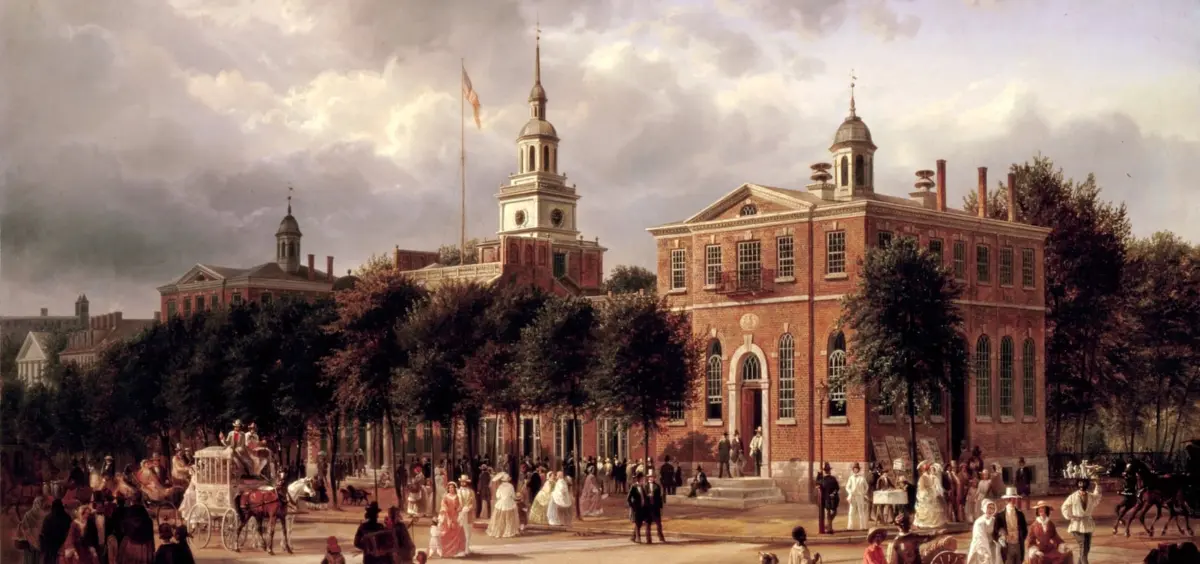
As the nation observes Constitution Day this month, the debate over the origins, mechanics, and enduring legacy of the American republic has assumed a renewed sense of urgency. In classrooms, school boards, and legislative chambers across the United States, the foundational documents that birthed the world’s most enduring constitutional republic are increasingly subjected to polarizing interpretations. Critics on various sides of the ideological spectrum question whether the U.S. Constitution was designed as a genuinely democratic instrument, while educational curricula frequently pivot toward frameworks that emphasize historical grievance over foundational principles.
Amidst this cultural and intellectual friction, a vital counter-movement is taking place within American publishing. A new wave of scholarly studies, historical examinations, architectural biographies, and engaging youth literature has emerged to re-examine the mechanics of 1776 and 1787. Rather than succumbing to twenty-first-century cynicism, these works invite citizens, students, and educators to return to the primary texts, the rigorous debates, and the tangible spaces where the republic was forged.
This curated review examines five distinct literary contributions published to navigate the complexities of America’s founding era. From Ilan Wurman’s meticulous textual analysis of the Constitution of 1789 to Michael Platt’s philosophical exegesis of the Declaration of Independence; from Lawrence W. Reed’s accessible defense of core American ideas to D.G. Hart’s vibrant biography of Independence Hall; and finally, to the action-packed YA historical fiction of the American Treasure Hunters series—these volumes provide a multifaceted toolkit for anyone seeking to understand the bedrock of American democracy. Together, they offer both rigorous intellectual defenses and accessible narratives designed to inoculate younger generations against historical illiteracy.
Read Also
Detailed Chronology: Milestones in the Architecture of the Republic
To fully appreciate the scope of these new literary offerings, it is essential to trace the historical timeline they explore—a sequence of events stretching from early colonial experiments to the codification of supreme law and the institutional evolution of our national monuments.
[1630s–1690s] Early Economic Experiments
     │         └── Plymouth Colony "common land" failure; Massachusetts Bay paper money disaster.
     ▼
[1732] Architectural Genesis
     │         └── Construction of the Pennsylvania State House begins (later Independence Hall).
     ▼
[July 1776] The Sovereign Break
     │         └── The Continental Congress adopts the Declaration of Independence through rigorous deliberation.
     ▼
[1787–1789] Constitutional Framework
     │         └── Drafting of the Constitution at the Philadelphia Convention; ratification and implementation of the 1789 document.
     ▼
[1820s–1833] Institutional Re-christening & Iconic Visits
     │         └── The State House officially becomes "Independence Hall"; President Andrew Jackson’s raucous 1833 reception.
     ▼
[1926–Modern Day] Jurisprudential Evolution & Preservation
     │         └── Landmark Supreme Court rulings (e.g., Myers v. United States); designation as a national park; contemporary preservation and public engagement.
     ▼
[Present Day] Educational & Cultural Reckoning
     │         └── Constitution Day observances intersected by debates over curricula like the 1619 Project and the rise of restorative historical literature.
The Crucible of Colonial and Revolutionary Experiments (1630–1789)
The historical trajectory captured across these volumes begins long before the ink dried on the Declaration of Independence. As Lawrence W. Reed highlights in Born of Ideas, the American experiment was shaped by early failures that informed later successes. The economic missteps of the Pilgrims—specifically the communal land-sharing experiment at Plymouth Colony—and the disastrous paper currency scheme launched by the Massachusetts Bay Colony in 1690 served as stark warnings to the Founders regarding property rights, inflation, and individual liberty.
These lessons crystallized in Philadelphia. In 1732, workers laid the foundation for the Pennsylvania State House—a modest brick structure that would eventually host the framing of both the Declaration of Independence and the United States Constitution. As D.G. Hart documents in Independence Hall: The History of an American Icon, this building witnessed the dramatic debates of 1776, where representatives of the thirteen colonies risked their lives, fortunes, and sacred honor by signing a document whose success was far from guaranteed.
Eleven years later, the drafting of the Constitution in the same assembly room established a complex federal republic. As legal scholar Ilan Wurman demonstrates in The Constitution of 1789: A New Introduction, the framers—led by figures like James Madison—weighed every article, phrase, and punctuation mark with scrupulous care to balance power, protect minority rights, and prevent tyranny.
The Nineteenth-Century Evolution and Iconography (1820–1950s)
The physical and symbolic legacy of the Founding continued to evolve long after the principal actors had passed. Hart’s historical review notes that the Pennsylvania State House was not universally referred to as "Independence Hall" until the 1820s, as the nation began consciously mythologizing its revolutionary past.
By the 1830s, the building had become a central stage for American civic life. President Andrew Jackson’s 1833 visit to Philadelphia culminated in a reception at Independence Hall so overwhelmingly packed and raucous that attendees reportedly leapt from first-floor windows to escape the human crush. Over the next century, the site transitioned from a municipal building into a hallowed national shrine, eventually designated as a national park in the mid-twentieth century and serving as a focal point during the 1976 Bicentennial visit of Queen Elizabeth II.
Supporting Context & Metrics: Analyzing the Literature of Liberty
The release of these five titles arrives at a critical juncture in American education and public discourse. Quantitative and qualitative indicators reveal a growing divide in how civic history is taught and perceived.
The Contemporary Educational Landscape
According to recent civic literacy assessments conducted by the Annenberg Public Policy Center, a significant percentage of American adults struggle to name the three branches of government or understand basic constitutional mechanics. Simultaneously, public schools face intense ideological friction regarding historical curricula. The widespread adoption of progressive frameworks—such as the 1619 Project alongside standardized metrics from organizations like the College Board—has prompted many educators, parents, and independent scholars to seek robust, patriotic countermeasures.
The books reviewed in this collection directly address these educational gaps across different age groups and reading levels:
| Book Title | Author | Target Audience | Primary Focus / Theme |
|---|---|---|---|
| The Constitution of 1789 | Ilan Wurman | Scholars, Educators, Laymen | Textual analysis, originalism, structural mechanics, landmark court cases. |
| The Deliberation That Founded America | Michael Platt | Advanced Readers, Historians | Philosophical exegesis of the Declaration of Independence, rhetoric, and political theory. |
| Born of Ideas | Lawrence W. Reed | Middle & High School Students | Foundational principles of rights, property, and economic lessons from early America. |
| Independence Hall | D.G. Hart | General Readers, History Buffs | The biographical and cultural history of America’s most iconic revolutionary building. |
| The Boston Tea Party Conspiracy | American Treasure Hunters (Series) | Young Adults (Ages 12–15) | Fast-paced historical adventure fiction blending cryptography, colonial history, and mystery. |
Addressing the Counter-Majoritarian Dilemma
A central theme in modern constitutional scholarship—expertly unpacked in Ilan Wurman’s work—is the "counter-majoritarian" nature of the U.S. Constitution. Critics frequently point to institutional features that check pure direct democracy, arguing they are undemocratic:
- The U.S. Senate: Grants absolute equal representation to states regardless of population disparity, meaning Wyoming and California wield identical senatorial weight.
- Judicial Review: Empowers federal judges to set aside popular votes, as demonstrated in 2014 when a federal judge invalidated an Arizona constitutional amendment defining marriage as between one man and one woman.
- The Amendment Threshold: Requires a three-quarters majority of states to ratify a constitutional amendment, allowing a stubborn bloc of thirteen states to block institutional reform.
Wurman’s The Constitution of 1789 addresses these structural realities not as design flaws, but as deliberate safeguards crafted by the framers to protect minority rights from the volatile whims of transient majorities—a nuance frequently lost in contemporary political discourse.
Official Statements and Expert Perspectives
As publishers, legal scholars, and historians release these timely texts, public commentary surrounding Constitution Day underscores the enduring relevance of originalist interpretation and civic education.
On the Textual Integrity of the Constitution:
"Wurman drills down into the debates at the time over words and phrases, even punctuation, showing how scrupulous Madison and the others were with every bit and piece of the framework… One can imagine teachers of civics and government in high school and college freshman courses dipping here and there into the book for lesson plans. A useful and handy resource."
— Literary & Legal Review CommentaryOn the Power of Deliberation in 1776:
"We are more what we are because of our principles than any other people on the face of the earth. None of the signers could have known that the war would lead to victory and peace. Had the British prevailed, their lives might have been taken and their property and wealth seized."
— Michael Platt, Author of The Deliberation That Founded AmericaOn Combating Historical Cynicism:
"The world will never forget, or cease to admire, what Americans did in 1776… With curricula from the 1619 Project, the College Board, and other left-wing organizations commonly implemented in public schools, teachers and parents should consider such proudly patriotic volumes as this one as an antidote to twenty-first-century cynicism."
— Lawrence W. Reed, Author of Born of Ideas
These statements reflect a shared conviction among traditionalist authors: that an accurate understanding of America’s founding requires engaging directly with the courage, intellectual rigor, and philosophical sophistication of the men who built the republic.
Future Outlook: Rebuilding Civic Literacy for the Next Generation
Looking ahead, the battleground for the soul of American history will undoubtedly remain centered in the nation’s classrooms and public libraries. The success of books like Lawrence W. Reed’s Born of Ideas and the youth-oriented adventure titles published by Creed & Culture Press—such as The Boston Tea Party Conspiracy, The Hunt for Confederate Gold, The Pirate and the Alamo, and The Mummy of Ambrose Bierce—signals a growing commercial and cultural appetite for accessible, pro-American historical content.
For young readers aged twelve to fifteen, bridging the gap between dry academic texts and engaging narrative fiction is paramount. By combining fast-paced plots, ciphers, hidden fortunes, and deep historical references to the Freemasons and the colonial tea trade, modern publishers are proving that historical literacy does not have to feel like a chore.
Ultimately, whether through Wurman’s rigorous legal dissections, Platt’s philosophical meditations on the Declaration, Hart’s lively architectural biographies, or youth adventure fiction, these works collectively ensure that the fires of 1776 and 1787 continue to burn. As Constitution Day prompts citizens to reflect on the architecture of their government, this new literary canon offers an indispensable roadmap for preserving, understanding, and defending the American republic for generations to come.





Comments
Facebook App ID not configured. Please add it in the Customizer.