
Executive Overview
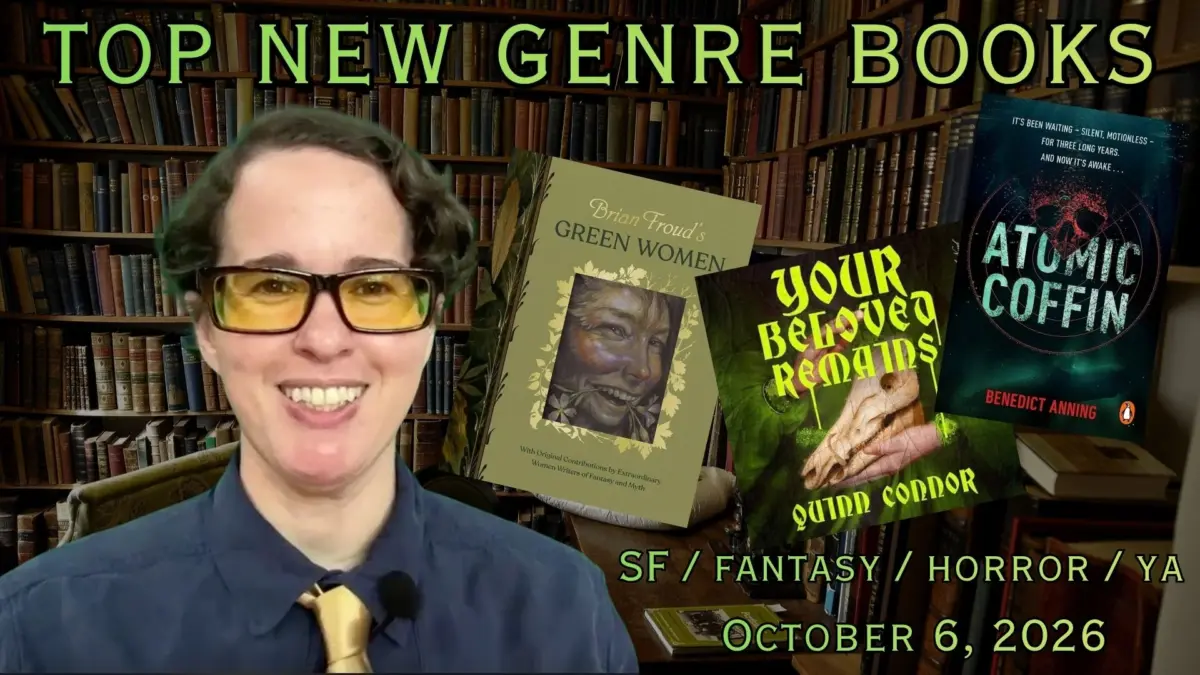
On October 6, 2026, Locus Magazine, the long-standing journal of record for the science fiction, fantasy, and horror publishing industries, released its highly anticipated weekly roundup of new literary releases. Navigating an increasingly crowded and decentralized marketplace, the publication’s weekly video and editorial breakdowns serve as a vital compass for librarians, booksellers, and avid readers alike. The slate of releases for the first week of October 2026 highlights a profound diversification of speculative fiction, spanning hard science fiction, high fantasy, psychological horror, and boundary-pushing Young Adult (YA) fiction.
However, this weekly showcase arrives at a critical juncture for the publishing industry and the cultural journalism that supports it. As algorithmic recommendation engines increasingly dictate consumer reading habits and independent media outlets face severe financial headwinds, the preservation of human curation has become a central battleground. Alongside its curation of the week’s best new books, Locus issued an urgent appeal to its readership for financial support. This call to action underscores a broader systemic challenge: the survival of independent, authoritative literary criticism in an era dominated by corporate consolidation and digital disruption.
+-------------------------------------------------------------------+
|               THE SPECULATIVE FICTION ECOSYSTEM (2026)            |
+-------------------------------------------------------------------+
|                                                                   |
|   [Publishers & Authors]  -->  [Independent Curators (Locus)]      |
|             |                                |                    |
|             v                                v                    |
|   [Algorithmic Platforms]         [Critical Reviews & Context]    |
|             |                                |                    |
|             +--------------->+<--------------+                    |
|                              |                                    |
|                              v                                    |
|                      [Engaged Readers]                            |
|                                                                   |
+-------------------------------------------------------------------+
Detailed Chronology: The October 6, 2026 Literary Landscape
The first week of October traditionally represents the peak of the autumn publishing season—often referred to in the industry as part of the "Super Thursday" corridor, where publishers deploy their most promising titles ahead of the holiday shopping rush. The releases highlighted by Locus on October 6, 2026, reflect several dominant thematic shifts that have come to define speculative fiction in the mid-2020s.
Read Also
Science Fiction: Climate Realism and Post-Humanism
The science fiction titles arriving on shelves this week demonstrate a marked departure from the simplistic dystopian tropes of the previous decade. Instead, the 2026 crop of SF focuses heavily on "cli-fi" (climate fiction) grounded in real-world ecological projection, alongside narratives exploring post-humanism and the ethical boundaries of artificial intelligence. Writers are moving away from far-future escapism to interrogate the immediate future of humanity, examining how societies adapt to shifting biomes and how human consciousness merges with digital infrastructure. These stories are characterized by a sense of pragmatic survivalism rather than outright nihilism.
Fantasy: Cultural Reclamation and Cozy Escapism
In the fantasy sector, the releases of October 6 reveal a dual trend. On one end of the spectrum is a powerful wave of mythic revisionism and cultural reclamation. Authors from historically marginalized backgrounds are drawing on non-Western mythologies to construct complex, politically nuanced magic systems and empires. On the other end of the spectrum is the sustained popularity of "cozy fantasy." This sub-genre, which prioritizes low-stakes conflicts, community building, and interpersonal relationships over world-ending wars, has solidified its position as a major market force, offering readers a therapeutic escape from contemporary socio-economic anxieties.
Horror: The Rise of Domestic and Folk Dread
As the autumn season intensifies, the horror releases of this week show a distinct preference for psychological dread, folk horror, and domestic isolation over traditional monster narratives. Reflecting post-pandemic anxieties and a societal fragmentation driven by digital isolation, these new titles explore the horrors of the familiar: haunted domestic spaces, rural communities harboring ancient secrets, and the terrifying fragility of the human mind under prolonged stress. The supernatural elements in these works often serve as metaphors for systemic trauma and generational grief.
Young Adult: Intersectional Futures and Digital Realities
The Young Adult speculative fiction arriving this week showcases an evolution toward greater thematic complexity. Once dominated by formulaic rebellion narratives, 2026’s YA releases grapple with intersectional identities, digital citizenship, and the psychological impact of growing up in an omnipresent media landscape. These books blend speculative elements—such as cybernetic enhancements or magical realism—with acute sociological observations, providing teenage readers with tools to conceptualize and navigate their own rapidly changing world.
Supporting Context & Metrics: The Economics of Genre Publishing in 2026
The books highlighted in the October 6 release cycle enter a market characterized by intense competition and shifting consumer behavior. To understand the significance of Locus Magazine’s curation, it is necessary to examine the macroeconomic forces currently shaping the publishing landscape.
Estimated Market Share of Book Discovery Channels (2026)
========================================================
Algorithmic Feeds (TikTok, Instagram, etc.):   [42%]
Independent Curators & Reviews (e.g., Locus):  [28%]
Physical Bookstore Displays:                   [18%]
Word of Mouth / Direct Recommendations:        [12%]
The Shift to Multimedia and Video Curation
As textual search engines become increasingly saturated with AI-generated content, publishers and literary journals have been forced to pivot to multimedia discovery formats. Locus’s decision to lead its October 6 coverage with a dedicated YouTube video release is a direct response to this trend. Video curation has become a primary driver of book sales, particularly among younger demographics.
According to industry data from the Association of American Publishers (AAP), over 40% of speculative fiction readers under the age of 35 report discovering their next read through short-form or long-form video content. By integrating high-production-value video summaries with traditional print and digital journalism, Locus bridges the gap between legacy literary criticism and modern, visually driven consumer habits.

The Crisis in Independent Cultural Journalism
Behind the exciting array of new titles lies a stark financial reality. The call for reader donations prominently featured in the Locus announcement highlights the fragile state of independent arts journalism.
Historically, publications like Locus relied on a combination of print subscriptions, industry advertising (primarily from major publishing houses), and physical bookstore sales. However, the consolidation of the publishing industry into a few mega-corporations has severely reduced advertising budgets, as these conglomerate publishers increasingly allocate their marketing spend directly to social media platforms and algorithmic ad networks.
| Revenue Source | 2016 Share | 2026 Share (Est.) | Trend Analysis |
|---|---|---|---|
| Print Subscriptions | 45% | 20% | Significant decline due to digital migration and paper costs. |
| Publisher Advertising | 35% | 15% | Decreased due to corporate consolidation and direct-to-consumer ad spend. |
| Reader Donations/Crowdfunding | 5% | 45% | Now the primary life support for independent cultural journalism. |
| Digital Ads & Sponsorships | 15% | 20% | Highly volatile; subject to shifting search engine and social media algorithms. |
This structural shift has forced independent literary institutions to transition to non-profit or community-supported models. Locus, operating under the umbrella of the Locus Science Fiction Foundation (a 501(c)(3) organization), must continuously fundraise to maintain its staff of professional reviewers, reporters, and archivists.
Official Statements and Institutional Advocacy
The reliance of the speculative fiction community on independent institutions like Locus cannot be overstated. In their appeal to readers, the editors of Locus articulated the core of their mission:
"We rely on reader donations to keep the magazine and site going. We publish hundreds of reviews and news stories each year, but we can’t do it without your help."
This statement reflects a broader sentiment shared across the literary community. Industry analysts point out that without professional, human-led review venues, the literary ecosystem would lose its most critical filter. Professional reviewers provide deep historical context, trace thematic genealogies, and champion mid-list or debut authors who lack the massive marketing budgets of established bestsellers.
Publishing experts warn that a reliance on purely algorithmic discovery risks creating a cultural feedback loop, where only books that conform to pre-existing, highly marketable tropes are elevated. Independent journals act as a vital counterweight to this trend, discovering and validating experimental, challenging, and boundary-pushing literature that algorithms might otherwise overlook.
Future Outlook: Speculative Fiction’s Trajectory into 2027 and Beyond
As the publishing industry moves toward 2027, the trends observed in the October 6, 2026 releases are expected to consolidate and evolve in several key ways.
Emerging Trajectories in Speculative Fiction (Path to 2027)
===================================================================
[Hybrid Publishing Models] ---> Crowdfunded Imprints & Direct-to-Consumer
[Thematic Evolution]       ---> Rise of "Solarpunk" and Hyper-Local Horror
[Curation Paradigm] ---> Shift from Algorithmic Feeds back to Trusted Human Curators- The Expansion of Hybrid and Decentralized Publishing: The distinction between traditional "Big Five" publishing and independent, crowdfunded publishing will continue to blur. Authors are increasingly utilizing platforms like Kickstarter, BackerKit, and Patreon to fund high-concept speculative fiction projects directly, bypassing traditional gatekeepers before partnering with independent distributors to reach physical bookstores.
- The Hyper-Localization of Speculative Themes: In response to globalized technological and environmental challenges, writers are expected to turn inward, focusing on hyper-local settings and indigenous perspectives. This will enrich the speculative fiction landscape with highly specific, diverse world-building that rejects homogenized, Western-centric future visions.
- The Renaissance of Trusted Human Curation: As digital spaces become further inundated with synthetic text and automated recommendations, consumers are projected to experience "algorithmic fatigue." This shift will likely spark a renaissance for curated, community-supported newsletters, physical literary salons, and trusted institutional voices like Locus. The survival of these platforms will depend entirely on the willingness of their core audiences to transition from passive consumers to active, financial patrons of cultural journalism.
Ultimately, the October 6, 2026 releases demonstrate that speculative fiction remains as vibrant, diverse, and intellectually vital as ever. However, the infrastructure that allows readers to discover these worlds—the delicate network of independent reviewers, editors, and journalists—requires active stewardship. The future of our imaginary worlds depends on our willingness to support the real-world institutions that map them.




Comments
Facebook App ID not configured. Please add it in the Customizer.