
Executive Overview
For decades, the anatomy of storytelling has been dominated by the mechanics of positive transformation. Writers are continually taught the well-worn trajectory of the heroic journey: a protagonist burdened by a foundational lie encounters a thematic truth, undergoes a crucible of trials, and ultimately emerges victorious, enlightened, and emotionally evolved. Yet, this traditional paradigm represents only one facet of human psychological reality. What happens when a protagonist meets the thematic truth and categorically fails—or refuses—to integrate it?
To address this critical narrative gap, acclaimed author and writing instructor K.M. Weiland is premiering the final installment of her 2026 Story School series: Negative Character Arcs: The Hidden Pattern of Self-Deception. Debuting tomorrow, October 6, at 1 PM EDT, this masterclass delves deep into the tragic architecture of storytelling. By examining the three major variations of negative transformation—Disillusionment, Fall, and Corruption—Weiland’s masterclass aims to provide writers with the structural tools necessary to construct believable, emotionally resonant, and psychologically inevitable downfalls.
Rather than viewing tragic characters as simple agents of poor decision-making, this masterclass treats negative character arcs as sophisticated explorations of self-deception. The session builds directly upon last month’s class, Flat Character Arcs: From Transformation to Integration, forming a comprehensive curriculum that investigates the profound divergent paths characters take when confronted with fundamental truths about reality.
Read Also
Detailed Chronology: The Evolution of Story Structure and Character Psychology
To understand the significance of Weiland’s upcoming masterclass, it is helpful to trace the evolution of how writing instruction approaches character development.
The Early Divide: Plot Versus Character
In the early stages of narrative pedagogy, plot and character were routinely taught as isolated disciplines. Instruction manual frameworks focused on external structural beats—such as inciting incidents, plot points, and climaxes—while character development occupied a separate psychological realm. Writers struggled to bridge the gap between what a protagonist did in the external world and how they evolved internally.
The Synthesis: Unifying Plot, Character, and Theme
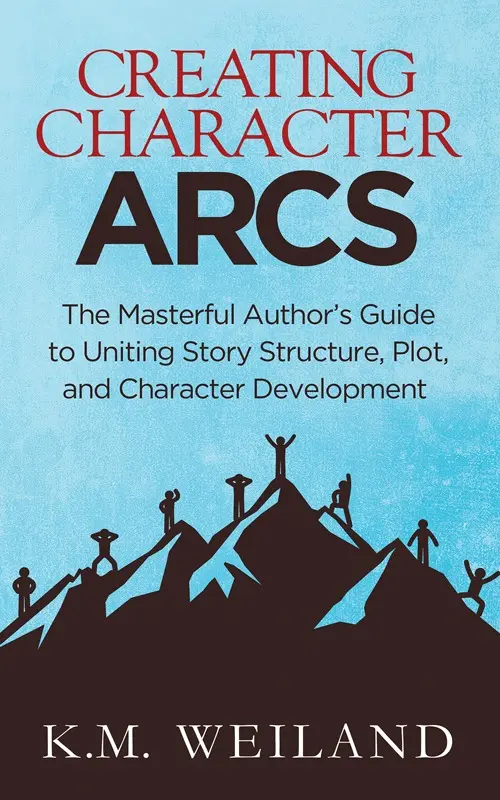
Over years of focused study, Weiland and other narrative theorists recognized a fundamental interconnection: character creates plot, plot forces character growth, and theme serves as the underlying bedrock that unifies both. This realization culminated in seminal works such as Creating Character Arcs and Writing Your Story’s Theme.
As this theoretical framework matured, it became clear that the structural beats of a story are not arbitrary. Instead, they are precise pressure points designed to test a character’s relationship with reality. While positive change arcs utilize these pressures to foster growth, negative character arcs employ the exact same structural machinery to chart a protagonist’s gradual fracture, resistance, and ultimate embrace of self-deception.

Supporting Context & Metrics: The Triad of Negative Transformation
Negative character arcs are frequently misunderstood as simply being the "opposite" of positive change. However, Weiland’s curriculum emphasizes that the beginning of a negative arc can often mirror a positive transformation. The divergence occurs in how the character handles the friction between their internal worldview and objective reality.
The masterclass breaks this psychological descent down into three distinct, interconnected variations:
1. The Disillusionment Arc
In a Disillusionment Arc, the character successfully overcomes their original internal lie. They see reality clearly and strip away their comforting delusions. However, unlike a positive transformation where this clarity is empowering, the character in a disillusionment arc cannot experience this truth as a transcendent reality. Left without their protective illusion, they are consumed primarily by grief over what has been lost, leaving them emotionally paralyzed or spiritually hollow.
2. The Fall Arc
Moving further down the spectrum, the Fall Arc features a protagonist who repeatedly encounters opportunities to embrace the truth, yet actively chooses to cling to the lie. Their tragedy is born of an increasing unwillingness or inability to surrender the specific worldview that is actively generating their misery. The narrative tension derives from watching a character actively construct their own cage.
3. The Corruption Arc
Representing the completed pattern of negative transformation, the Corruption Arc often begins with the character possessing a clear understanding of the thematic truth. Rather than integrating it, the protagonist makes a conscious or unconscious choice to reject that truth in favor of a constricted, self-protective perspective or a comforting lie—typically driven by the pursuit of power, safety, or control.
When synthesized, these three arcs reveal the hidden pattern of self-deception: a complete trajectory moving from the initial inability to integrate a painful truth, to active resistance against it, and finally to the total embrace of a lie as a new, corrupted baseline of reality.
Official Statements and Pedagogical Insights
Speaking on the conceptual foundation of the upcoming masterclass, K.M. Weiland highlights the psychological complexity that separates compelling tragedies from simple morality tales.

"When I first started writing about character arcs years ago, my primary interest was very practical. I wanted to understand how character development fit together with plot structure," Weiland explains. "But the deeper I got into studying both, the more obvious it became to me that they weren’t really separate things at all… Character creates plot. Plot creates character growth. And underneath both is theme—the story’s exploration of the relative Truths and Lies that give meaning to the character’s understanding of reality."
Addressing the specific mechanics of tragedy, Weiland notes that writing a believable downfall requires moving beyond surface-level flaws:
"Negative Arcs ask what happens when that process [of transformation] goes awry. That’s a much more complex question than simply asking, ‘Why do people make bad choices?’ After all, most compelling Negative-Arc characters are actually making choices they believe to be necessary, justified, or even good. Their tragedy lies in the widening gap between their worldview and their reality."
This structural alignment ensures that a character’s downfall does not feel arbitrary or forced by the author, but rather emerges organically from the inescapable pressures of the plot.
Future Outlook and Masterclass Logistics
As writers increasingly seek sophisticated frameworks to elevate their craft, masterclasses that bridge high-level psychological theory with practical plot mechanics are becoming indispensable. Negative Character Arcs: The Hidden Pattern of Self-Deception offers a definitive roadmap for authors aiming to master the mechanics of tragedy.
Key Masterclass Takeaways:
- The Transformational Cycle: Mapping where negative arcs fit alongside positive and flat arcs.
- Structural Breakdown: Analyzing how the Lie, Truth, Want, Need, and Ghost develop across Disillusionment, Fall, and Corruption arcs.
- Beats Integration: Connecting the First Plot Point, Midpoint, Third Plot Point, and Climax directly to the character’s psychological regression.
- Case Studies: Examining familiar literary and cinematic examples to translate abstract psychological concepts into actionable plotting decisions.
Event Details & Registration
- Event Negative Character Arcs: The Hidden Pattern of Self-Deception
- Premiere Date: Tomorrow, October 6 at 1 PM EDT
- Registration: Writers interested in securing their spot or exploring the curriculum can register directly via the Helping Writers Become Authors Official Portal.
Special Curriculum Bundle Opportunity
For writers looking to explore both sides of the character arc spectrum, Weiland is offering a special bundle pairing Negative Character Arcs with its predecessor, Flat Character Arcs: From Transformation to Integration. The bundle allows creators to examine both the progressive integration of truth and the tragic descent of self-deception, available now at a 15% discount through the Steadfast and Tragic Character Arcs Masterclass Bundle page.
By mastering both trajectories, authors can expand their narrative palette, ensuring that whether their characters rise to enlightenment or fall into delusion, their journeys remain structurally sound and deeply moving.




Comments
Facebook App ID not configured. Please add it in the Customizer.