
Executive Overview
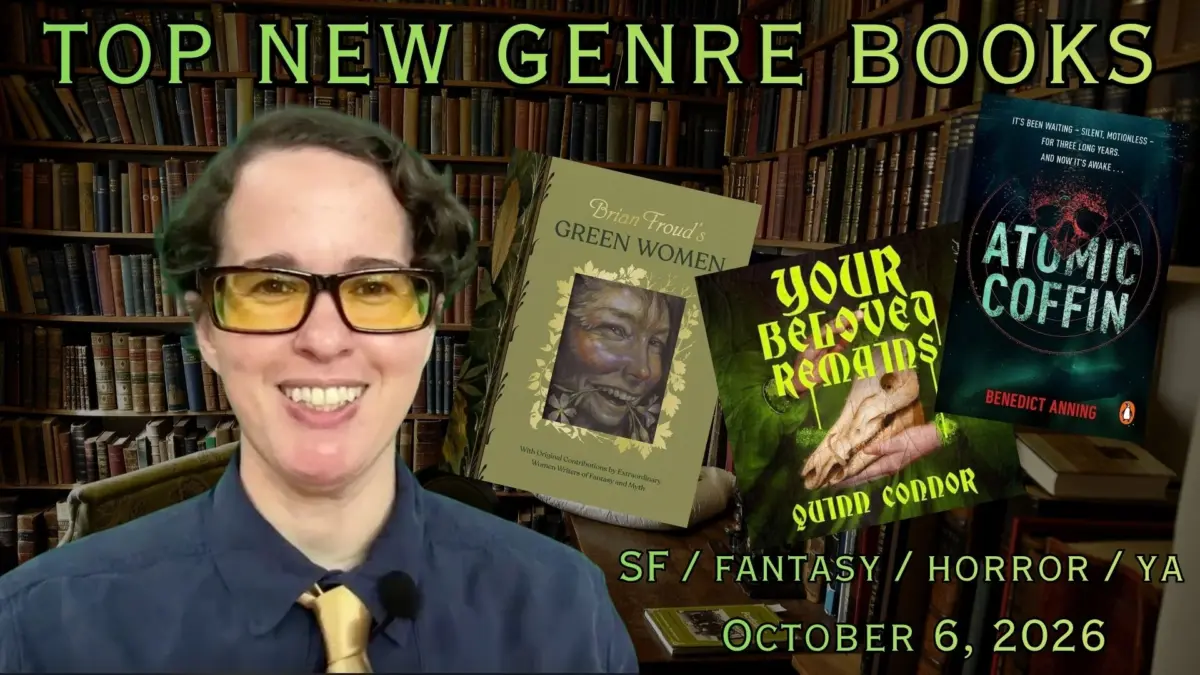
On October 6, 2026, Locus magazine—the long-standing journal of record for the science fiction, fantasy, and horror publishing industries—released its highly anticipated weekly new releases digest. Delivered via a dedicated multimedia presentation, the update highlights a critical juncture in the autumn publishing cycle. The first week of October historically marks the beginning of the industry’s intensive fourth-quarter push, a period characterized by a dense concentration of high-profile literary debuts, anticipated sequels, and seasonal horror releases timed to capitalize on the autumn and holiday markets.
The latest curation spans four major categories: high-concept Science Fiction, expansive Fantasy worldbuilding, atmospheric Horror, and emotionally resonant Young Adult (YA) speculative fiction. However, the release of this editorial guide occurs against a backdrop of ongoing economic challenges for independent arts journalism. Alongside its literary recommendations, Locus issued an urgent appeal to its readership for financial support through its 2026 fundraising campaign. This dual reality—a thriving, creative output of speculative fiction contrasted with the increasingly fragile financial models of the independent publications that cover them—underscores the complex ecosystem of modern literary media.
Detailed Chronology of the October 2026 Publishing Surge
The release of Locus’s October 6 digest represents a key milestone in the annual publishing calendar, colloquially known in industry circles as the "Fall Rush." The timeline of this release cycle reveals how publishers strategically position titles to maximize visibility during the peak reading season.
Read Also
[Late August – September 2026]
Advance Review Copies (ARCs) distributed; early critical consensus builds.
       │
       ▼
[Late September 2026]
Publishers initiate targeted pre-order campaigns and social media teasers.
       │
       ▼
[October 6, 2026 (Super Tuesday)]
Official publication date for Q4 flagship titles; Locus releases video digest.
       │
       ▼
[Mid-to-Late October 2026]
Mid-season sales metrics evaluated; independent media fundraising campaigns conclude.
The "Super Tuesday" Phenomenon
In the Anglo-American publishing world, Tuesdays serve as the standardized release day for new books. The first Tuesday of October, falling on October 6, 2026, represents one of the most crowded release dates of the fiscal year. Publishers coordinate these drops to ensure maximum shelf space in physical bookstores ahead of the winter holidays and to align with the eligibility windows for major annual literary awards.
Category-by-Category Release Breakdown
The titles highlighted in the October 6 video represent the vanguard of several shifting narrative movements:
- Science Fiction: The contemporary science fiction landscape of late 2026 shows a marked shift away from purely escapist space opera toward "hard" speculative concepts addressing climate adaptation, synthetic biology, and the socio-political implications of advanced automation. Authors featured in this week’s cycle emphasize grounded, scientifically plausible futures that reflect ongoing real-world anxieties.
- Fantasy: Modern fantasy continues to diversify its cultural inspirations. The October 6 lineup highlights a departure from traditional Eurocentric medievalism, favoring instead intricate magic systems rooted in Mesoamerican, East Asian, and West African mythologies. Additionally, the subgenre of "cozy fantasy"—which prioritizes low-stakes narrative tension and community-building—shares the spotlight with epic, multi-volume political dramas.
- Horror: Capitalizing on the traditional seasonal demand in October, the horror selections focus heavily on psychological dread, eco-horror, and gothic revivals. Publishers have noted a significant uptick in "domestic gothic" novels, which deconstruct familial trauma through supernatural metaphors, reflecting a broader cultural appetite for introspective terror.
- Young Adult (YA): The YA speculative releases for this week emphasize intersectional identities, complex moral grey areas, and dystopian worlds that mirror modern youth-led social movements. Rather than relying on the formulaic rebellion tropes of the early 2010s, the 2026 YA cohort focuses on collective survival, restorative justice, and interpersonal relationships amidst systemic collapse.
Supporting Context & Metrics: The Dual Evolution of Genre Trends and Literary Media
To fully comprehend the significance of Locus’s October 6 update, one must examine the broader economic and cultural data shaping both the speculative fiction market and the landscape of independent cultural journalism.
Speculative Fiction Market Dynamics (2024–2026)
Market research indicates that speculative fiction remains one of the most resilient sectors of the global publishing industry. According to industry tracking data from the mid-2020s, genres like fantasy and horror have experienced sustained growth, driven in part by algorithmic recommendation engines on social media platforms such as TikTok (BookTok) and YouTube (BookTube).
| Genre Category | Market Share Growth (Y-o-Y, 2025–2026) | Primary Consumer Demographic | Key Theme of Q4 2026 |
|---|---|---|---|
| Science Fiction | +4.2% | Ages 25–45 | Post-AI Ethics & Ecological Solarpunk |
| Fantasy | +8.7% | Ages 18–35 | Non-Western Mythologies & Cozy Fantasy |
| Horror | +11.3% | Ages 16–40 | Folk Horror & Psychological/Gothic Dread |
| Young Adult (Speculative) | +2.1% | Ages 12–24 | Climate Anxiety & Interpersonal Resilience |
This surge in demand has led to an unprecedented volume of weekly releases, making curation services—such as those provided by Locus—vital for readers overwhelmed by the sheer quantity of new titles.
The Digital Transformation of Literary Journalism
The inclusion of a YouTube video format in Locus‘s weekly rollouts reflects a broader, necessary shift in how literary media engages with audiences. Traditional print magazines have faced declining subscriber bases and rising paper and distribution costs for over a decade. By integrating visual media, video essays, and rapid-fire video roundups, legacy publications are attempting to capture the attention of younger, digitally native demographics who consume book recommendations primarily through video content.
However, this transition is capital-intensive. Producing high-quality video content requires specialized equipment, editing software, and dedicated staff, further straining the budgets of non-profit or independent literary organizations.
The Economics of Independent Arts Media
The fundraising appeal embedded in Locus’s October 6 announcement highlights a persistent crisis in the arts journalism sector. Founded in 1968, Locus has operated as a critical pillar of the speculative fiction community for over five decades, offering reviews, author interviews, and industry news. Unlike corporate-backed media entities, independent journals rely heavily on a hybrid revenue model consisting of:
- Print and Digital Subscriptions: A steadily declining baseline of recurring revenue.
- Niche Advertising: Ad placements from publishers, which fluctuate based on seasonal marketing budgets.
- Direct Reader Philanthropy: One-time or recurring donations, which have increasingly become the deciding factor in whether these publications can remain operational.
Without these reader-funded campaigns, the ecosystem risks losing dedicated, objective critical analysis, leaving book discovery largely in the hands of algorithmic feeds and paid publisher sponsorships.

Official Statements: The Struggle for Independent Curation
The editorial team at Locus and broader industry commentators have frequently spoken out about the necessity of preserving human-curated spaces in an increasingly automated media landscape.
In an appeal reflecting the core mission of the publication, the Locus editorial board stated:
"We publish hundreds of reviews and news stories each year, but we can’t do it without your help. We rely on reader donations to keep the magazine and site going. In an era where algorithmic recommendations dominate what readers see, independent, expert curation is more critical than ever to ensure that diverse, groundbreaking voices in speculative fiction are not lost in the noise."
Publishing industry analysts also emphasize the critical role that specialized outlets play in maintaining a healthy ecosystem. Dr. Helena Vance, a literary sociologist specializing in digital publishing trends, commented on the situation:
"The relationship between independent media like Locus and the publishing industry is symbiotic. Major publishers rely on these platforms for critical validation, while mid-list and debut authors depend on them for visibility that they rarely receive from mainstream media. If these dedicated genre magazines disappear, the path to discovery for non-blockbuster titles becomes exponentially more difficult, ultimately homogenizing the marketplace."
Future Outlook: Navigating the Algorithmic Horizon
As the publishing industry moves deeper into late 2026 and prepares for the 2027 fiscal year, several key trends are poised to redefine how books are marketed, reviewed, and consumed.
The Rise of Hybrid Curation
The future of literary discovery will likely involve a hybrid model that blends human expertise with advanced digital tools. While algorithms are efficient at identifying surface-level reader preferences, they lack the capacity for deep thematic analysis, historical contextualization, and the identification of emerging literary movements. Publications like Locus are positioned to act as trusted guides, using video platforms to deliver human-curated insights directly to audiences who might otherwise rely solely on automated feeds.
Sustainability of Non-Profit Publishing Models
The reliance on recurring fundraising campaigns, such as Locus’s autumn drive, highlights the need for more sustainable financial models. Some industry experts suggest the establishment of broader coalition-based funding, where independent publishers, literary estates, and philanthropic foundations pool resources to subsidize critical infrastructure for arts journalism.
Additionally, the adoption of decentralized subscription models and membership communities (such as Patreon or specialized digital hubs) may provide a more predictable revenue stream than traditional annual donation drives.
Anticipating the Q4 Literary Awards Season
The books highlighted in the October 6, 2026 release cycle will form the core of the upcoming winter and spring awards conversations. The critical reception of these titles over the next several weeks will heavily influence nominations for the Hugo, Nebula, World Fantasy, and Locus Awards in 2027. Consequently, the reviews and roundups published during this window carry significant weight, acting as an early filtering mechanism for the highest honors in speculative fiction.
Ultimately, the October 6 digest from Locus is more than a simple list of new books; it is a reflection of a vibrant, evolving creative community navigating the harsh realities of the modern digital economy. The continued support of these independent platforms will determine whether the rich diversity of science fiction, fantasy, horror, and young adult literature continues to find its way into the hands of readers worldwide.





Comments
Facebook App ID not configured. Please add it in the Customizer.