
Executive Overview
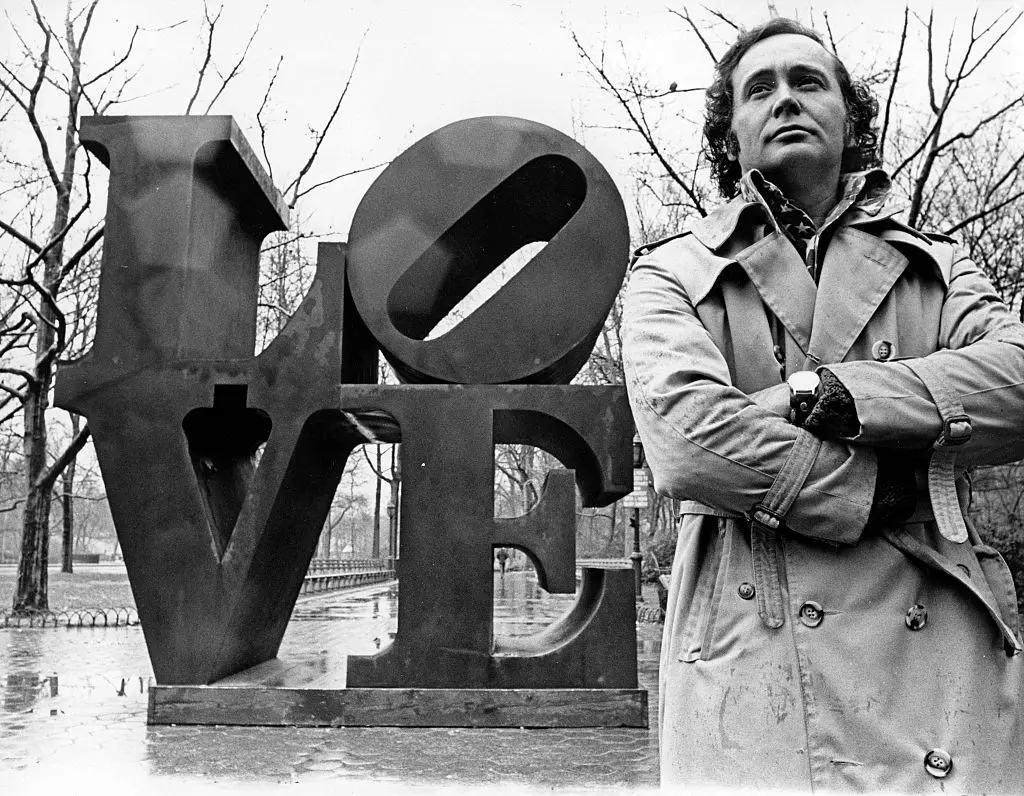
Six years after the passing of Pop art visionary Robert Indiana—internationally celebrated for his iconic, block-lettered LOVE series featuring its characteristic tilted "O"—the foundation established to protect his artistic legacy has ignited a fierce debate in the art world. The Star of Hope Foundation has listed Indiana’s long-time home and studio on the rugged Maine island of Vinalhaven for $1.4 million. A secondary nearby property owned by the artist has simultaneously been put on the market for $210,000.
This move directly contravenes explicit instructions in Indiana’s final will and testament, which mandated that his historic 19th-century residence—a sprawling former Odd Fellows lodge known as the Star of Hope—be transformed into a public museum-quality environment. The artist envisioned a cultural hub hosting educational classes, lectures, rotating exhibitions of his extensive collection, and a permanent tribute to his creative output.
While the foundation defends the sale as a pragmatic pivot away from cumbersome property management toward direct philanthropic investment in Maine’s broader arts ecosystem, the decision has drawn sharp rebukes. Legal representatives of the late artist’s estate, local municipal leaders, and longtime community members have condemned the listing as a betrayal of testamentary intent. As the real estate listings go live, the cultural heritage community is left reckoning with a fundamental question: When the physical preservation of an artist’s personal sanctuary proves economically and logistically unviable, does shifting to pure financial philanthropy honor or abandon their ultimate vision?
Read Also
Detailed Chronology: From Refuge to Real Estate
To understand the weight of the Star of Hope Foundation’s decision, one must retrace the four-decade relationship between Robert Indiana and the isolated island community of Vinalhaven, located in the stormy waters of Maine’s Penobscot Bay.
1978–2018: The Vinalhaven Years
Following decades of navigating the hyper-competitive, fast-paced art scenes of New York City and various other creative hubs, Robert Indiana (born Robert Clark) retreated to Vinalhaven in 1978. He purchased the Star of Hope—a dilapidated, imposing 19th-century Victorian-Italianate structure originally built as an Odd Fellows lodge—overlooking the island’s bustling harbor.
For the next forty years, the Star of Hope served as both his fortress and his primary canvas. It was within these weathered walls that Indiana sought solitude, far removed from the commercial machinery of the global art market, while continuing to create, curate, and assemble an eclectic collection of objects, ephemera, and his own artwork. Over time, the building became deeply intertwined with his identity, mirroring his artistic philosophy: idiosyncratic, deeply American, and resolutely independent. By the time Indiana passed away in May 2018 at the age of 89, the property was heavily laden with artistic history, personal belongings, and decades of accumulated weathering.
2018–2020: Establishment of the Foundation and Initial Stabilization
Upon his death, Indiana’s will bequeathed his estate, including the Star of Hope, to the newly formed Star of Hope Foundation. The organization was explicitly chartered to safeguard his legacy, manage his immense collection of works, and carry out the instructions outlined in his will.
In the immediate wake of his passing, the foundation began foundational preservation efforts. The structure was in dire straits: peeling paint, rotting clapboards, and a failing Mansard roof temporarily shielded by heavy-duty plastic tarps threatened the integrity of the building. During the early years of its tenure, the foundation stabilized the roof, repaired critical windows, and cleared localized damage. However, these early preservation milestones masked mounting structural, logistical, and financial realities that would eventually derail the vision of an island museum.
2026: The Listing and the Backlash
In August 2026, the foundation abruptly reversed its public-facing strategy. Announcing that property management and capital-intensive structural restorations fell outside its core mandate, the organization listed the Star of Hope for $1.4 million alongside a secondary property down the street priced at $210,000.
The announcement sent shockwaves through legal circles, local government offices, and the regional arts community. What was initially framed as an administrative restructuring was quickly recognized as a definitive abandonment of the museum project mandated by Indiana’s will.
Supporting Context & Metrics: The Anatomy of a Heritage Crisis
The controversy surrounding the Star of Hope sale highlights broader systemic challenges faced by artist-endowed foundations managing historic properties. Preserving artist estates involves a complex matrix of financial, regulatory, and structural variables.
The Physical Condition of the Star of Hope
Photographs accompanying the 2026 real estate listings lay bare the immense hurdles that confronted the Star of Hope Foundation. Decades of harsh Maine winters, maritime humidity, and deferred maintenance had taken a profound toll on the 19th-century structure.
- Exterior Decay: The historic clapboard siding required total remediation, and the Mansard roof demanded multi-hundred-thousand-dollar engineering interventions.
- Interior Compromise: Contemporary interior photography reveals exposed lath, peeling interior lead-based paint, uneven timber framing, and localized water damage.
- Regulatory Hurdles: Bringing a public-access museum up to modern building, fire, and accessibility codes on an island with limited municipal infrastructure presented a regulatory labyrinth. Bringing the building into compliance would require millions of dollars in continuous capital injections—funds that the foundation concluded would be better spent elsewhere.
Financial Metrics and Asset Conversion
- Listing Price (Primary Building): $1,400,000 (Star of Hope lodge, Main Street, Vinalhaven).
- Listing Price (Secondary Property): $210,000 (A secondary building owned by Indiana a few doors down).
- Artist Legacy Valuation: Robert Indiana’s estate has generated tens of millions of dollars through global exhibitions, print sales, and the enduring commercial viability of his LOVE, HOPE, and EAT motifs.
- Redirection of Capital: The foundation projects that liquidating the real estate assets will instantly convert non-yielding property holdings into an agile philanthropic endowment, funneling cash directly into grants for Maine-based artists and cultural nonprofits.
Official Statements and Diverging Perspectives
The decision to sell has sharply polarized stakeholders who were close to Indiana, creating a chasm between the foundation’s board management and those who viewed the museum project as a sacred trust.
The Foundation’s Defense: Pragmatism Over Property
Carole Martin, managing director of the Star of Hope Foundation, defended the sale as a courageous and honest course of action in interviews with The New York Times.
"These properties are not our purpose—supporting artists is," Martin stated. "Selling these properties allows us to convert those assets into philanthropic capital and put resources directly into Maine’s arts community. We are one of many organizations trying to solve a hard problem—how to bring new life to a building that has sat empty for years. Selling the property while investing directly in local artists and organizations is the most honest path forward."
According to foundation leadership, holding onto a money-pit property on an isolated island ultimately disservices Indiana’s wider philanthropic impact. By selling the estate, the foundation avoids the quagmire of perpetual real estate maintenance and instead establishes a robust, liquid funding stream for contemporary creators throughout the state.
Legal Condemnation: A Breach of Testamentary Intent
Conversely, legal experts who represented Indiana’s estate during previous post-mortem litigation argue that the sale violates the legal and moral principles governing artist estates.
Kevin Lipson, a partner at the law firm Venable, delivered a scathing critique of the foundation’s maneuver. In an interview with The New York Times, Lipson characterized the listing as "a remarkable repudiation of Robert Indiana’s testamentary intent," adding, "He wanted and expected a museum of some sort on Vinalhaven and that apparently is not in the cards."
When an artist lays out explicit, legally binding instructions regarding their physical legacy, deviation from those instructions undermines the foundational trust between creators and the institutions they entrust with their life’s work. Legal analysts note that while foundations often possess discretionary powers under cy-près doctrines or broad charter language when conditions become economically impossible, the swift pivot away from the museum plan has left a bitter taste among the artist’s confidants.
Local Disappointment and Pragmatic Optimism on Vinalhaven
The mood on Vinalhaven itself is mixed, reflecting a tension between emotional attachment to Indiana’s memory and practical considerations regarding the island’s economy.
Marjorie Stratton, Vinalhaven’s town manager who knew Indiana personally during his life on the island, expressed deep disappointment when speaking in a private capacity. She recalled numerous conversations with the artist in which he detailed his vision for the building: an educational incubator, an art space, and a sanctuary where young people could study and practice creative arts.
"It just makes me sad that this foundation doesn’t seem to be following through with what he told me he wanted that to be," Stratton remarked.
However, other local business owners view the liquidation through a more pragmatic lens. Elaine Crossman, a Main Street business and art gallery owner who was also acquainted with Indiana, suggested that the foundation’s protracted restoration efforts had stalled into an impractical financial drain. She expressed hope that a private buyer might breathe new life into the historic structure, potentially restoring its long-shuttered street-level commercial spaces.
"I’m optimistic that this is actually a really positive move," Crossman noted. "My hope would be that this is a big step in the right direction for that group to be able to do some positive work in the community."
Future Outlook: What Lies Ahead for the Star of Hope?
As the properties sit on the open market, the immediate future of the Star of Hope remains uncertain. Several distinct scenarios loom on the horizon:
- Private Acquisition and Adaptation: A private buyer with substantial capital could purchase the lodge, undertaking the immense structural repairs required to transform the historic lodge into a private residence, hybrid studio, or commercial space. However, such a buyer would permanently sever public access to Indiana’s primary sanctuary.
- Philanthropic Pivot: The Star of Hope Foundation will likely close the real estate chapter of its existence, channeling the multi-million-dollar proceeds from the Vinalhaven sales into grant-making programs, fellowships, and infrastructure support for artists residing across Maine. Whether this will quell public criticism depends on the transparency and tangible impact of the foundation’s future grant distributions.
- Ongoing Legacy Debates: The controversy serves as a cautionary tale for contemporary artists establishing testamentary trusts. It underscores the critical necessity of endowing physical properties with sufficient capital reserves before death, ensuring that future foundations are not forced to choose between honoring an artist’s brick-and-mortar museum dreams and fulfilling their broader philanthropic missions.
Ultimately, while the physical doors of Robert Indiana’s Vinalhaven sanctuary may soon close to the public under private ownership, the ideological debate over his legacy will echo through the halls of art law, philanthropy, and coastal Maine for years to come.


Comments
Facebook App ID not configured. Please add it in the Customizer.