
Executive Overview
Worry, fear, nervousness, and dread are not evolutionary design flaws; they are the bedrock of human survival. Deep within the architecture of the human brain lies a hardwired alarm system designed to alert us to immediate danger. Hundreds of thousands of years ago, this neurobiological response propelled our ancestors into "fight, flight, or freeze" mode the moment a saber-toothed cat prowled nearby. Today, that exact same internal mechanism activates when individuals face the scary, the threatening, and the unfamiliar.
Yet, a profound cultural and psychological shift is occurring across modern classrooms and living rooms. Educators, school counselors, and child psychologists are sounding an urgent alarm: anxiety is no longer an occasional obstacle of growing up; it has become a pervasive, daily crisis affecting children as young as preschoolers. According to frontline educators, anxiety now ranks among their primary concerns—competing directly with classic childhood hurdles such as friendship dynamics and bullying.
Enter the realm of children’s literature, where authors like Trudy Ludwig are spearheading a quiet revolution. Rather than pathologizing anxiety or treating it as a clinical defect to be eradicated, contemporary social-emotional learning (SEL) literature approaches fear as a universal, natural human emotion. Through acclaimed works such as Brave Every Day and the Caring Classroom series entry A Not So Perfect Start, Ludwig and her contemporaries are equipping children with the emotional vocabulary necessary to identify, articulate, and navigate big feelings. This article explores the rising tide of early childhood anxiety, the psychological research driving modern children’s books, and how narrative art is helping young minds transform from anxious "children in hiding" into resilient warriors.
Read Also
Detailed Chronology: The Evolution of Childhood Anxiety and Literary Intervention
The Primal Roots of Fear
To understand the contemporary landscape of childhood anxiety, one must first trace the evolutionary trajectory of fear. For millennia, the human brain relied on instantaneous threat detection to preserve life. The amygdala—the brain’s emotional processing center—acts as a smoke detector, bypassing logical reasoning to trigger stress hormones like cortisol and adrenaline.
In a prehistoric context, this meant escaping predators. In the twenty-first century, however, this survival mechanism frequently misfires. Modern children experience the exact same physiological turbo-boost—racing hearts, shallow breathing, and hyper-vigilance—not from physical predators, but from abstract stressors: academic pressure, social exclusion, parental conflict, and the relentless demand for perfection.
The Classroom Crisis: Pre-K to Second Grade
Over the past decade, educators have noticed a dramatic downward shift in the age at which children manifest clinical or sub-clinical levels of anxiety. What was once viewed primarily as an adolescent struggle has firmly established roots in pre-kindergarten through second-grade classrooms.
- The Rise of Perfectionism: Social-emotional learning experts frequently cite perfectionism as a dominant driver of early childhood distress. Young children, desperate to secure approval from teachers and parents, develop an intense fear of making mistakes.
- The "Children in Hiding": Researchers studying youth anxiety often describe heavily distressed children as "children in hiding"—students who physically or emotionally retreat from participation, engagement, and risk-taking.
- The Vocabulary Deficit: As seasoned educators routinely observe, a child cannot process or regulate an emotion if they lack the linguistic tools to name it. Without an emotional vocabulary, internal turmoil manifests as behavioral disruptions, somatic complaints (such as stomachaches), or profound withdrawal.
The Literary Response: Writing Brave Every Day
Recognizing this developmental roadblock, children’s author Trudy Ludwig embarked on an extensive research journey prior to penning Brave Every Day. Immersing herself in psychological literature, clinical articles, and developmental studies, Ludwig sought a way to translate complex cognitive-behavioral concepts into accessible narratives for young readers.
The turning point in her creative process occurred when she encountered the expert description of anxious youth as "children in hiding." This phrase provided the foundational springboard for her protagonist, Camila:
"Most kids love hide-and-seek. Not Camila.
She just wants to hide.
Hiding is what Camila does best when she worries.
And she worries a lot."
To ensure authenticity, Ludwig turned inward, examining the architecture of her own worries. She categorized her personal anxieties into three distinct cognitive traps:
- "What if" (catastrophizing future scenarios)
- "I can’t" (anticipating failure and self-doubt)
- "I’m scared" (visceral fear of the unknown)
This introspective exercise allowed her to craft Camila’s specific, relatable worries—incorporating a blend of realistic school-age stressors and whimsical, imaginative fears brought to life by illustrator Patrice Barton.
Expanding the Scope: A Not So Perfect Start
Following the success of Brave Every Day, Ludwig expanded her exploration of childhood emotional health with A Not So Perfect Start, the inaugural entry in her Caring Classroom picture book series.
Shifting her lens from generalized worry to the specific trap of perfectionism, Ludwig targeted the terror of making mistakes in front of peers. Drawing from educator consultations indicating that perfectionism is a primary source of pre-K through grade 2 anxiety, the narrative introduces Thea, a student new to school who is paralyzed by the prospect of imperfection.
Through the empathetic guidance of a supportive teacher and compassionate classmates, Thea learns to reframe her mistakes not as failures, but as essential learning opportunities. The book delivers a liberating message to young readers: You are perfect just being you—mistakes and all.
Supporting Context & Metrics: The State of Youth Mental Health
While qualitative accounts from educators provide a vital ground-level perspective, quantitative data from public health organizations underscore the urgency of addressing childhood anxiety proactively.
- Rising Prevalence Rates: According to epidemiological data compiled by organizations such as the Centers for Disease Control and Prevention (CDC), diagnoses of anxiety among children aged 3 to 17 have steadily climbed over the past twenty years.
- The Impact of Early Intervention: Developmental psychologists emphasize that unaddressed anxiety in early childhood serves as a primary predictor for generalized anxiety disorders, depression, and academic underachievement in adolescence.
- The Power of Shared Reading: Bibliotherapy—the practice of using literature to support mental health and emotional well-being—has garnered increasing empirical support. Studies demonstrate that when young children read stories featuring characters navigating identical emotional struggles, their neural pathways mirror the processing of real-world coping mechanisms. They learn through proxy, observing how fictional protagonists overcome internal turmoil safely and successfully.
| Emotional Challenge | Primary Manifestation in Early Childhood | Effective Literary / SEL Intervention |
|---|---|---|
| Generalized Worry | Withdrawal, somatic complaints, "hiding" behaviors | Normalizing fear as a natural emotion; categorizing "what if" thoughts (Brave Every Day) |
| Perfectionism | Paralysis around making mistakes, fear of failure | Cultivating a growth mindset; viewing errors as learning opportunities (A Not So Perfect Start) |
| Emotional Illiteracy | Behavioral outbursts, inability to articulate feelings | Introducing a rich emotional vocabulary through character-driven narratives |
Official Statements & Expert Perspectives
Educational leaders, school counselors, and children’s literature advocates agree that structural changes in how society addresses emotional intelligence are long overdue.
"A child cannot have emotional insight if they don’t have emotional vocabulary," notes a seasoned elementary school educator and curriculum advisor. Without words to capture the nuance of anxiety, children remain prisoners of their physiological responses.
Authors and mental health advocates argue that literature acts as a bridge between the clinical world of psychology and the imaginative world of childhood. By refusing to pathologize normal emotional fluctuations, books like Brave Every Day dismantle the stigma surrounding mental health from its earliest inception.
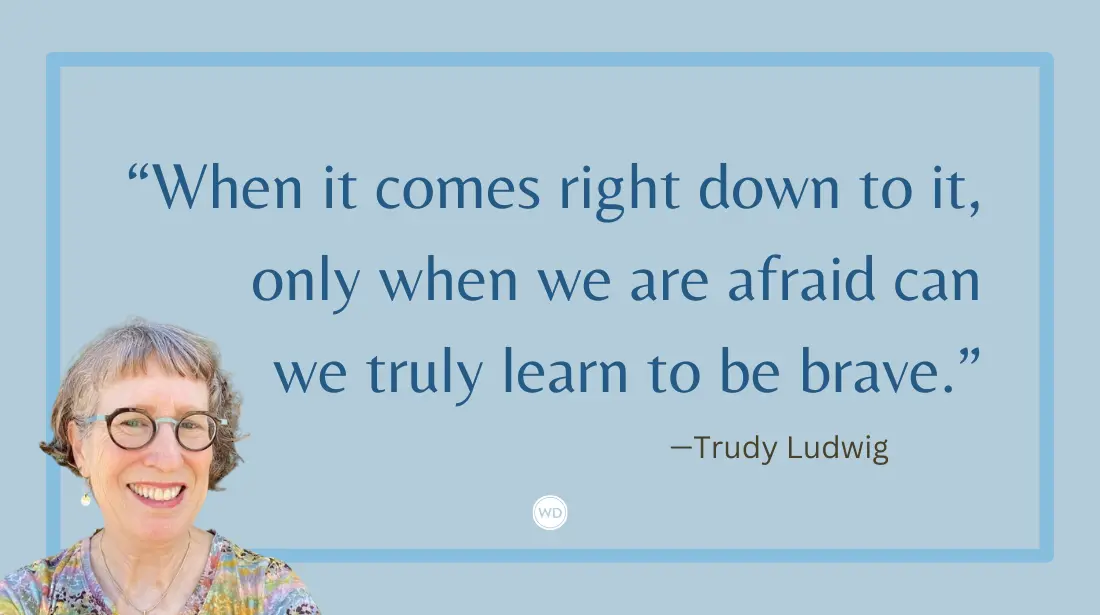
Furthermore, child development specialists frequently cite the proverb that "growth is not born from comfort." True resilience—the capacity to bend without breaking—requires individuals to venture outside their comfort zones. When children witness characters stepping into the unknown despite their racing hearts, they internalize a vital truth: bravery is not the absence of fear; it is the mastery of it. As Ludwig aptly concludes: "When it comes right down to it, only when we are afraid can we truly learn to be brave."
Future Outlook: Building Emotionally Resilient Classrooms
As educational institutions increasingly integrate Social-Emotional Learning (SEL) into core curricula, the landscape of early childhood education is undergoing a necessary transformation. The future of student success depends as heavily on emotional literacy as it does on traditional literacy and numeracy.
Several key trends are shaping the future of childhood emotional health and resilience training:
- Mainstreaming Emotional Literacy in Early Education: Pre-K and kindergarten classrooms are shifting from punitive behavioral management models to restorative, emotion-informed practices. Educators are utilizing picture books as daily curricular tools rather than occasional storytime treats.
- Collaborative Home-School Mental Health Frameworks: Authors and educators are emphasizing the necessity of bridging the gap between classroom discussions and home environments. Books that normalize worry provide parents and caregivers with non-threatening conversational entry points to discuss mental health with their children.
- Dismantling the Stigma of Perfectionism: As academic pressures increase, future curricula are pivoting away from rigid grading systems toward growth-mindset evaluations that celebrate iteration, experimentation, and recovery from error.
- Empowering the "Worrier-Warrior": Ultimately, the cultural narrative surrounding anxiety is evolving. Rather than viewing anxious children as fragile or broken, society is beginning to recognize them as "worriers who are true warriors"—individuals who expend immense emotional energy every single day to face their fears and conquer the unknown.
By continuing to invest in rich, empathy-driven literature and emotionally intelligent educational frameworks, communities can ensure that the next generation of children grows up equipped not to hide from their fears, but to meet them with courage, compassion, and resilience.





Comments
Facebook App ID not configured. Please add it in the Customizer.