For contemporary parents, the twilight hours between dinner and bedtime often transform into a high-stakes negotiation. As digital saturation permeates nearly every aspect of modern life, the default setting for evening wind-down routines frequently defaults to glowing screens. Whether it is educational apps that ultimately deliver digital distraction, activity kits that lose their novelty by midweek, or board games that work for two sessions before gathering dust in a hall cupboard, the search for a sustainable, screen-free engagement tool has proven exhausting for households worldwide.
Enter a surprisingly radical, refreshingly low-tech solution: the spoken word.
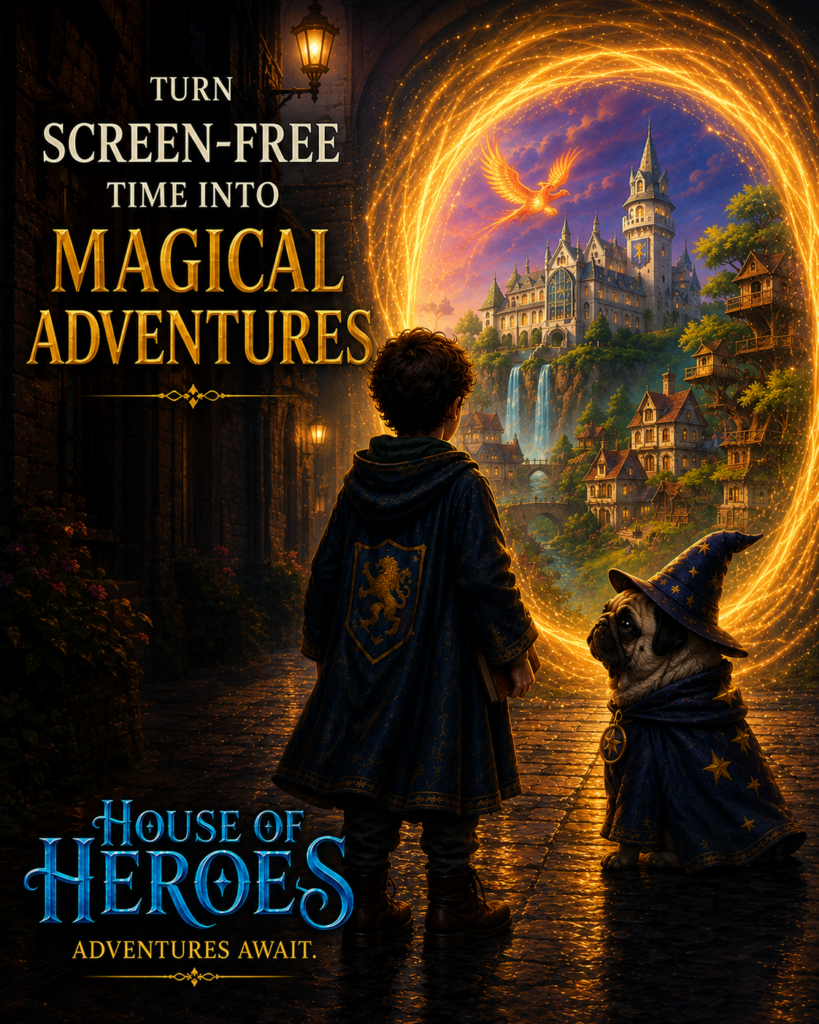
House of Heroes, a guided family storytelling adventure platform designed specifically for children aged 4 to 11, has emerged as an industry-disrupting alternative to digital media. By marrying the time-honored tradition of reading aloud with modern interactive narrative design, the platform places absolute agency in the hands of the child. Parents act as the narrator, reading word-for-word scripts, while children make every single consequential decision regarding the plot’s trajectory.
Far from a passive listening exercise, this dynamic framework bridges the gap between active participation and deep emotional connection. Industry analysts and child development advocates are taking note, viewing platforms like House of Heroes as a vanguard movement in reclaiming family time, fostering intrinsic literacy skills, and bypassing the arduous bedtime battles associated with screen dependency. This report offers an investigative look into the architecture of guided family storytelling, examining its developmental merits, operational mechanics, and potential to redefine the modern parenting landscape.
Detailed Chronology: The Evolution of Evening Engagement
To understand the cultural resonance of House of Heroes, one must examine the shifting paradigms of childhood entertainment over the past three decades. The timeline below traces the evolution of family wind-down rituals, highlighting the growing tension between digital convenience and authentic human connection.
Late 1990s – Early 2000s: The proliferation of home computers and the early rise of educational CD-ROMs mark the beginning of digital integration in child-rearing. Bedtime routines still heavily rely on physical picture books, yet television remains the primary evening diversion.
2010s: The ubiquitous tablet revolution transforms parenting. "Screen time" becomes the default babysitter and evening pacifier. Educational applications flood the market, promising cognitive enhancement but frequently resulting in fragmented attention spans and bedtime power struggles over device relinquishment.
The Post-Pandemic Era (2020–2023): Lockdowns accelerate screen reliance, sparking a counter-movement among parents and educators. Demand surges for tactile, offline alternatives, including subscription-based craft boxes and board game kits. However, material fatigue sets in; parents report high rates of abandonment for kits that lack replay value or require extensive preparation.
The Present Day: A convergence of developmental psychology and parental burnout creates a fertile market for minimalist, high-impact interventions. The rise of guided, interactive audio and verbal storytelling platforms marks a shift back to oral traditions, supercharged by structured decision-making mechanics that captivate young minds without the blue light of a monitor.
Supporting Context & Metrics: The Crisis of Screen Fatigue and the Power of Oral Narratives
The modern parenting dilemma is not merely anecdotal; it is backed by a growing body of sociological and developmental research. Pediatric health organizations consistently warn against excessive evening screen exposure, citing disrupted melatonin production, sleep latency, and behavioral friction when devices are removed.
Yet, telling parents to "put down the screens" has historically been met with frustration due to a lack of compelling, low-friction alternatives. Traditional board games often require complex rule sets that tax exhausted parents at the end of a long workday. Conversely, creative storytelling from scratch demands an imaginative heavy lifting that many adults simply lack the bandwidth for after 8:00 PM.
House of Heroes bypasses these friction points through a precise structural model:
Zero Preparation: Every adventure is scripted word-for-word. Parents do not need to improvise plots, roll dice, or master complicated rulebooks.
Precision Timing: Designed explicitly for the modern schedule, each session runs between 20 and 25 minutes—long enough to feel like an immersive shared event, yet concise enough to fit neatly into a predictable bedtime sequence.
Child-Led Agency: By allowing the young listener to dictate the narrative choices, the platform satisfies a child’s deep psychological need for autonomy, transforming them from passive recipients of information into active architects of their own fictional universe.
Inside the World of Eternia: Mechanics and Methodology
At its core, House of Heroes operates on a monthly subscription model that delivers fresh guided adventures on a regular cadence. The narrative universe is anchored in a magical realm known as Eternia, where young participants attend a specialized institution called the House of Heroes.
Character Architecture and Empathy Building
The platform’s narrative depth relies on a recurring cast of whimsical, highly relatable characters designed to model social-emotional learning:
The Pug Wizard Headmaster: Combines authority with endearing eccentricity, teaching children that leadership can take unexpected forms.
The Half-Human, Half-Owl Roommate: Fosters discussions around coexistence, diversity, and mutual respect.
The Guardian Teacher: Balances strict boundaries with emotional warmth, establishing safe parameters for adolescent testing of limits.
The Resident Seamster: Crafts custom magical cloaks for every student, symbolizing identity, individualization, and belonging.
Organic Skill Acquisition
Unlike overt educational software that announces its pedagogical goals ("Now let’s practice kindness!"), House of Heroes embeds values organically within the narrative flow. Courage is tested when confronting the unknown; persistence is forged through structural plot hurdles.
Furthermore, recurring narrative interludes—such as visits from a dwarf character named Master Tolm—provide reflective spaces between major adventures. Master Tolm discusses core values like grit and empathy not as didactic lectures, but as peer-level conversations. This subtle approach aligns closely with modern educational frameworks that prioritize socio-emotional competencies over rote memorization.
Official Statements and Industry Perspective
Child development specialists and family counselors have increasingly advocated for interventions that prioritize relational presence over digital consumption. While House of Heroes is a commercial enterprise, its underlying philosophy strikes a chord with broader cultural discussions surrounding parental burnout and digital detox.
"The magic of the platform is not solely found within the fictional boundaries of Eternia," notes one family life educator. "It lies in the reclamation of the parent-child dyad. Twenty minutes of undivided attention—where an adult is truly listening to a child’s choices and validating their logic—creates a neurobiological feedback loop of security and attachment that no application can replicate."
Parents testing the platform report a notable shift in evening dynamics. Rather than coaxing children away from televisions or tablets, caregivers observe instances where children initiate the storytelling session unprompted. The absence of screens eliminates the friction of device withdrawal, smoothing the transition from high-stimulation daytime activities to restful sleep.
Future Outlook: The Scaling of Screen-Free Alternatives
As the digital landscape continues to evolve, the pendulum is swinging back toward tactile, narrative-driven experiences. The success of platforms like House of Heroes signals a burgeoning market for "low-tech, high-connection" media consumption.
Looking forward, the integration of guided storytelling platforms into therapeutic, educational, and domestic spaces points toward several key trends:
The Rise of "Plug-and-Play" Humanities: Parents are increasingly seeking out tools that foster literacy, emotional intelligence, and oral communication without requiring hardware upgrades or software updates.
Subscription-Based Family Rituals: Moving away from disposable toys and single-use craft kits, modern consumers are investing in recurring experiences that build long-term narrative engagement and familial traditions.
Bridging the Literacy Gap: By pairing auditory processing (listening to the parent read) with critical decision-making, children enhance their reading comprehension, vocabulary acquisition, and narrative structure awareness long before they pick up heavier chapter books independently.
For families eager to test the waters of screen-free narrative engagement, the barrier to entry has been intentionally lowered. Platforms offering introductory modules—such as the free starter adventure where children help a pug wizard evade mischievous cats to reach the gates of the House of Heroes—allow households to experience the dynamic firsthand with minimal commitment.
Ultimately, the enduring appeal of platforms like House of Heroes rests on a timeless truth: no matter how advanced technology becomes, the most powerful medium for human connection remains the human voice, sharing a story where anything is possible.










Comments
Facebook App ID not configured. Please add it in the Customizer.