
Executive Overview
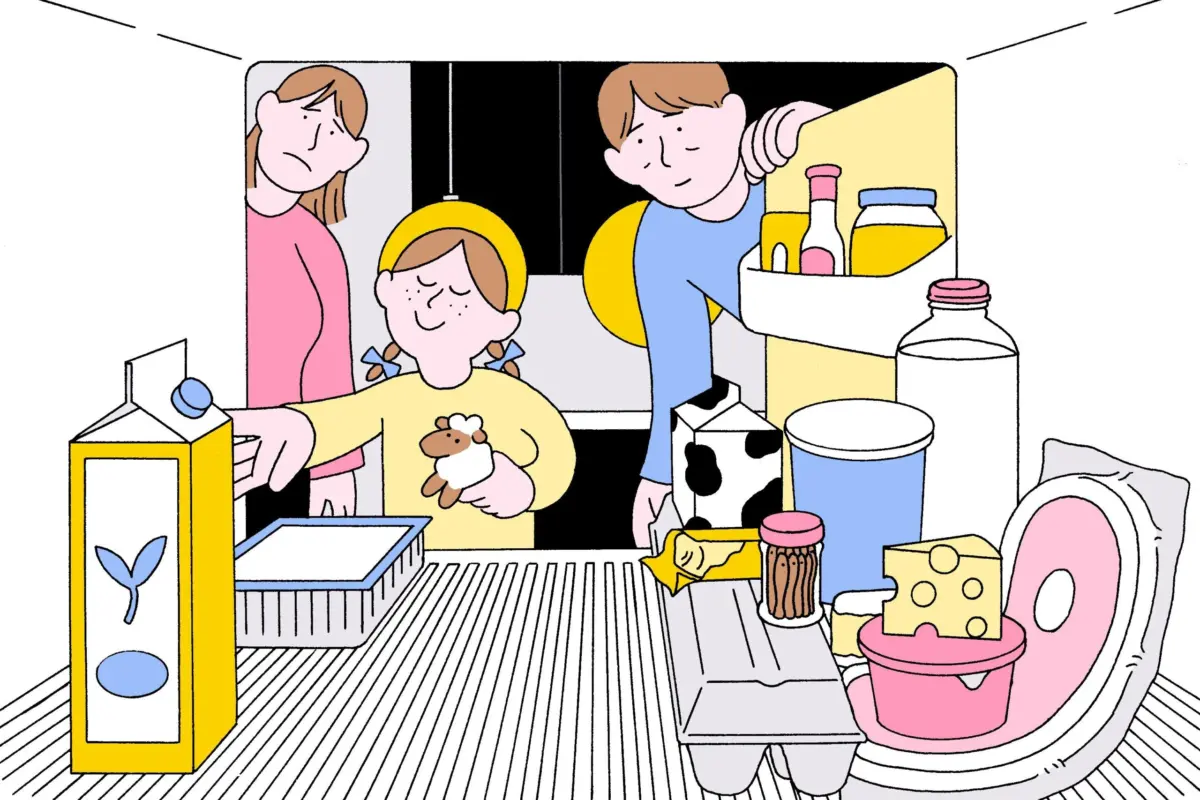
In modern parenting, few domestic battlegrounds are as emotionally charged or culturally contentious as the family dinner table. When a child rejects the household culinary status quo in favor of an ethical diet—such as veganism—parents are frequently forced to re-evaluate their roles as providers, educators, and moral guides. This dynamic is explored in a recent installment of the advice column Your Mileage May Vary, where guest columnist and science journalist Shayla Love addressed a parent grappling with a nine-year-old daughter’s sudden conversion to veganism.
The core dilemma centers on a familiar parental anxiety: How does one balance the encouragement of a child’s blossoming moral autonomy with the practical necessities of nutritional health, culinary adventurousness, and household harmony? The parents, self-described consumers of "free-range chicken and grass-fed beef," worry that accommodating a strict plant-based diet at such a young age might foster lifelong picky eating or nutritional deficits. Meanwhile, the child experiences genuine moral distress at the sight of meat on the family table.
By drawing upon developmental psychology, developmental philosophy, and personal narrative, this article examines the underlying mechanisms of childhood moral maturation. Rather than viewing a child’s dietary restriction as a stubborn behavioral phase or a threat to nutritional diversity, child development frameworks suggest that this ethical awakening is a vital milestone in cognitive growth. This report unpacks the intersection of parental authority, childhood agency, and dietary ethics, offering a roadmap for families navigating the complexities of raising an ethically conscious child.
Read Also
Detailed Chronology of Childhood Moral Development
To understand why a nine-year-old might independently decide to forgo animal products, one must examine the timeline of human moral reasoning. Children do not cross an arbitrary threshold at age 18 and suddenly begin engaging with the world through an ethical lens. Instead, moral frameworks evolve in fits and spurts, shaped by expanding social circles, exposure to alternative viewpoints, and cognitive maturation.
The Stages of Moral Reasoning: The Kohlberg Framework
The foundational architecture for understanding this evolution was laid by 20th-century American psychologist Lawrence Kohlberg. Through decades of empirical research centered on hypothetical ethical dilemmas—such as the famous "Heinz dilemma," which questions whether a husband is justified in stealing an unaffordable drug to save his dying wife—Kohlberg formulated a comprehensive, six-stage model of moral development.
- Preconventional Morality (Early Childhood to Age 9): During this initial phase, a child’s understanding of right and wrong is strictly dictated by external consequences. Rules are enforced by authority figures (primarily parents), and actions are deemed "good" or "bad" based on whether they result in punishment or reward. A child refrains from hitting a sibling or throwing food not out of an innate empathy for the sibling or a philosophical aversion to waste, but to avoid parental reprimand.
- The Transition Period (Around Age 9): As children approach late childhood and early adolescence, they begin to transition out of preconventional morality. They start recognizing that rules are social constructs rather than immutable physical laws, and that different people may hold conflicting moral viewpoints based on their unique social contexts.
- Conventional and Postconventional Morality (Adolescence and Beyond): In the subsequent stages, individuals develop the capacity to weigh societal consensus, systemic fairness, and abstract ethical principles against personal convenience or strict rule-following.
In the case of the nine-year-old vegan, her pivot away from the family’s "grass-fed beef" paradigm signifies this very transition. Her parents’ ethical framework—which justifies meat consumption through the lens of humane farming practices (free-range and grass-fed)—is no longer sufficient for her developing worldview. Influenced by peers at school and her own burgeoning capacity for empathy, she has encountered an ethical friction point. According to Kohlberg’s framework, this friction is not a behavioral defiance issue; it is a textbook sign of cognitive maturation.
Supporting Context & Metrics: The Gardener vs. The Carpenter
When a child’s moral choices clash with established family routines, parents often experience a jarring sense of failure or loss of control. However, modern developmental philosophy suggests that the parental instinct to course-correct or steer a child back to the family norm may be misdirected.
Shifting Paradigms: Alison Gopnik’s "Gardener" Model
University of California, Berkeley psychologist and philosopher Alison Gopnik challenges traditional definitions of parenting in her acclaimed book, The Gardener and the Carpenter. Gopnik contrasts two distinct parental archetypes:
- The Carpenter: This model views parenting as an engineering project. The parent follows a strict blueprint, utilizing specific tools and directives to assemble a predetermined, polished final product (e.g., an unpicky eater who eats everything put in front of them without complaint).
- The Gardener: This model reframes parenting as an ecological cultivation process. A gardener does not manufacture plants; rather, they cultivate the soil, provide water and sunlight, and create a rich, protective environment, acknowledging that this ecosystem can yield a diverse array of flourishing flowers, fruits, or vegetables.
Growth, resilience, and independent flourishing are the ultimate goals of gardening, not a rigid, by-the-book final product. When applied to the dietary dilemma, a "carpenter" parent might mandate that the child eat the family meal to prevent future pickiness. Conversely, a "gardener" parent recognizes that supporting a child’s earnest, if inconvenient, ethical exploration is more vital to long-term character development than enforcing culinary uniformity at the dinner table.
Historical Precedents in Child-Centered Education
This philosophical stance echoes the 18th-century insights of Jean-Jacques Rousseau. In his groundbreaking philosophical novel Émile, or On Education, Rousseau shocked contemporary society by advocating for a child-centered, experiential approach to learning. Rousseau argued against burdening children with overly didactic, authoritarian lessons before they were developmentally ready to process them. Instead, he maintained that children must learn through real-world experiences, drawing their own conclusions and building resilience through trial and error.
Applied to contemporary dietary choices, Rousseau’s philosophy reminds us that a nine-year-old experimenting with veganism is unlikely to possess a comprehensive, ironclad nutritional or philosophical philosophy—nor should she be expected to. She has simply encountered an idea that resonates with her developing empathy. The parental mandate, therefore, is not to dictate the "correct" diet, but to scaffold her journey safely.
Official Perspectives and Expert Guidance
Navigating a child’s dietary restriction requires a delicate balance between respecting autonomy and safeguarding health. Nutritionists, pediatricians, and behavioral experts emphasize that accommodating a child’s ethical choices does not inherently lead to a lifetime of culinary inflexibility, provided the parents approach the transition strategically.
Nutritional Vigilance vs. Dietary Dogma
The primary, valid concern raised by parents undertaking this journey is nutritional adequacy. Plant-based diets, when poorly planned, can present risks of deficiencies in:
- Vitamin B12: Found almost exclusively in animal products.
- Iron and Zinc: Plant-based (non-heme) iron is less readily absorbed by the human body than heme iron found in meat.
- Calcium and Vitamin D: Essential for developing skeletal structures in growing children.
- Complete Proteins: Ensuring an adequate array of amino acids through varied plant sources.
Rather than dismissing the child’s moral stance as a phase or digging in heels over family meal menus, pediatric dietitians recommend turning the dietary shift into an educational collaboration.
- Age-Appropriate Education: Parents can guide children to research nutrient-dense plant foods, transforming a restriction into an exploration of global cuisines. Cuisines rich in plant-based proteins—such as traditional Indian, Mediterranean, Middle Eastern, and East Asian dishes—offer a vast array of flavors that expand, rather than contract, a child’s palate.
- Collaborative Cooking: Involving the child in meal planning and preparation encourages culinary curiosity. As science journalist Shayla Love notes from her own journey with veganism, committing to an ethically driven diet often introduces individuals to a wider, more diverse world of culinary ingredients—from lentils and chickpeas to tofu and nutritional yeast—than they would have encountered on a standard omnivorous diet.
The Spectrum of Moral Evolution
Furthermore, experts emphasize that ethical frameworks are rarely static. It is entirely normal for individuals—including children and adolescents—to test rigorous ideological boundaries, modify their practices over time, and adapt their behaviors as they gain life experience. A child who adopts strict veganism at age nine may maintain those values indefinitely, or she may later incorporate sustainable, ethically sourced animal products back into her diet, much like Love did after more than a decade of strict veganism. The underlying victory is not the specific item on the dinner plate, but the cultivation of a conscience that actively considers the impact of human actions on the world.
Future Outlook
As cultural awareness surrounding environmental sustainability, animal welfare, and health continues to evolve, families are increasingly likely to encounter intergenerational and ideological friction at the dinner table. The modern household is no longer bound by a single, monolithic culinary tradition; instead, it is becoming a microcosm of pluralistic ethical negotiation.
Looking forward, the success of families navigating these choices will rely heavily on communication, flexibility, and psychological safety.
- De-escalating Mealtime Conflict: Families can establish shared meal protocols that honor both the parents’ need for efficient, communal cooking and the child’s ethical boundaries. Preparing a versatile base meal to which plant-based or meat proteins can be added independently is one practical strategy to reduce emotional friction.
- Fostering Lifelong Critical Thinking: By treating dietary shifts as opportunities for philosophical inquiry and nutritional education rather than behavioral battles, parents equip children with the tools needed for independent critical thinking.
Ultimately, a child who cares deeply about the ethical implications of her food choices is demonstrating robust moral development. While the family menu may undergo a period of turbulent readjustment, the long-term dividend—raising an empathetic, thoughtful, and civically conscious individual—far outweighs the temporary inconvenience of cooking an extra option on a Tuesday evening.





Comments
Facebook App ID not configured. Please add it in the Customizer.