
Executive Overview
In what is shaping up to be one of the most anticipated events of the upcoming autumn auction season, the international art market is once again turning its gaze toward the rarefied, enduring brilliance of Amedeo Modigliani. Capitalizing on a powerful wave of surging European auction momentum over the past two years, auction house Phillips has announced that it will bring a remarkably scarce and historically significant sculpture by the Italian modernist to its marquee New York evening sales this November.
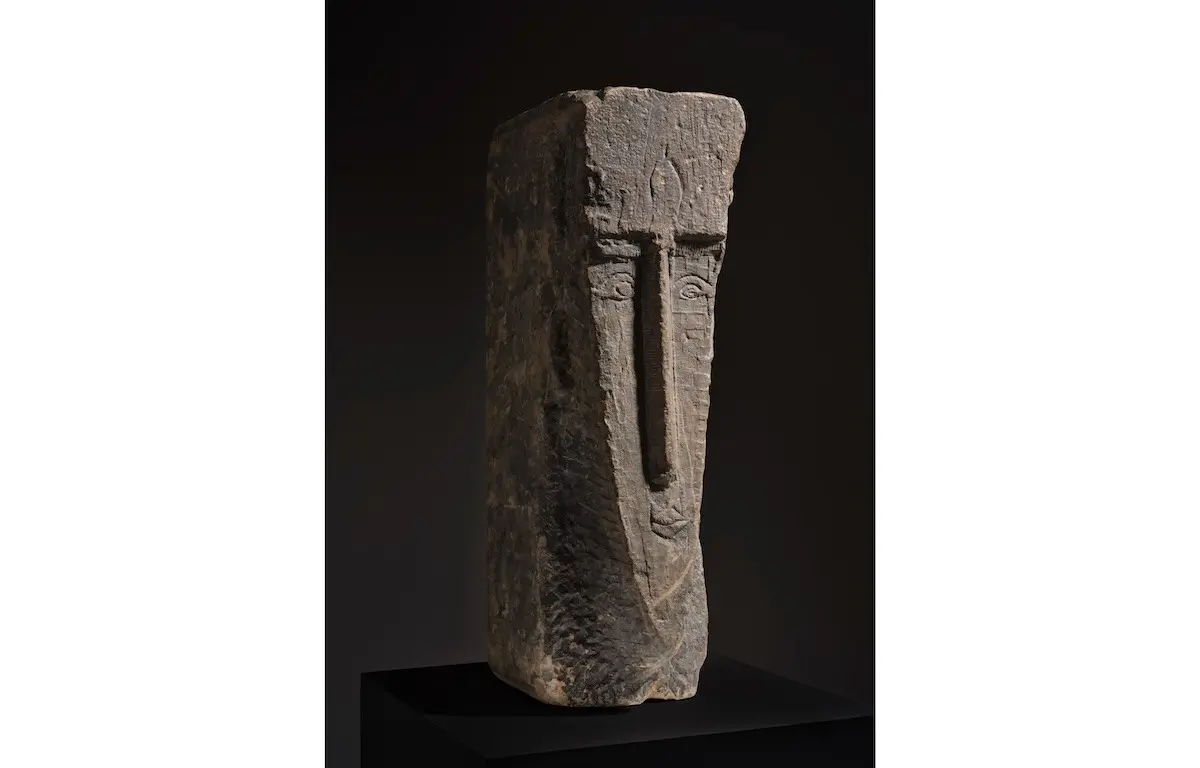
The masterwork in question, a limestone carving titled Tête (1911–12), has been assigned a formidable pre-sale estimate of $28 million to $35 million. Should the piece find a buyer within or above this projected range, it will instantly solidify its place as one of the most expensive three-dimensional works by the artist ever to cross an auction block.
While Modigliani remains universally celebrated for his iconic, highly stylized oil paintings—particularly his sensuous female nudes characterized by elongated necks and mesmerizing, almond-shaped eyes—his sculptural output is exceptionally limited. Experts estimate that the visionary artist produced a mere 28 sculptures during his tragically brief and tumultuous lifetime, with only 26 surviving to this day. Consequently, the appearance of Tête on the open market represents a rare, once-in-a-generation collecting opportunity.
Read Also
Fresh to the market after remaining in the secure custody of the same distinguished private collection for over half a century, the sculpture is poised to test the resilience and appetite of the upper echelon of the global art market. As institutional curators, billionaire collectors, and high-net-worth advisors converge on New York for the November sales, all eyes will be on Phillips to see if this haunting limestone visage can ignite a fierce bidding war and capture the elusive lightning of the current Modigliani market.
Detailed Chronology: From Parisian Bohemia to a Half-Century in Seclusion
To fully appreciate the cultural and monetary weight of Tête (1911–12), one must retrace the brief, bohemian trajectory of Amedeo Modigliani’s life and the specific historical moment in which his sculptures were conceived. Born in Livorno, Italy, in 1884, Modigliani moved to Paris in 1906, establishing himself in the legendary, impoverished artistic enclaves of Montmartre and Montparnasse. Although he arrived in the French capital with aspirations of becoming a major sculptor, the harsh realities of poverty, chronic illness, and the toxic dust associated with stone carving eventually forced him to pivot primarily toward painting.
Between roughly 1909 and 1914, however, Modigliani poured his creative soul into sculpture, heavily influenced by the primitive arts of Africa, ancient Greece, Egypt, and Cambodia, as well as the mentorship and encouragement of the visionary Romanian sculptor Constantin Brâncuși. Working primarily in stone—often acquiring discarded blocks of limestone intended for construction sites around Paris—Modigliani envisioned his carved heads as part of an immersive, quasi-architectural installation. He famously referred to these haunting vertical forms as Pillars of Tenderness and intended to exhibit them together as a cohesive environment.
The specific chronology of the newly unveiled Phillips lot adds an intriguing layer of provenance. Last changing hands in 1972, Tête has spent more than fifty years hidden away from public view within a single private collection. During an era when major masterworks frequently bounce between speculative investors every few years, this half-century of quiet seclusion has endowed the sculpture with a pristine "fresh-to-market" status that auction houses covet above all else.
While the precise intermediary steps of its mid-century journey remain shielded by client confidentiality, its survival through the turbulence of the twentieth century and its eventual consignment to Phillips mark the next definitive chapter in the object’s storied existence.
Supporting Context & Metrics: Rarity, Records, and the Sculpture Market
When evaluating the financial benchmarks of Modigliani’s oeuvre, a fascinating paradox emerges: while his paintings dominate the absolute pinnacle of his auction history, his sculptures possess an intrinsic scarcity that commands profound scholarly and institutional respect.
To understand the market dynamics surrounding Tête, one must look at the ultra-exclusive club of surviving Modigliani sculptures. Out of the estimated 28 pieces he crafted, the vast majority are safely housed within the permanent collections of world-class cultural institutions. Major museums—including the Metropolitan Museum of Art in New York, the Tate museum network in the United Kingdom, the National Gallery of Art in Washington, D.C., and the Centre Pompidou in Paris—guard their Modigliani sculptures fiercely, ensuring that examples rarely slip into private hands.
When a stone head does manage to break free into the commercial sphere, the market reacts with dramatic force.
- In 2010, Christie’s staged a watershed moment when it sold another of Modigliani’s limestone heads for a staggering $52.8 million, setting what was then an overall auction record for the artist.
- Nearly a decade later, in 2019, the same auction house successfully brought yet another iteration of Tête to the block, realizing a robust $34.3 million.
Phillips’s current estimate of $28 million to $35 million for the 1911–12 work positions it comfortably within historical precedent for the artist’s three-dimensional output, albeit safely below his absolute high-water marks for sculpture.
However, when placed alongside Modigliani’s broader market, these figures occupy a different tier entirely. The undisputed apex of the artist’s commercial value remains firmly rooted in his canvas work. That benchmark was established in spectacular fashion in November 2015, when Christie’s sold his sumptuous 1918 painting Nu couché (Reclining Nude) for an astronomical $170.4 million. That historic transaction not only shattered Modigliani’s previous personal best but instantly etched the canvas into the global history books as one of the most expensive artworks ever sold at auction.
Compared to a nine-figure painting, a $28 million to $35 million valuation for a masterwork sculpture might appear modest to the lay observer. Yet, market analysts emphasize that comparing two-dimensional canvases to rare, hand-carved stone monoliths is an apples-to-oranges endeavor. Given the physical fragility and extreme scarcity of his sculptures, Tête represents a pure, unfiltered expression of Modigliani’s modernist vision—one that institutional buyers and elite private collectors understand may not appear on the open market again for another generation.
Official Statements: Perspectives from Phillips and Market Insiders
The announcement of the consignment has generated considerable commentary from art world leaders, who are eager to contextualize the work’s arrival within the shifting tides of the contemporary global market.
Weighing in on the significance of the upcoming sale, Jeremiah Evarts, Phillips Deputy Chairman of the Americas and Senior International Specialist, did not mince words when describing the piece. In an official statement released by the auction house, Evarts characterized Tête as an unmitigated "masterpiece."
"Fresh to the market after over half a century in the same important private collection, Tête embodies everything that makes Modigliani’s sculpture so revered, including its profound art historical importance," Evarts stated.
The physical characteristics of the sculpture itself—carved meticulously from a solid block of dense limestone—support this glowing appraisal. The piece features a characteristically elongated, slender face, a prominent, straight nose bridge, and a tiny, enigmatic, smiling mouth that bridges the gap between archaic non-Western aesthetics and early twentieth-century European modernism. By emphasizing the work’s deep art-historical resonance, Phillips is actively signaling to museum acquisition committees and ultra-high-net-worth collectors that Tête is not merely a luxury asset, but a museum-grade cultural artifact.
Although Phillips has maintained strict confidentiality regarding the identity of the consignor—revealing only that the work has remained in the same private collection since it last changed hands in 1972—industry insiders note that the house’s strategy relies heavily on cultivating trust and discretion. By securing such a pristine object, Phillips is successfully punching above its historical weight class, competing directly with the traditional auction duopoly of Christie’s and Sotheby’s for marquee autumn dominance.
Future Outlook: Catching the Modigliani Wave in a Resurgent Market
As the art world looks ahead to the crucial November sales in New York, the broader economic and cultural climate surrounding Amedeo Modigliani suggests that Phillips’s timing could not be more auspicious. The auction house is explicitly banking on a powerful wave of renewed market interest and aggressive bidding behavior that has defined Modigliani sales across Europe over the past twenty-four months.
The recent resurgence began in earnest in 2025 at Christie’s in Paris, where a rare portrait by the artist blew past expectations to fetch $31.3 million. That sale more than tripled its pre-sale high estimate, setting a dazzling new benchmark for Modigliani within France—the very country where he spent his most productive and creative years.
That momentum only accelerated earlier this year in London. At a high-profile Sotheby’s evening sale, a stunning painting of a nude woman originating from the prestigious collection of billionaire Joe Lewis smashed expectations by commanding a stellar $63.5 million. This transaction not only established a fresh regional record for Modigliani in Europe but also signaled to hesitant investors that top-tier masterworks with impeccable provenance remain entirely immune to broader macroeconomic jitters.
These back-to-back European blockbusters have created a palpable tailwind for Phillips. By bringing Tête to New York—historically the most liquid and aggressive marketplace for blue-chip modern and contemporary art—Phillips is positioning the sculpture to benefit directly from this accumulated market energy.
Whether Tête will surpass its $35 million high estimate, challenge past sculpture records, or quietly find a home within a private institution remains to be seen. What is already certain, however, is that the November sales will provide a definitive stress-test for the upper tier of the art market. As collectors prepare their paddle cards and curators draft acquisition proposals, Amedeo Modigliani’s silent, stone-carved gaze continues to command the absolute center of the cultural conversation.





Comments
Facebook App ID not configured. Please add it in the Customizer.