

The children’s publishing landscape has reached a significant milestone with the official release of Postcards from Malcolm X: How Yuri Kochiyama Became a Human Rights Activist. Authored by Mia Wenjen, illustrated by Keith Henry Brown, and published by Red Comet Press, this moving picture book biography (targeted at readers ages 7 and up) illuminates the extraordinary life of Yuri Kochiyama.
By detailing Kochiyama’s evolution from an ordinary, small-town Californian girl into a fearless human rights champion, the book examines her powerful, transformative bond with Malcolm X. The narrative centers on a handshake at a New York courthouse in 1963 that sparked a deep friendship rooted in justice, equity, and cross-racial solidarity.
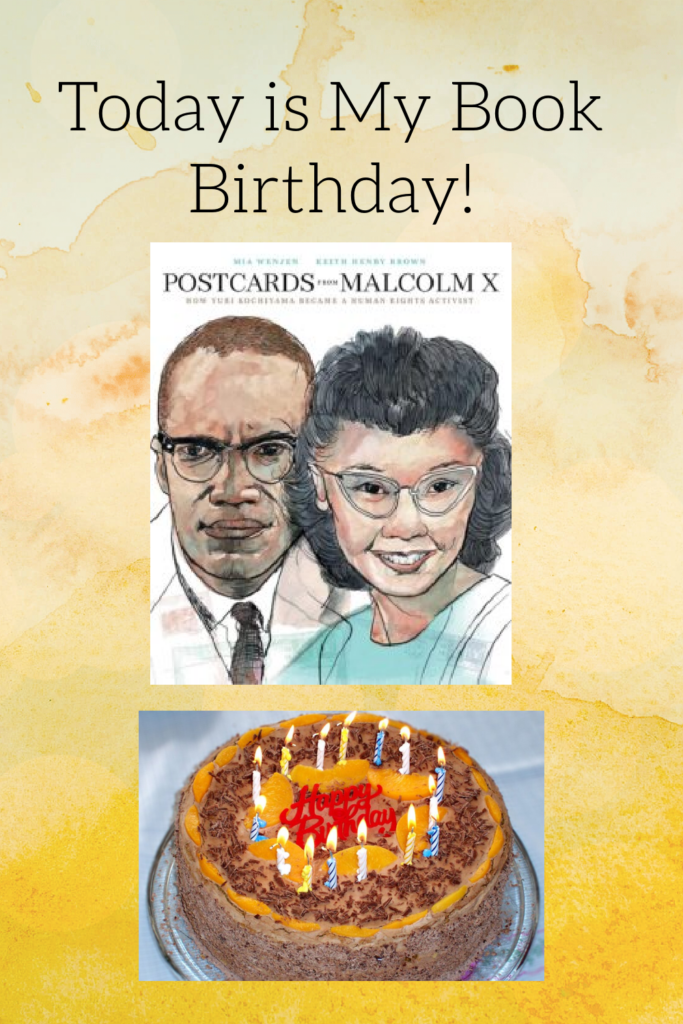
Beyond recounting a historical alliance, Postcards from Malcolm X serves as a vital literary and educational tool. It addresses the mechanics of cross-cultural coalition-building, the realities of institutional racism, and the persistence required to bridge divides among historically marginalized groups. Complete with original postcards from Malcolm X, an extensive historical timeline, and rich back matter, the book functions as both a historical archive and an inspiring call to action for the next generation of changemakers.
Read Also
Detailed Chronology: The Evolution of an Activist
To understand the profound significance of the relationship between Yuri Kochiyama and Malcolm X, one must examine the sequential milestones that shaped Kochiyama’s life. Her trajectory challenges simplistic narratives of innate radicalism, illustrating instead how personal tragedy, systemic injustice, and civic engagement forge an enduring activist identity.

Early Life and the Illusion of the "All-American" Experience
Yuri Kochiyama’s formative years were characterized by a conventional, small-town upbringing in California. During her youth and high school years, she viewed herself as a typical "All-American" girl, largely shielded from—and oblivious to—the systemic racial prejudices operating within American society. Blessed with strong natural communication skills, a background in high school journalism, and exceptional emotional intelligence, Kochiyama developed a natural affinity for bringing people together.
However, her worldview was fundamentally shattered by the outbreak of World War II and the subsequent signing of Executive Order 9066. The forced removal and mass incarceration of over 120,000 Japanese Americans stripped Kochiyama’s family of their home, liberty, and constitutional rights. Compounding this trauma was the tragic death of her father, whose health deteriorated due to severe stress and interrogation following his arrest by the FBI immediately after the Pearl Harbor attack.

Awakening, Resilience, and Service
Rather than breaking her spirit, these compounding injustices served as the crucible for Kochiyama’s political awakening. Her early experiences with state-sanctioned discrimination made her acutely sensitive to the plight of other oppressed communities. Following the war, her trajectory led her to Harlem, New York, where she and her family immersed themselves in the local community.
Working alongside Japanese American soldiers returning from segregated units and engaging with diverse urban populations, Kochiyama honed her leadership style. She mastered the art of showing up—consistently, reliably, and without personal ego—earning the trust of neighbors across ethnic boundaries. Yet, while she was deeply active in local Harlem grassroots efforts, she initially lacked a clear analytical framework for understanding the structural levers of white supremacy and systemic racism that maintained oppression.

The Courthouse Encounter and the Mentor-Mentee Bond
The turning point of Kochiyama’s life occurred in 1963 at a New York courthouse, where she approached Malcolm X and shook his hand. This initial meeting was met with skepticism and caution; Malcolm X, a towering figure in the Black freedom struggle, naturally questioned the motives of an outsider entering the space. However, Kochiyama’s persistent dedication, humility, and willingness to do the unglamorous legwork of activism won his trust.
Malcolm X became Kochiyama’s most influential mentor and dear friend. Possessing a rare pedagogical gift, he demystified complex socioeconomic structures, explaining the mechanics of structural racism in ways that transformed Kochiyama’s localized activism into a comprehensive international human rights philosophy. Their bond deepened to the extent that when Malcolm X embarked on an international tour across Africa and the Middle East, he maintained correspondence with Kochiyama, sending her a series of personal postcards that documented his evolving global perspective.

Legacy and Educational Outreach
The tragic assassination of Malcolm X in 1965 left an indelible mark on Kochiyama. Committed to ensuring that his vision, intellectual contributions, and anti-racist frameworks were not lost to history, she dedicated decades to educational outreach. Kochiyama developed comprehensive curricula centered on Malcolm X’s philosophies, presenting them in schools, community centers, and universities. In doing so, her evolution into a human rights activist became a living tribute to Malcolm X’s legacy—a testament to the enduring power of mentorship and shared revolutionary vision.
Supporting Context & Metrics: Intersectional Solidarity in Literature
The publication of Postcards from Malcolm X arrives at a critical juncture in contemporary educational and publishing landscapes. As civic education faces ongoing debates regarding the teaching of hard histories and civil rights, picture book biographies that emphasize intersectionality are increasingly recognized as essential developmental resources.

The Mechanics of Cross-Racial Coalitions
Mia Wenjen’s narrative deliberately underscores the challenges inherent in forging cross-racial solidarity. True coalition-building between minority groups is rarely frictionless; it demands humility, endurance, and a willingness to confront mutual suspicions. By highlighting how Kochiyama had to prove her commitment to Black civil rights organizers through sustained, unheralded labor, the book provides an authentic model for modern activism.
This thematic focus addresses a vital pedagogical need: teaching young readers that unity across diverse ethnic and racial backgrounds requires intentional effort, emotional resilience, and active listening. It counters the utopian fallacy that solidarity occurs spontaneously, reframing it instead as a disciplined practice of mutual accountability.

Integrating Primary Sources and Educational Scaffolding
From a publishing and design standpoint, Postcards from Malcolm X utilizes several structural elements to maximize its educational impact:
- Primary Source Integration: The inclusion of original postcards from Malcolm X grounds the narrative in tangible historical reality, offering young readers a direct connection to the past.
- Extensive Back Matter and Timelines: These features contextualize the intersecting timelines of the Japanese American internment and the mid-century Black Civil Rights Movement.
- Keith Henry Brown’s Evocative Artistry: The illustrations provide emotional resonance, making complex historical themes accessible and engaging for readers ages 7 and up.
Official Statements & Insights from the Author
In discussions surrounding the launch of Postcards from Malcolm X, creator Mia Wenjen emphasized the intentionality behind the project and its relevance to contemporary social dynamics.

"For this book, I wanted to show intersectional, cross-racial solidarity, as an example from the past that will hopefully inspire similar collaboration today and in the future," Wenjen stated. "It was important to me to show Yuri Kochiyama’s activity journey. She started as a naive ‘All-American’ who didn’t think racism existed… Her experiences during WWII burst that bubble, and her awakening as an activist began, but also utilized her skill set."
Wenjen elaborated on the pedagogical role of Malcolm X in Kochiyama’s life and the broader lessons of their friendship:
"Malcolm X, she would state in her autobiography, was the person who taught her the most about activism. While she was an activist in her community in NYC’s Harlem area, she didn’t necessarily understand the levers that caused the racism she faced. Malcolm X understood structural racism and was a naturally gifted teacher who could make complicated concepts understandable."
Addressing the complexities of alliance-building across racial lines, Wenjen noted:
"I think this friendship is a realistic example of what it takes to cross racism barriers, even amongst minority groups fighting the same fight. Yuri had to prove herself to the Black Civil Rights activists by showing up, again and again, and doing the work (without asking for credit)… Perhaps this initial suspicion and hostility is why there isn’t more cross-racial solidarity today. Yuri’s commitment serves as a role model for us all on what it takes to actually be able to support all causes, across all different ethnic groups. I hope this book inspires our children on how powerful uniting together can be, but also how difficult it is to create those ties."
Future Outlook: Impact on Youth Activism and Education
As Postcards from Malcolm X enters classrooms, libraries, and homes, its long-term impact on youth literature and civic education promises to be profound. By centering an Asian American woman whose life’s work was deeply intertwined with the Black freedom struggle, the book broad传统的 American civil rights narratives, showcasing the interconnected nature of human rights struggles.

The release also aligns with a growing body of work by Mia Wenjen that champions diverse historical figures, civic engagement, and multicultural storytelling—including titles such as Barbed Wire Between Us, We Sing from the Heart, and Fortune Cookies for Everyone!.
By providing educators and parents with robust framing for discussions on systemic injustice, allyship, and historical empathy, Postcards from Malcolm X equips young readers with the historical consciousness needed to navigate and shape a more equitable future. Through the enduring example of Yuri Kochiyama and Malcolm X, the next generation is reminded that while building bridges across communities is demanding work, it remains the most powerful catalyst for transformative social change.

Comments
Facebook App ID not configured. Please add it in the Customizer.