
Executive Overview
The sprawling multi-generational narrative of the Avatar universe has never shied away from ideological complexities, geopolitical turmoil, or the heavy burdens placed upon its young protagonists. However, the debut of Avatar: Seven Havens on Paramount+ has introduced a startling and unprecedented narrative pivot. Set roughly 225 years after a global cataclysm known simply as "The Cataclysm," the new series paints a bleak historical portrait of its predecessor, The Legend of Korra. Far from being remembered as the savior of the world, Korra is cast in the opening episodes as a harbinger of apocalypse—a historical villain whose choices allegedly shattered civilization.
This unexpected portrayal has sent shockwaves through the fandom. While Seven Havens has enjoyed a largely positive critical reception and a swift, rare double-season renewal for Seasons 3 and 4, the treatment of Korra has ignited a fierce debate. Is the series offering a genuine, lore-shattering deconstruction of the Avatar cycle, or is it wielding a calculated narrative red herring to directly address and submerge years of toxic real-world fandom discourse?
Compounding the controversy is the visible emotional toll the storyline has taken on those closest to the character, including voice actor Janet Varney. Meanwhile, franchise creators Michael Dante DiMartino and Bryan Konietzko have stepped forward to defend Korra’s legacy, urging fans to look past the initial episodes. As the dust settles on the show’s premiere, the unfolding mystery of Seven Havens forces viewers to re-examine how mythologies are written, weaponized, and ultimately redeemed.
Read Also
Detailed Chronology: From Republic City to the Seven Havens
To understand the magnitude of the controversy surrounding Avatar: Seven Havens, one must trace the timeline from the conclusion of The Legend of Korra to the dystopian landscape of the new series.
The Korra Era: Triumphs and Turning Points
During the final seasons of The Legend of Korra, the Southern Water Tribe Avatar faced existential threats that fundamentally altered the fabric of the physical and spiritual worlds. Most notably, Korra made the controversial, empathetic decision to leave the spirit portals open following her battle with Unalaq and Vaatu, permanently fusing the human and spirit realms. Later, her defeat of the fascist dictator Kuvira resulted in the manifestation of a third spirit portal right in the heart of Republic City.
While these choices ushered in an era of unprecedented spiritual integration, they also unleashed chaos. The sudden Harmonic Convergence manifested airbending abilities in ordinary citizens worldwide—including the radical anarchist Zaheer. Furthermore, Korra famously lost her direct metaphysical connection to past Avatar incarnations when her spirit was ripped apart by Unalaq, forcing her to forge a new path entirely on her own terms. Despite these trials, Korra’s arc culminated in profound personal growth, resilience, and a deeply emotional normalization of queer relationships through her partnership with Asami Sato.
The Cataclysm and the Distortion of History
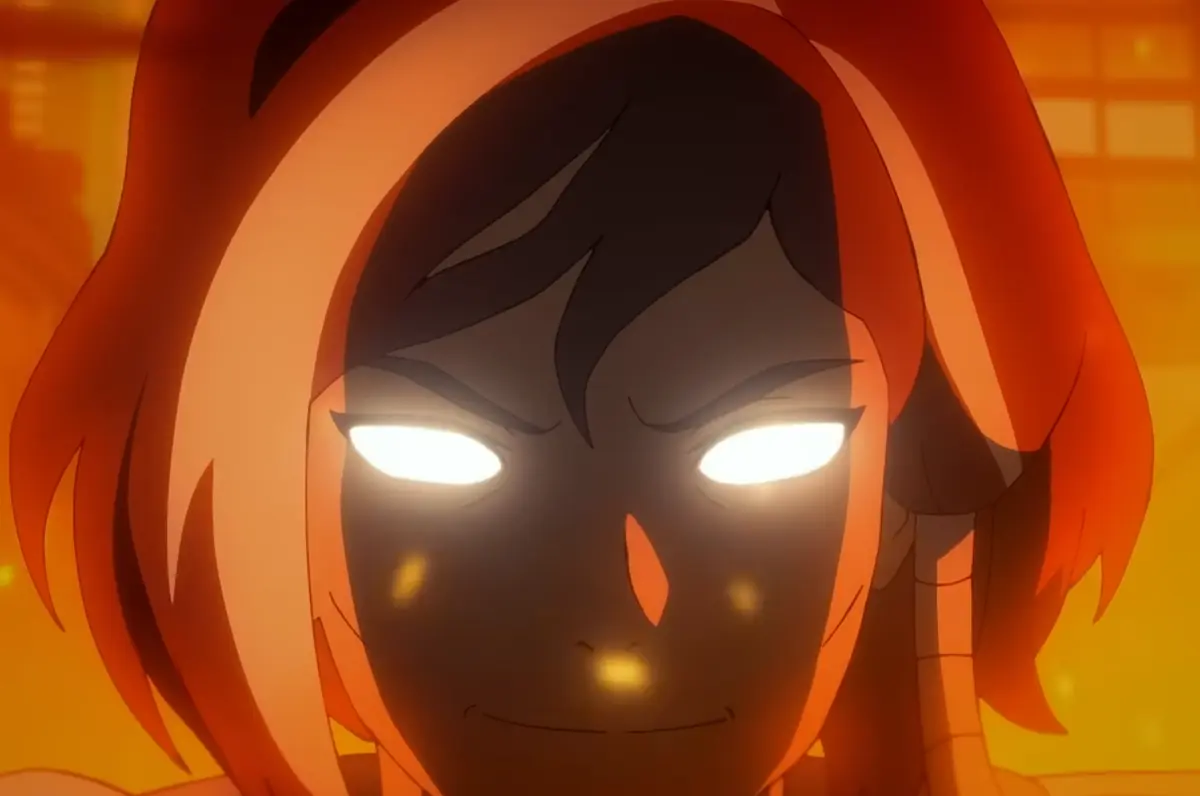
Fast forward 225 years into the timeline of Seven Havens. The world as fans knew it has been decimated by an event designated as "The Cataclysm." In the premiere episodes, viewers are introduced to a society that harbors deep-seated resentment toward the Avatar lineage. Historical memory has curdled; Korra is explicitly blamed for the near-total destruction of the world.
The series highlights this revisionist history through public spectacles, including a festival that maliciously recreates and exaggerates Korra’s actions, portraying her not as a guardian of balance, but as a destructive deity who brought ruin to humanity. To children in this era, the name Korra is synonymous with a monster. Yet, within the strict internal logic of original Korra lore, the Avatar never committed actions matching the scale of the devastation attributed to her. This glaring discrepancy has fueled intense investigative theories across the internet.
Supporting Context & Metrics: The Anatomy of Fandom Division
The decision to use Korra as a narrative scapegoat in Seven Havens does not exist in a vacuum. It taps directly into a decade of real-world polarization that followed The Legend of Korra’s original 2012–2014 run on Nickelodeon.
A Divisive Predecessor
While Avatar: The Last Airbender achieved near-universal acclaim, The Legend of Korra proved to be a lightning rod for criticism. Some viewers struggled to embrace a protagonist who was flawed, hot-headed, and deeply vulnerable to systemic failures, contrasting her with the universally beloved, monastic wisdom of Aang.
More perniciously, a vocal faction of internet trolls subjected Korra to intense scrutiny driven by underlying prejudice. The character was frequently targeted by misogynistic critiques framing her as "ineffective" or overly emotional, while homophobic backlash erupted following the groundbreaking finale confirming her relationship with Asami. Paradoxically, other critics launched good-faith literary arguments suggesting that Korra’s well-intentioned political and spiritual interventions—such as opening the spirit portals—inadvertently destabilized geopolitical stability.
Critical Reception and Streaming Success
Despite these historical fractures, Paramount’s confidence in the broader Avatar intellectual property has never been higher. The rapid renewal of Seven Havens for Seasons 3 and 4 underscores a robust viewing audience and strong engagement metrics on Paramount+. The franchise’s pivot toward a more fantasy-focused, mythic direction has successfully captured both legacy fans and new demographics. However, the "Korra question" remains the primary engine driving social media discourse, proving that the character’s legacy casts an inescapable shadow over the franchise’s future.
Official Statements: Creators and Cast Respond
The emotional weight of Korra’s villainous framing in Seven Havens reached a boiling point when key figures associated with the franchise addressed the fanbase’s anxieties.
Janet Varney’s Heartbreak
Janet Varney, the voice behind Korra, shared a raw, vulnerable account of her experience watching the Seven Havens pilot. Speaking in recent interviews, Varney admitted that she "sobbed" through the episode and felt utterly "shattered" by the narrative direction.
"I finished it, and my partner was like, ‘So?’ And I was like, ‘I can’t even tell you what happened. I’m so upset,’ crying," Varney recounted. "I was like, ‘I’m so worried about all the people that love Korra and already defend Korra…’ I know we don’t know what’s going to happen, and I want people to keep the faith, but who knows? But just for me, watching children talk about her as if she’s a monster was heartbreaking. I mean, it really hurt."
Showrunners Push Back Against Bad-Faith Critiques
In response to fan panic and accusations that the writers were validating toxic elements of the fandom, series co-creators Michael Dante DiMartino and Bryan Konietzko stepped forward to clarify their intentions during an interview with Teen Vogue.
Konietzko directly challenged historical misconceptions held by viewers, explicitly defending the character against double standards:
"The idea that Korra separated her connection with the other Avatars… her uncle did that to her," Konietzko emphasized. "I’m always like… Aang’s entire people were wiped out, but nobody holds that against Aang. But they hold Korra to this totally different standard. I think there’s a lot of misogyny, I think there’s a lot of homophobia. Her story is an amazing one of resilience and repair."
Echoing these sentiments, DiMartino urged fans to exercise patience and trust the broader narrative architecture of the new series:
"Watch the show… she’s one of my favorite characters. The Avatars are never perfect heroes. But there’s more to Korra’s story than you see in the first couple of episodes."
Future Outlook: Decoding the "Lorra" Red Herring
As Avatar: Seven Havens continues its rollout on Paramount+, the overarching consensus among narrative analysts is that the initial vilification of Korra is a carefully constructed red herring—affectionately dubbed "the Lorra" by online sleuths.
Rather than endorsing the toxic tropes or bad-faith criticisms that plagued The Legend of Korra, the writers appear to be setting up a sophisticated meta-commentary on the unreliability of history. In real-world societies, heroic figures who challenge the status quo are frequently demonized by subsequent generations, political opportunists, or societies unwilling to confront their own systemic failures. By positioning Korra as a mythical scapegoat in the opening acts, DiMartino and Konietzko are likely laying the groundwork for a profound thematic payoff: a storyline where the current generation of heroes must unearth the unvarnished truth, dismantle historical propaganda, and reclaim the true legacy of the Water Tribe Avatar.
Ultimately, while the initial shock of seeing Korra condemned as a monster caused genuine pain to voice actors and loyal fans alike, all signs point toward a triumphant vindication. Avatar: Seven Havens is not rewriting history to punish Korra; it is challenging its characters—and its audience—to look beyond the myths we tell about the past in order to find balance in the future.

Comments
Facebook App ID not configured. Please add it in the Customizer.